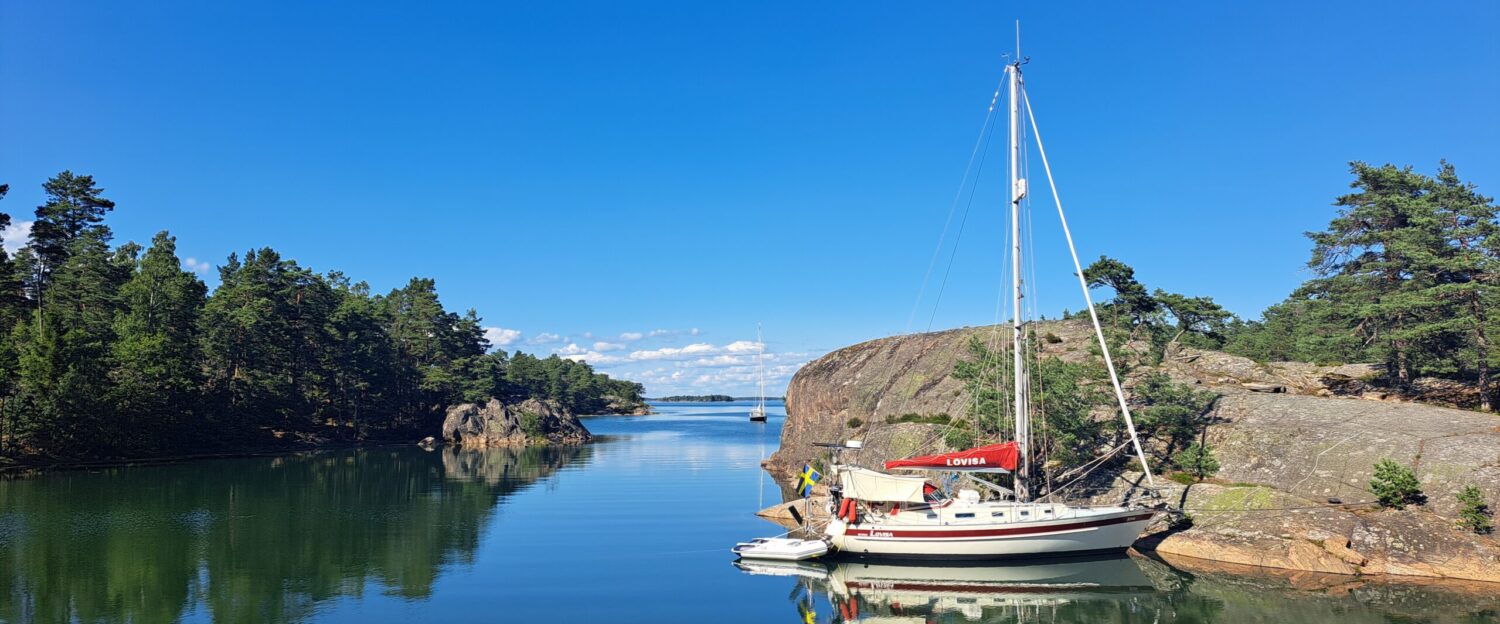
We reached Gustavia in the morning of March 2 after our first night sailing since the Atlantic crossing. We found a very crowded Rade de Gustavia so it took some time to find a good spot. Unfortunately for us, it was also very rolly. We had probably not been rolling that much in an anchorage since we left the Canary Islands. The alternative was to move to the northern part of Rade de Gustavia that was a bit less rolly but that area was swiped by the exhaust gases of the power plant. On the positive side we found in Rade de Gustavia one of the clearest waters of this whole adventure at that point of time.
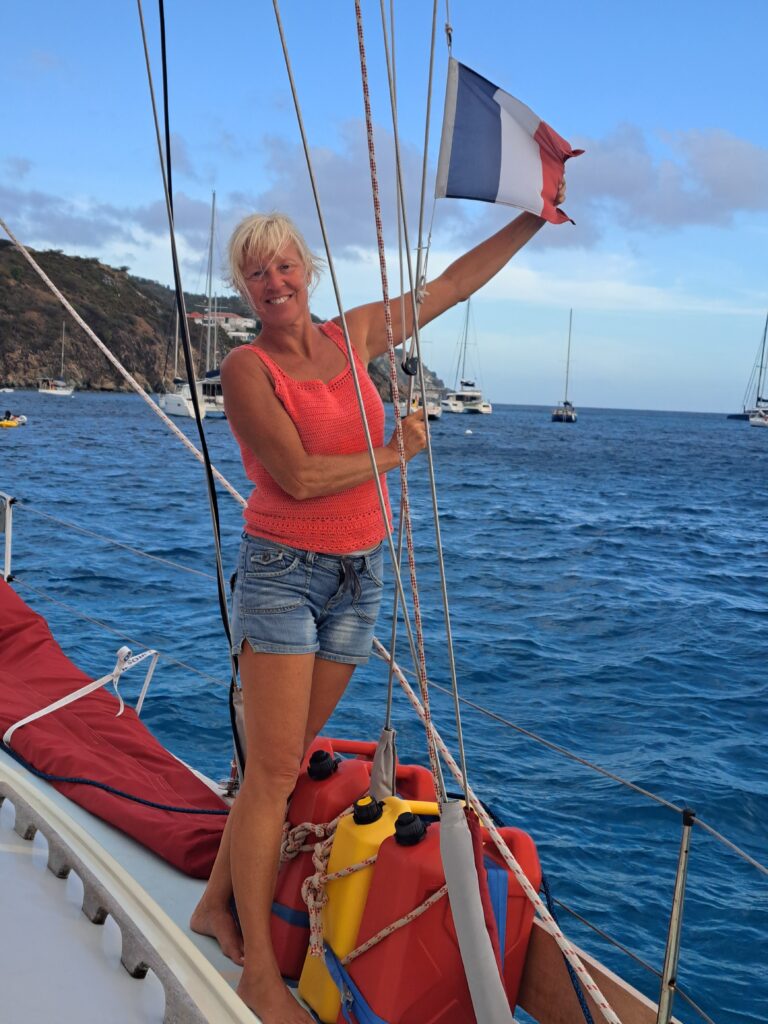
After a power nap in the morning after arrival, we took the dinghy out in the afternoon for a short trip onshore to the Capitainerie so we could do the check-in and raise the French guest flag again on starboard side of Lovisa, for the fifth time of this whole adventure.
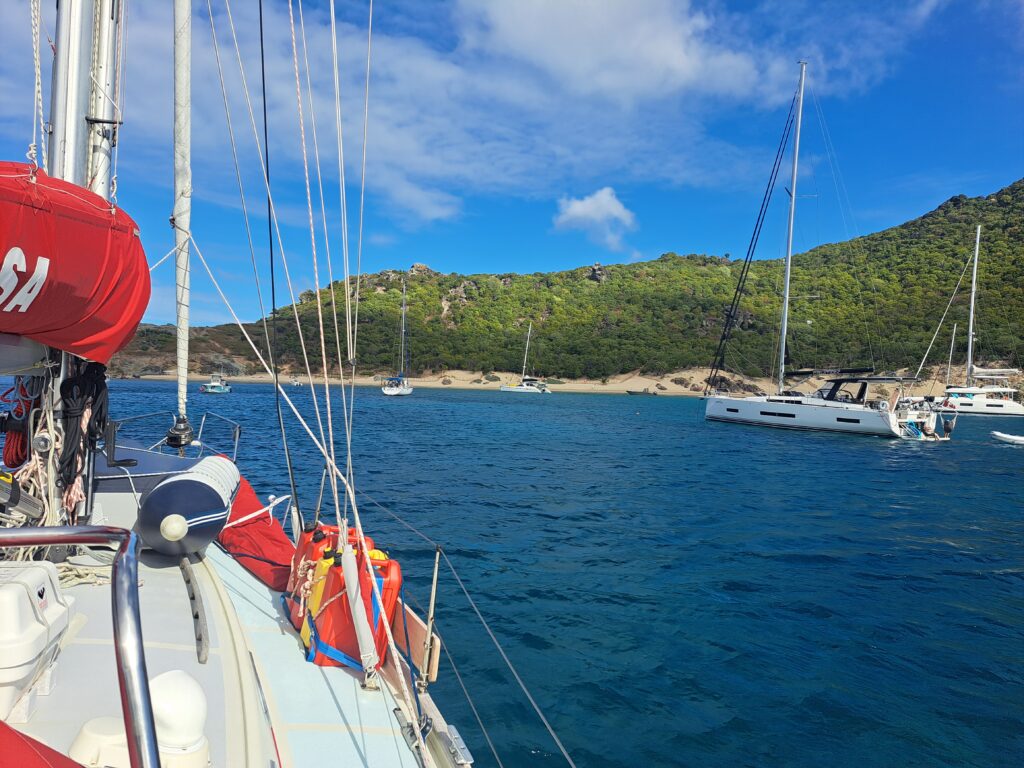
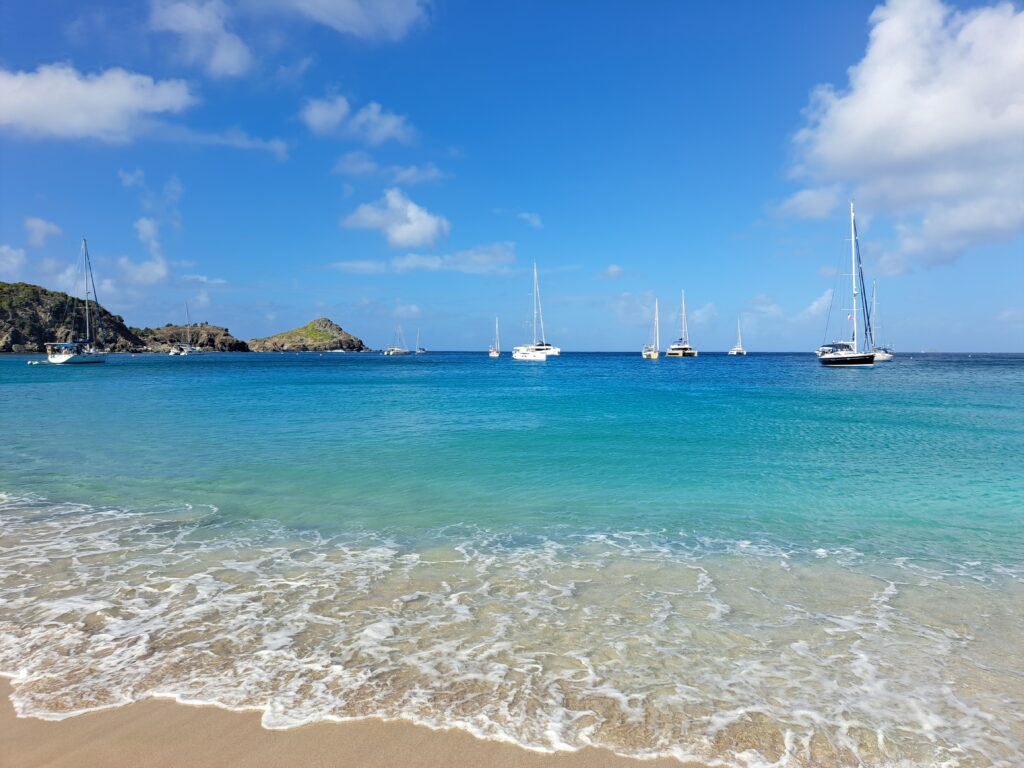
Life on a sailboat can really get miserable with heavy rolling so we remained in Rade de Gustavia only one night and moved already next day to Colombier, a bay on the northern side of the island, only three nautical miles away. Colombier is more protected from the south eastern swell that was making Rade de Gustavia so rolly. There we found clear water, sea turtles, rays, fewer boats and less swell, just as we were hoping. But the bay was still subject to some strong wind gusts.
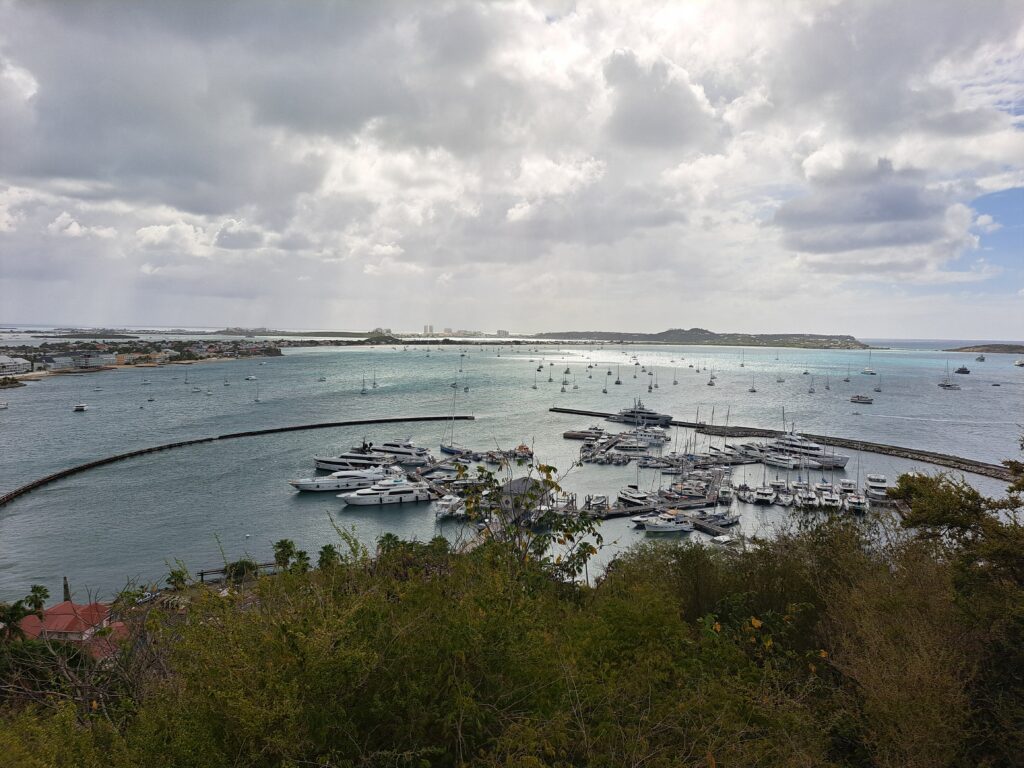
The bay opens toward north west and from there we could see the southern coast of Sint Maarten in the background about ten nautical miles away.
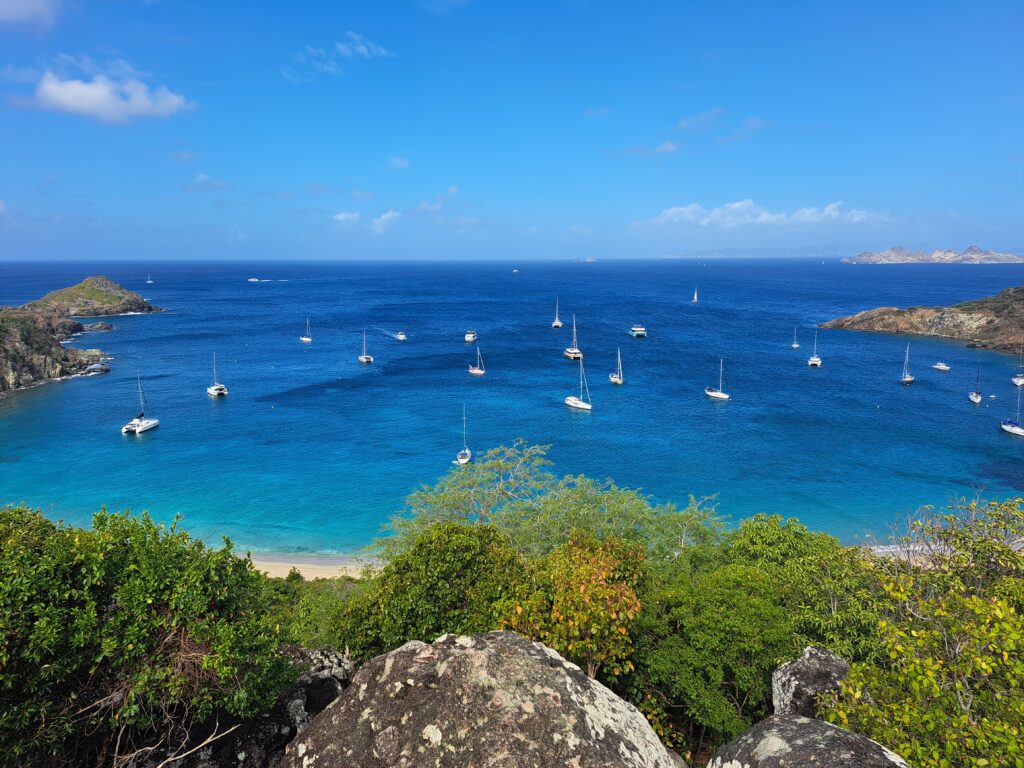
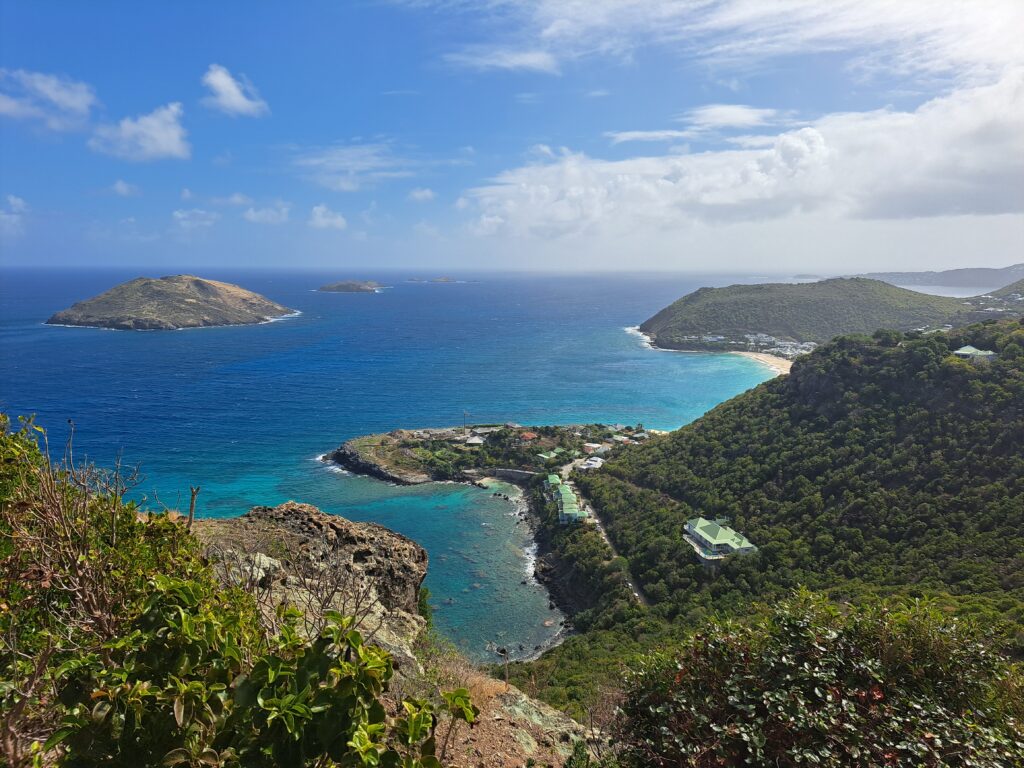
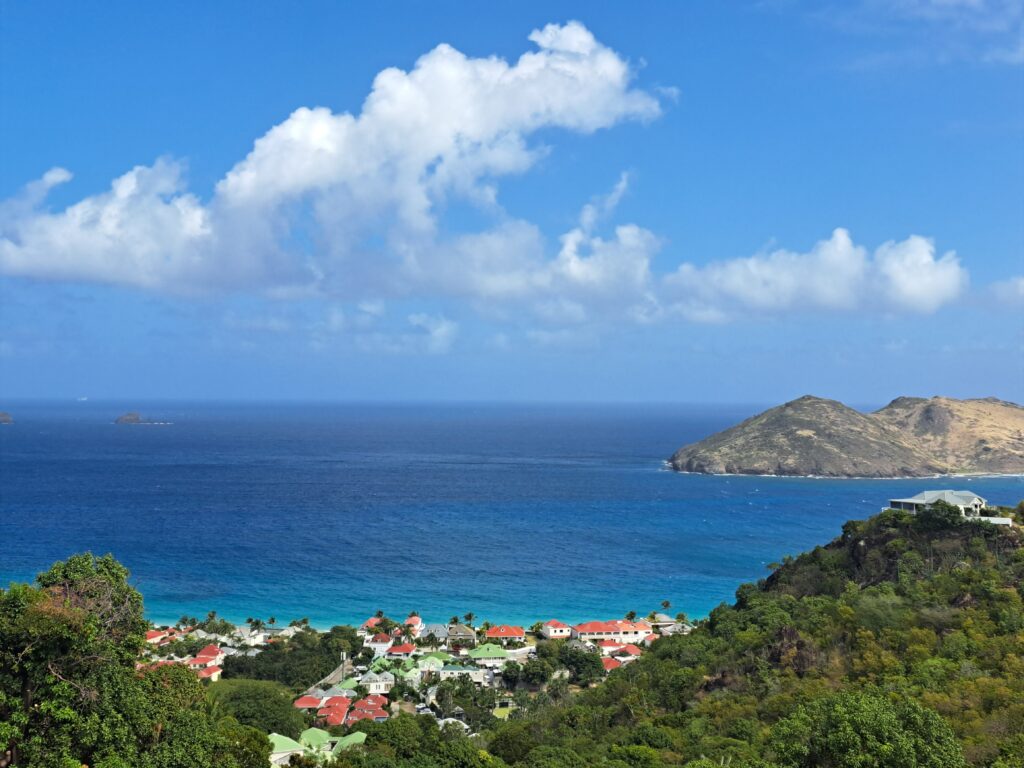
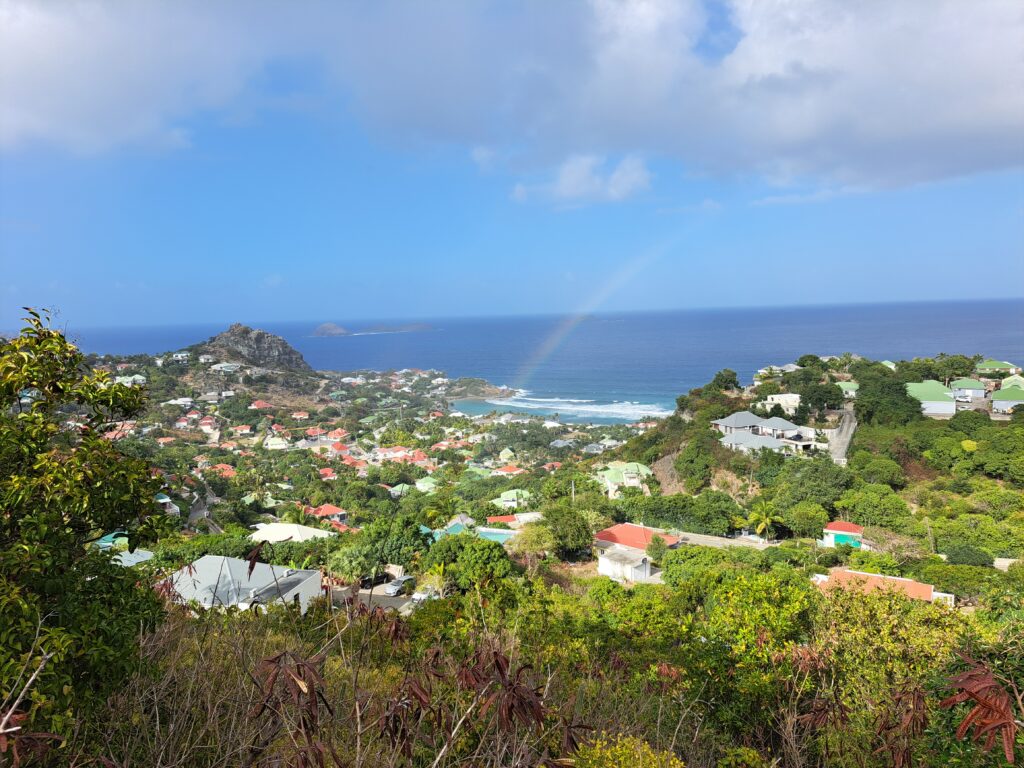
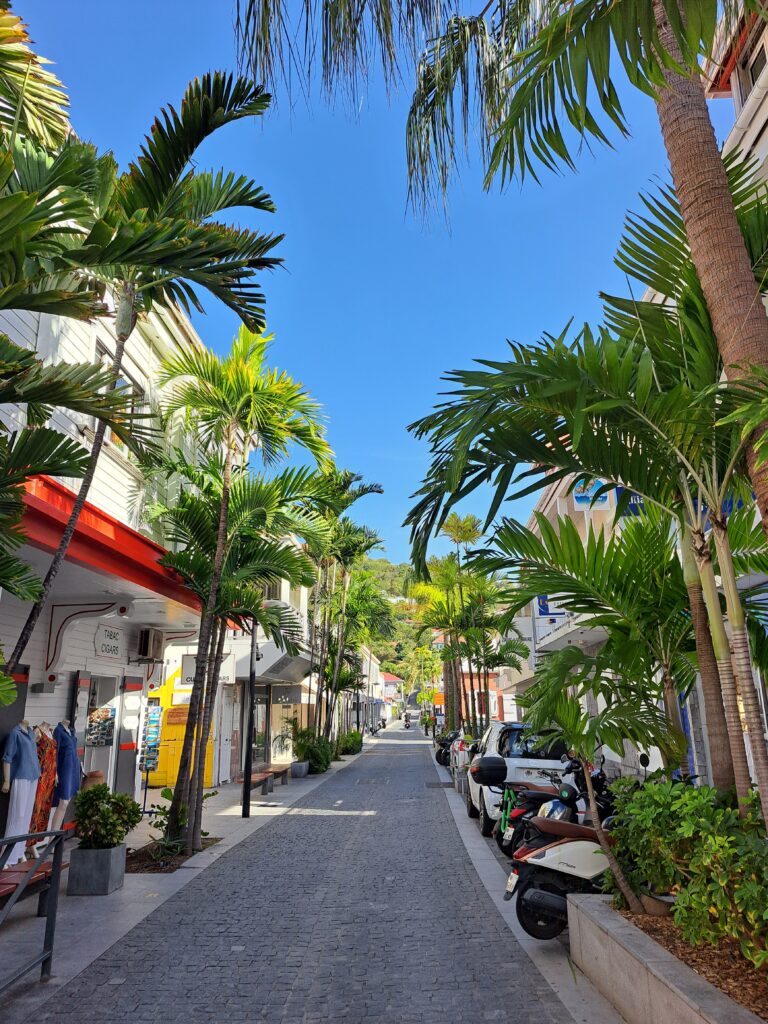
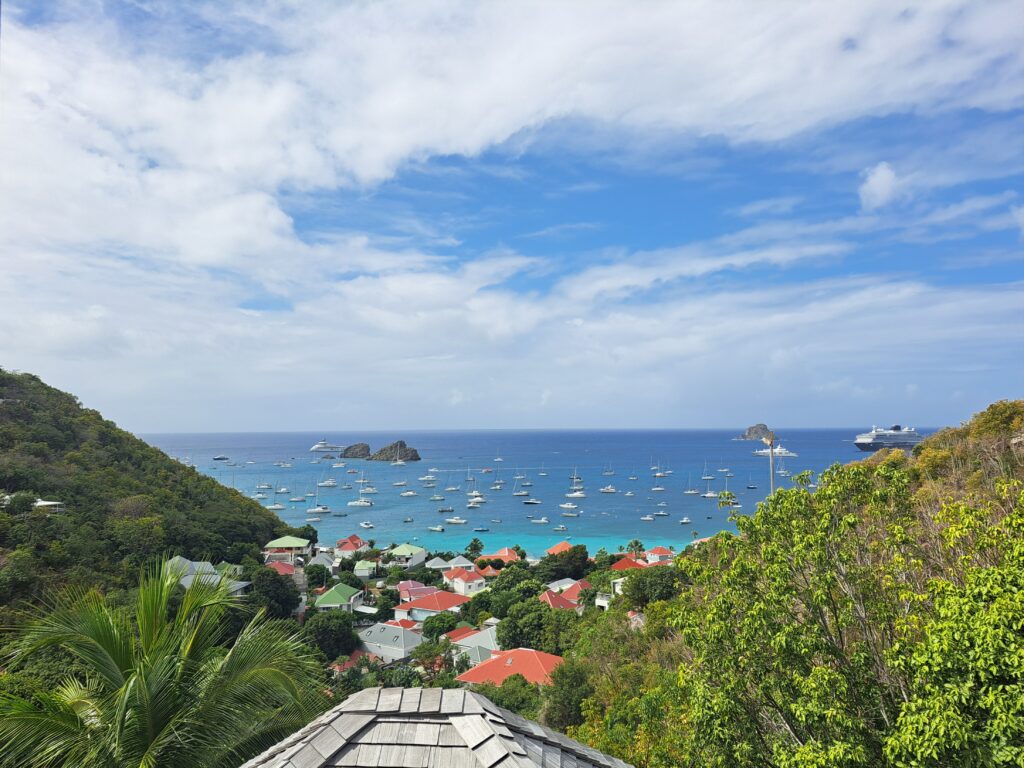
From the bay of Colombier we took a long walk to Gustavia. It took about an hour and a half, walking up and down the hills with great panoramas over the coast of Saint Barthélemy and over the city of Gustavia itself. We were in need of exercise because we had not been moving much since English Harbour.
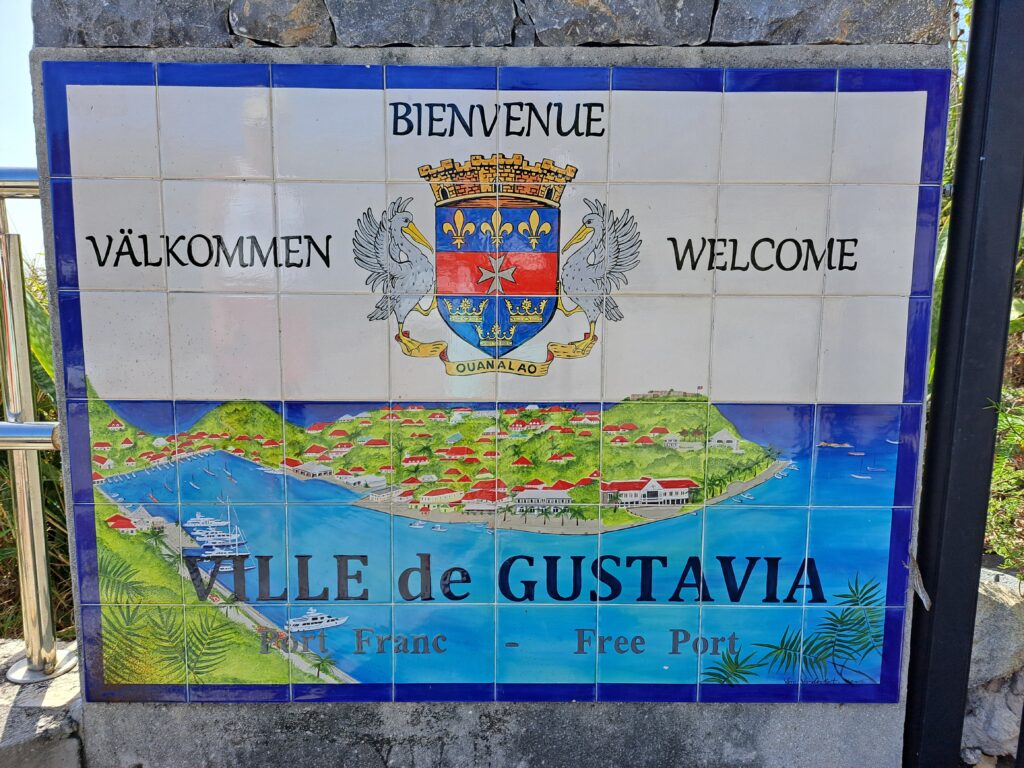
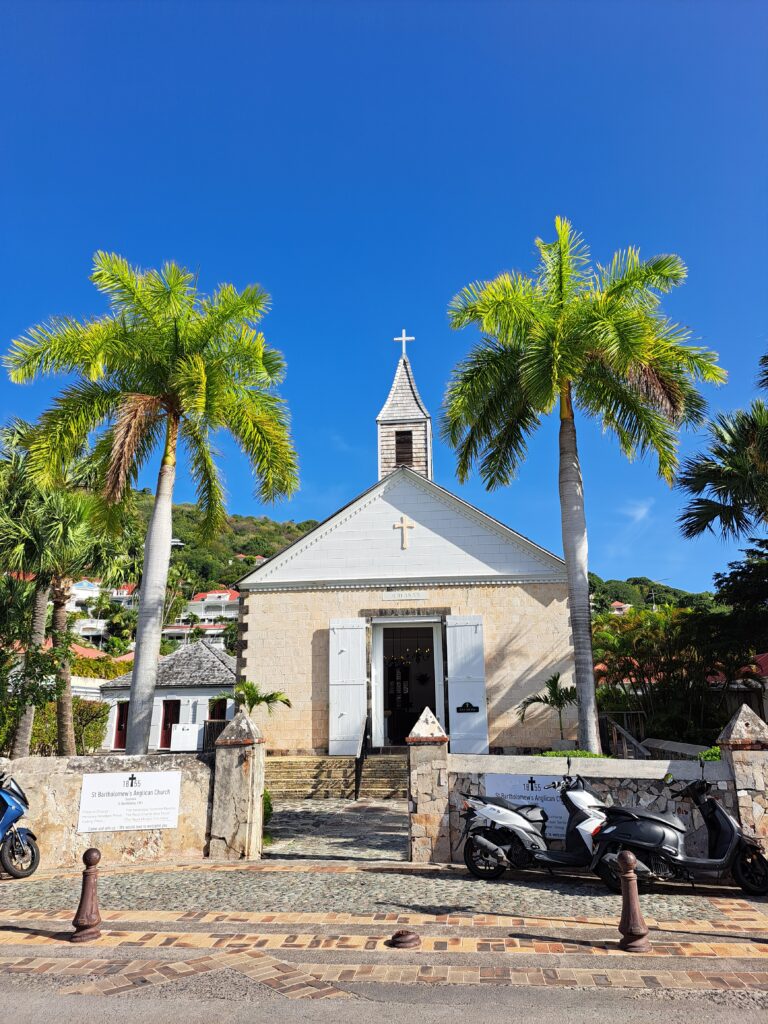
Saint Barthélémy was a Swedish colony for nearly a century. The Swedish heritage is still clearly visible in Gustavia, first in the name of the city itself that is named after Swedish king Karl Gustav III. Then on the street plates. When the French bought back the island from Sweden in 1878, they renamed the streets with French names, but an initiative to highlight the history of the island brought the local administration to reinstall the old Swedish street names during the 1960s.
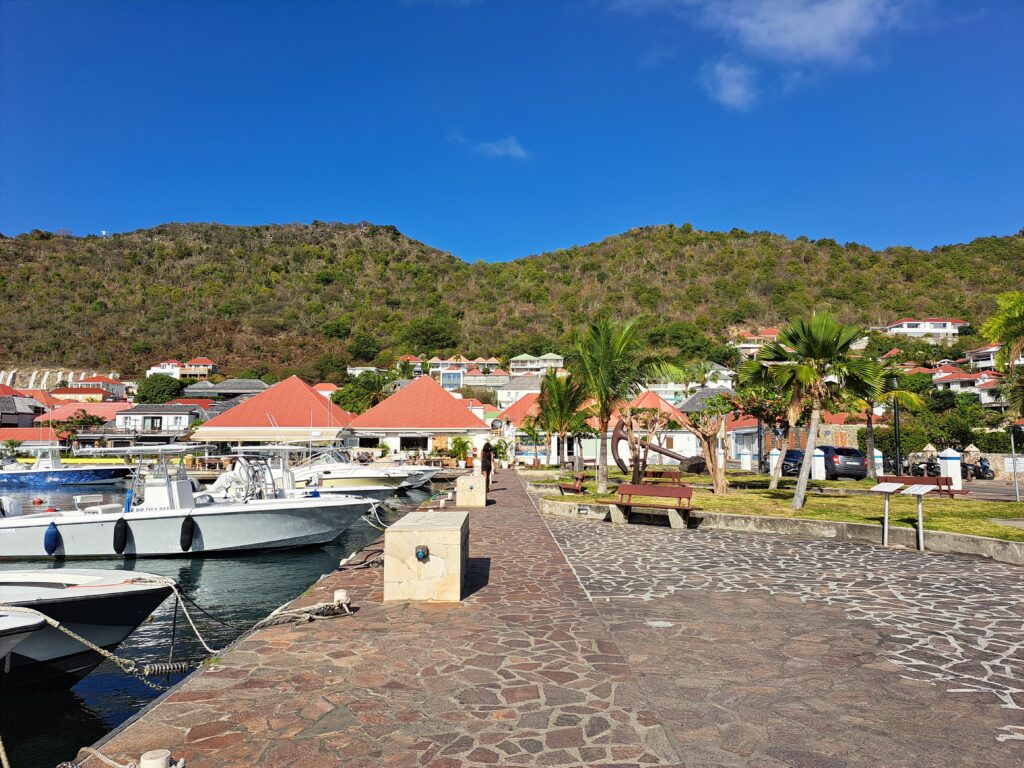
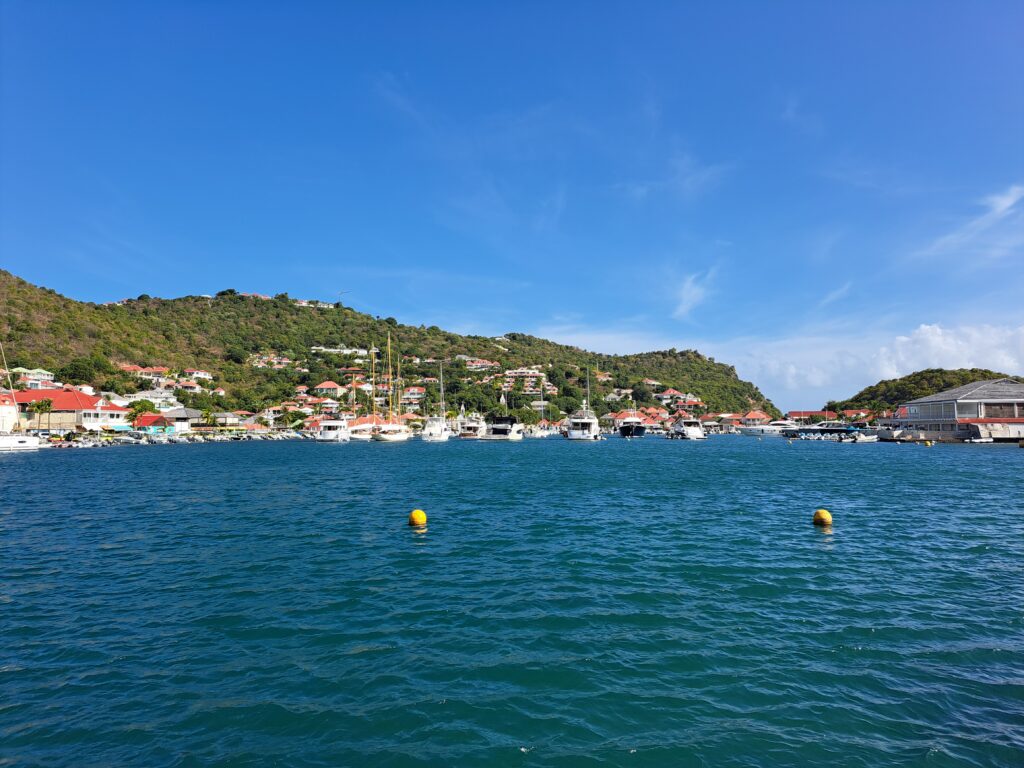
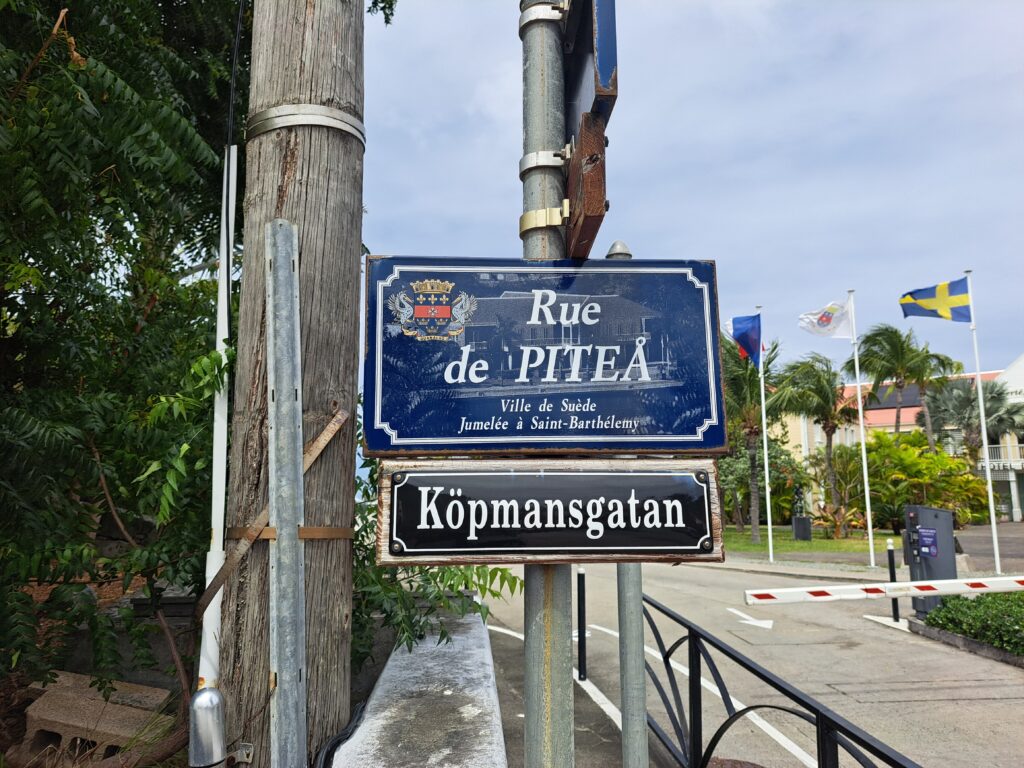
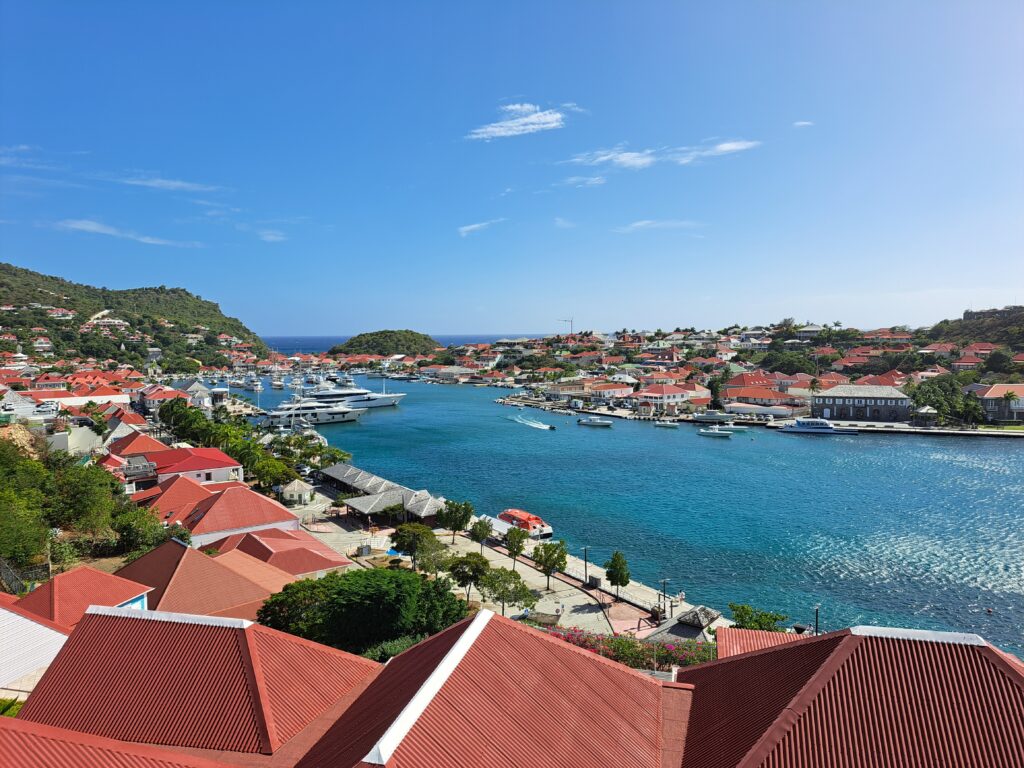
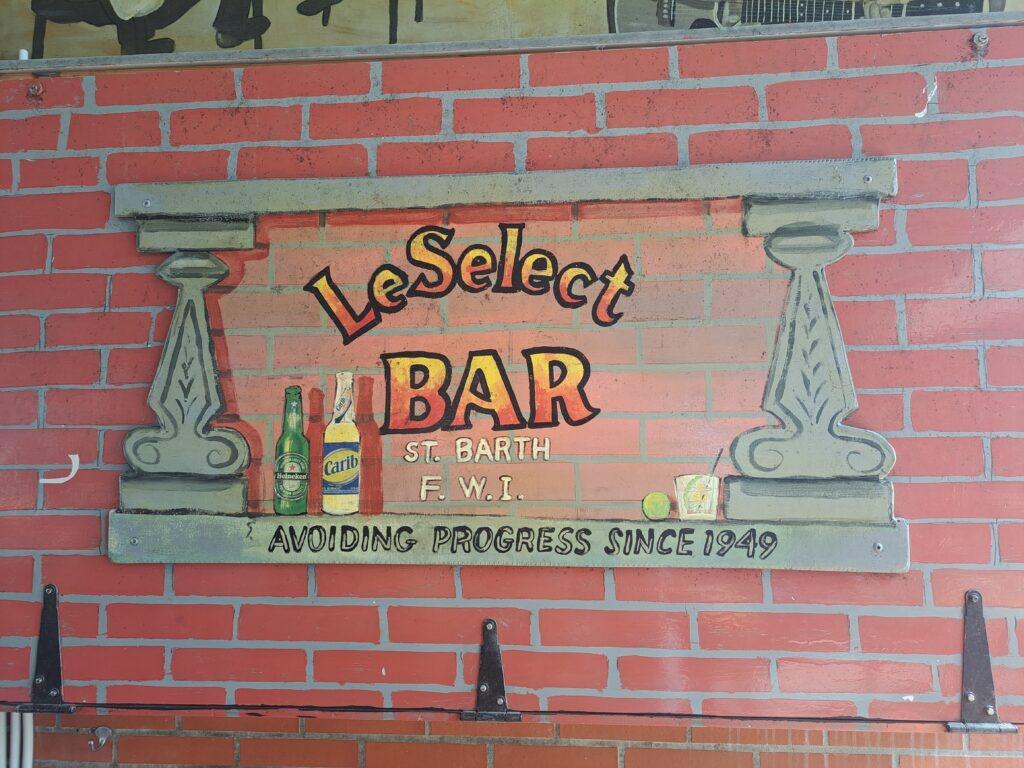
For lunch, we stopped at a bar called “Le Select bar” which is the oldest bar on the island and there we could eat a burger and have a drink at a reasonable price. Saint Barthélemy is known to be expensive in general but like everywhere else, there are always exceptions.
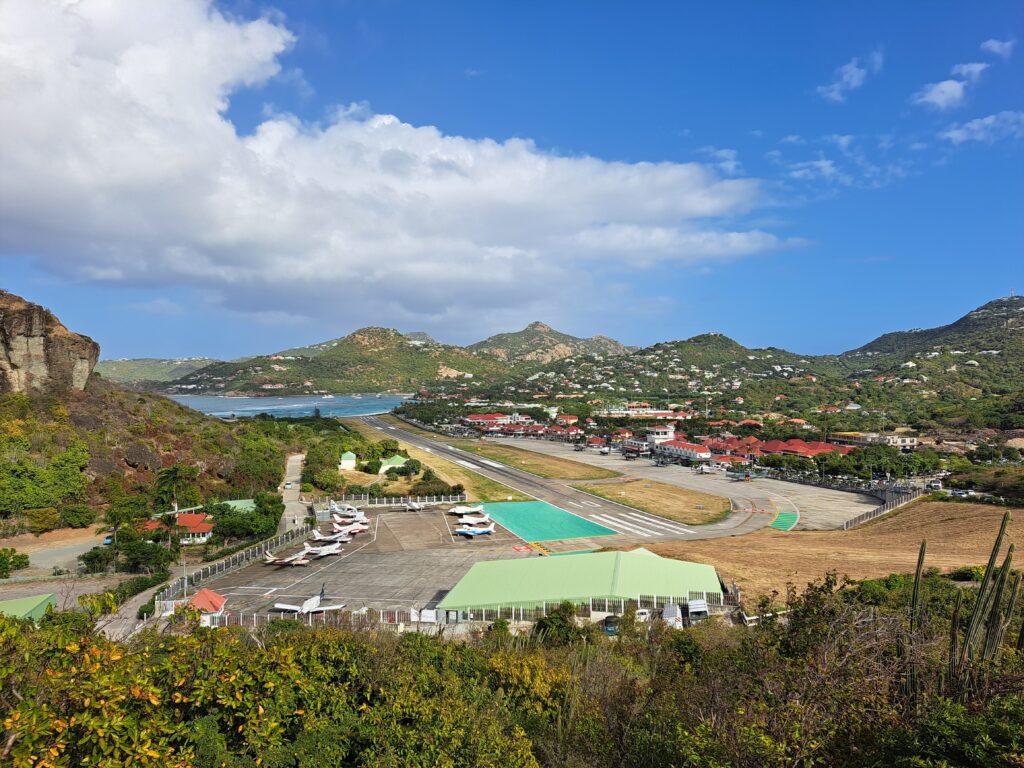
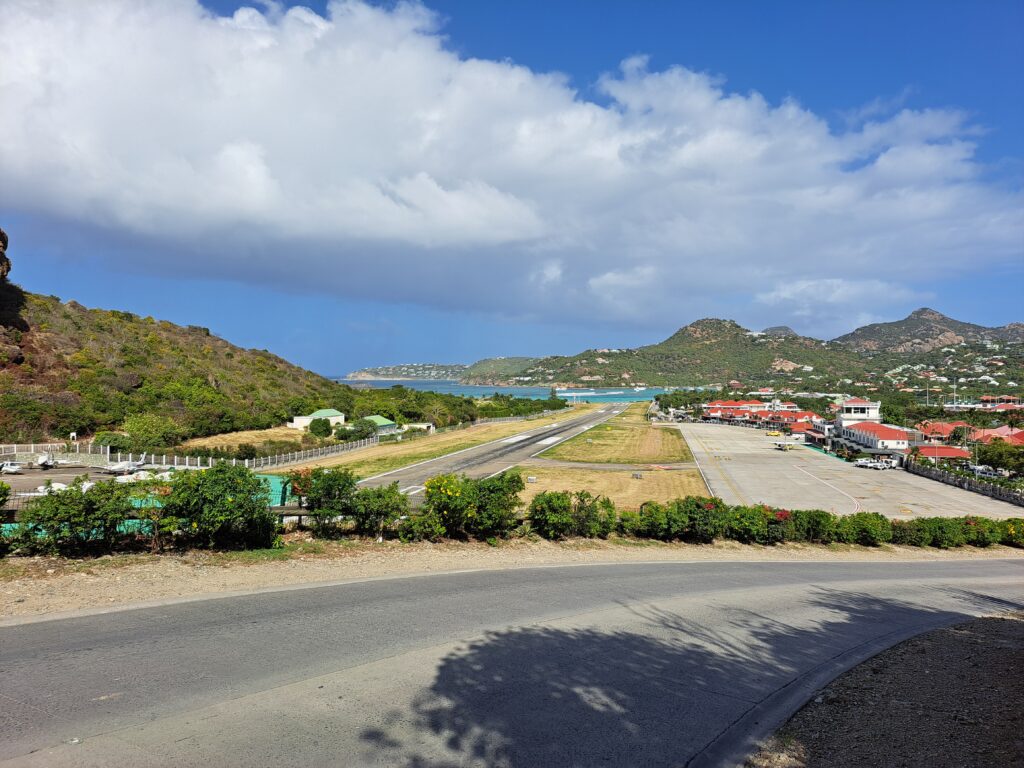
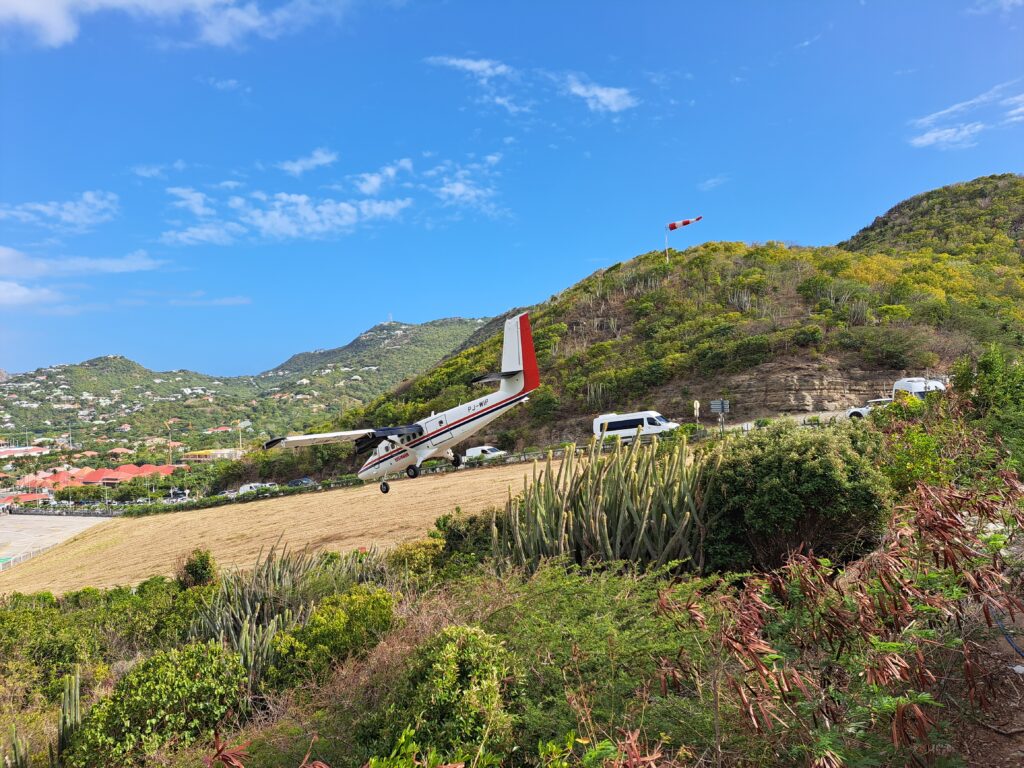
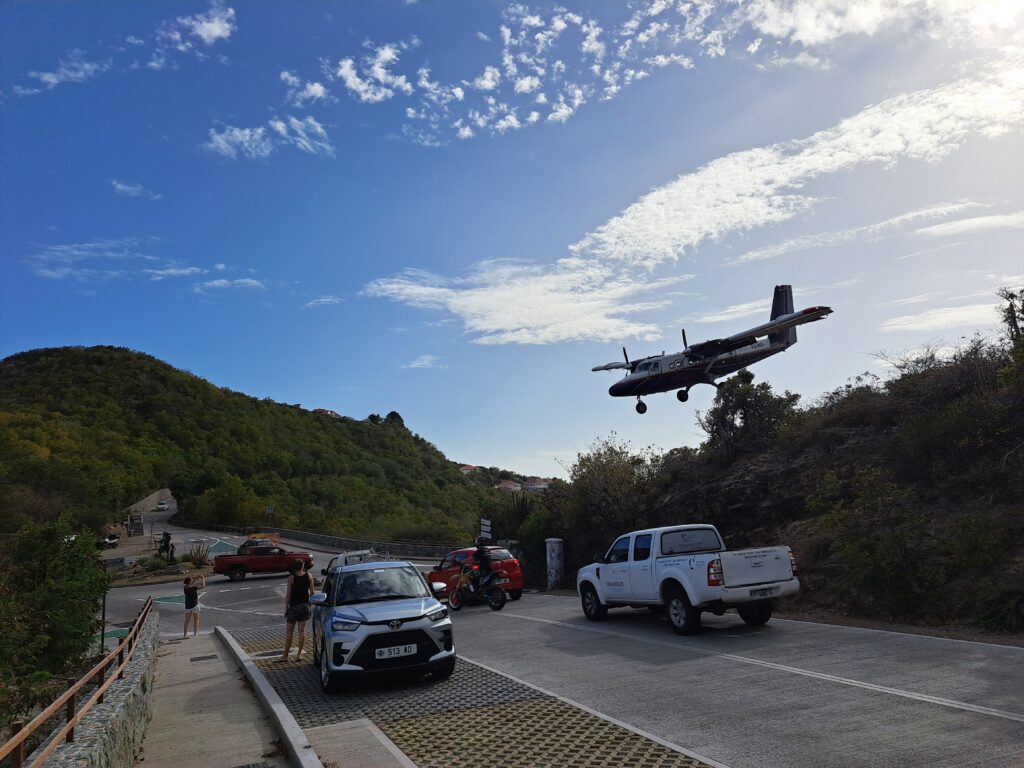
On the way back from Gustavia to Colombier, we walked by the airport, initially to buy some water, but we ended up hypnotized by the show of the planes landing. And what a show ! The runway is short and squeezed between a hill to the west and the sea to the east. Planes land from the west and need to fly over the hill, over the traffic and then plunge to reach the runway.
While our first day on anchor in Colombier was quiet, the anchorage started to get really gusty so we decided to move on towards our next destination, Anse Marigot in Saint Martin. It took only four hours to cover the 20 Nm to Anse Marigot sailing broad reach with Genoa alone. We had winds from 8 to 10 m/s and quite big waves. Sea conditions reminded us a bit of Bay of Biscay (even though we were close from land) but we felt way more comfortable and confident. This moment reminded us how much we learnt about the boat and about ourselves since we crossed Bay of Biscay six months earlier.
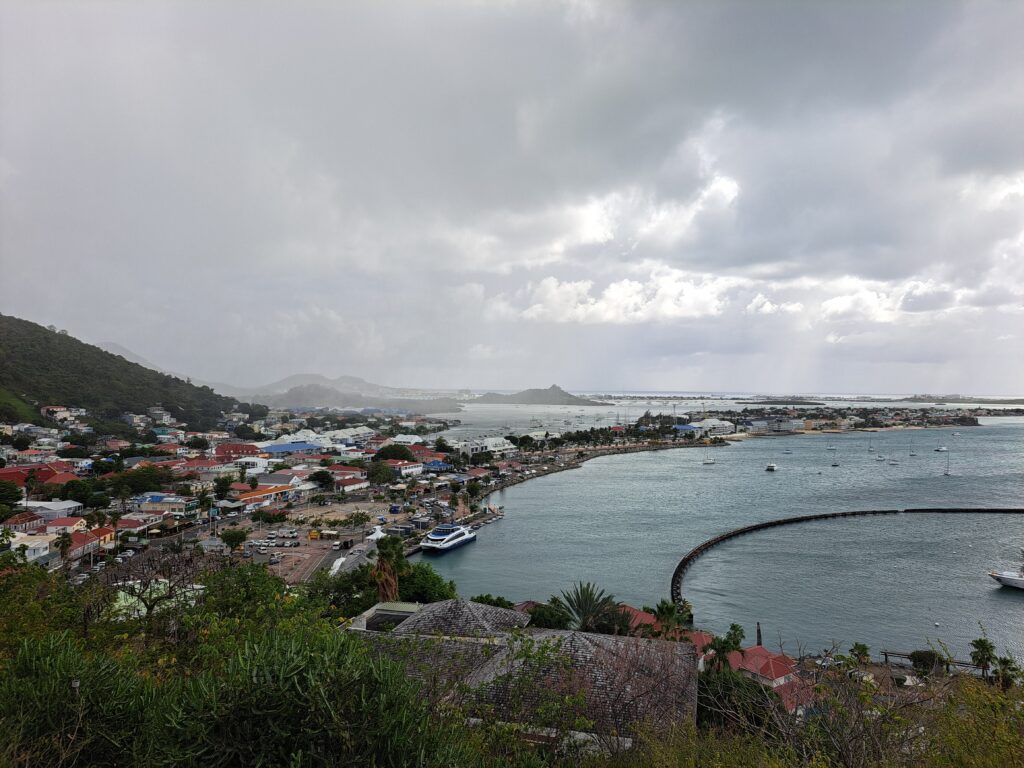
Anse Marigot is the largest anchorage on the French side of the Island. It is not really beautiful but it is practical with a very good dinghy dock to reach land and get to restaurants, supermarkets and laundry services.
We anchored in 5 meters depth and initially dropped 20 meters of chain but with wind blowing regularly over 10m/s, gusts over 17m/s and ferry boats creating big waves behind the boat we ended up dragging. After the first night, we increased the length to 30 meters.
There was a very special boat on anchor in Anse Marigot, a Cayman island flagged sailboat launched as Mirabella V and now simply named M5. The world’s largest single masted sailing yacht. It is approximately 78 meters long (255 feet), 16 meters wide and has a 90 meters tall mast !
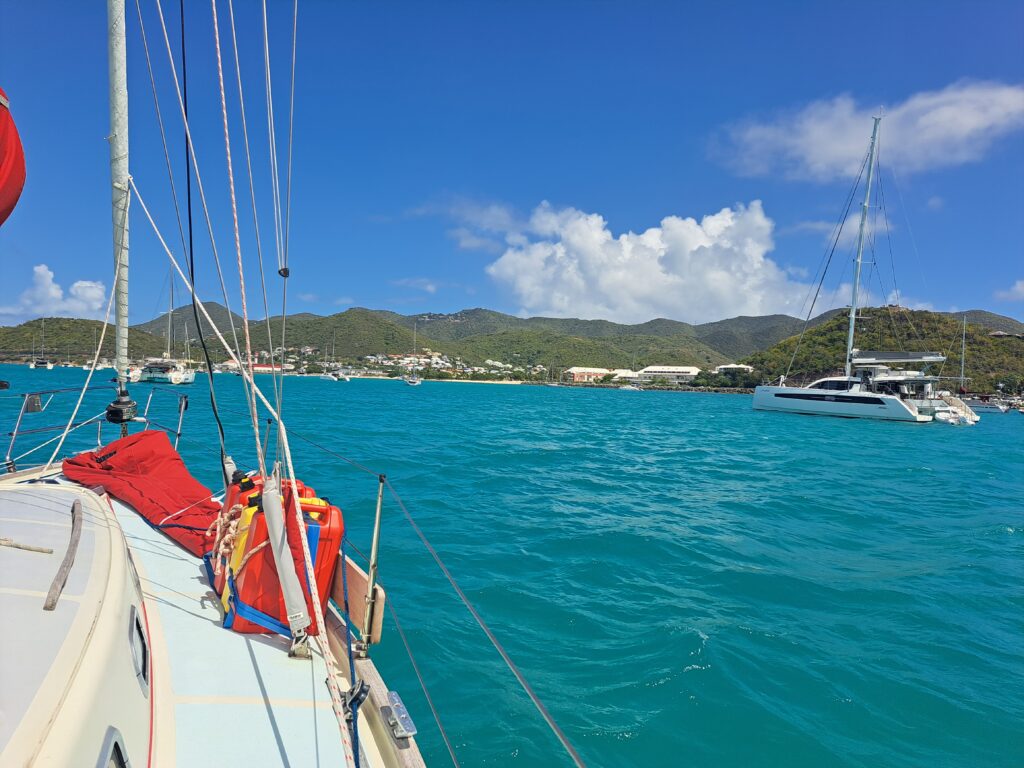
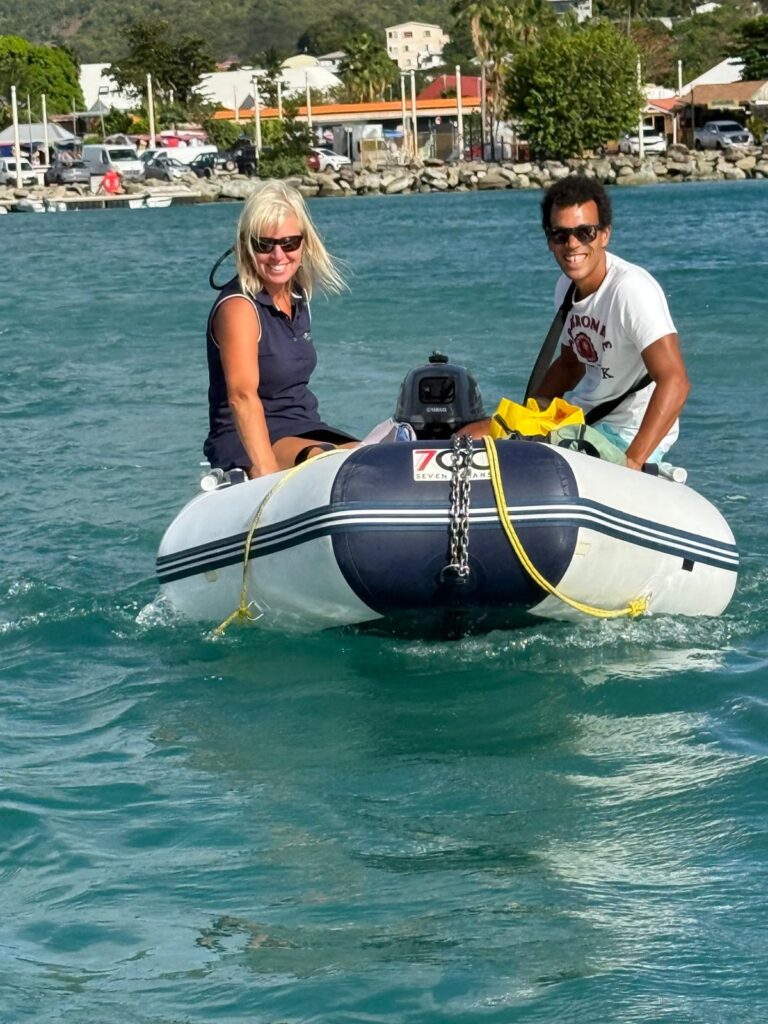
First task on the list at arrival was to do some grocery shopping. There was not much food left in our stocks beyond our safety food when we reached Anse Marigot and we were not really willing to start opening our safety cans that are not extremely tasty. Food stores in Saint Martin propose a quite wide range products so we spent some money to replenish our stocks.
Here are our happy faces with with the dinghy full of groceries !
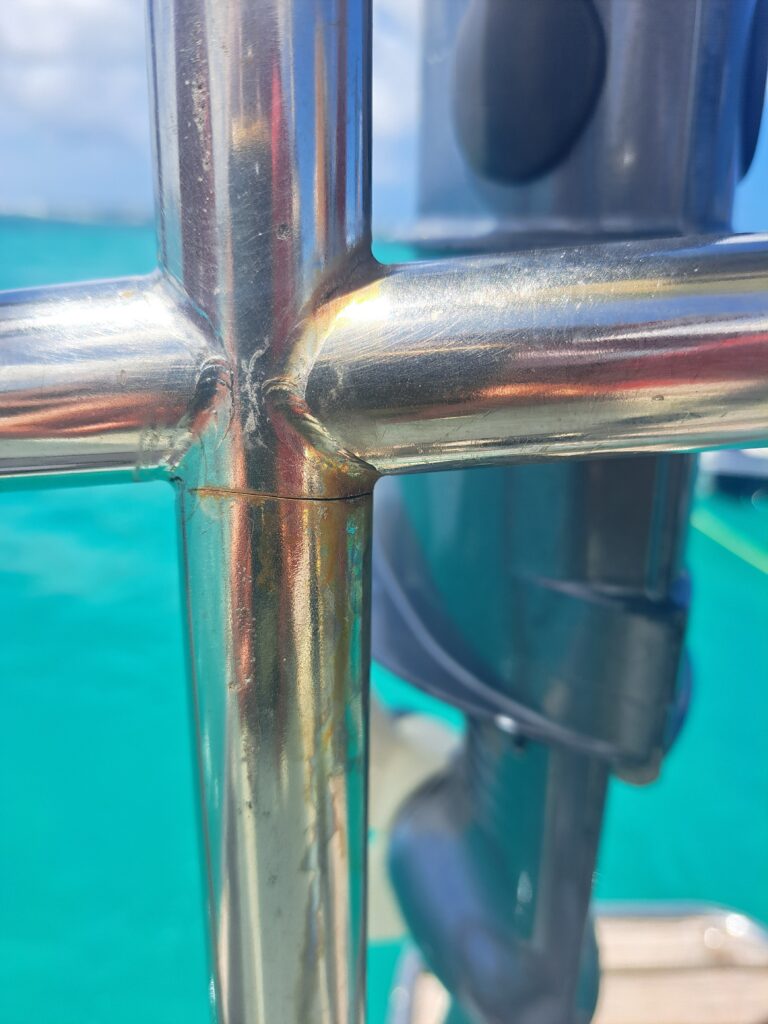
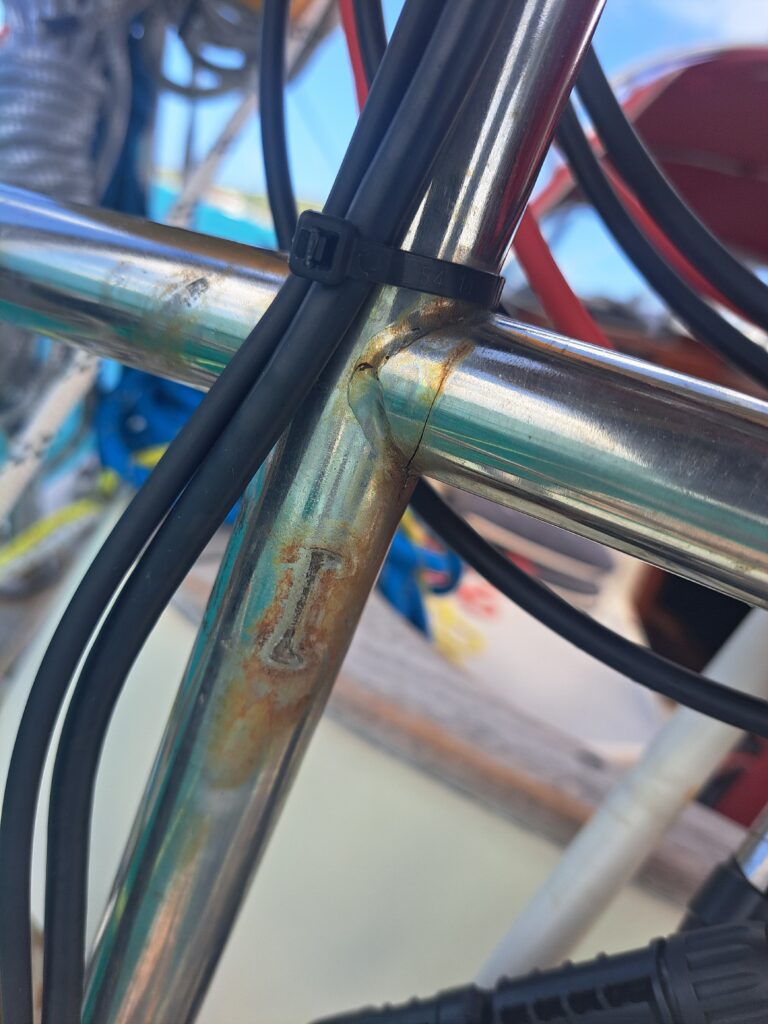
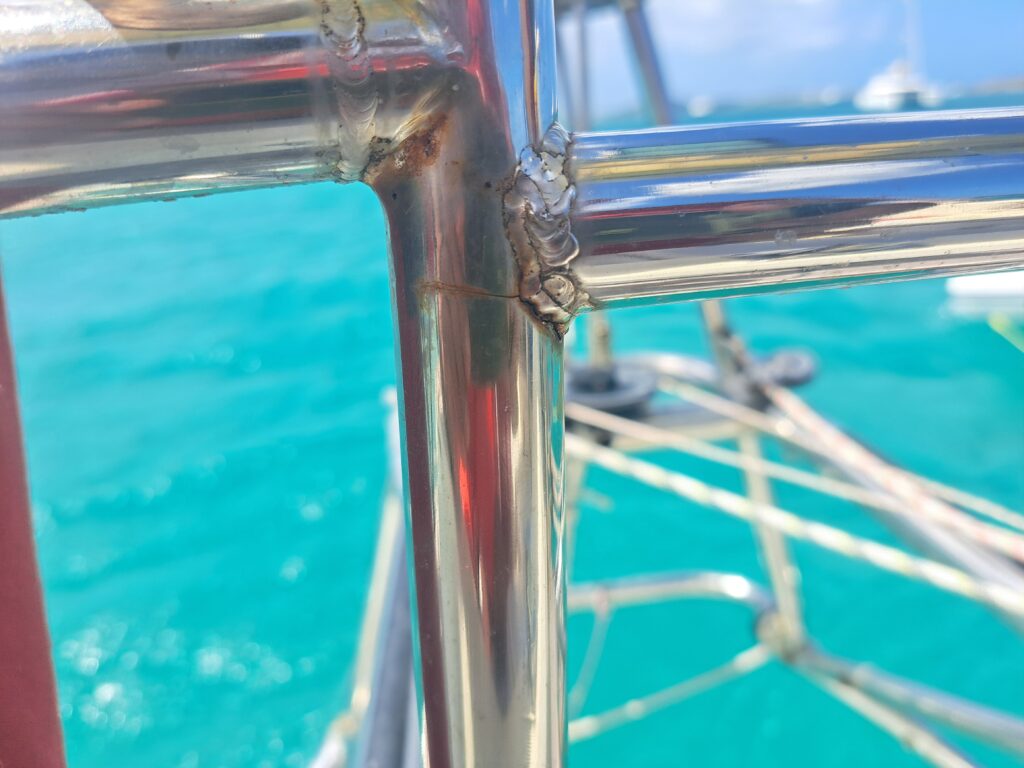
During our stay in Saint Martin, we also checked the availability of boatyards in St Martin to haul out Lovisa for a few works that we need to do prior to make route toward Europe again including painting a layer or two of antifouling and get some cracks we have on the pushpit welded. We launched Lovisa on 28th April 2025. After ten months and more than six thousands nautical miles, the overall conditions of the antifouling was still good but some areas lost paint more than others including the area of the bow thruster, so a touch up would be good. The cracks on the pushpit on the other hand was an issue we kept monitoring for some time. A couple were present already when we left Sweden and new ones appeared on the way. We believe they developed because the solar arch is moving a little bit when we sail. It is connected to the pushpit, so its movements are probably causing mechanical stress on the pushpit. Some old repair weldings could also be seen so that was not a new problem.
We booked the haul out of Lovisa in April after our sailing trip to the British Virgin Islands.
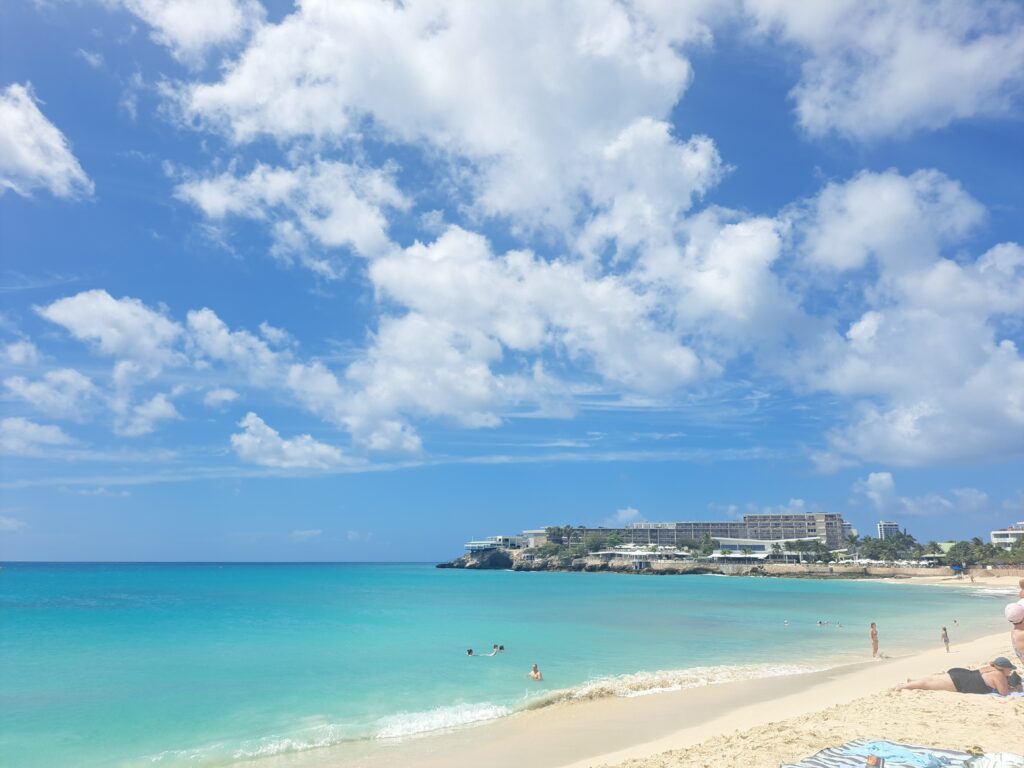
The island of Saint Martin is also very famous for its international airport so we took the opportunity of having a rental car for a couple of days to get there. Planes landing in Sint Maarten Princess Juliana airport usually approach from the west and fly very low over the public Maho Beach prior to touch down on the runway just behind it. That was already very impressive to see, but the real show is when big jet planes take off. When we were standing on the beach we were not more than 100m from the exhaust of the engine that was aligned on the runway for take off. When the pilot pushed the throttle to take off, the jet blast was so powerful that it was hard to stand. We’ve been through some strong winds during our adventure but not that strong ! It was a very funny experience even though it felt quite dangerous. And it is clearly unhealthy to stand behind and engine breathing just exhaust gas ! But ok, once in a lifetime !
On March 10, we left Saint Martin for Virgin Gorda, the nearest island of the British Virgin Islands. Virgin Gorda is 82 nautical miles away and we didn’t want to leave Saint Martin by night or arrive on the Virgin Island by night so we opted once more for a night sailing, leaving Saint Martin in the afternoon to reach Virgin Gorda the next day after sunrise. We started the trip at 4pm. Even though the forecast predicted winds between 8 and 10m/s there was several big squalls in the area and these disturbed the winds. During the first hour we had winds in the back between 3 and 5 m/s with waves around 2 meters. We did not hoist the sails because the wind was not enough to keep pressure in them with waves rolling the boat. They would have just been slapping so we ran on engine waiting for the wind to increase. While going on engine we ran the watermaker to produce some fresh water as we had again very little water left in the tank. A last squall hit us two hours after departure. We took a picture of it when it was still behind us.
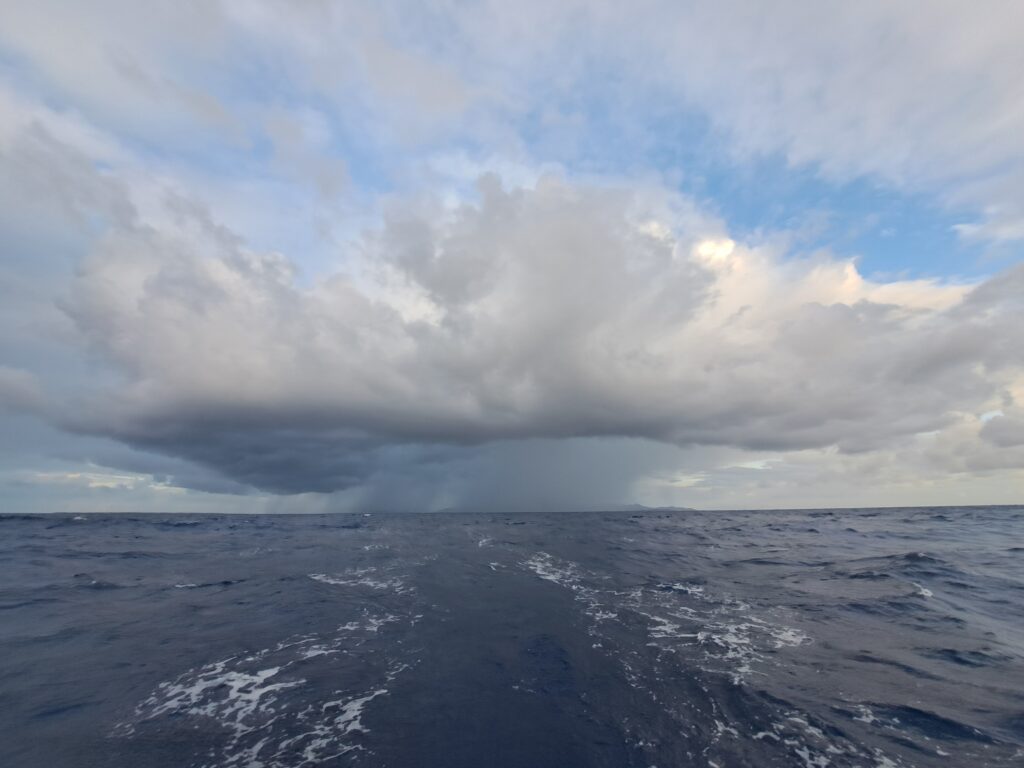
We find this picture quite interesting because it really shows how localized these phenomena are. When it reached us we got winds up to 20m/s for about 5 minutes with heavy rain, then everything went back as it was before. About an hour after this last squall, the sky cleared up and the wind finally picked up to 9 – 11 m/s so we could stop the engine and start sailing. And for the first time since somewhere in the middle of the Atlantic, we had to wear our sailing gears during the night.
We reached Virgin Gorda in the morning during the first hours of day light. On approach we managed to avoid a fishing buoy at the very last moment. We spotted it when it was not more than 15m from the bow of the boat. We had just the time to turn off the autopilot and make a sharp 90 degree turn to avoid it. We passed not more than 2m from it.
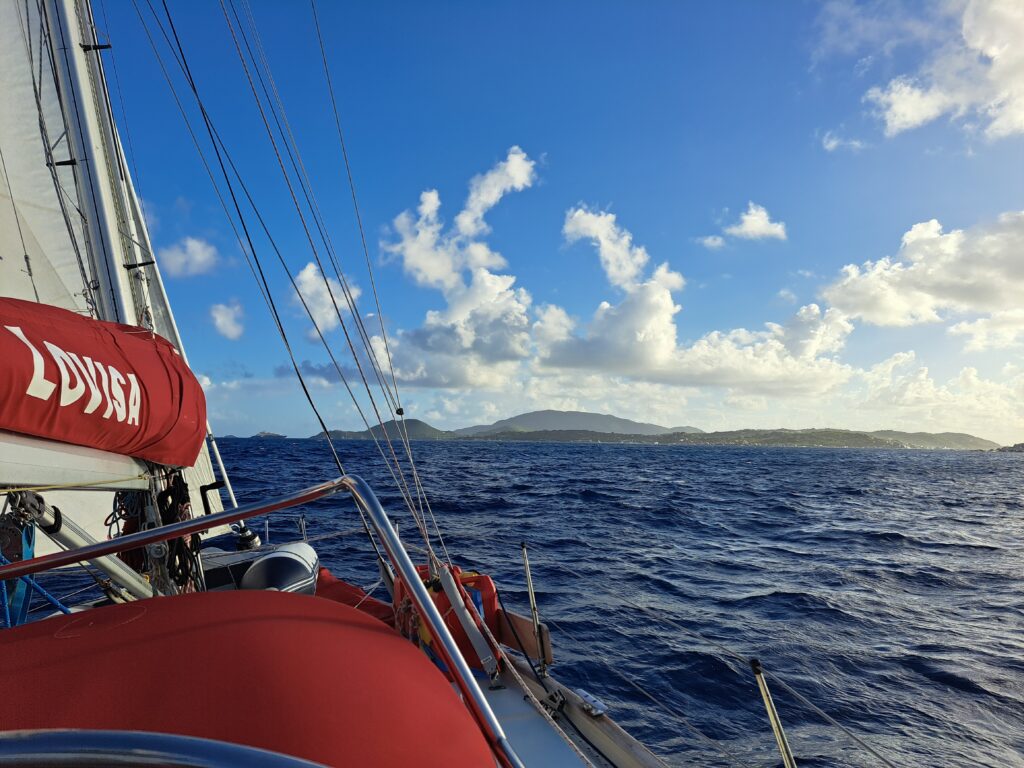
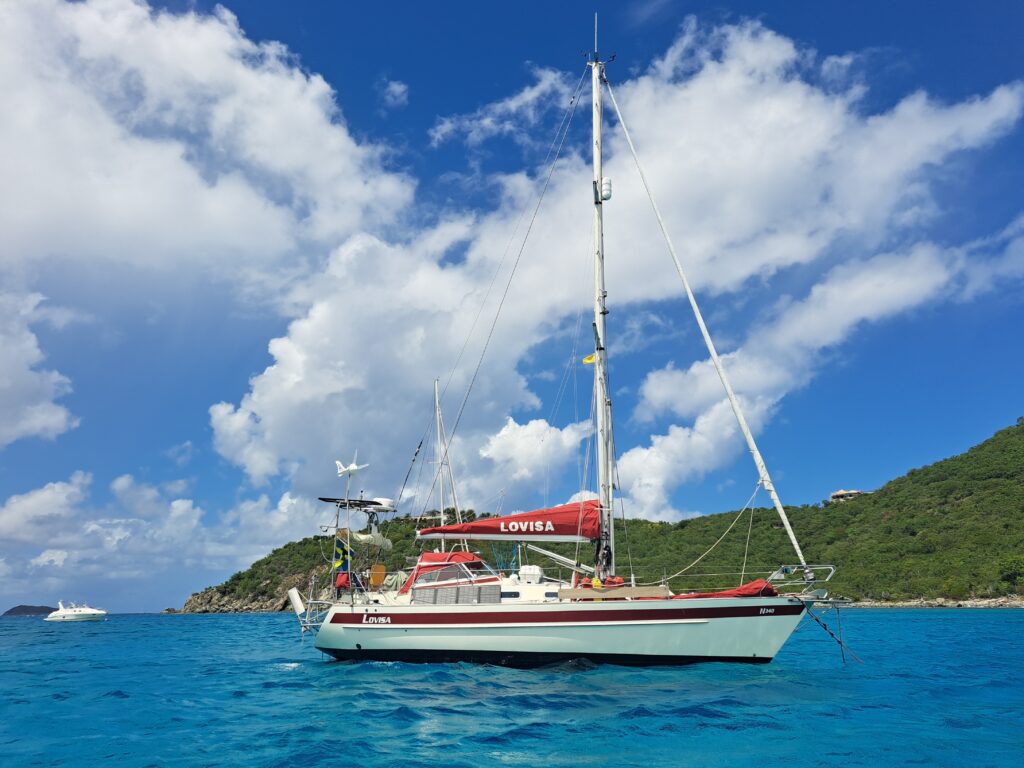
After 16 hours sailing, we anchored in Saint Thomas Bay, in front of Spanish Town on Virgin Gorda in a crystal clear water. We approached the anchorage on engine but we noted that the motor had a different noise and we were going slower as usual. A short inspection of the propeller revealed that the issue was only some sargasso that got stuck around the propeller and these could be easily remvoed.
Trop bien, bravo pour le journal de bord ca fait rever, coucou de Finspång
Salut François ! Merci ! On y met le coeur pour écrire le journal de bord. On espère que notre aventure pourra inspirer d’autres à aller réaliser leur rêve! A bientôt a Finspång ! Emilien et Maria