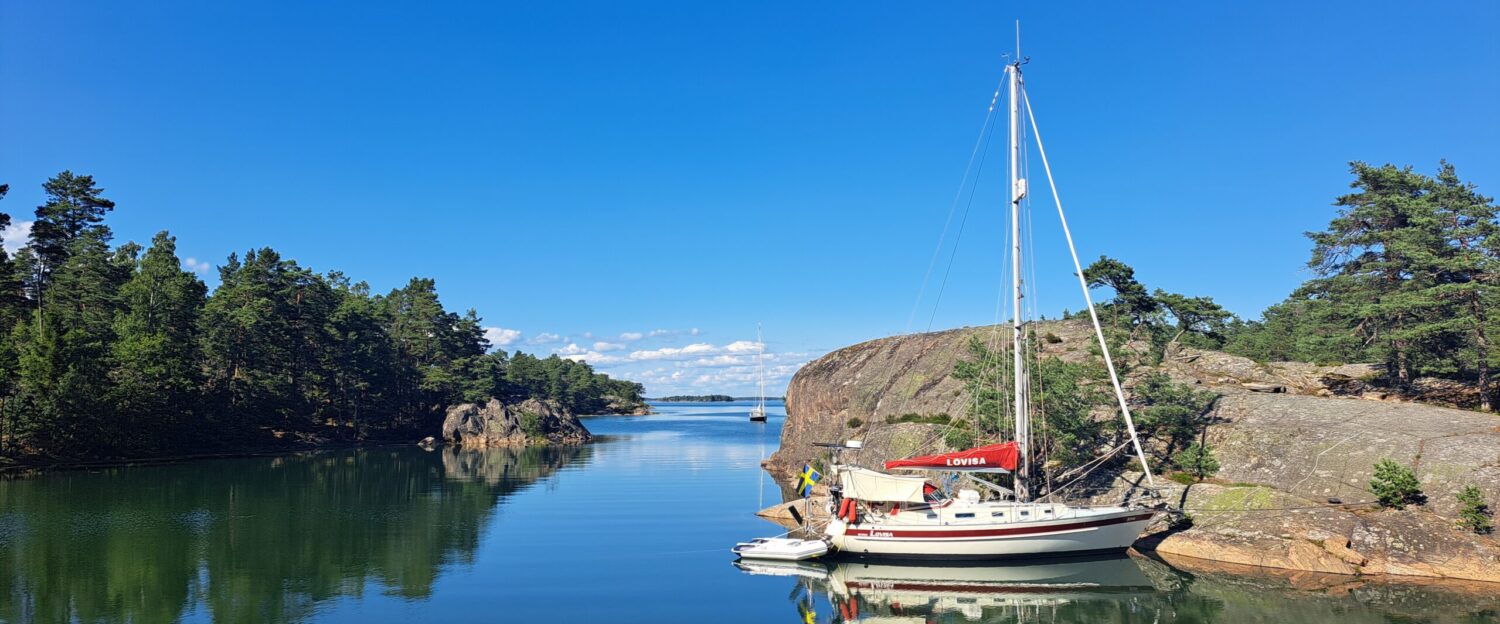
We left Saint Pierre and at the same time Martinique on February 2 toward the neighboring island of Dominica. A new land to discover after more than two weeks in Martinique.
We crossed Dominica Channel that separates Martinique and Dominica sailing beam reach with winds between 9 and 13 m/s that propulsed Lovisa over 7 knots. Waves in the passage were not more than 1.5 m making the passage very enjoyable. We covered the 52 Nm between Saint Pierre and Prince Rupert Bay, in front of Portsmouth, in just ten hours.
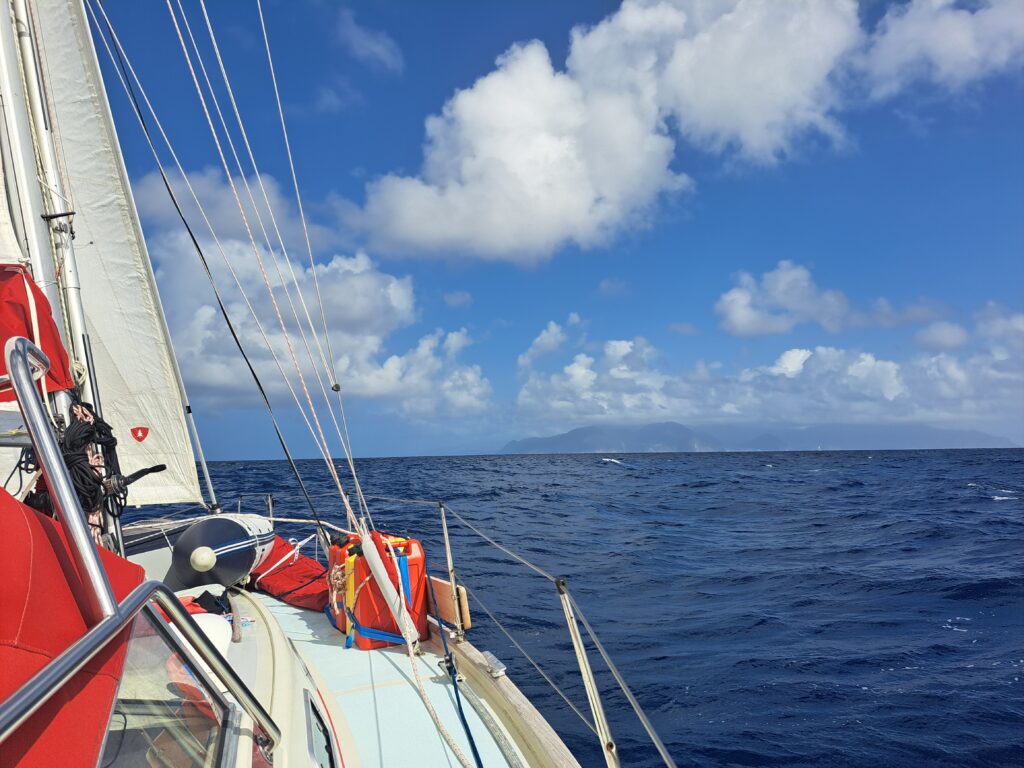
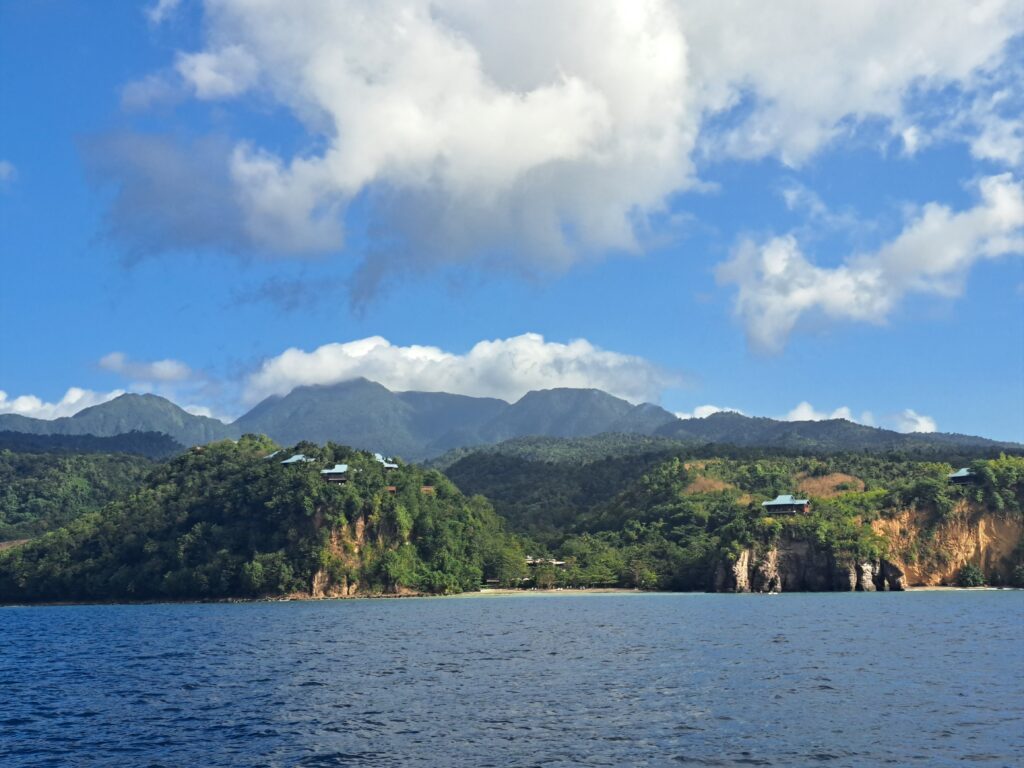
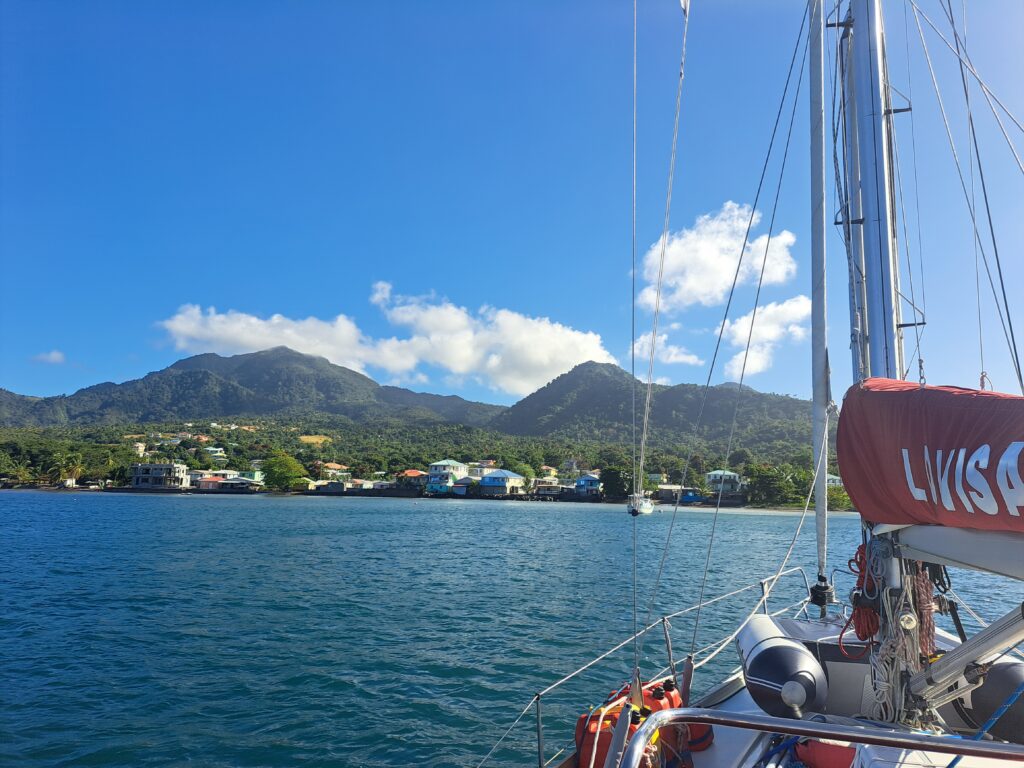
And again, new country, new flag on starboard side !
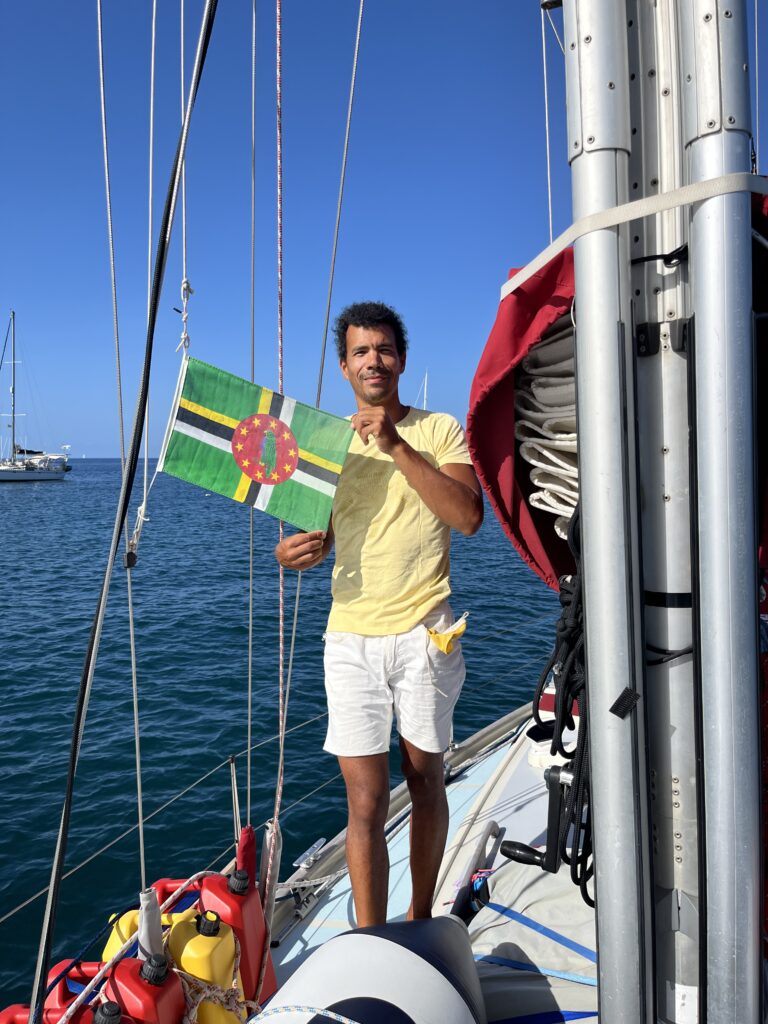
After a month and a half of snorkling and enjoying the beautiful beaches of the Grenadines and Martinique, we were very enthusiastic to discover Dominica. Dominica is not really known for the white long sand beaches, but rather for the beauty and richness of its interior nature that earned it the nickname of “Nature Island”.
In Dominica, instead of renting a car and visiting the island by ourselves, we chose to take guided tours via P.A.Y.S., the Portsmouth Association for Yatch Security, who arranged tours for us around different spots on the island and shared with us the passion for their country, their culture, history and ambitions.
Interesting fact: P.A.Y.S. was created in 2005 by the locals following robberies on pleasure yachts. One in particular marked a turning point: after the robbery happened, the victims informed about their misfortune via their VHF and recommended other yachters to leave the bay. And many boats actually left the anchorage. The voice spread out amongst yachters and many started to simply snob that anchorage. That was a true catastrophy for all the honest tourist guides, restaurants and all the honest people who make their living from tourists visiting Portsmouth. The locals decided therefore to ally to ensure this would never happen again and started to patrol the anchorage day and night for protection, reassure yachters and invite them to come back to Portsmouth. Eventually the association P.A.Y.S. got created. The result is safety in the anchorage and above all a great atmosphere. We felt very welcome and they really do their best for yachters to feel so; on our third day in the anchorage, we joined one the BBQs on the beach that they organize every wednesday and sunday for yachters. That night, they exceptionally invited a live band to sing reggae music. This was also the occasion socialize with other yatchers including our friends sailing S/Y Anne Mon that we last met in Cascais.
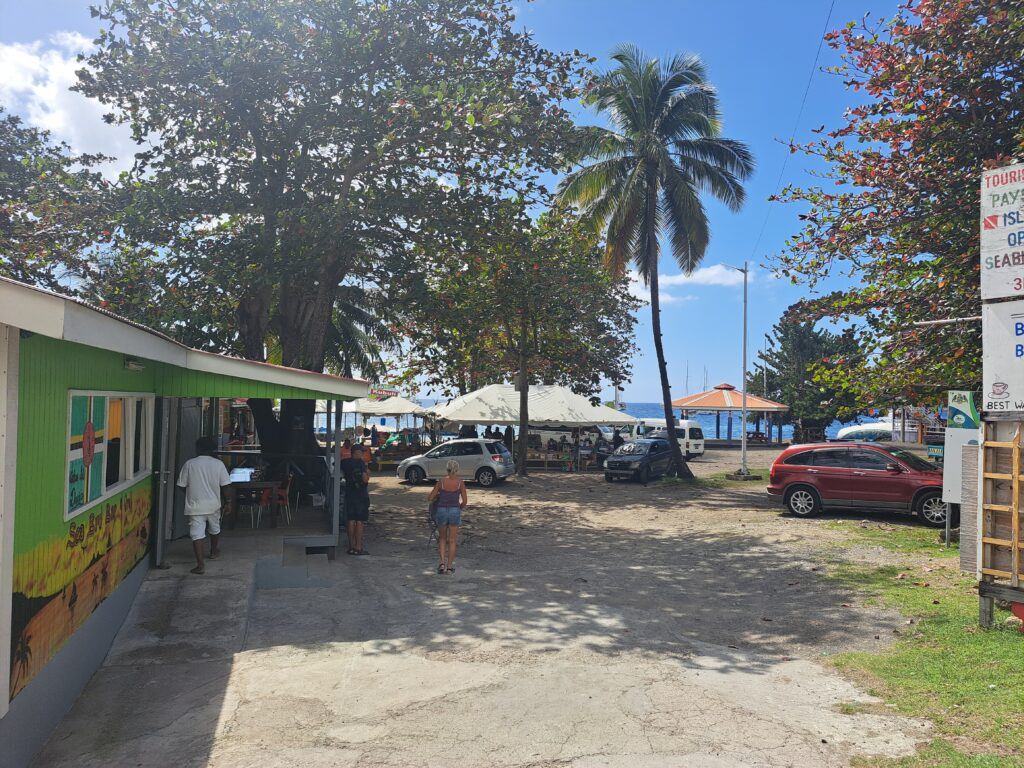
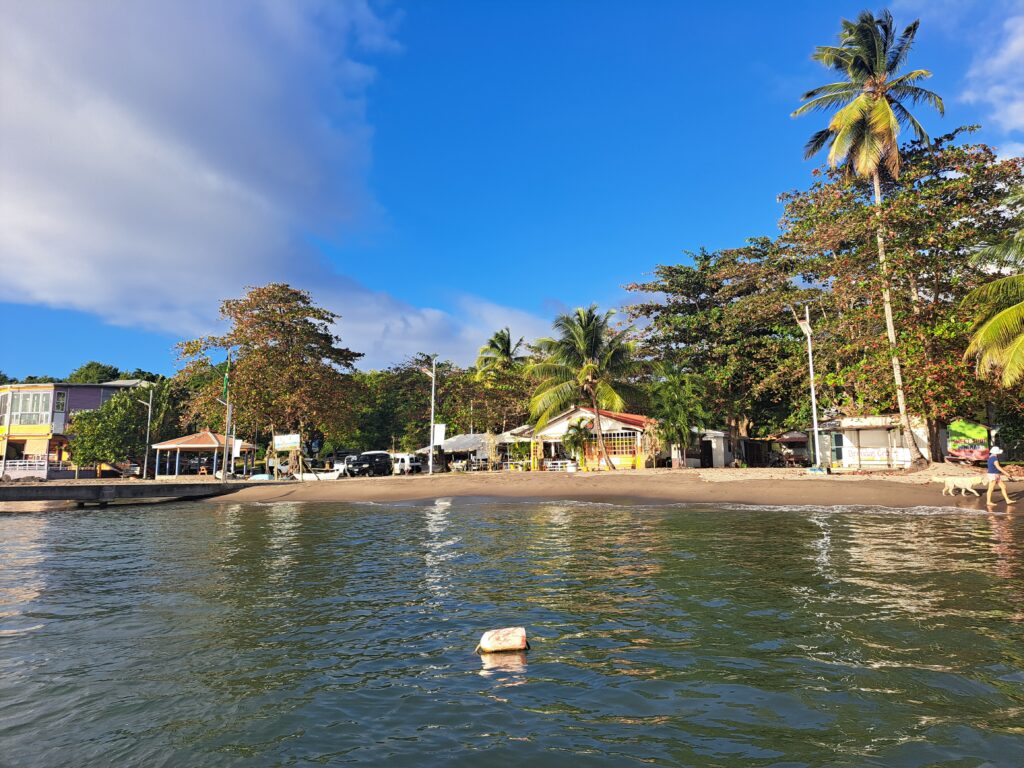
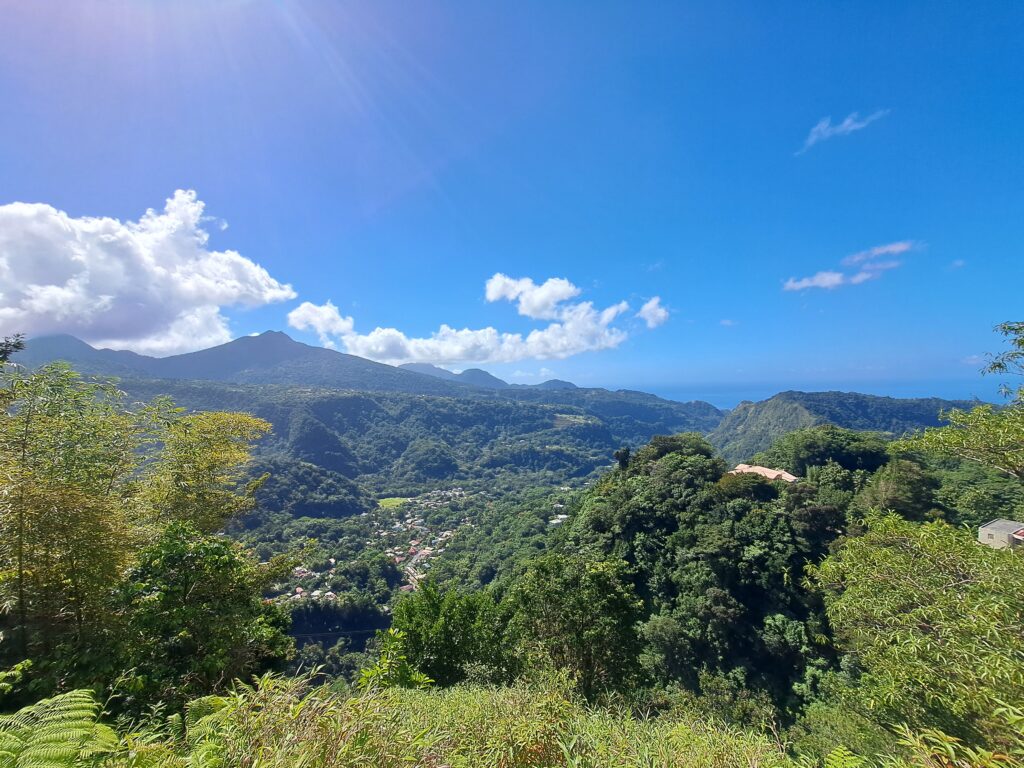
With our guides Kenneth Gussie who is also a musician, Alexis Faustin and Eric, alias Spaghetti and with the company of our friends sailing S/Y Marey and S/Y Alba, we visited some of the most iconic landscapes and nature of Dominica.
Roseau and the Roseau valley
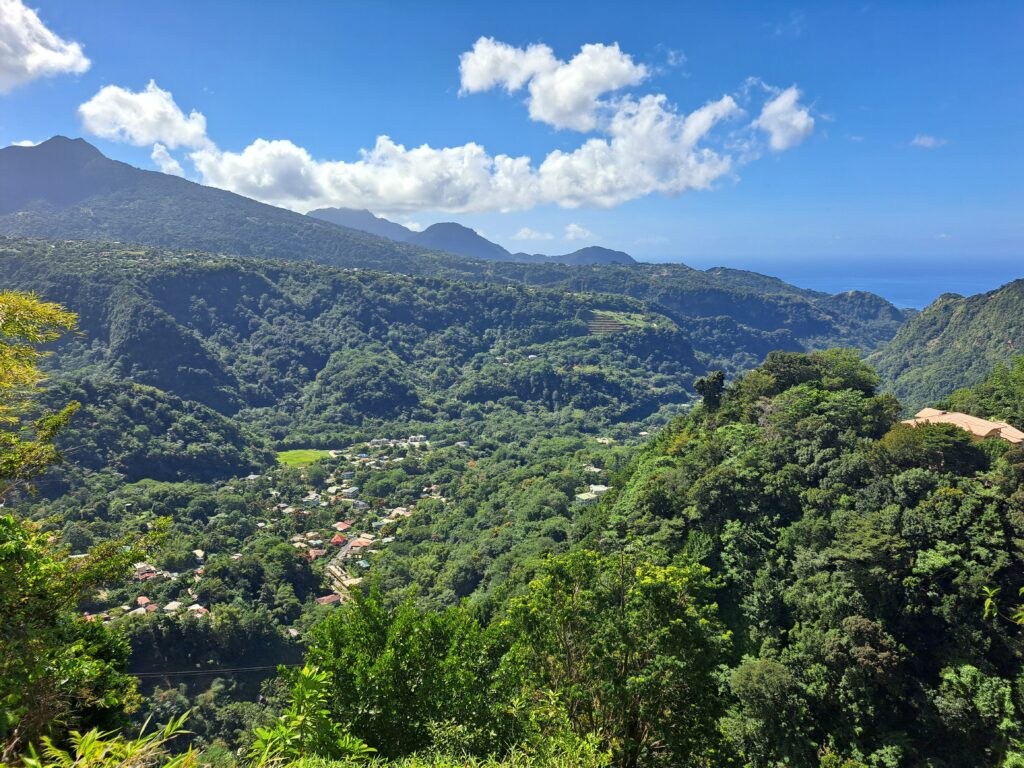
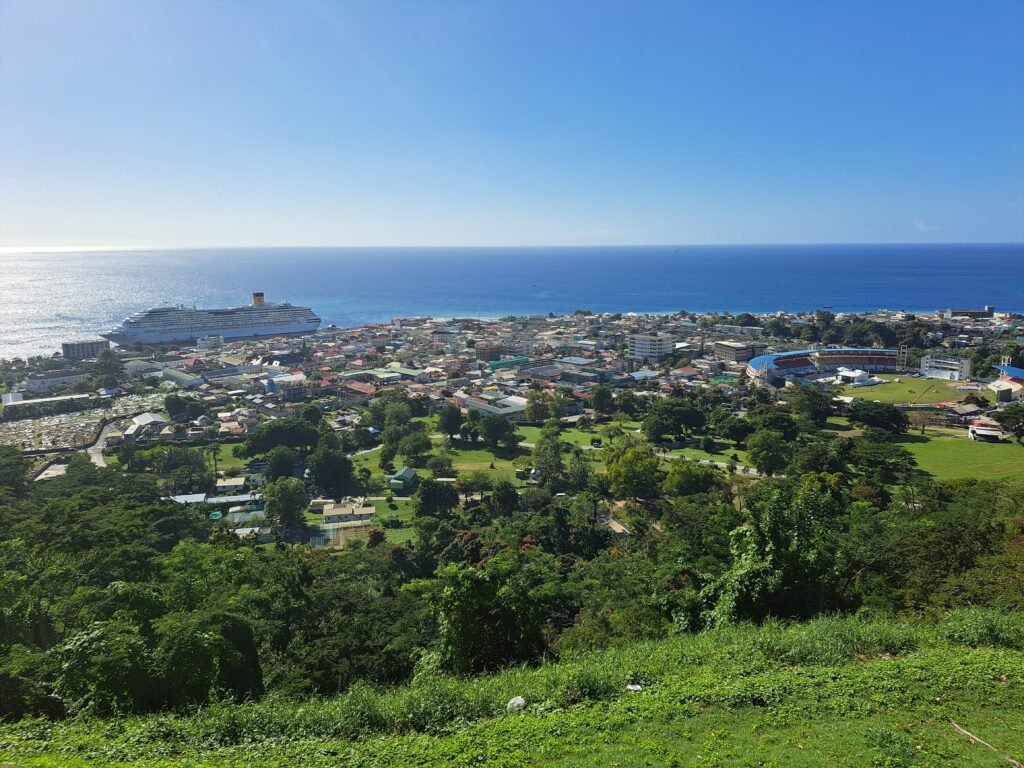
Roseau, located on the south west coast of Dominica, is the capital city of Dominica. While initially it was Portsmouth that was chosen as the capital, the capital was moved to Roseau due continuous outbreaks of malaria and yellow fever in Portsmouth, which is surrounded by swamps. Malaria and yellow fever have been completely eradicated in Dominica and Portsmouth is completely safe these days, but the capital city remains Roseau.
A striking thing when visiting Dominica is the mix of cities with English names (like Portsmouth), cities with French names (like Roseau) and others with indigenous names. This mix is the result of the colonial history of the island and the long dispute between the French and the British to control the island over the indigenous people, the Kalinago, who inhabited the island before the arrival of Europeans.
Trafalgar falls
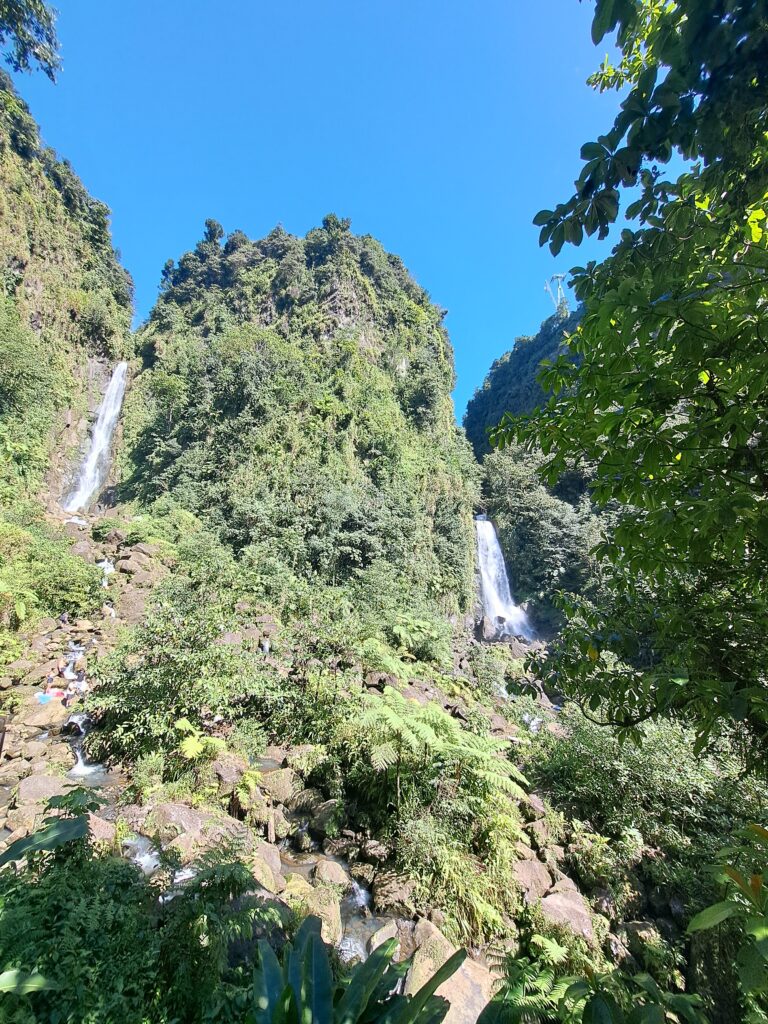
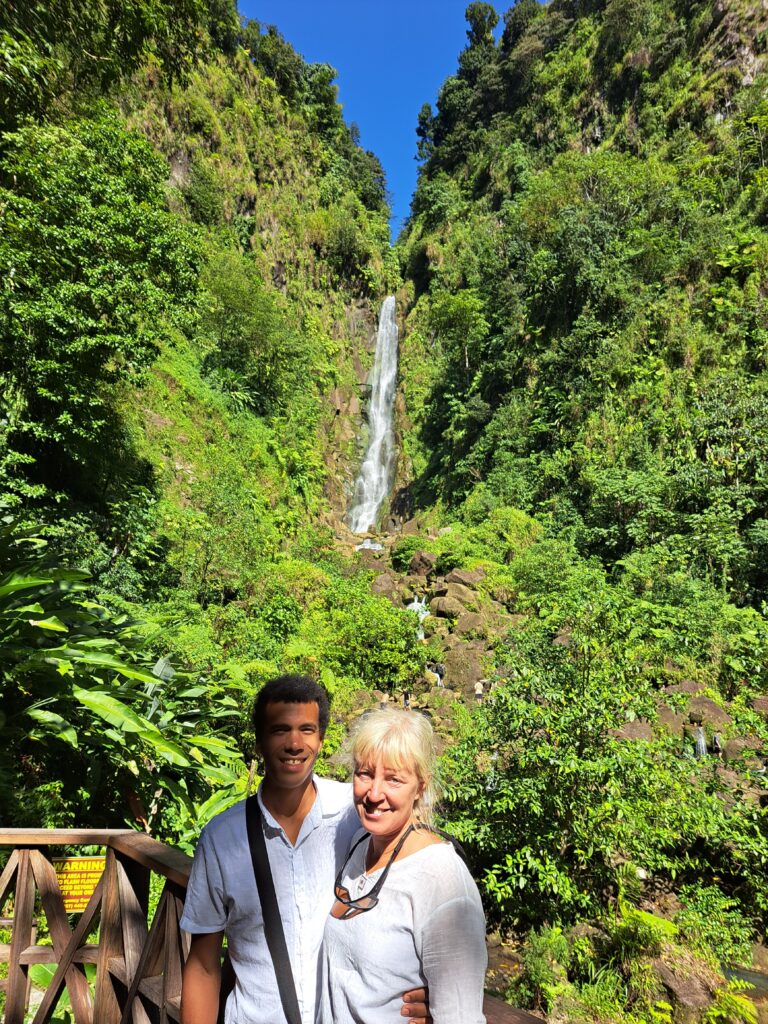
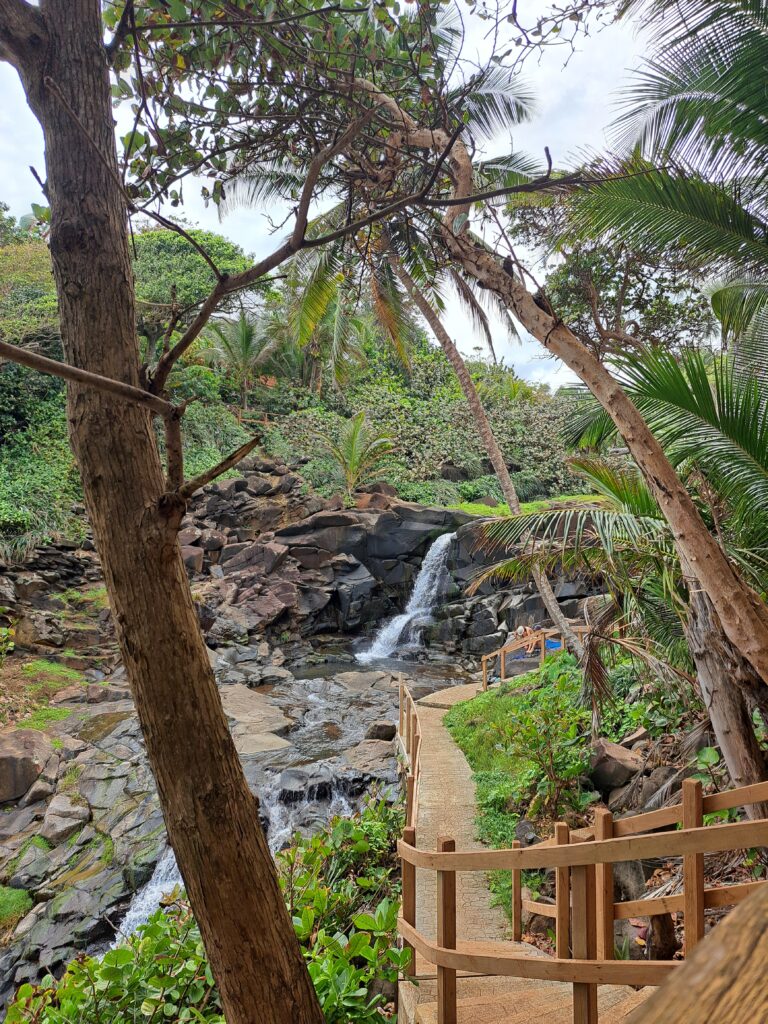
Trafalgar falls are twin waterfalls located in Morne Trois Pitons National Park. Dominicans gave the name of “Papa” to the left one and “Mama” to the right one. Papa is about 38 meters high and Mama about 23 meters.
Titou Gorge
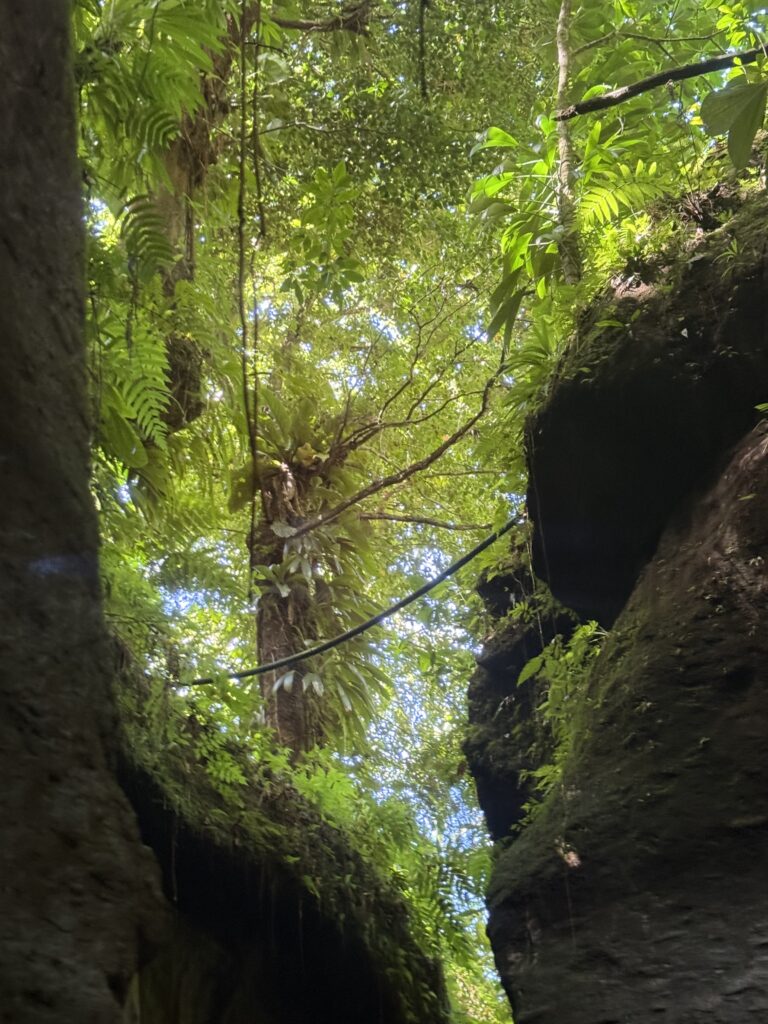
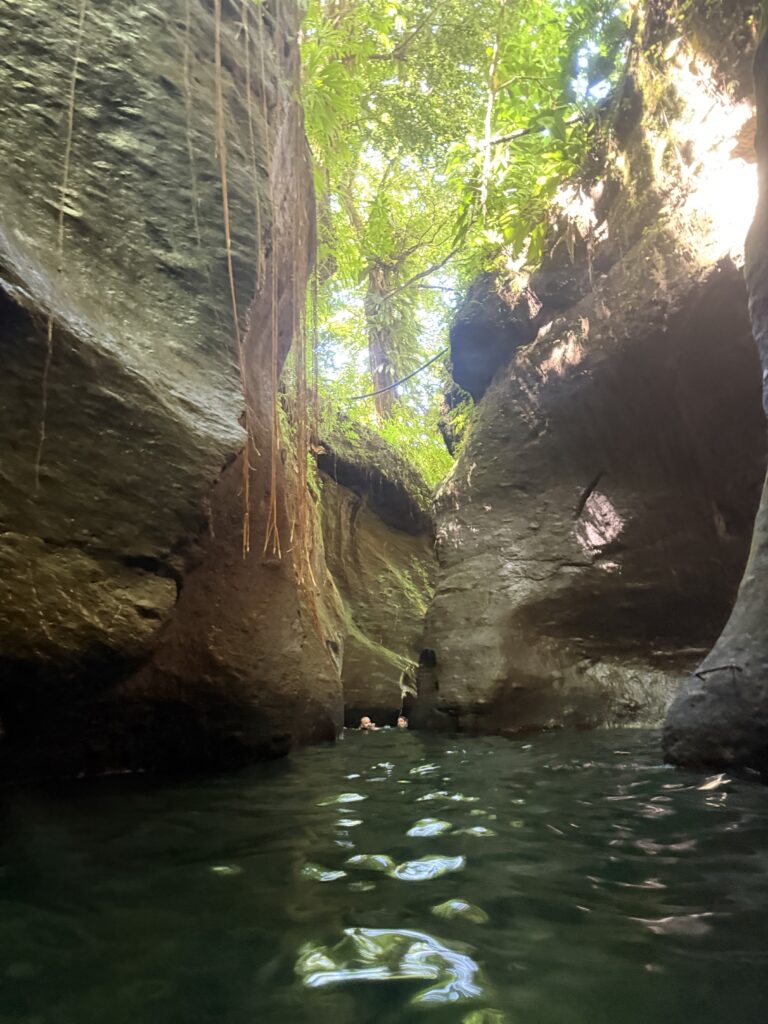
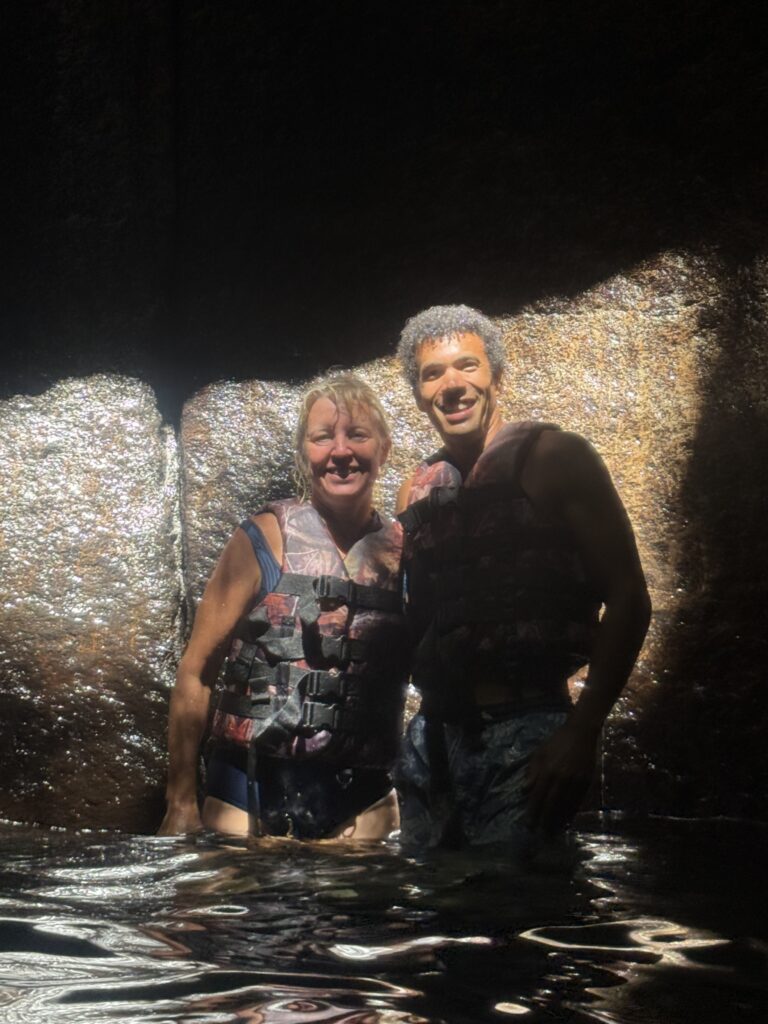
Titou Gorge is a natural canyon and swimming hole carved out through the years by a continuous flow of water coming from the mountain. Swimming the canyon upstreams leads to a hidden water waterfall.
Fruit plantation on the way to Syndicate falls
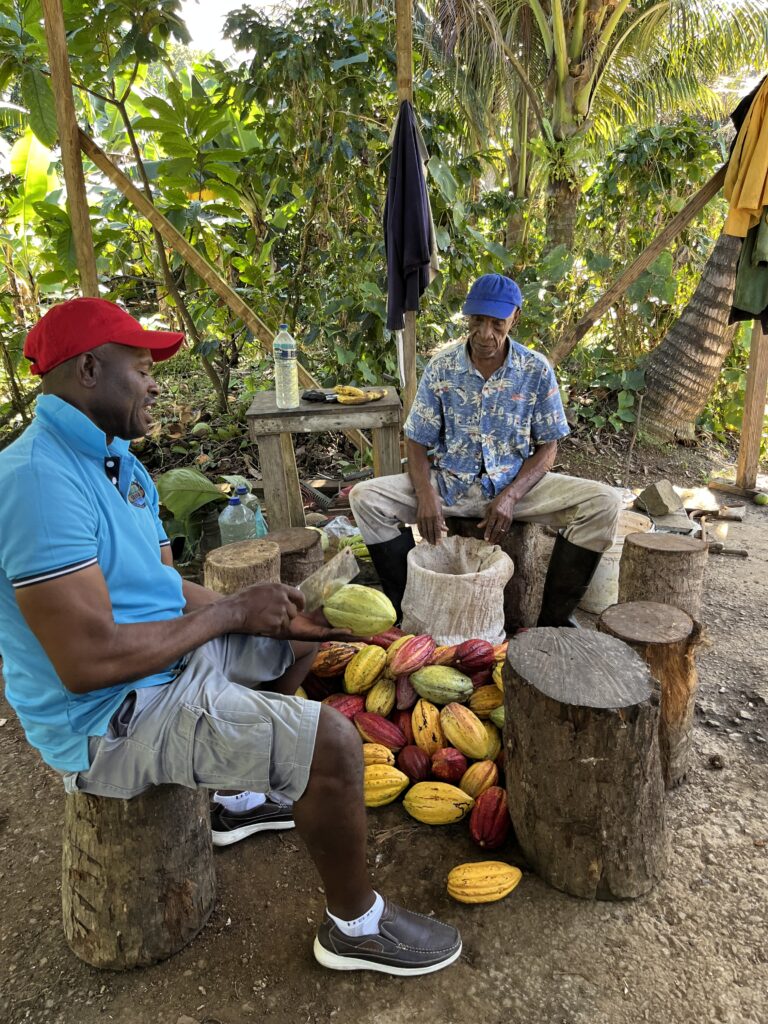
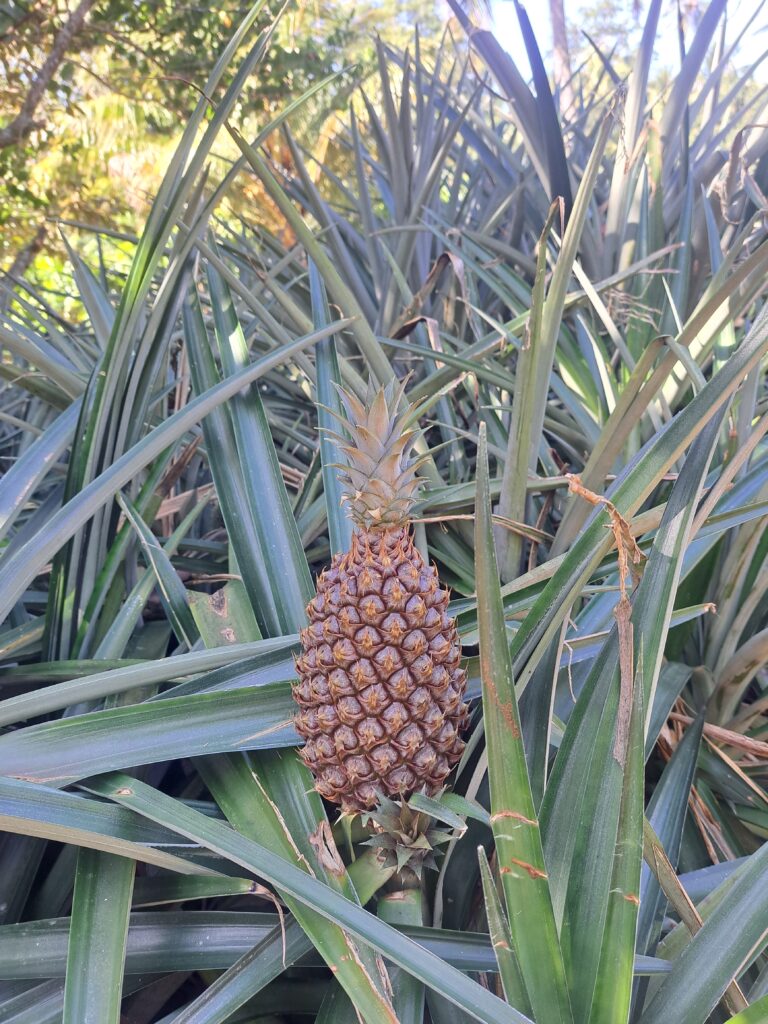
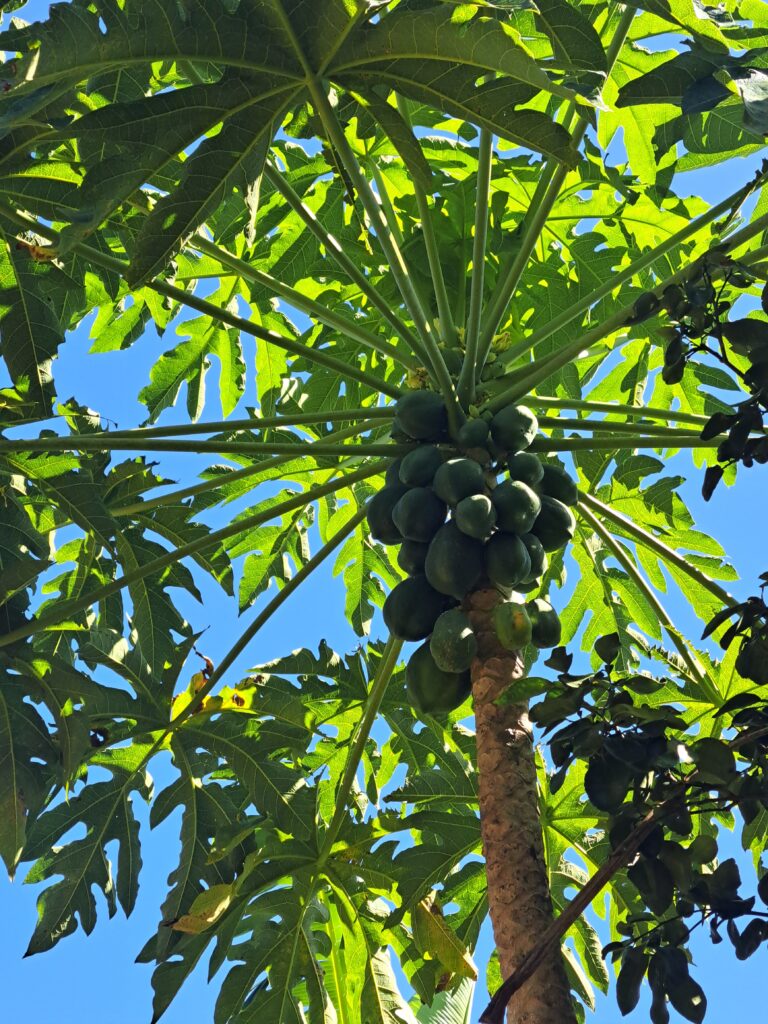
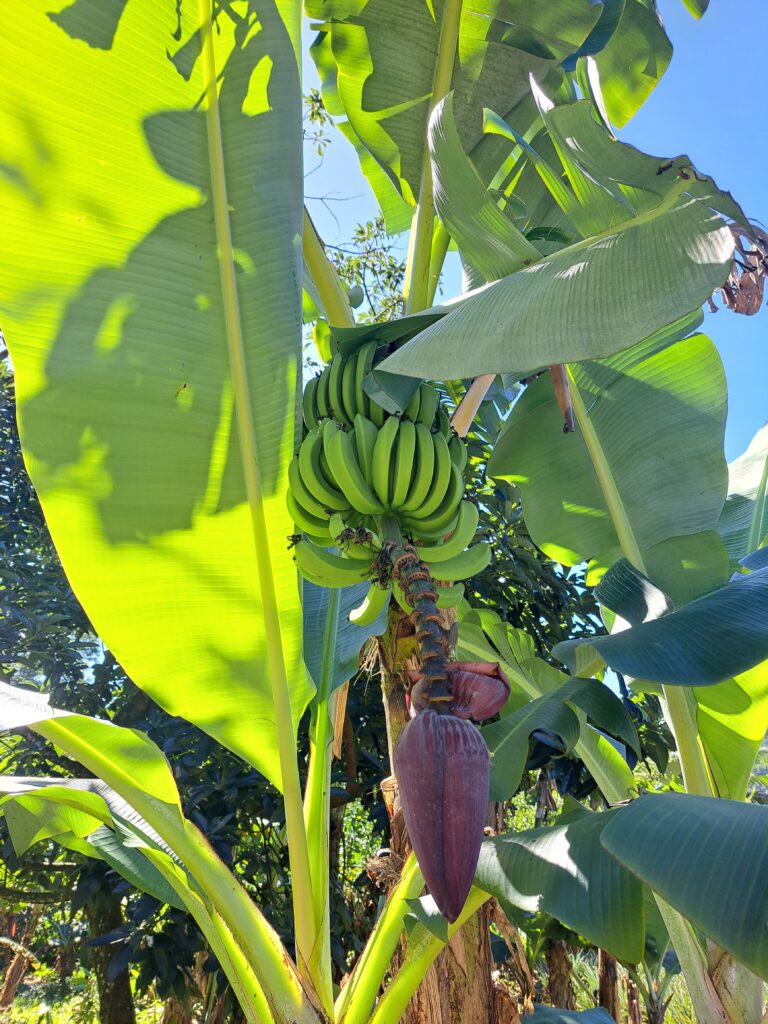
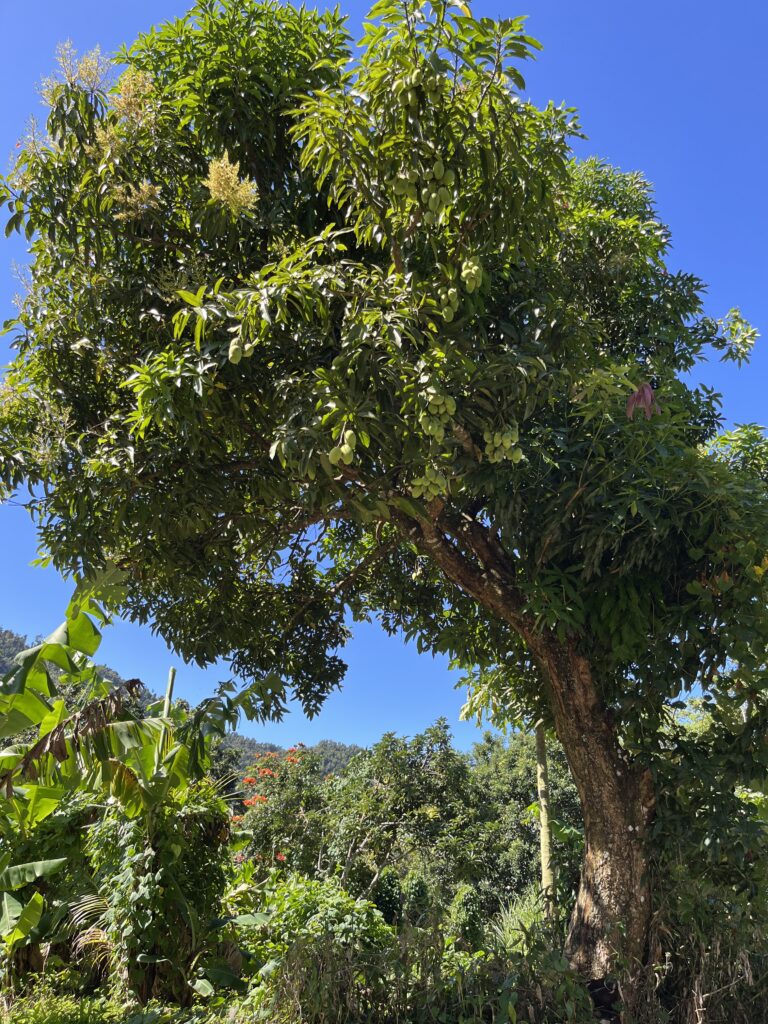
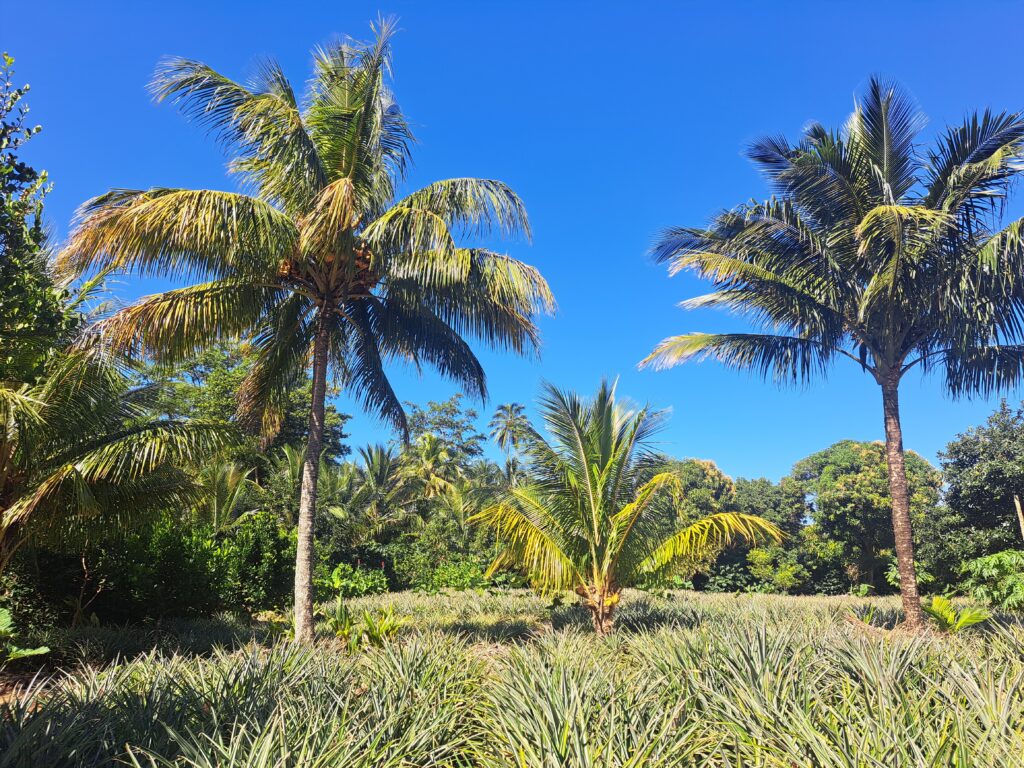
On the way to Syndincate falls on our second day, we stopped by a fruit plantation owned by a man as young as 93 years old still working happily in his plantation where he cultivates tropical fruits like cacao, grapefruit, bananas, pineapple and goyave. His secret ? Drink only spring water and green coconut juice that he offered also to us.
Syndicate falls
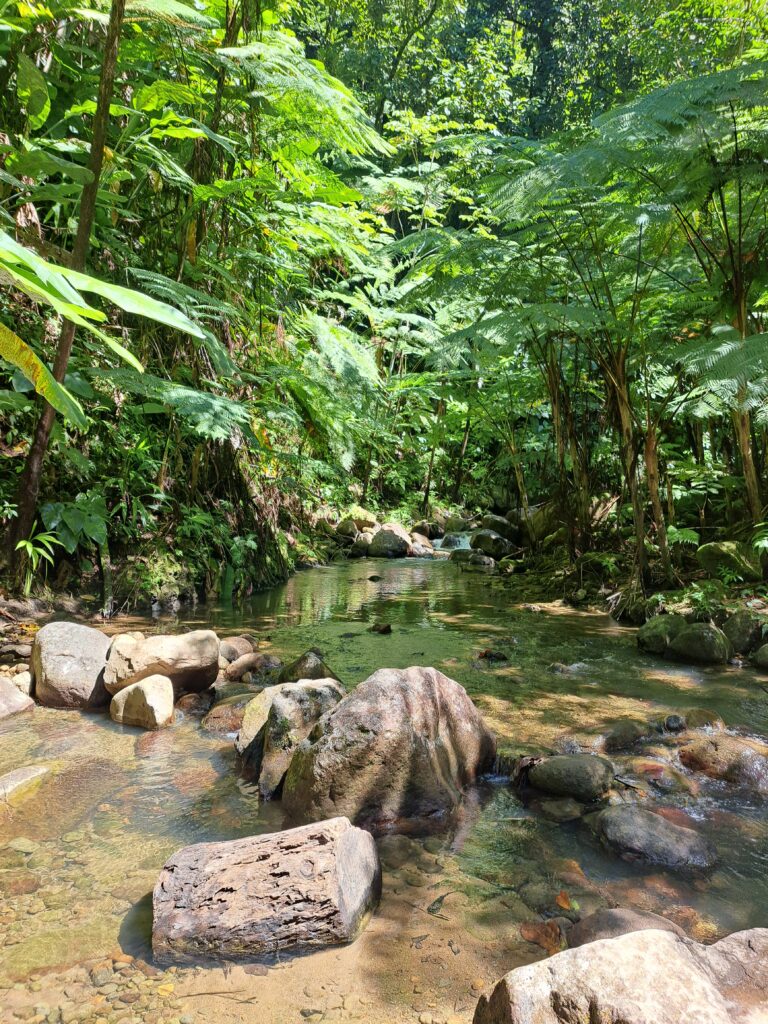
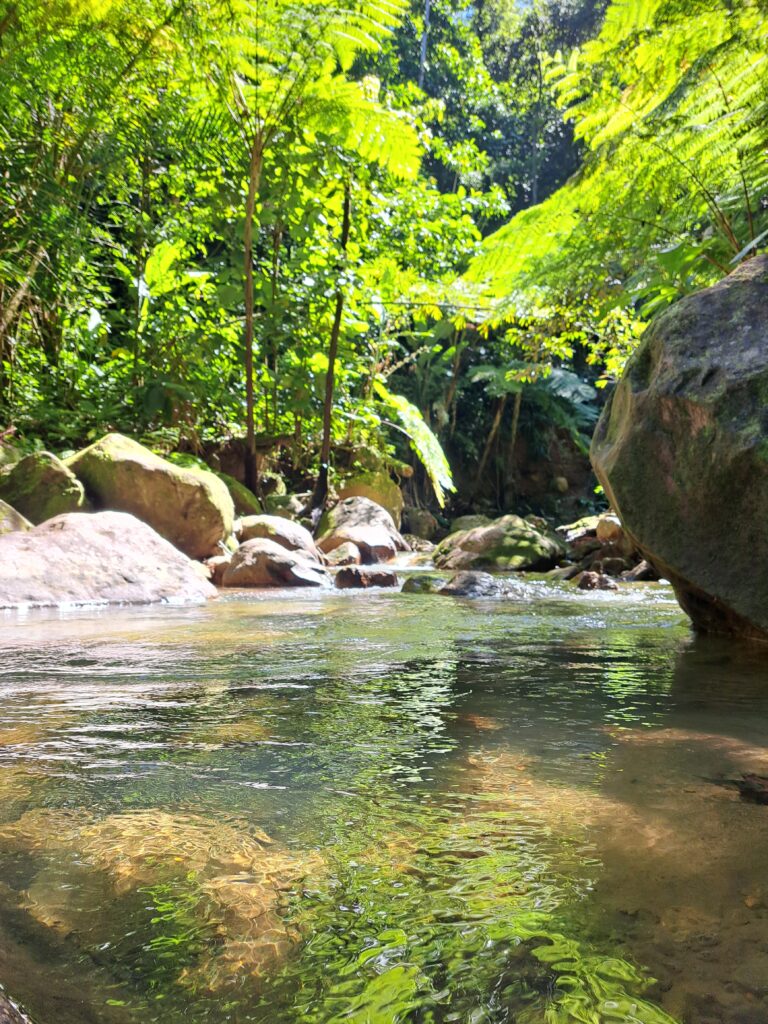
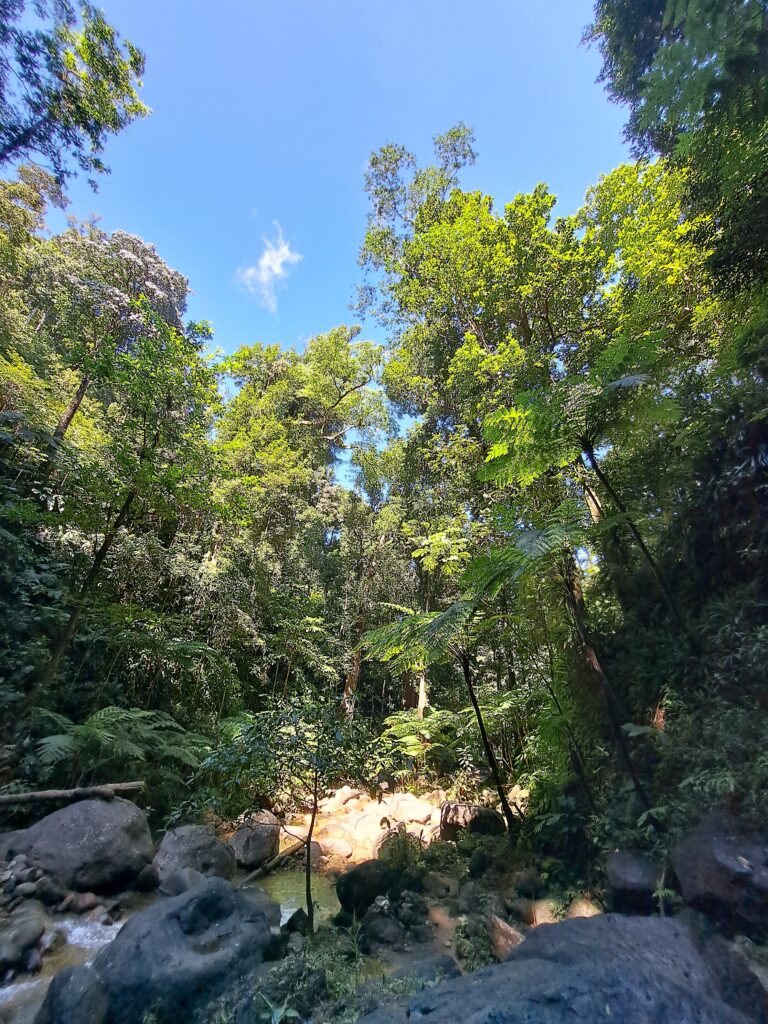
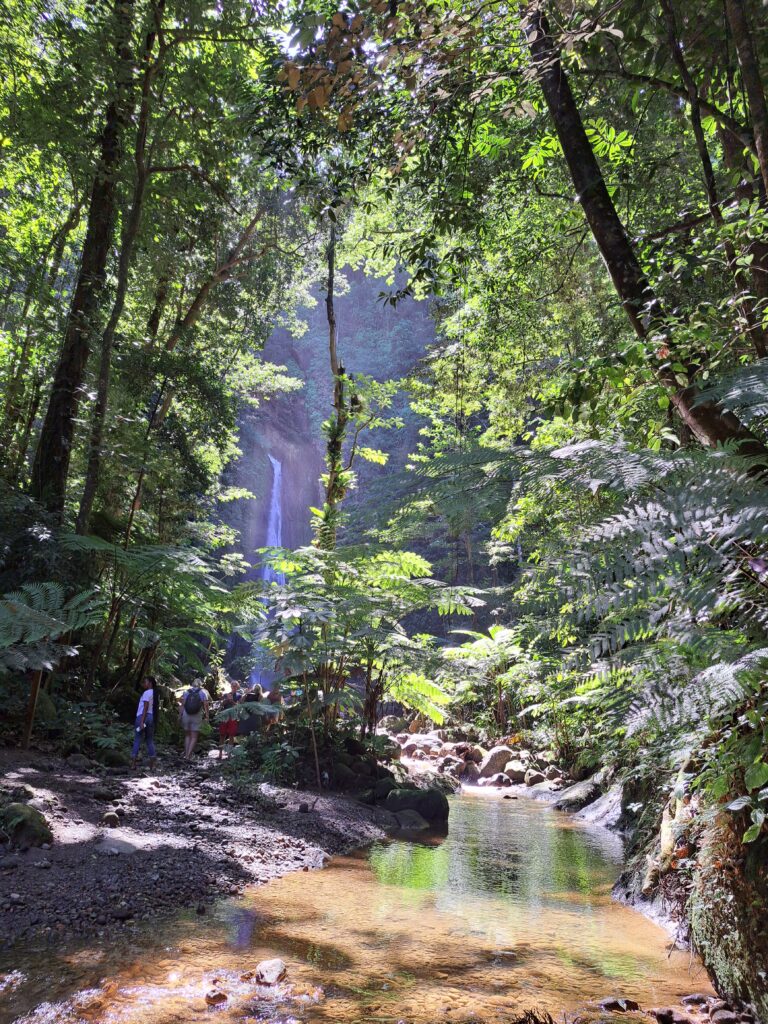
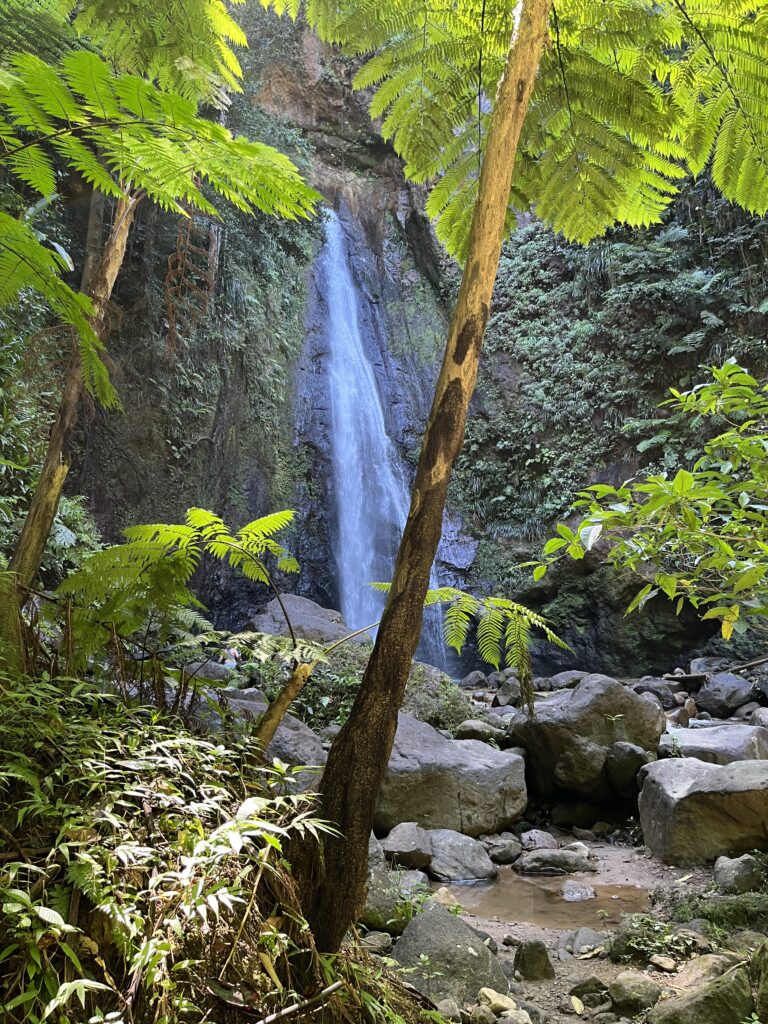
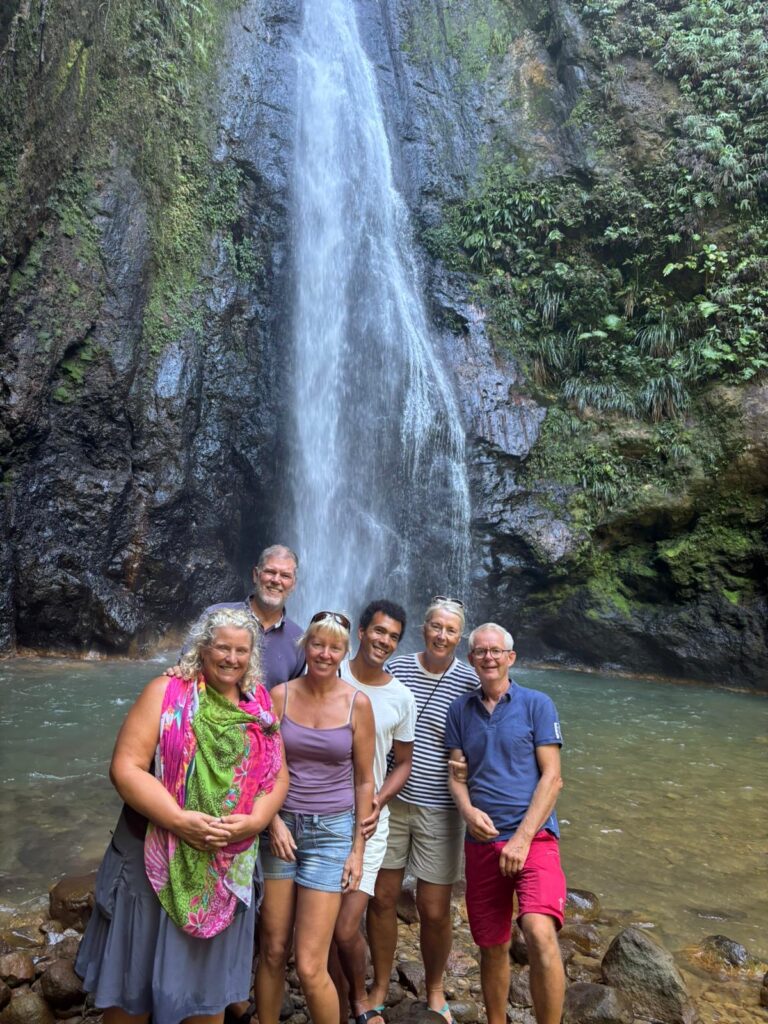
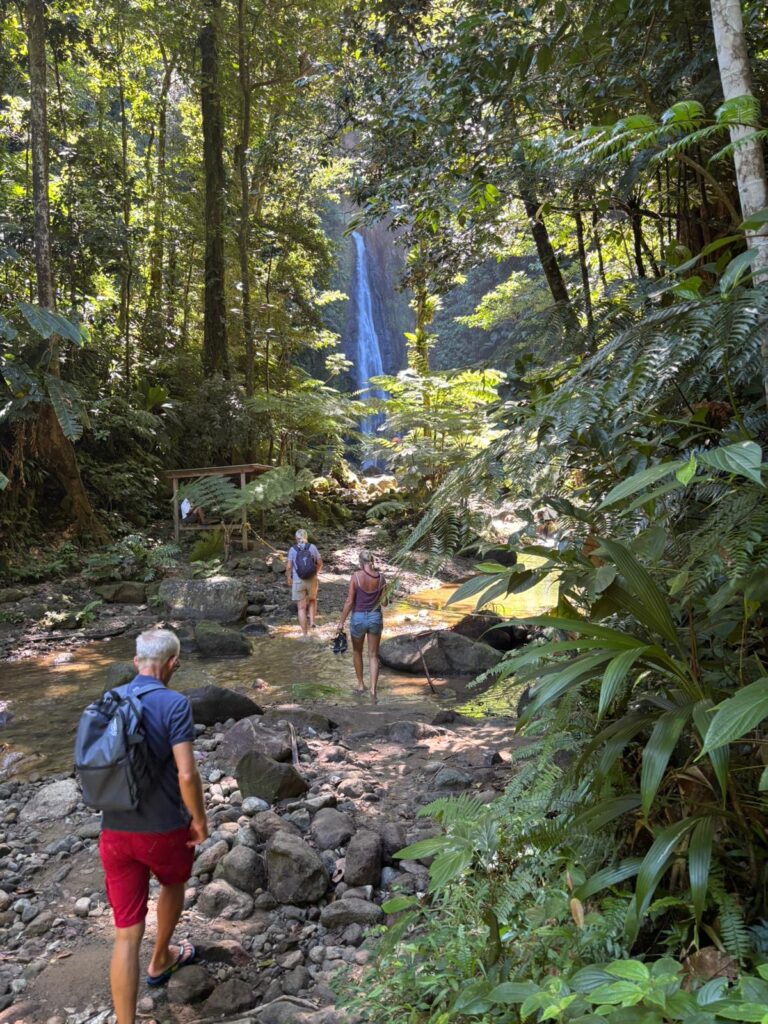
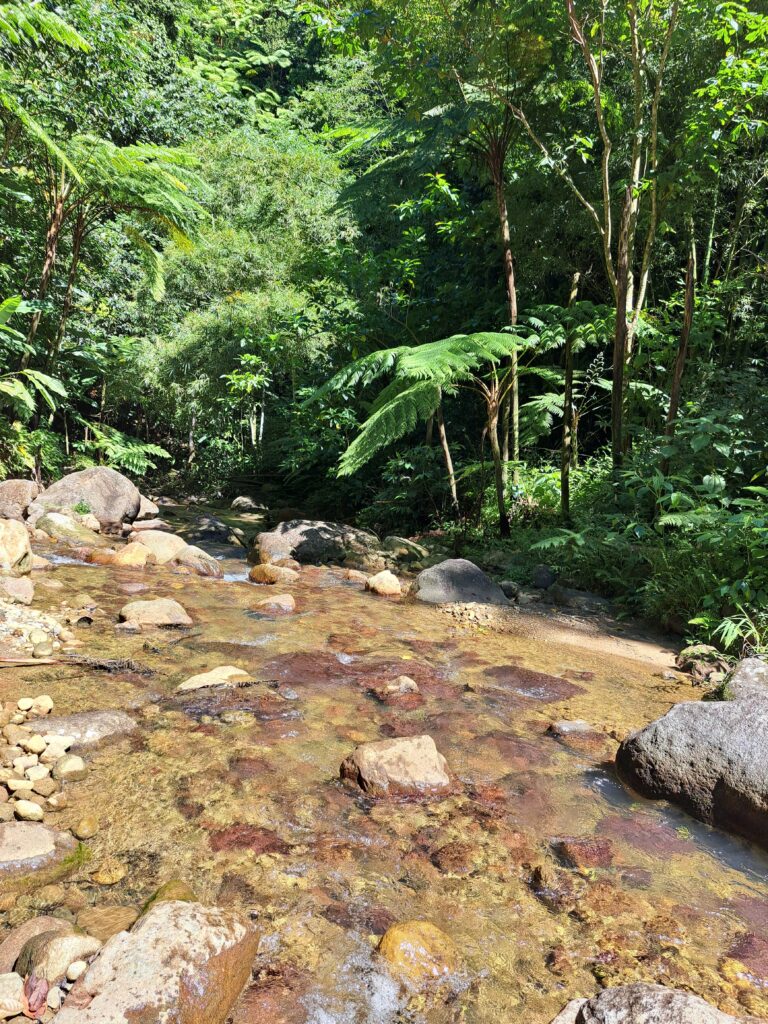
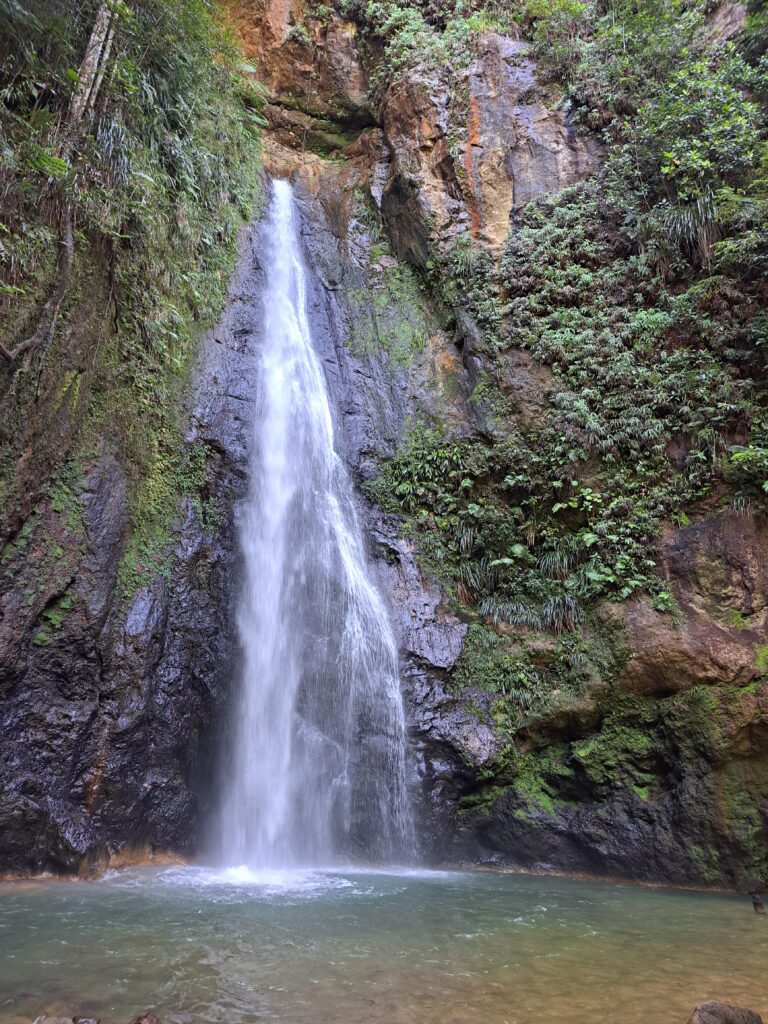
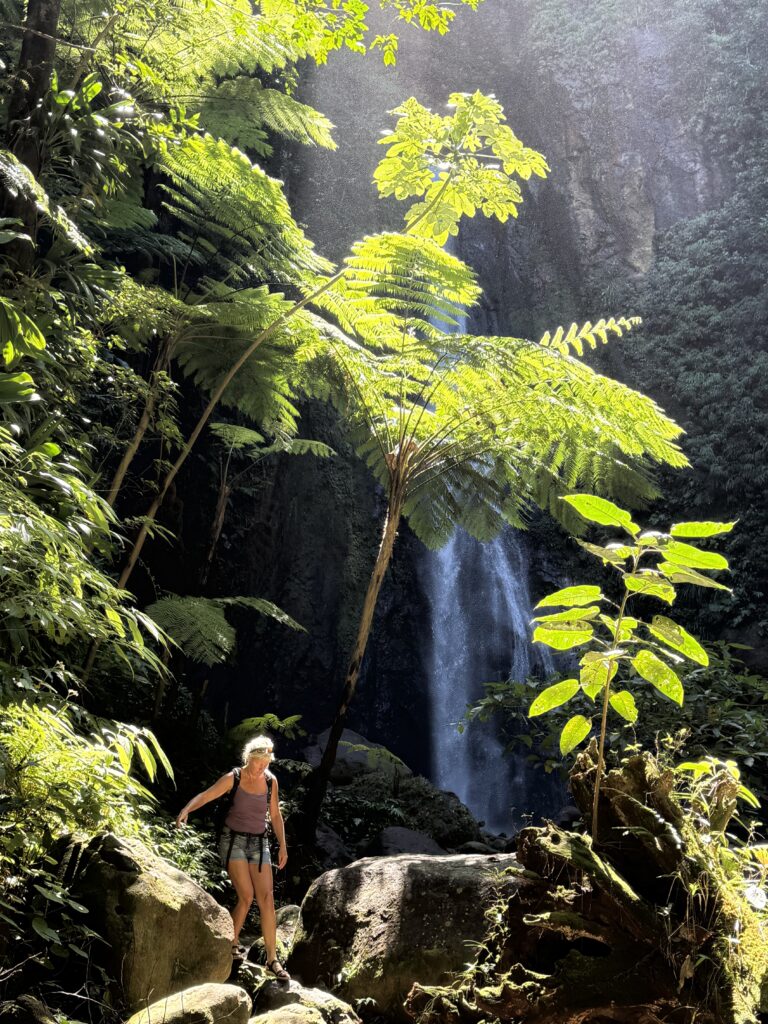
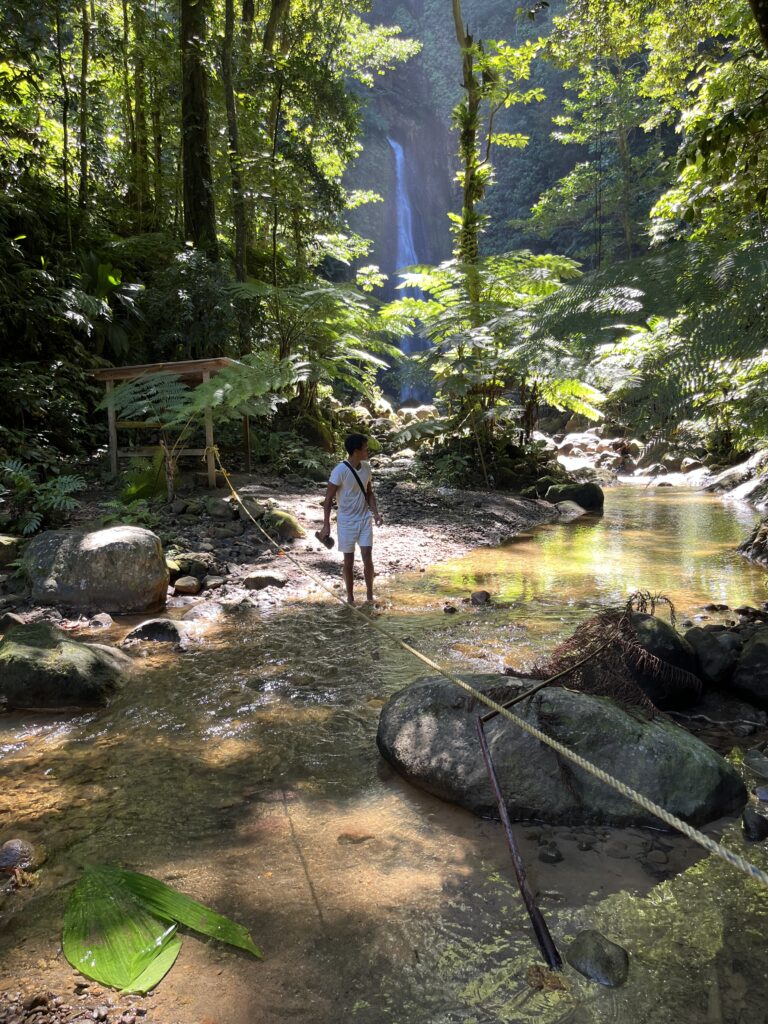
Syndicate falls are 30 meters high waterfall located half an hour drive from Portsmouth. From the parking, we did a 10 minutes hike through the nature to reach the waterfall. It was so lovely to be surrounded by the tall trees and all the greenery and to feel the cool water on the feet when passing the small stream a few times. Forests always have good energy and this one was so uplifting.
Indian River
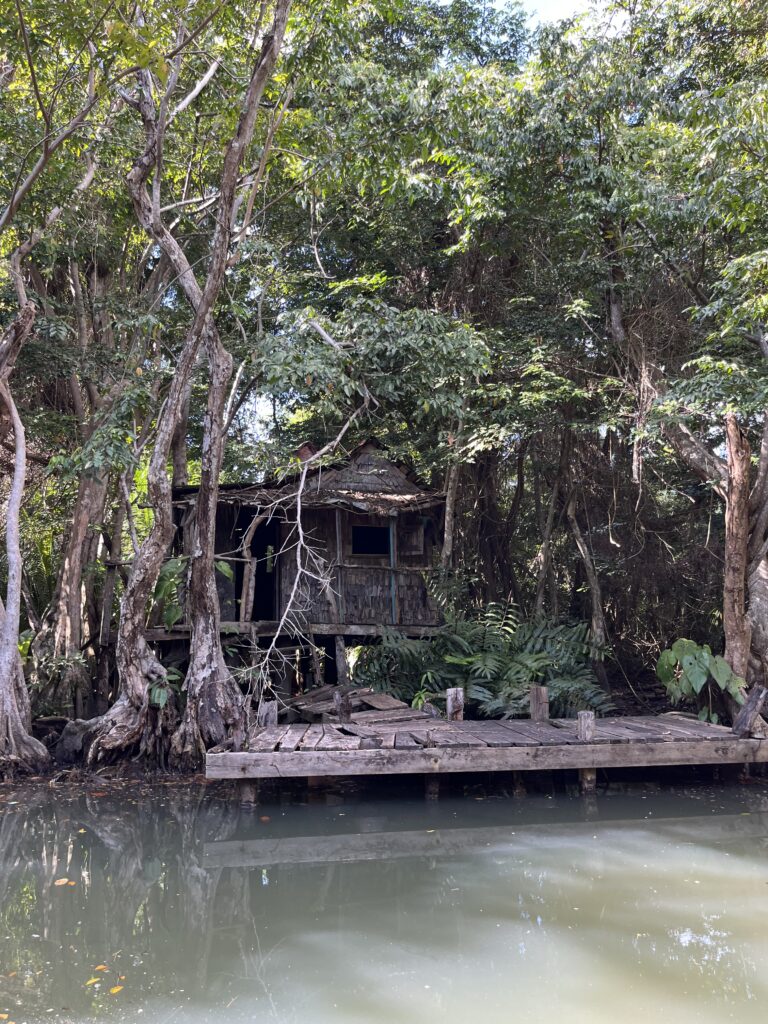
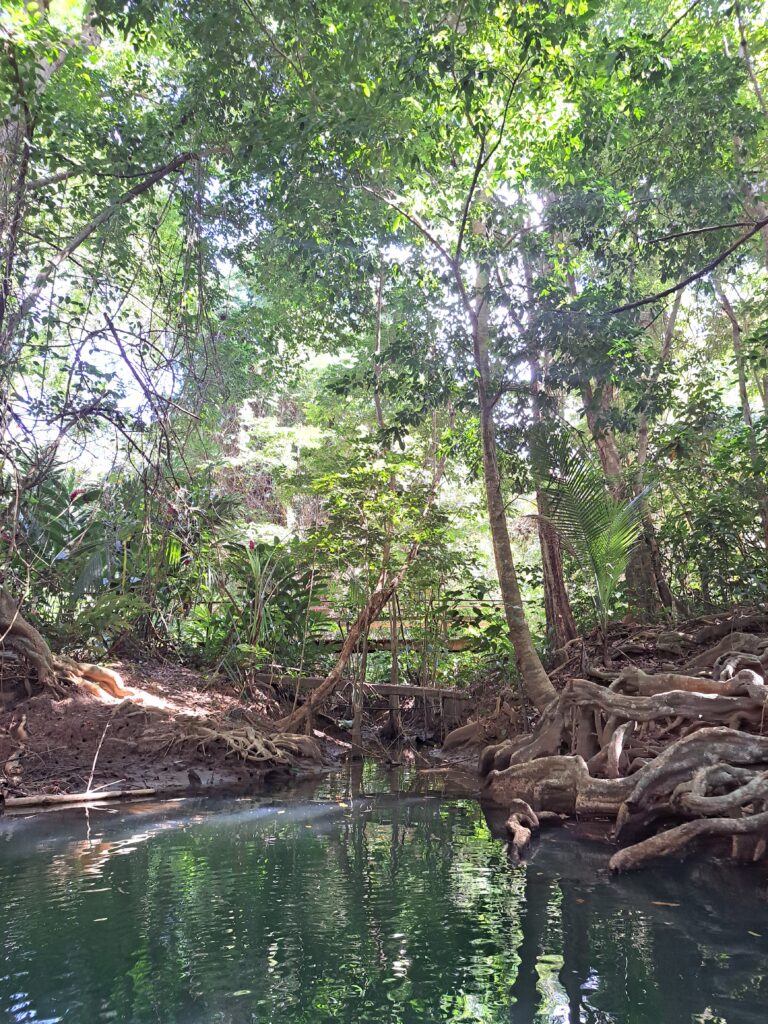
An “Amazon like” river flowing down from the inner mountains to Portsmouth. The river has been the stage of several scenes of the Pirates of the Caribbeans movie “Dead man’s chest”. The river itself is a protected area in which the use of petrol engine is prohibited. Most of the authorized Indian River tour guides use rows to go up the river but some have electrical motors like our guide nicknamed Spaghetti.
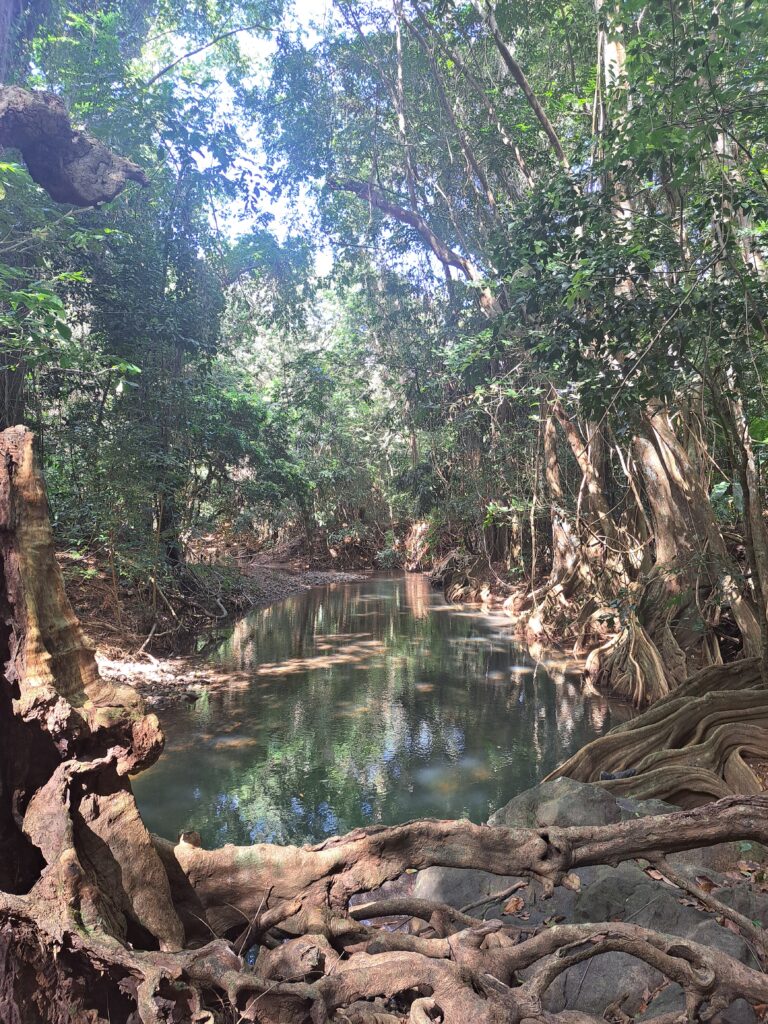
Rowing boats can row upstream the Indian River for about 1.5 km or so before the river becomes too shallow. Going up the Indian River offered us a full immersion in Dominican nature with the banks surrounded by very tight and wild vegetation. On our way through, we spotted white herons, a couple of little blue herons, a green iguana sleeping high up on a branch and many white mullets.
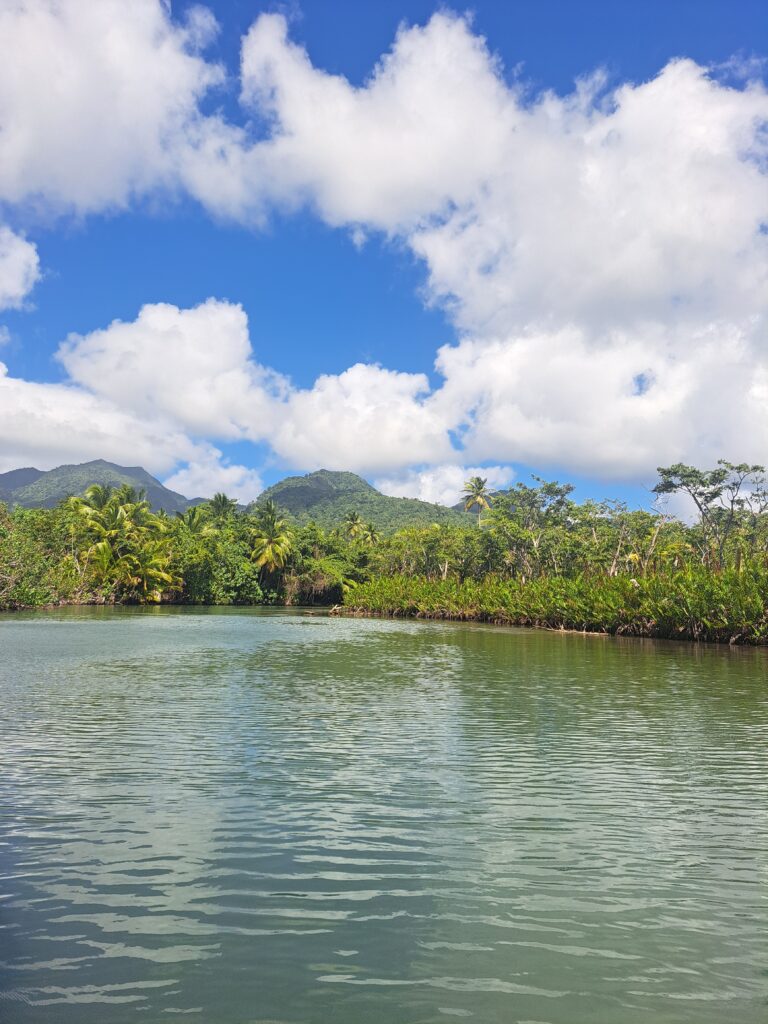
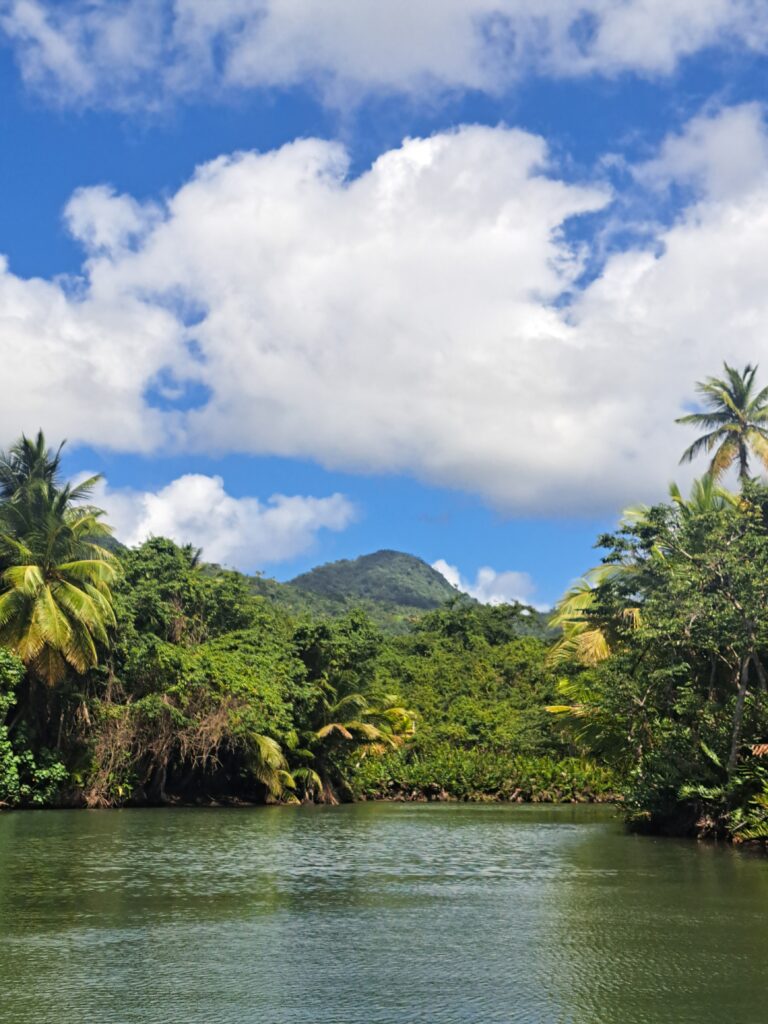
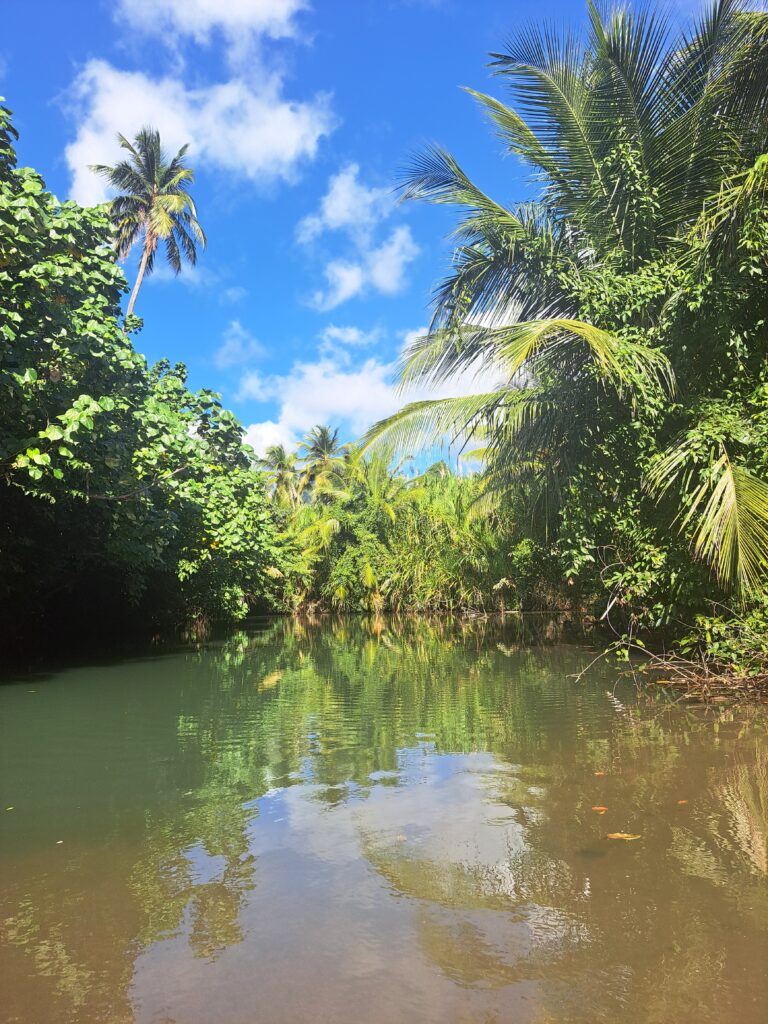
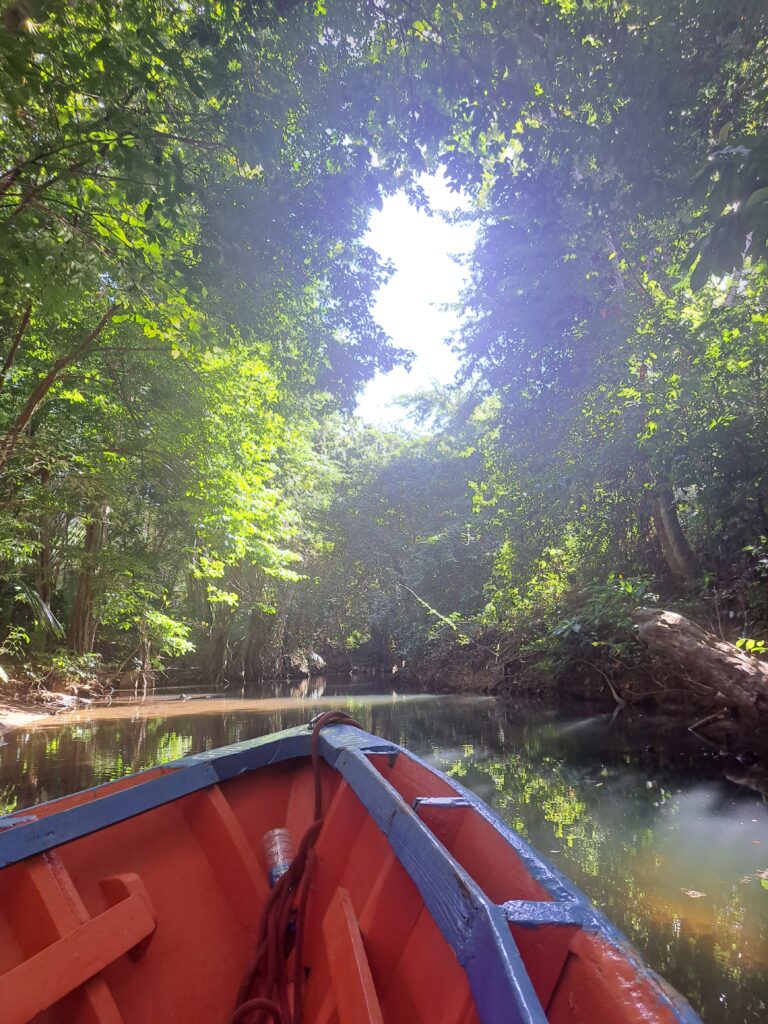
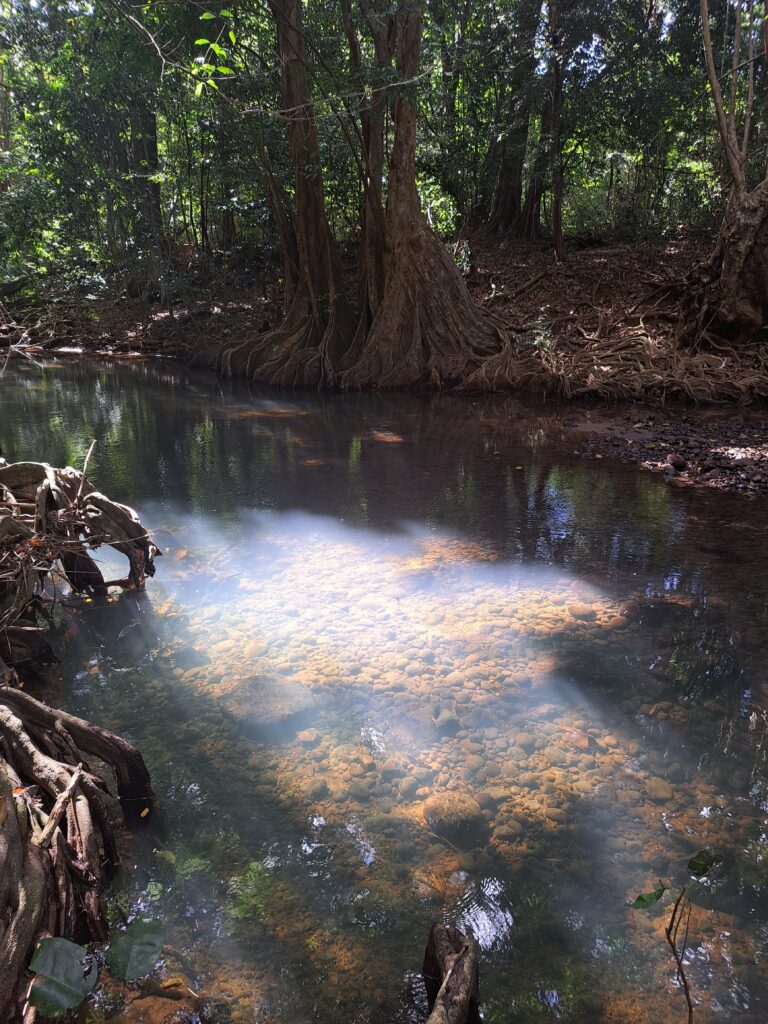
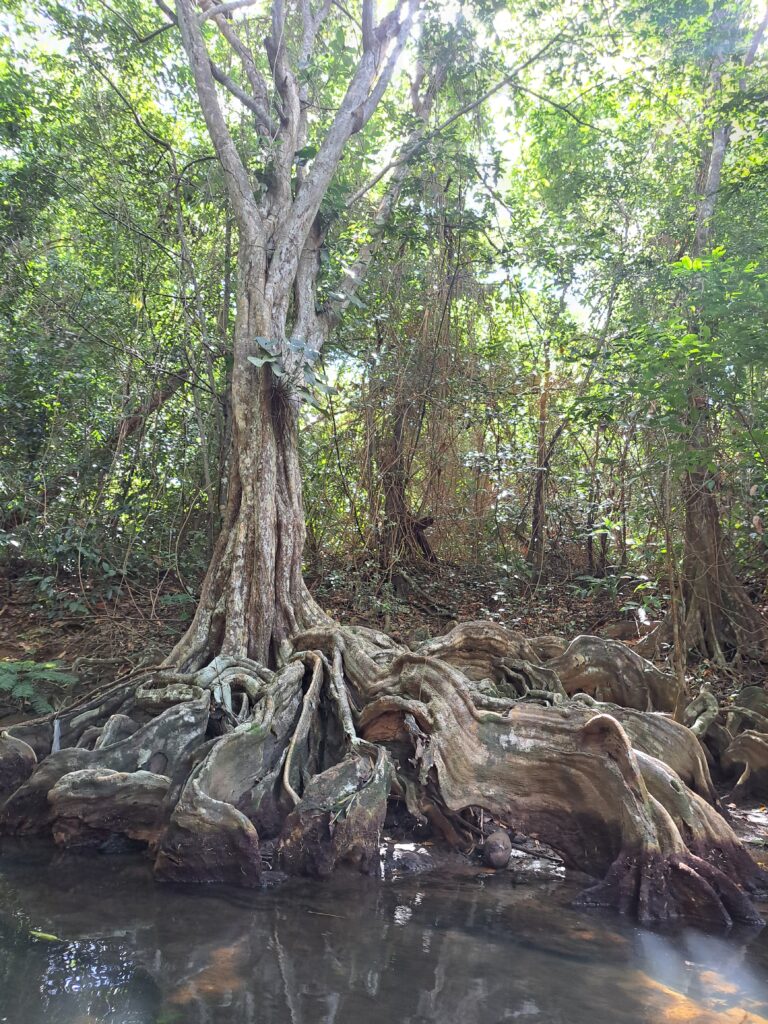
The banks of the Indian River counts many “Bwa Mang”, also called “bloodwood tree” with their narrow curved roots that make the environment surrealistic. This is probably one of the reasons why the Indian River was chosen as a stage for Pirates of the Caribbeans.
Red Rock
The third day of our tour was dedicated to the north east part of the island that is looking toward the Atlantic Ocean.
The drive to Red Rock passes through Calibishie, a small town with a Kalinago name that is located just at the edge of the Kalinago Territory. A huge reef protects Calibishie from the waves coming from the Atlantic, providing the inhabitants with the confidence to build houses right on the shoreline.
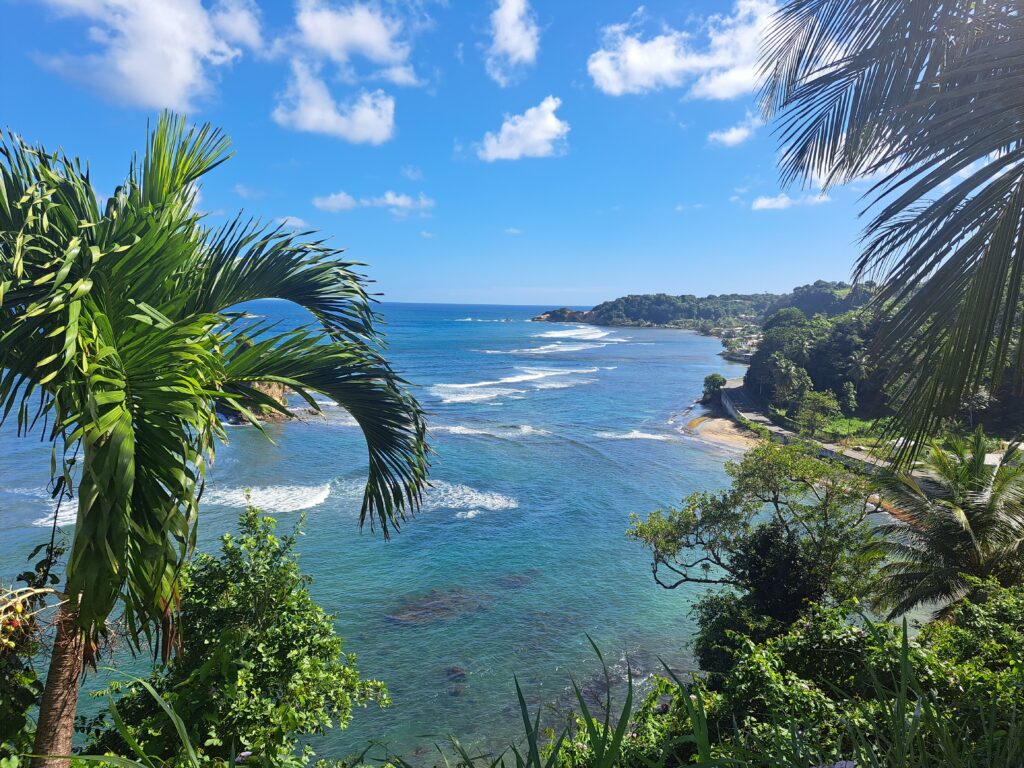
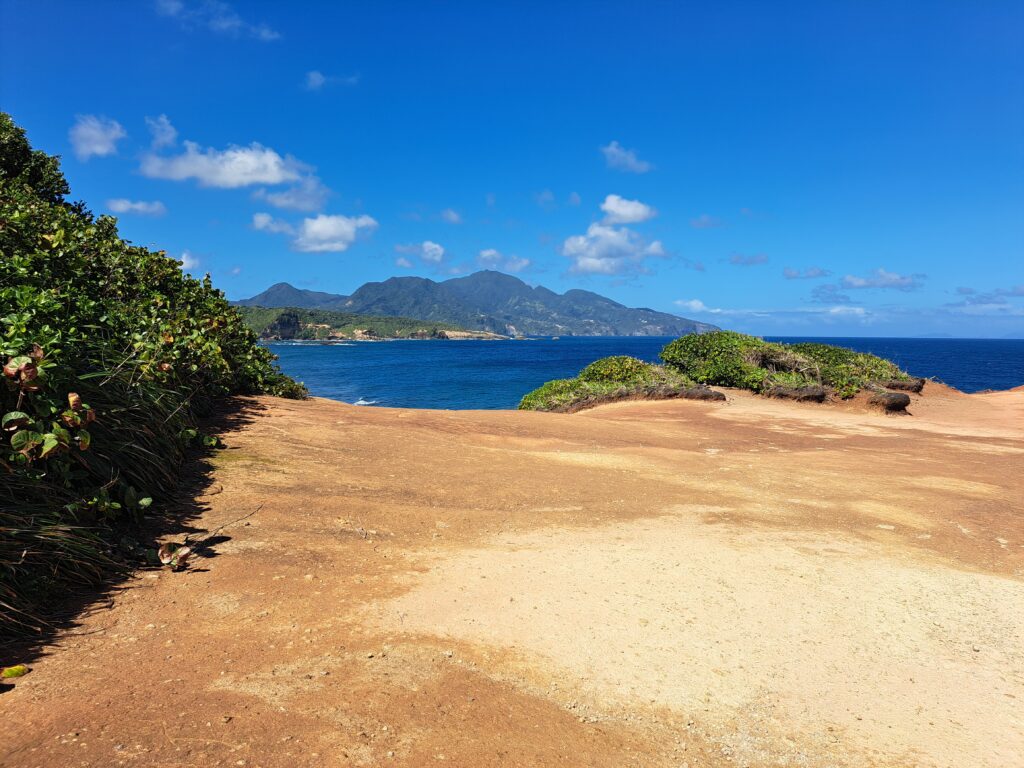
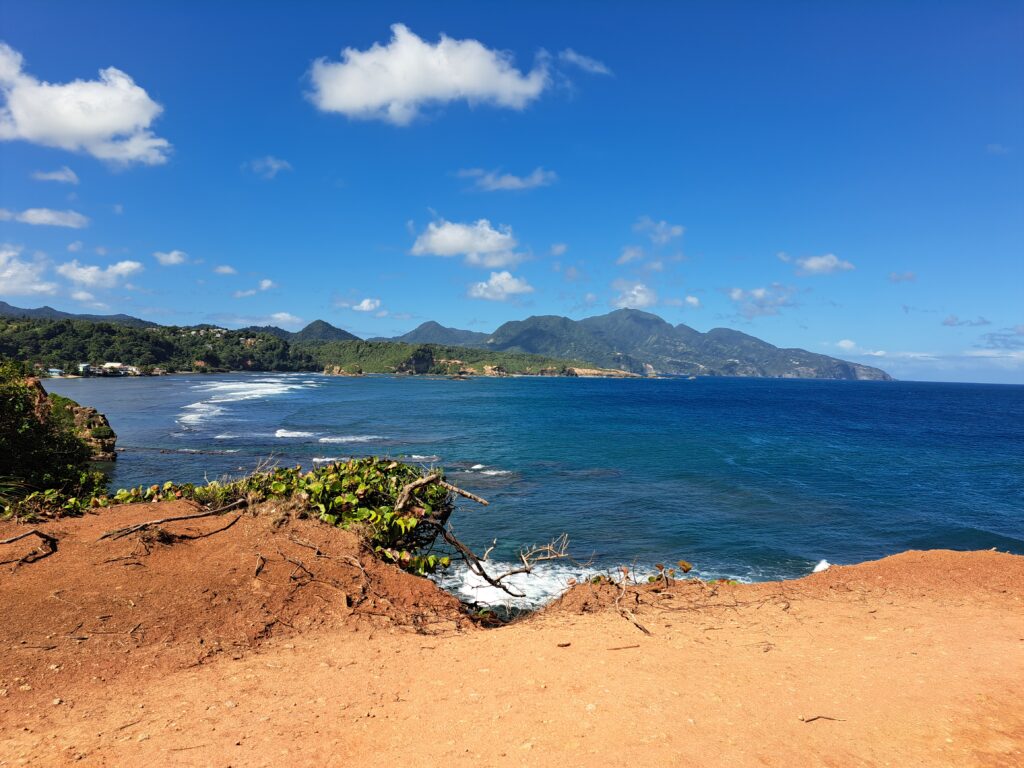
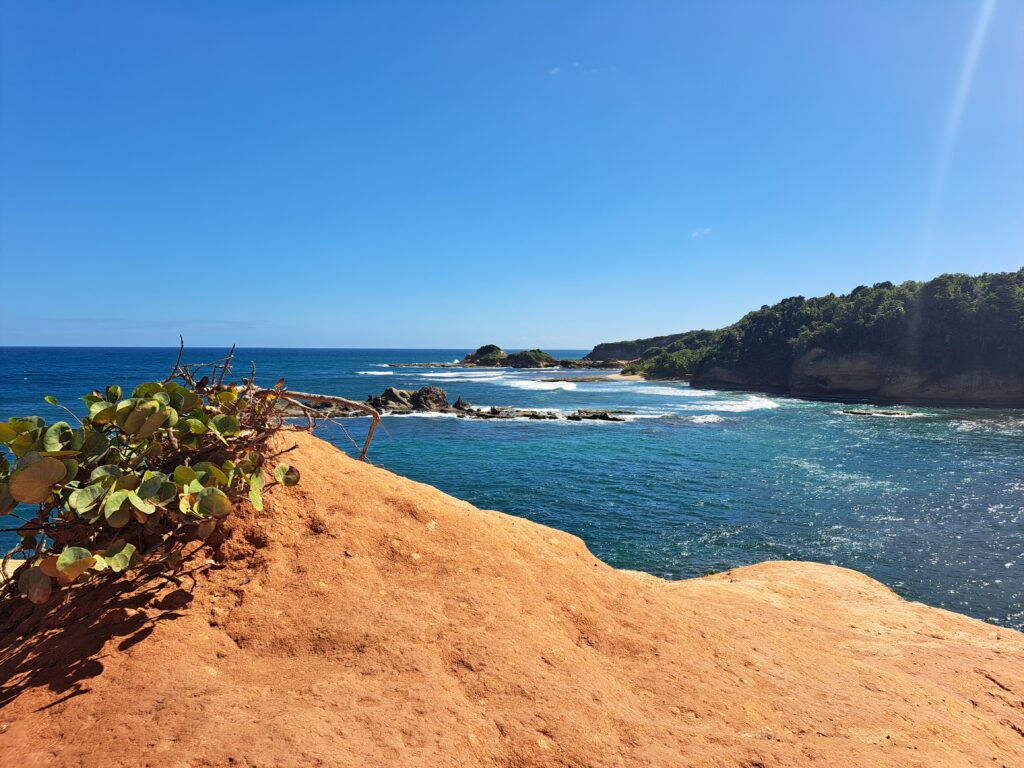
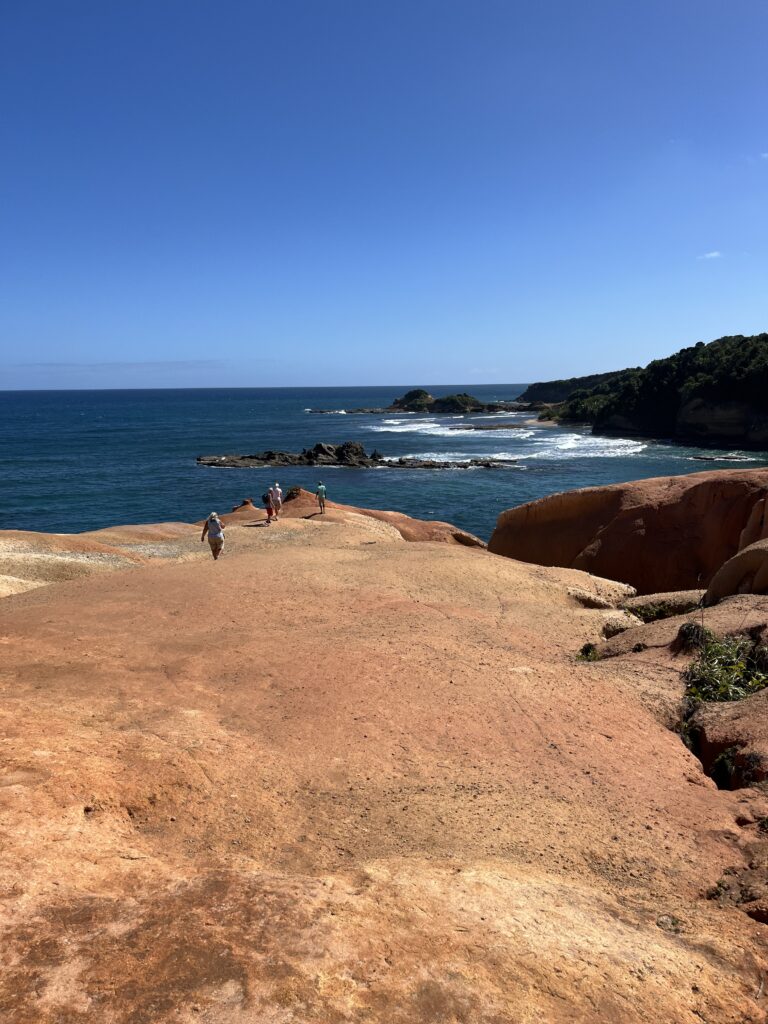
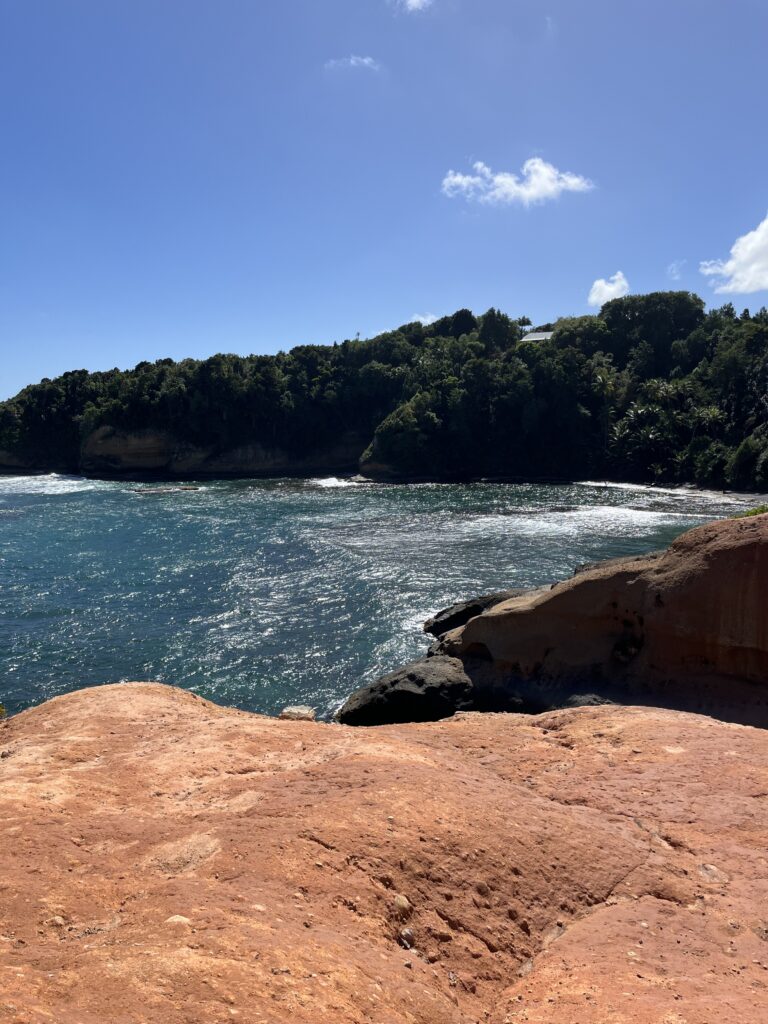
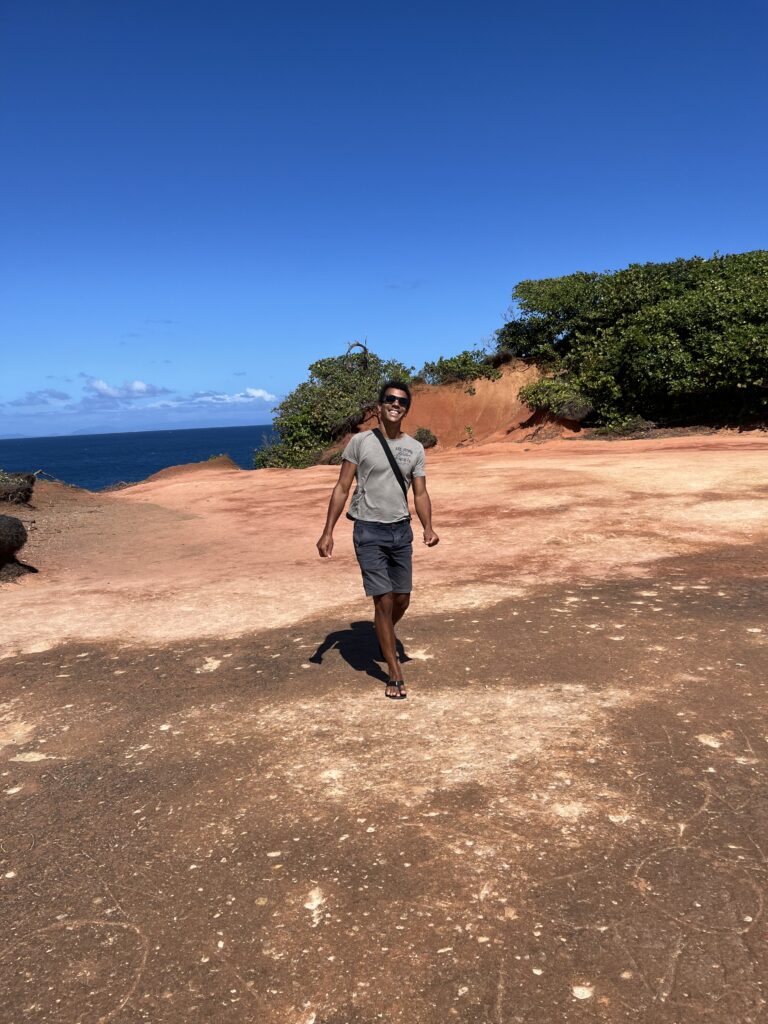
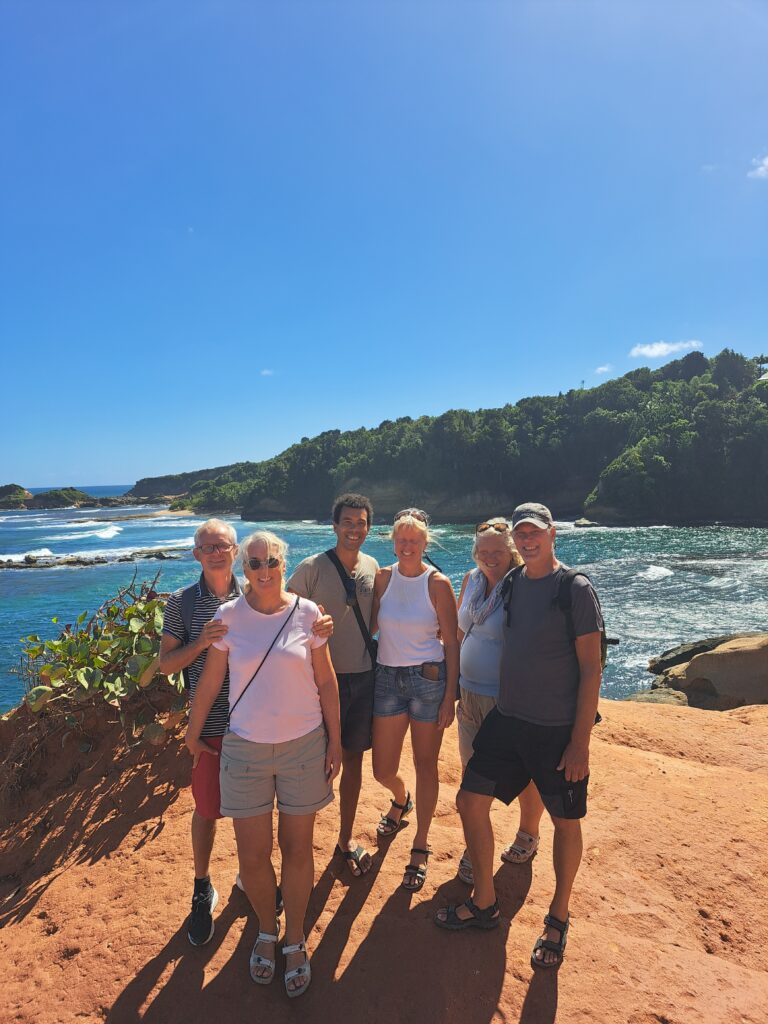
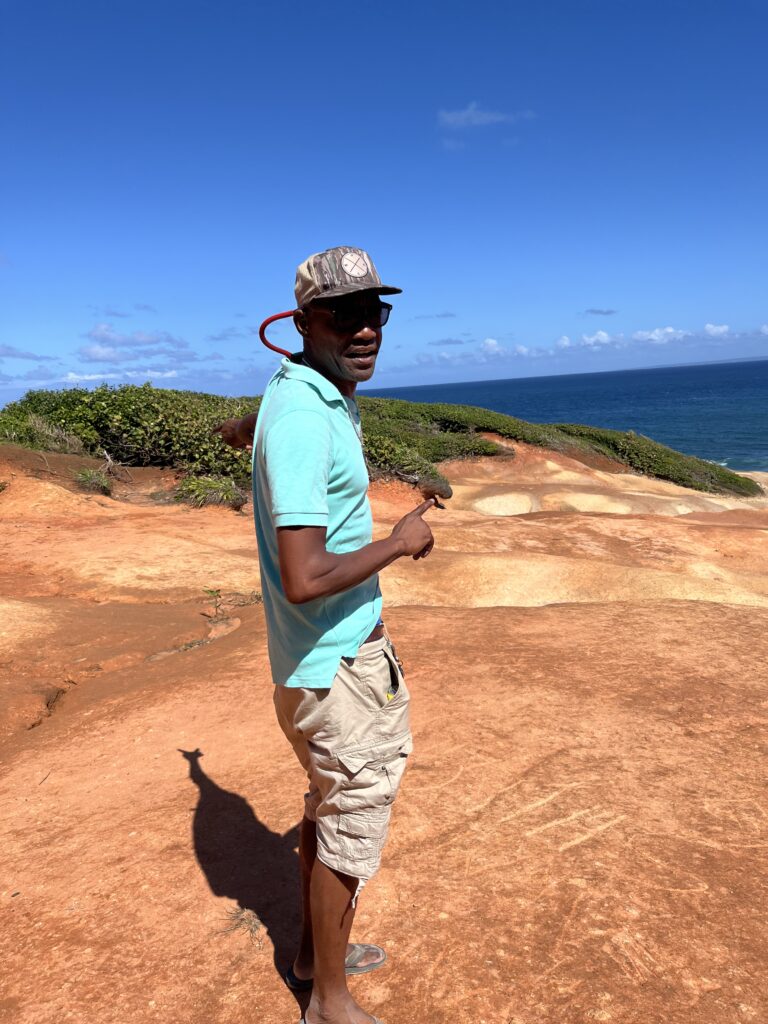
Red rock is actually not a rock but a formation made of clay that has been a eroding during the years creating a beautiful softly rolling landscape. The red color is result of the the oxidation of iron in the clay. From Red Rock, we could spot the flat island of Marie Galante and the volcanic islands of Les Saintes, all belonging to Guadeloupe.
Chocolate Factory
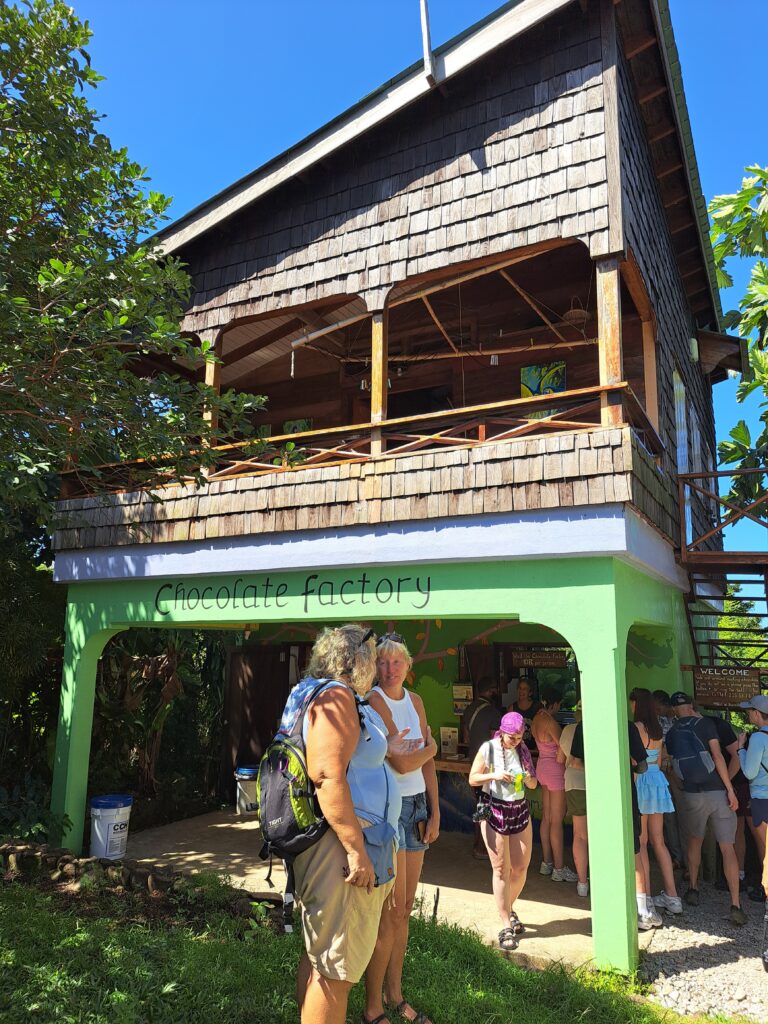
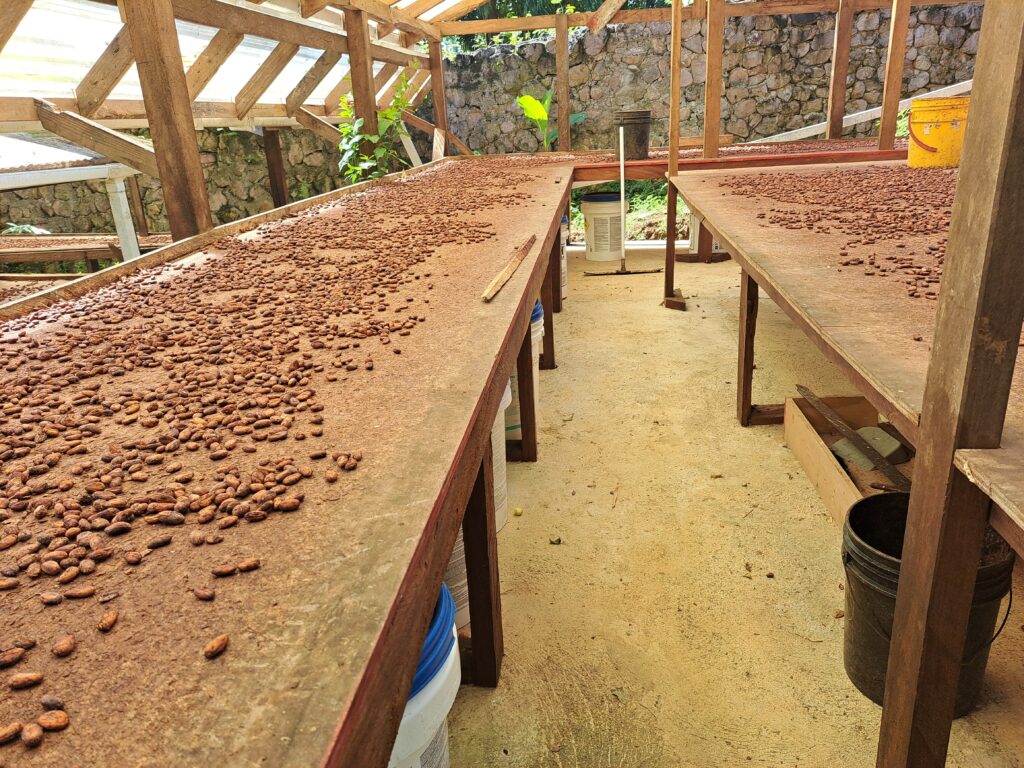
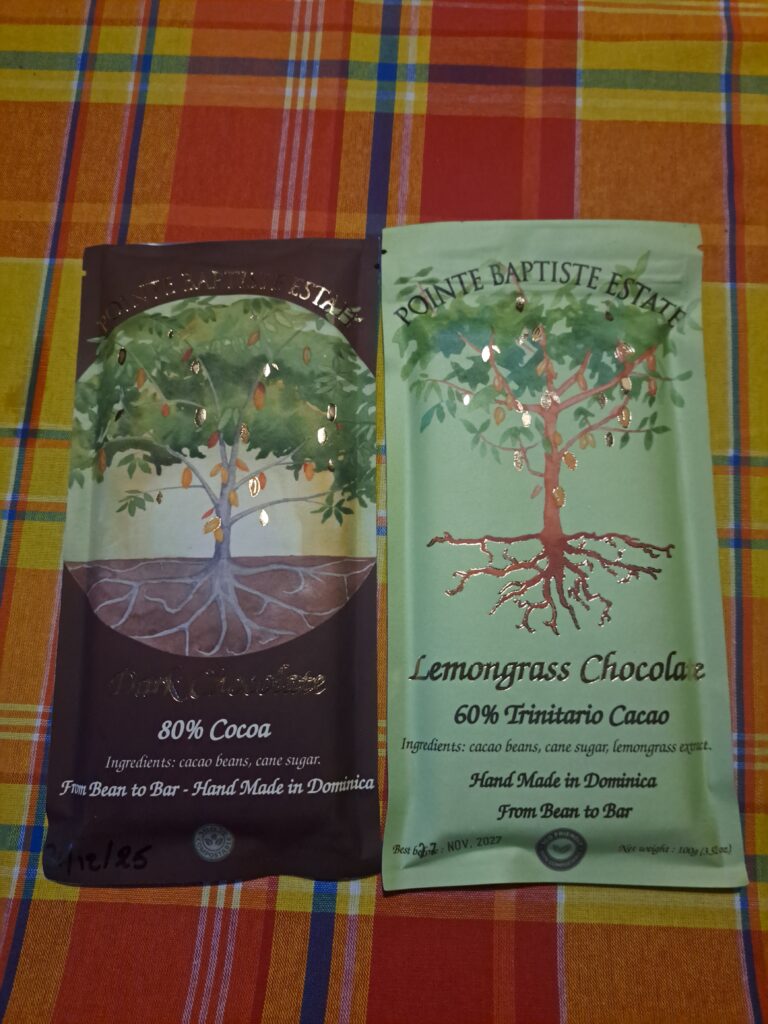
The Chocolate Factory is a small family business born from the passion of the owners for the island of Dominica and the passion for chocolate. The Chocolate Factory produces high quality chocolate using trinitario cacao from their own production and trinitario cacao from local farmers such as the old man we met on our second day. It was interesting to learn about all the stages of chocolate making, and of course it was very nice to taste the delicious chocolate. The family history is recorded in a book “Black and white sand” by Elma Napier.
The Kalinago Territory
The Kalinago Territory is a reserve for indigenous people, the Kalinago (formerly called Caribs), located along the north east coast of the island. Dominica is the only country in the Caribbean that has officially dedicated a territory for the indigenous people. Interesting fact, the president in charge as we visited the island, Her Excellency Sylvanie Burton became in 2023 the first Kalinago person to be elected president of Dominica.
Any people with Kalinago roots can claim land in Kalinago Territory for housing, farming or other purpose. Subject to approval of the Kalinago council, the given land cannot be sold, used for mortgage or given to anyone.
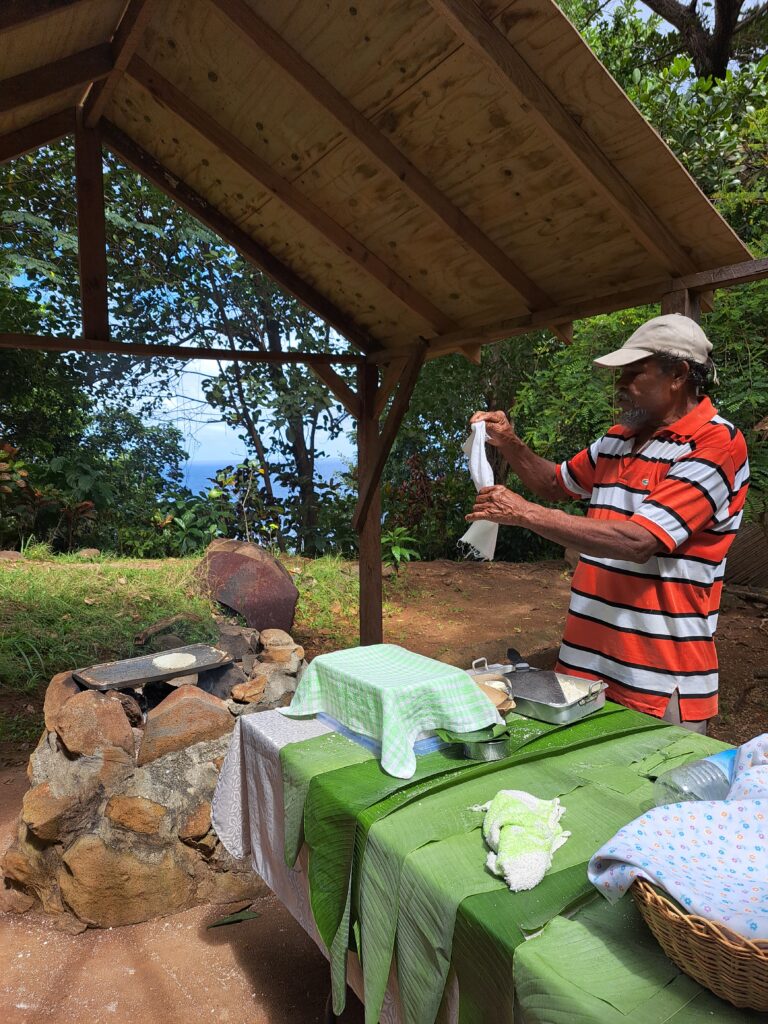
Our route through the Kalinago Territory led us to the Kalinago cultural centrer, “Baranan Aute”. There, we got a very interesting demonstration of the making of the traditional Kalinago bread, based on cassava (manioc), and we got to taste it – it was delicious, and we could see how traditional houses were built. Unfortunately for us, there was not much more going on, but we could learn more about the Kalinago in a small museum. Today, the Kalinago live in modern buildings like the rest of the society.
On our way through the island, we also got the chance to see with our own eyes some of the mega-projects in development in Dominica that really demonstrate the ambition of Dominicans. In the southern part of the island, Dominica is in progress of building the world’s longest cable car. With 6.6 km, it will connect the Roseau Valley with the Boiling lake, passing by some of the most iconic landscapes of Dominica such as Trafalgar falls that we visited, River Gorge, Valley of Desolation and Boiling lake.
Dominica is also in progress of building a brand new international airport. The country is not really known for having a very strong economy and in fact, it has regularly received donations from other countries to support the country in building schools, hospitals and even harbor infrastructures. However, the outstanding fact with the 370 million USD international airport project is that it is entirely funded by Dominican own funds accumulated after many years of savings. When in September 2017, the island was hit by hurricane “Maria”, the government was forced to use part of these savings to support the recovery of the island, delaying the beginning of the construction of the airport. But the ambition remained and in 2023, construction works could finally start. A direct connection to the world will for sure change the future of this island.
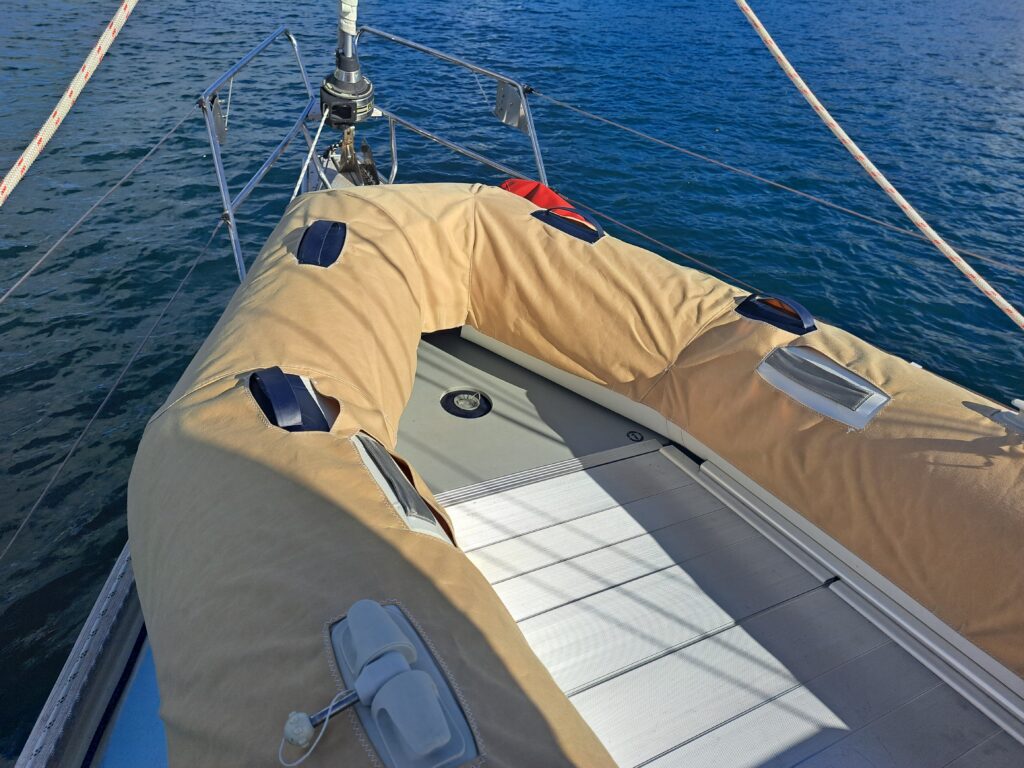
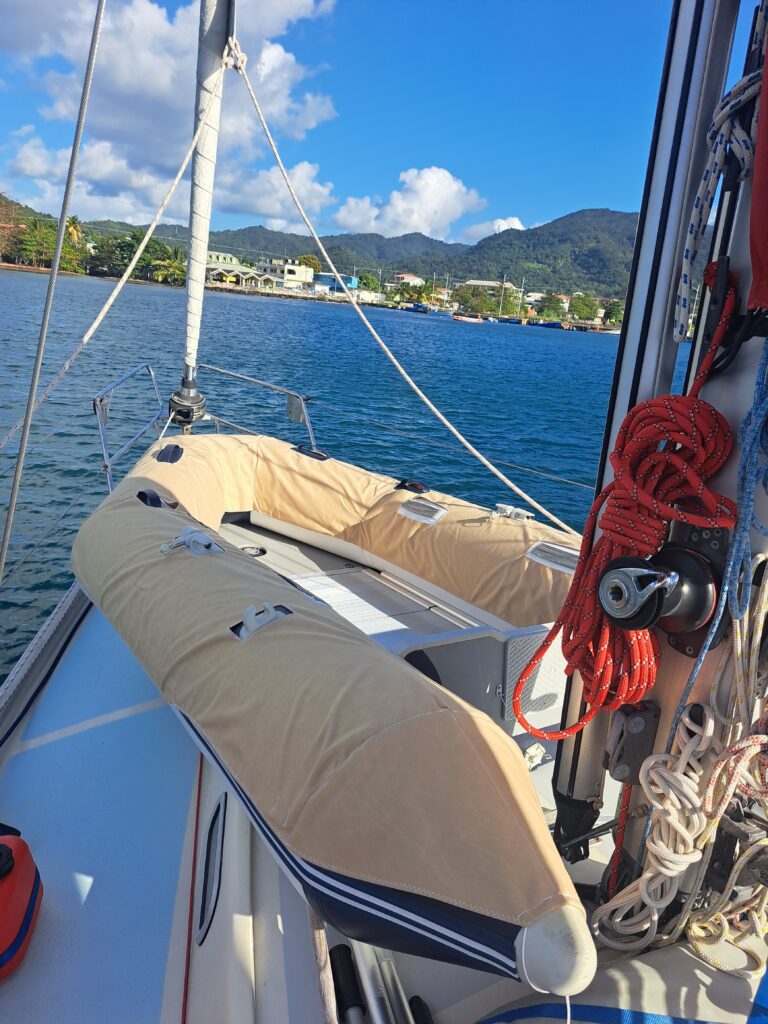
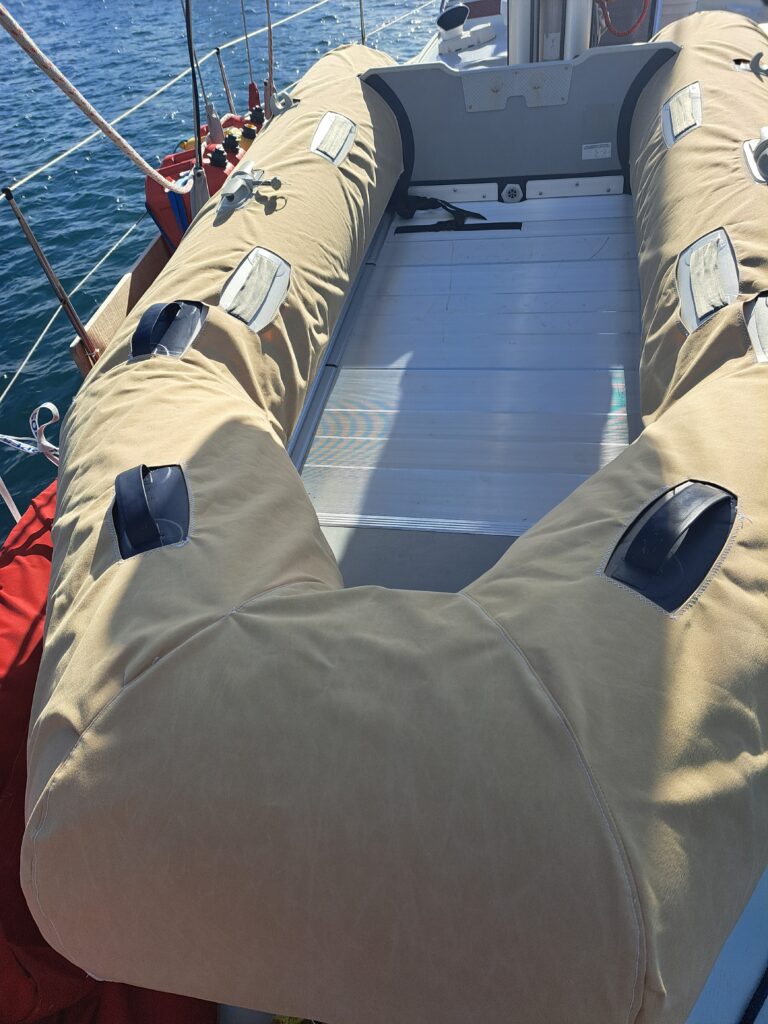
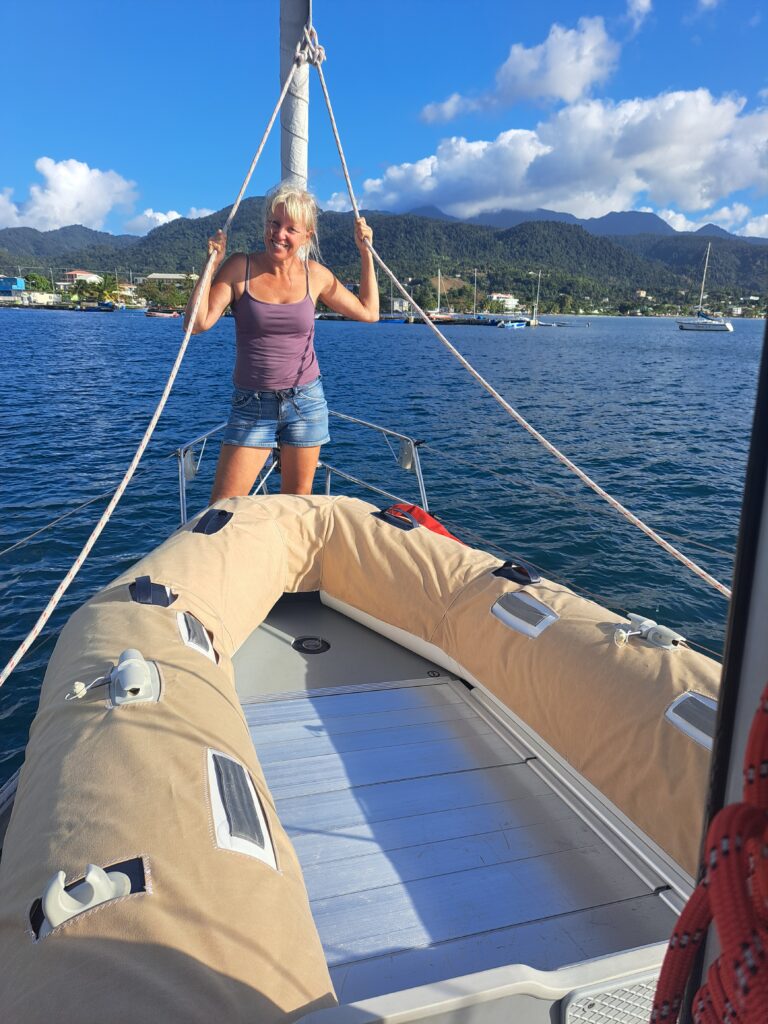
In Dominica, we also finalized the cover for the dinghy, a project we had been working on in several anchorages. Here is the final result of the work ! We also fixed the corroded connection of the starboard navigation light that was not functioning when we departed Saint Pierre at dawn.
We remained in Dominica four full days and left on February 6 to head to Marie Galante, one of the islands belonging to French island of Guadeloupe. We left behind us an amazingly beautiful island.
According to the weather forecast we should have been sailing beam reach with 5 to 7 m/s of wind between the islands. Instead of that and despite a promising start with 9 m/s of wind, we ended up rolling most of our way to Marie Galante on engine.
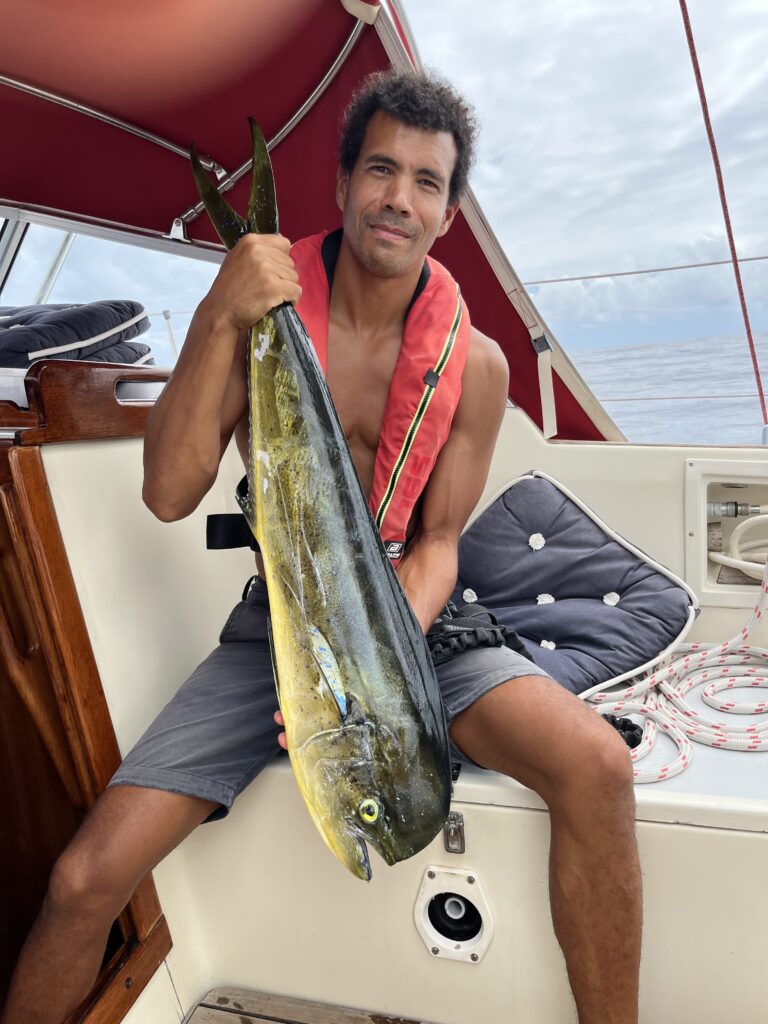
Ever since our last catch of fish on our way from Sainte-Anne to Anse d’Arlet in Martinique we had not caught any fish. On our way to Marie Galante and despite all the sargasso that was floating at the surface of the water, we dropped the fishing line. We had to take it up several times due to sargasso getting stuck to the lure, but as we were about to abandon (we were lifting the lure every 5 minutes), right in the middle of the passage, we got a beautiful 95 cm mahi mahi on the hook. It took about 20 minutes to get it on the boat as it was fighting hard, jumping out of the water again and again to try to liberate itself. Eventually it got too tired and we managed to get it on the boat. We shared the catch for dinner with our friends from S/Y Marey and S/Y Alba in what quickly became a potluck with everyone contributing something. Sailing life can be so simple and spontaneous. We grilled the fish and accompanied it with a potato salad and a salad of cucumber and tomatoes and some white wine. This fish brought us a great moment of joy.
Quelles merveilleuses contrées. Et nous européens, qui avons durant des siècles abattu nos forêts. J’espère que, sur ces îles, ils vont continuer à conserver les leurs. Comme ces ambiances d’accueil et de respect, de partage et d’amitié sont belles et agréables ! Quelles belles journées vous partagez. Et vous allez être capables d’être entièrement autonomes, matériellement ! C’est que vous vous débrouillez bien !! 🙂
En Guadeloupe, c’est Basse Terre qui est la plus verte… certaines petites îles autour sont paraît-il très belles.
Bien affectueusement.
Kenavo !
Great to follow your journey! And what a journey it is. Stay safe and look forward to your next update
Hi Heléne ! That’s so nice to read that you follow our adventure. Every island has something different to offer. Each time we cross from one island to another we are always so excited to discover how it will be on the other side. Today we were at a bar on the beach and it was written “Travel is the only thing you will buy that will make you richer”. This whole voyage is just so. Take care ! Emilien and Maria!