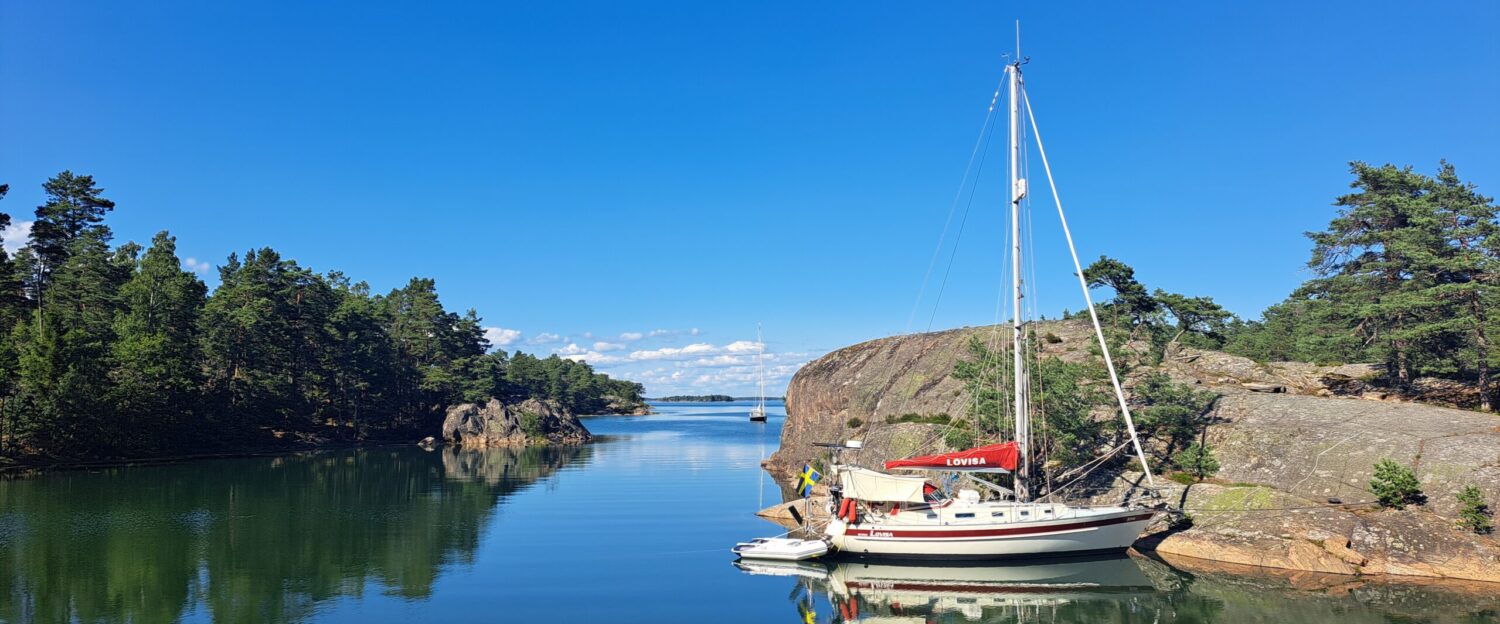
Here we present details of some of the works that we performed in preparation for the Atlantic crossing from the Caribbean to Europe.
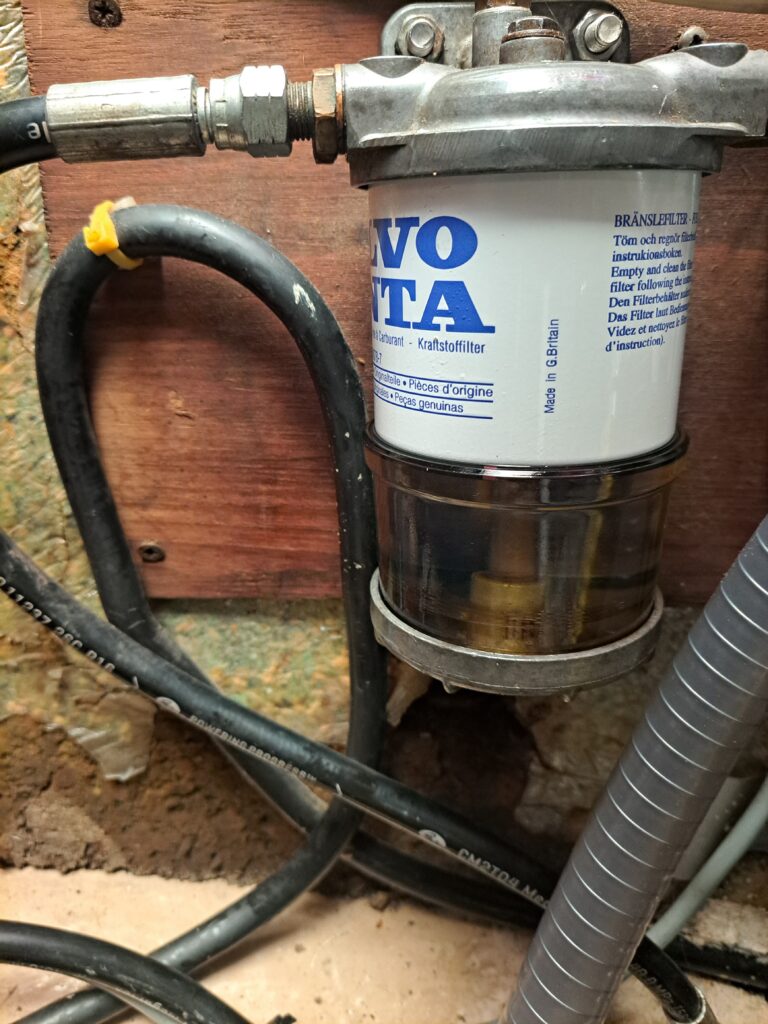
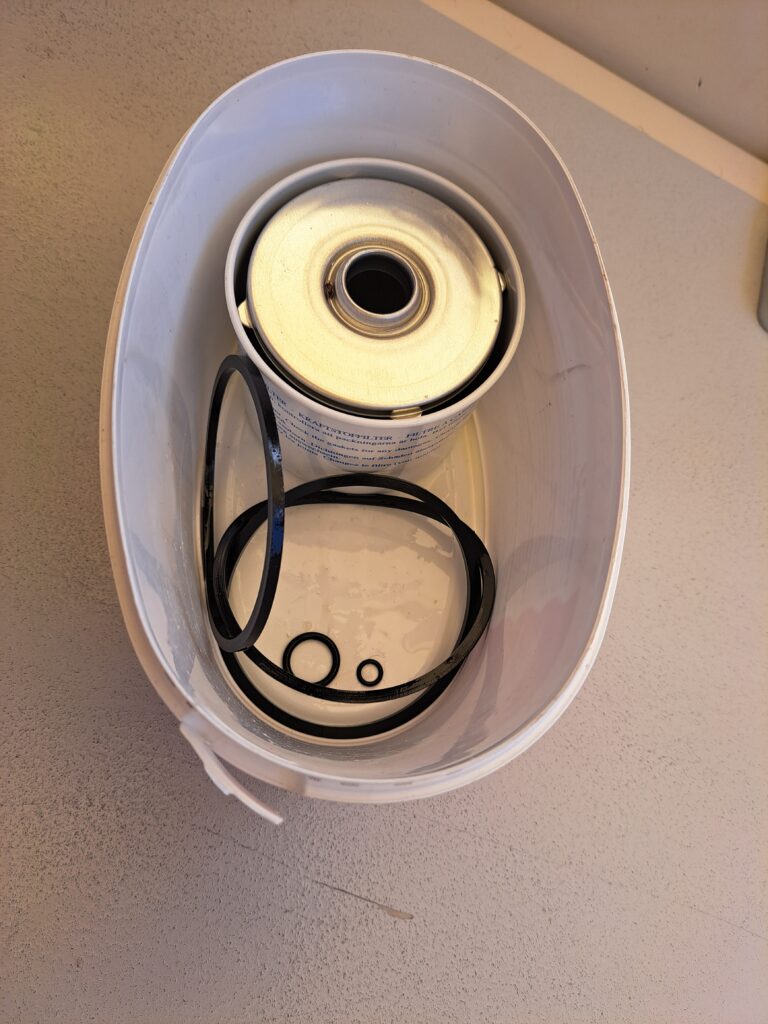
Replacement of CAV diesel filter
In Lanzarote, in preparation for the Atlantic crossing, we replaced the diesel fine filter. Not because we needed to but for peace of mind. However we didn’t replace the CAV filter because we have a duplex filter so if one filter is clogged we can switch quickly to the second one.
We decided to replace the CAV filter now as we were curious to see what it looked like after nearly a year of service. It didn’t seem to be that much fouled.
The fine filter had only a bit more than five months of service and it ran probably for 100 hours so we didn’t replace it.
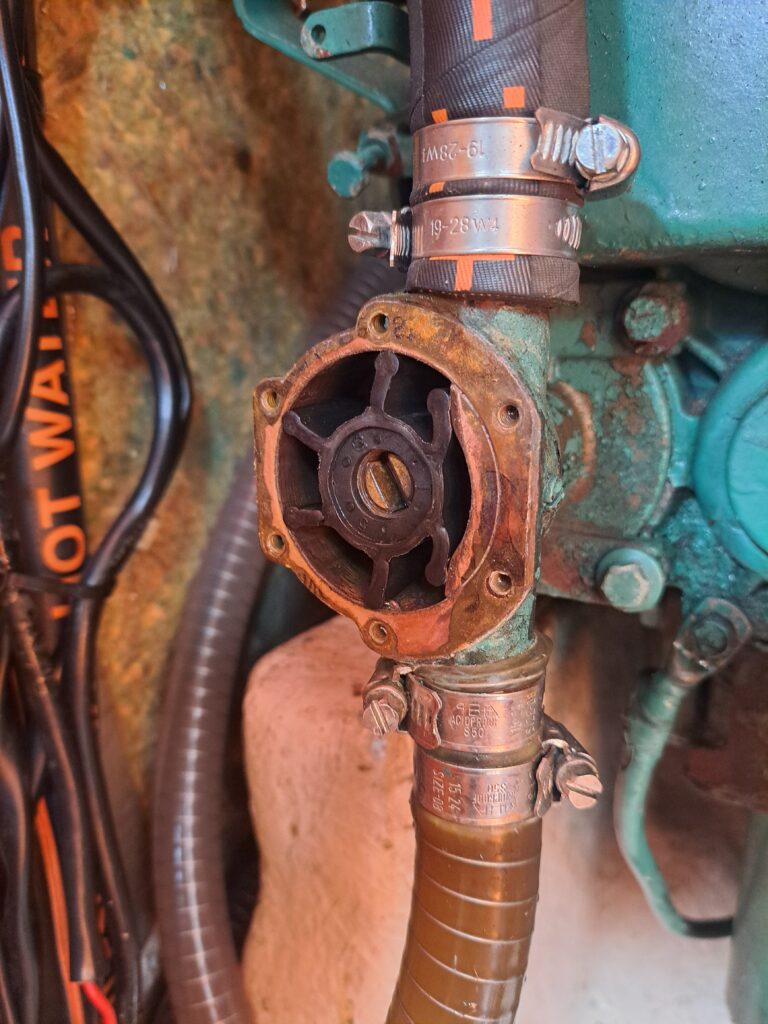
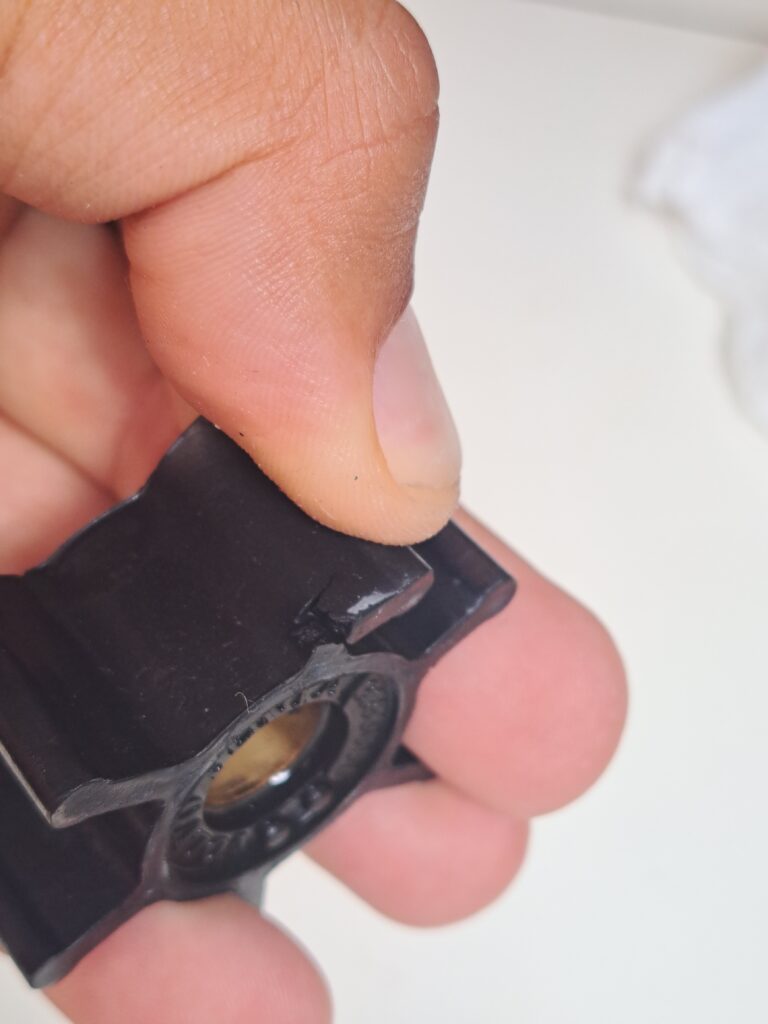
Replacement impeller of engine sea water pump
The impeller of the sea water pump ran for about 120 hours since the first replacement we did in Cascais so it was time for a second replacement in preparation for the Atlantic crossing as we might need to motor a lot. The impeller that we removed was still in one piece with some cracks. It looked quite similar to the one that we replaced in Cascais. Right timing for replacement!
Regreasing of genoa winches
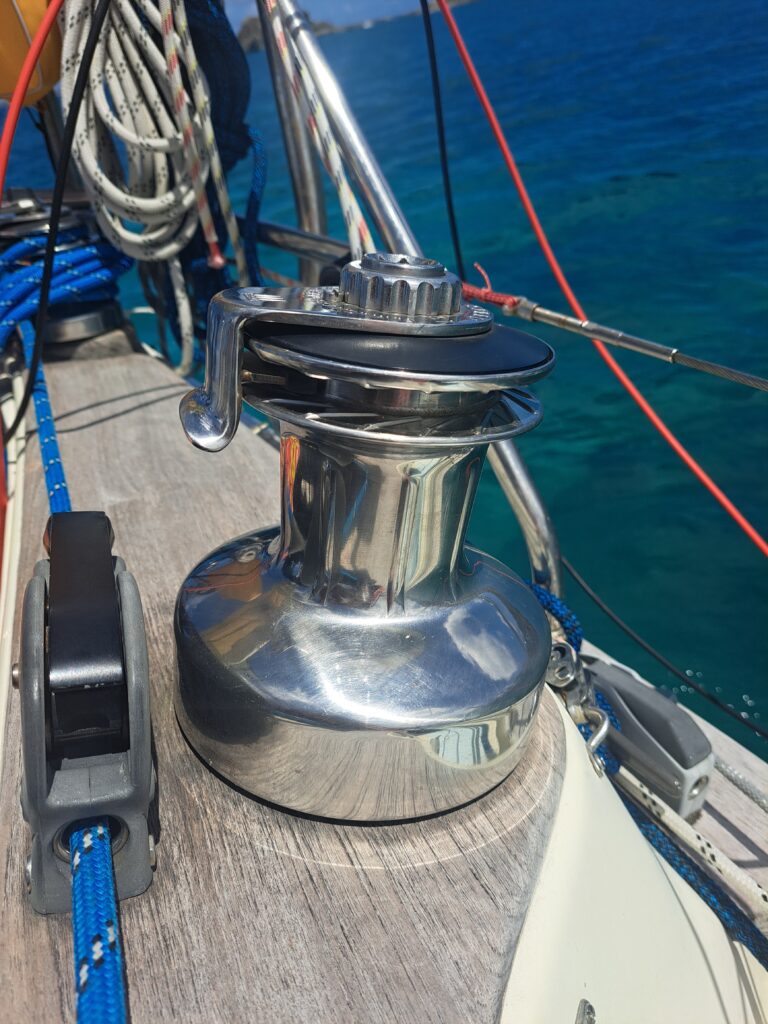
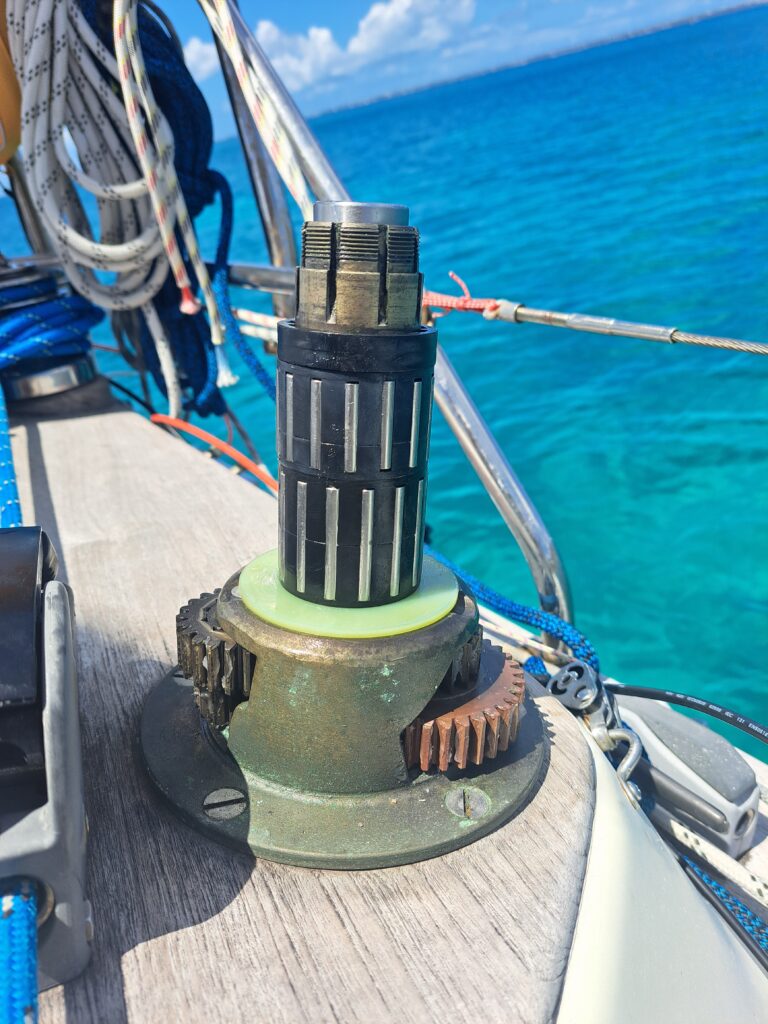
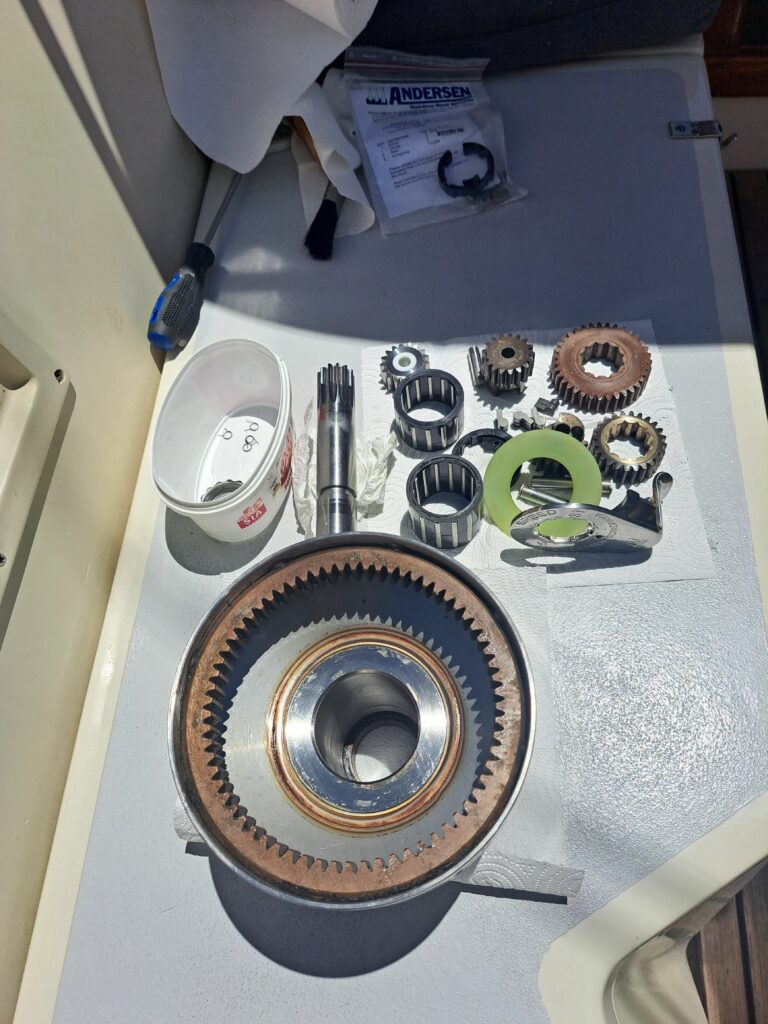
We did complete dismanting, cleaning and regreasing of both the winches that we use to trim the genoa. These are the winches that we use the most and especially the one on port side so far.
Check of steering mechanism
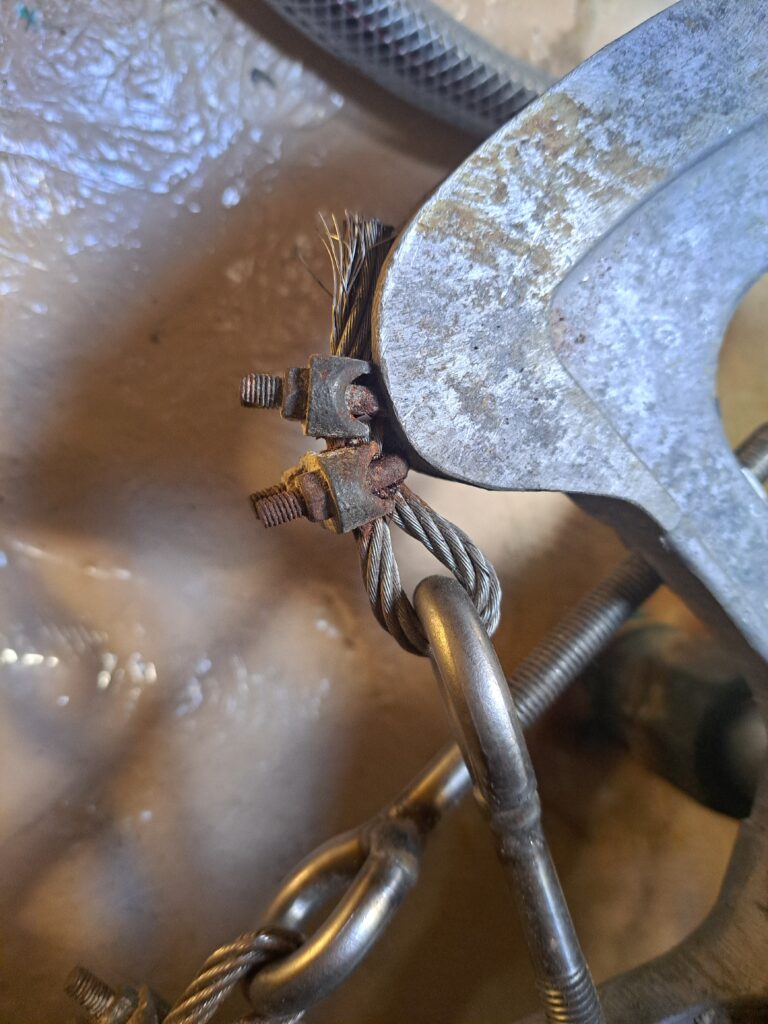
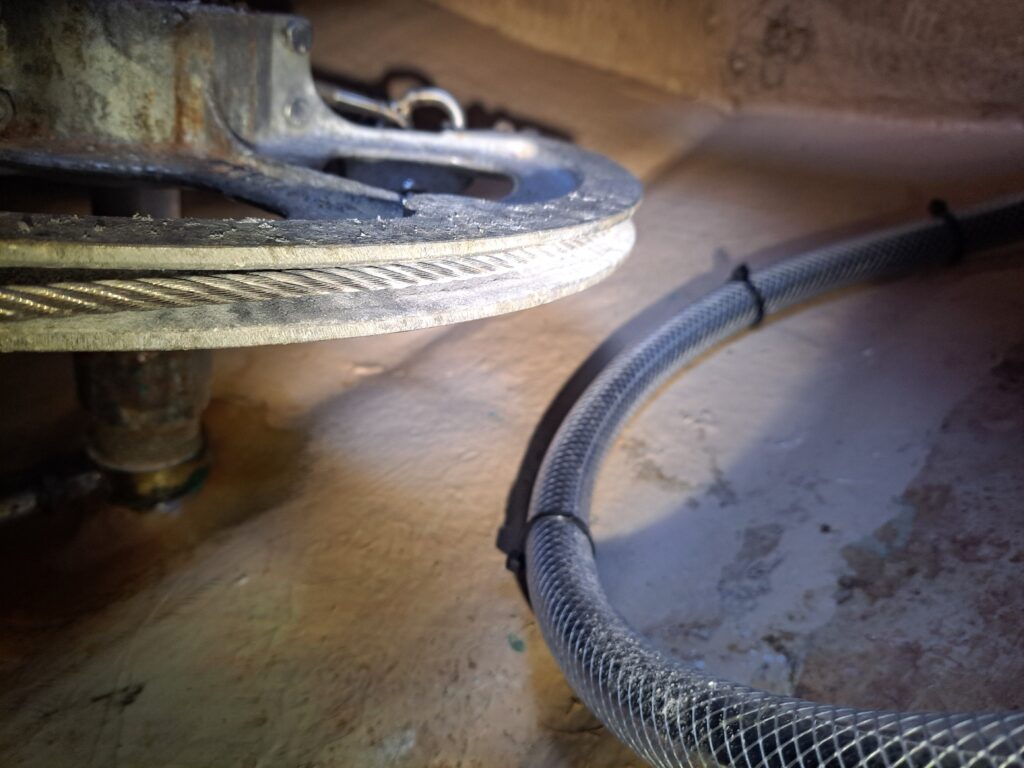
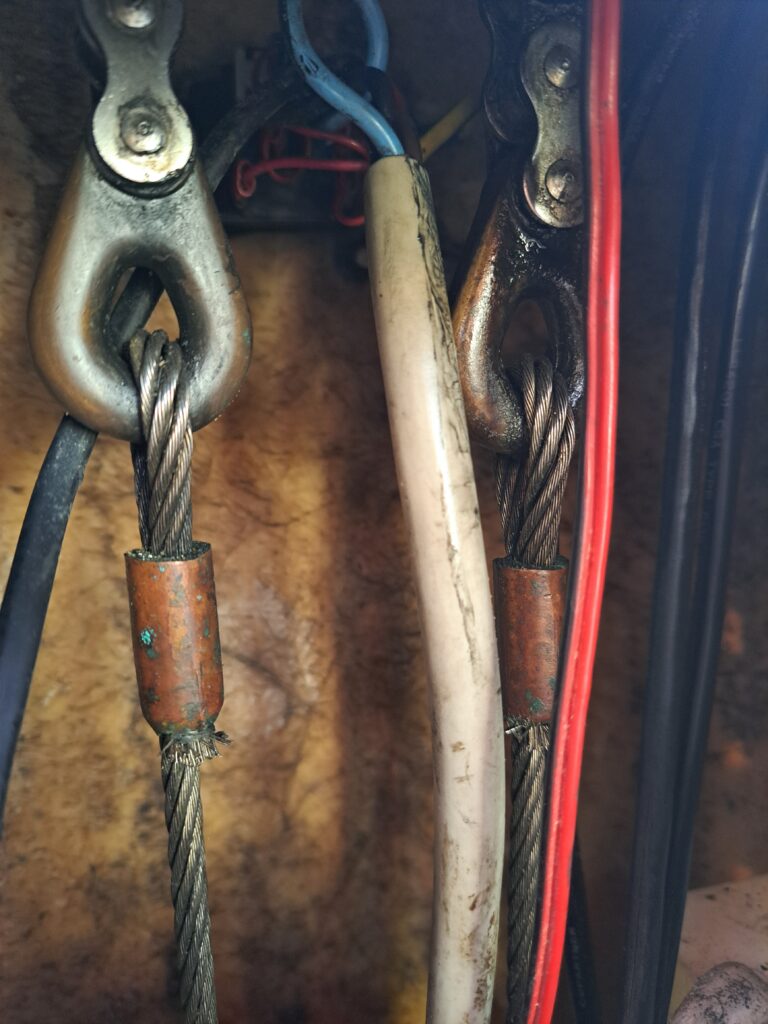
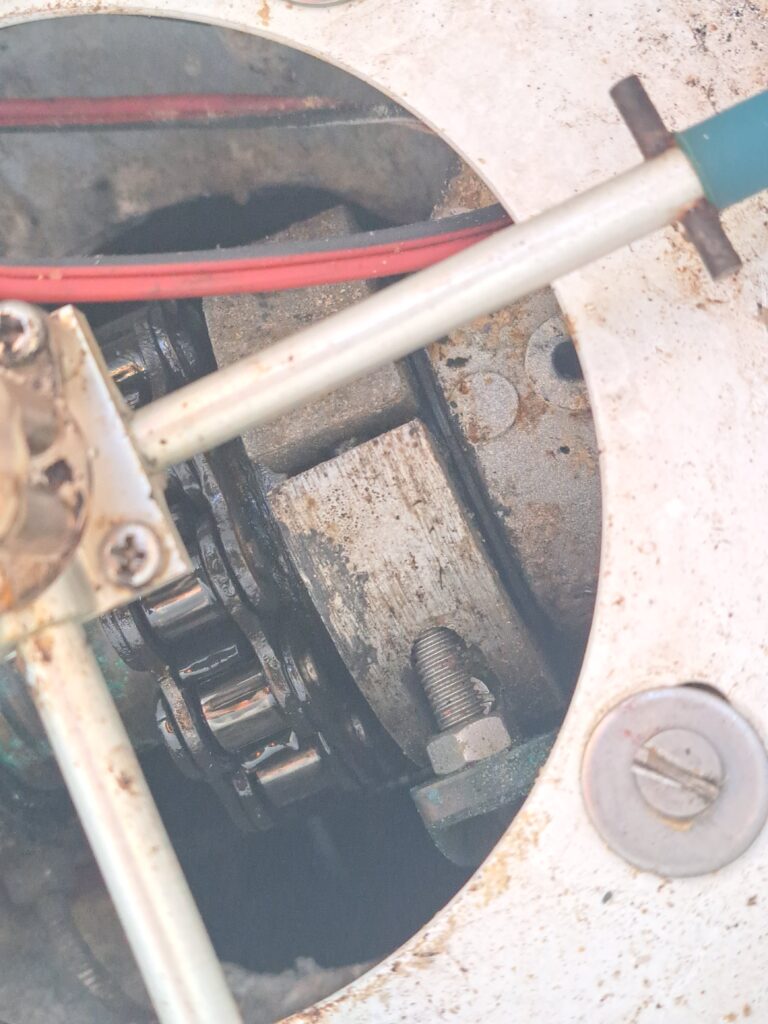
As we did prior to leave the Canary Islands, we checked the state of the seering cables from the rudder quadrant to the steering wheel. We looked for any frayed or worn cable. All was fine as far as we could see.
Regreasing of rudder shaft box
Some time passed since last time we pressed grease into the rudder shaft box. We could see tiny drops of water around the rudder pack box indicating that some water managed to pass through. That was indication that it was time to press new grease.
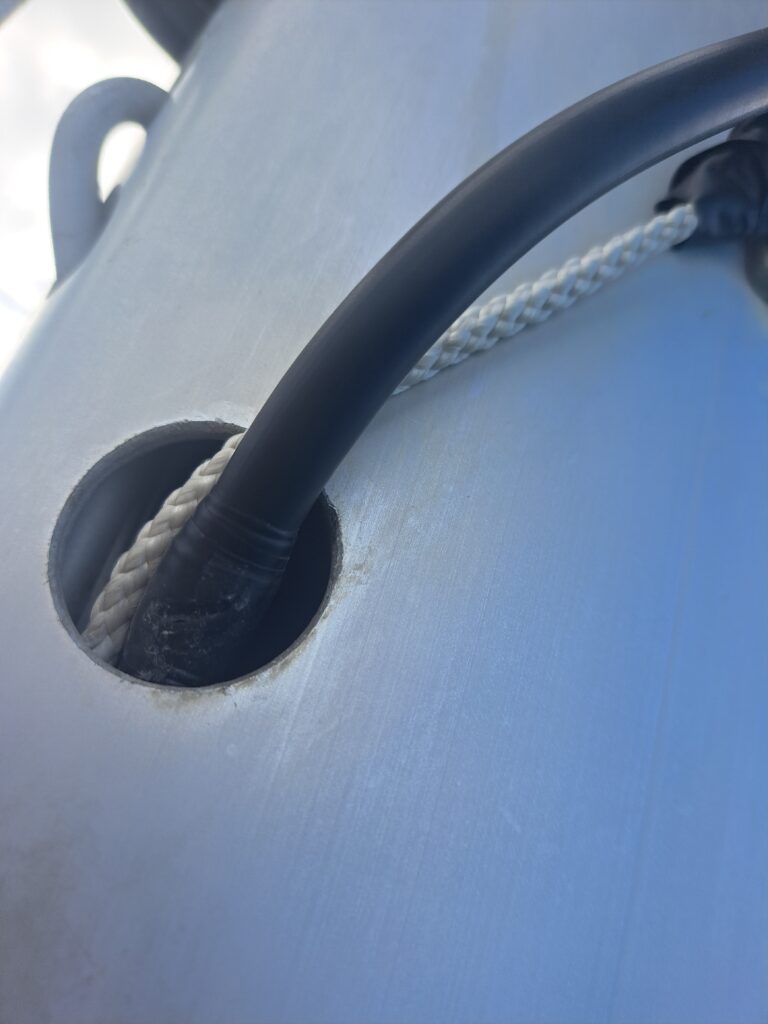
Check the conditions of the VHF cable on top of the mast
The VHF cable that runs inside the mast is a bit pressed where it gets out of the top of the mast because of its own weight. We have been regularly checking the conditions of it and we added a few layers of electric tape to protect it when we were in Boulogne-Sur-Mer. This time we only checked that the tape was still in place to protect the cable.
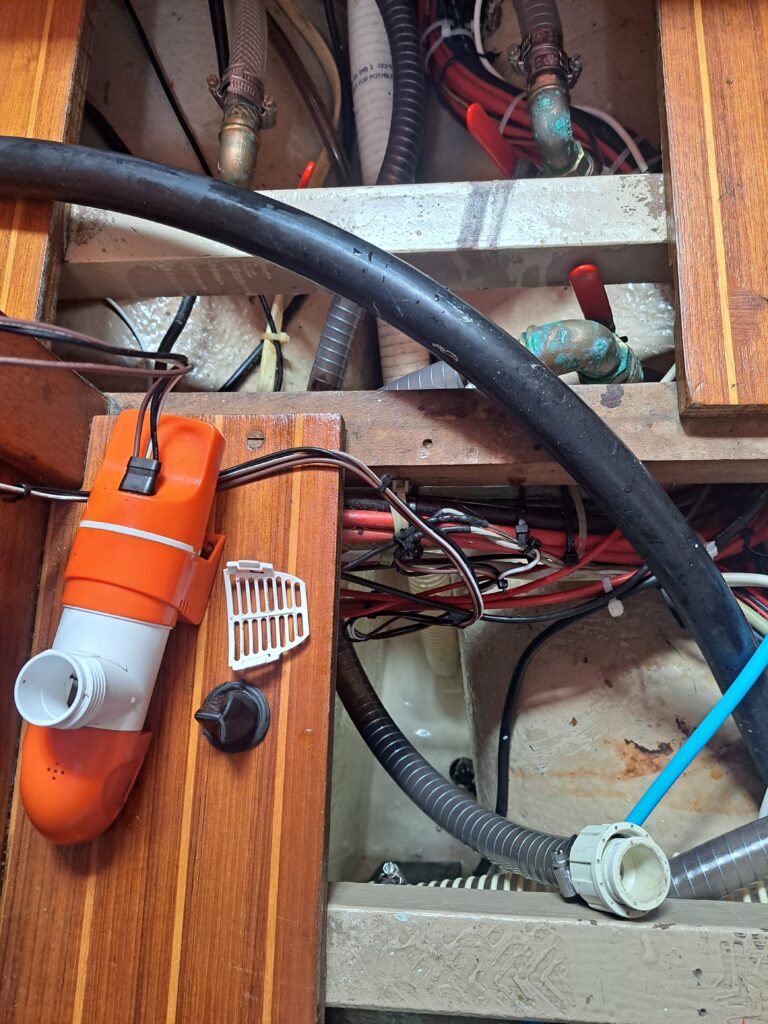
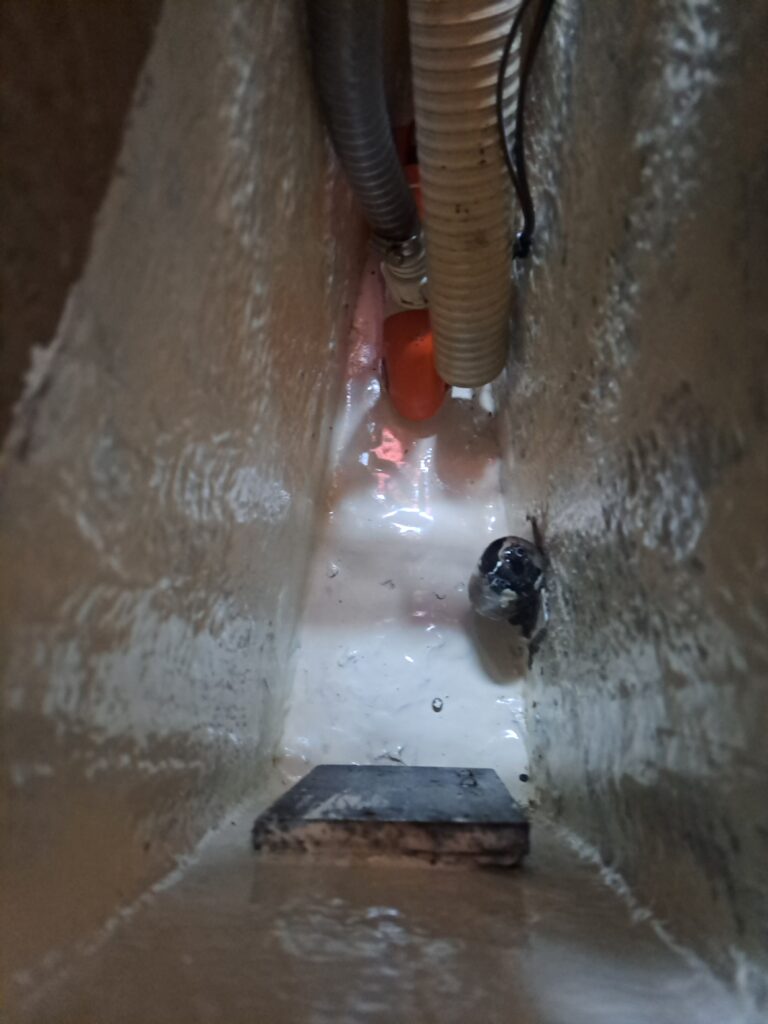
Check of bilge pump
We cleaned the bilge, cleaned the outside of the pump and cleaned the non return valve that is installed at the outlet of the pump. We then dropped several liters of water in the bilge to check that the pump was correctly starting on high level of water in the bilge and that we had good flow going out the through hull.
Repair of Genoa
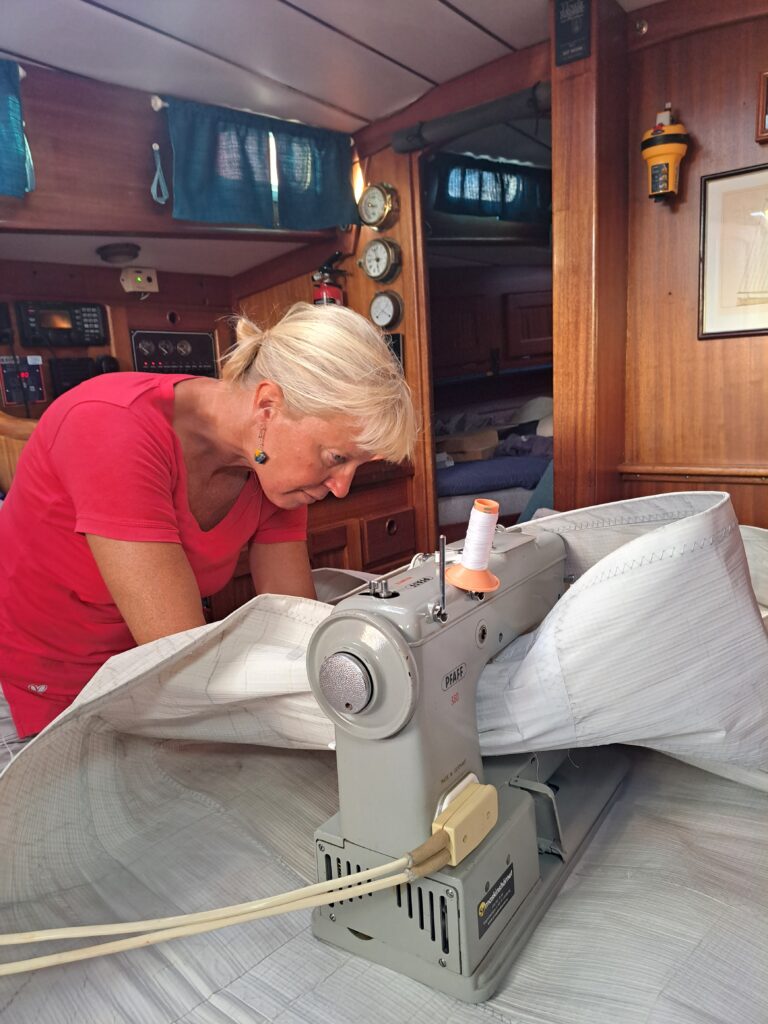
The Genoa we are sailing with is about 26 year old. It has been through a lot of wind, a lot of sunlight and a lot of salt water. But we wanted to try to sail it a bit more so we removed the sail from the furling system and brought it inside the boat to make repairs.
Haul out
On April 7, we got Lovisa lifted in a boatyard in Philipsburg for a bottom paint refresh and to get the cracks that we had on the pushpit repaired. We took the opportunity to replace the anode on the propeller shaft and the one on the bow thruster. We got the propeller cleaned and painted with new primer and antifouling but that work was done too quickly so there is no chance it will hold …
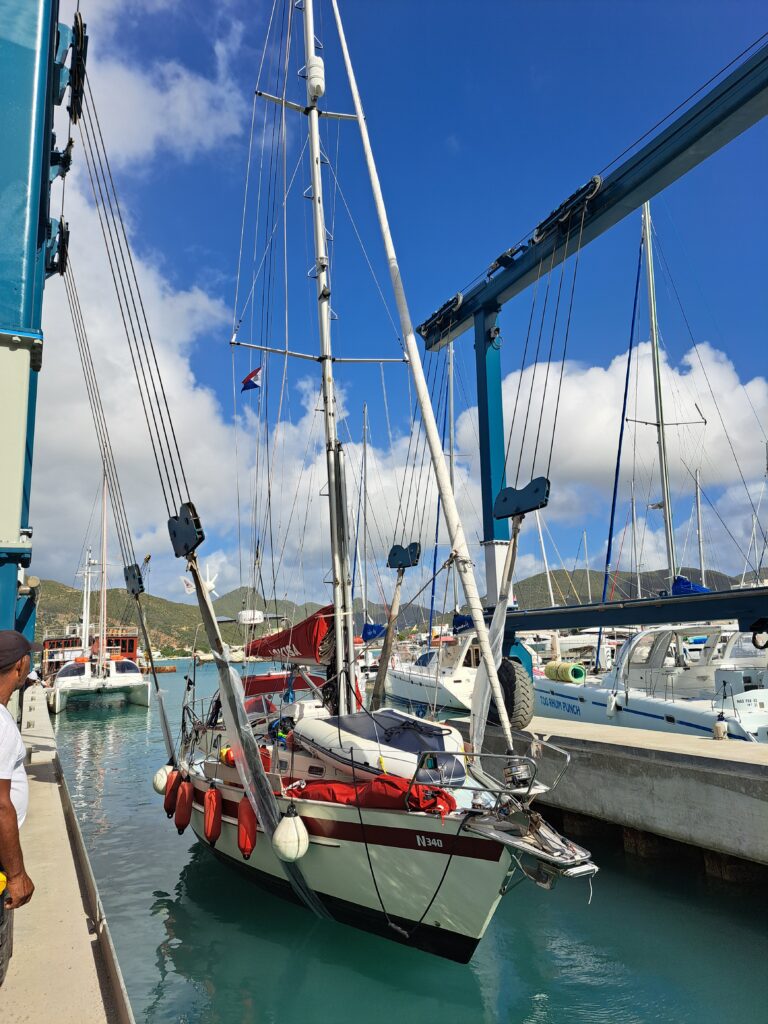
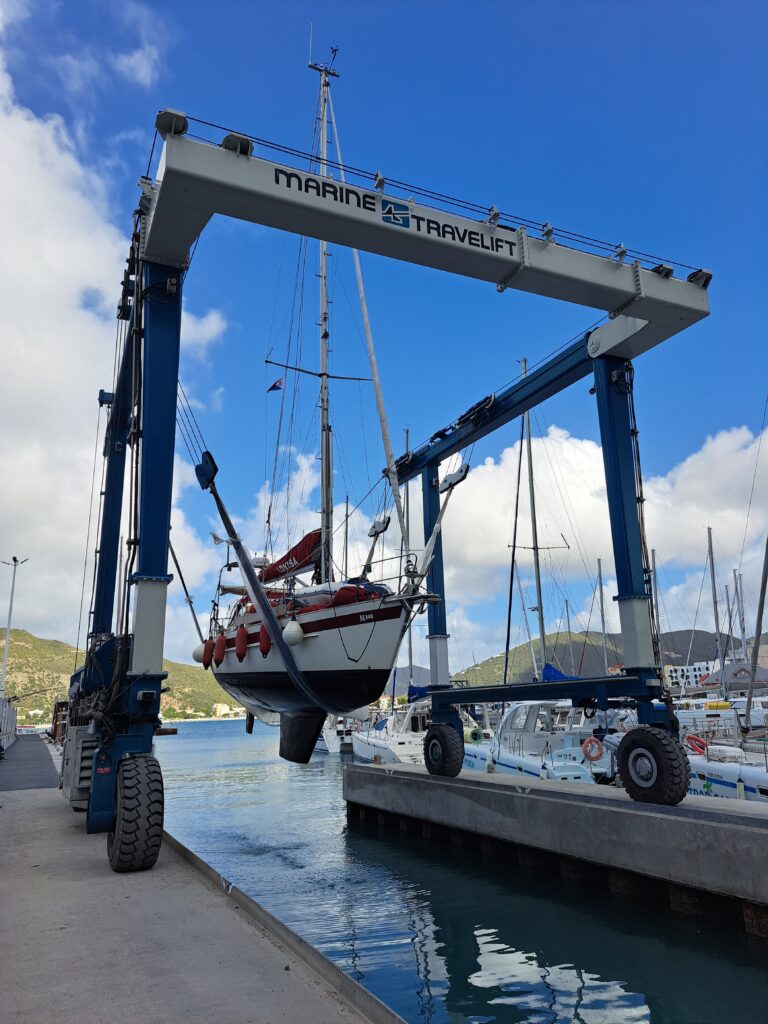
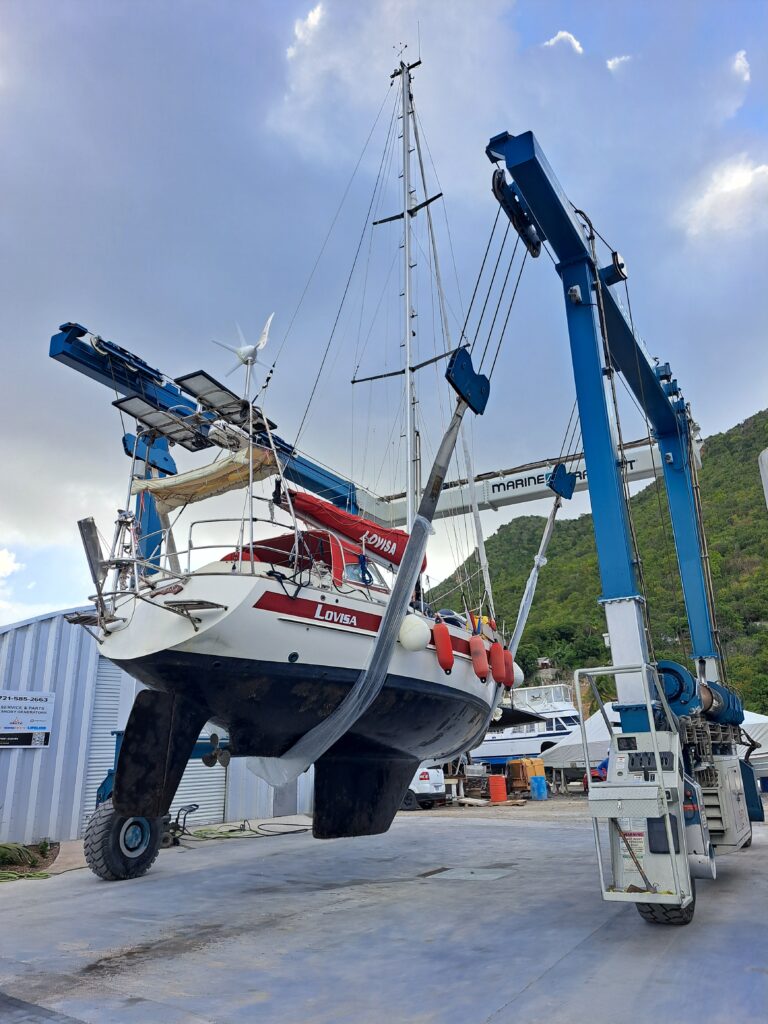
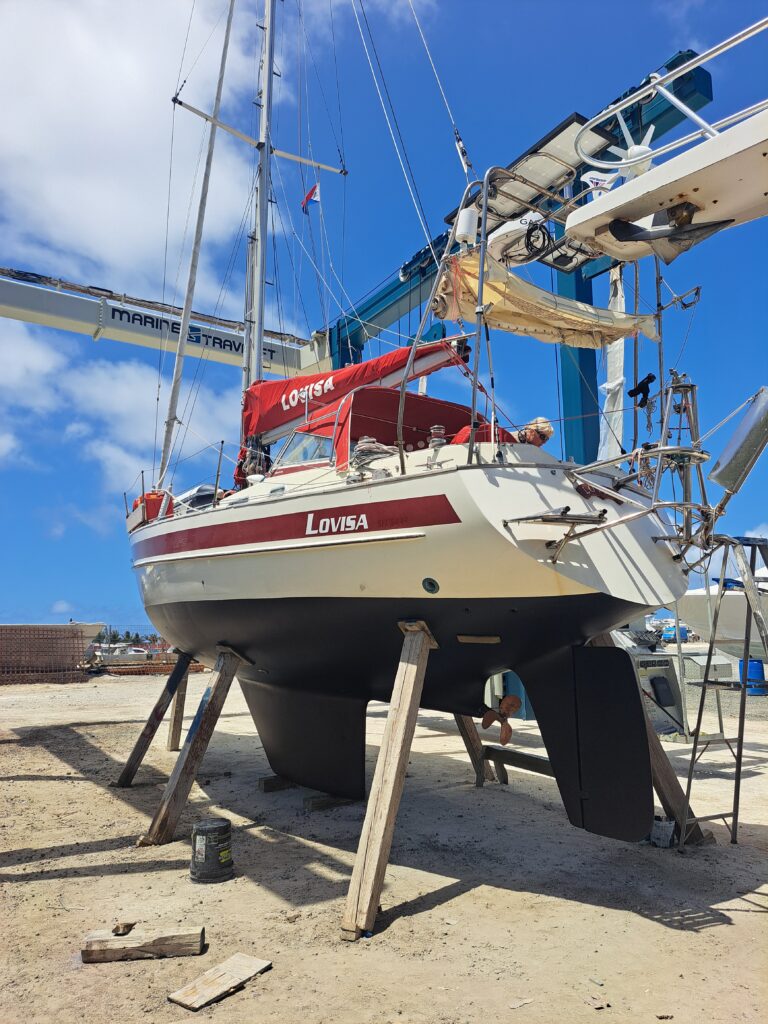
After two days on land, Lovisa went back in the water on April 9.
Replacement of gas regulator
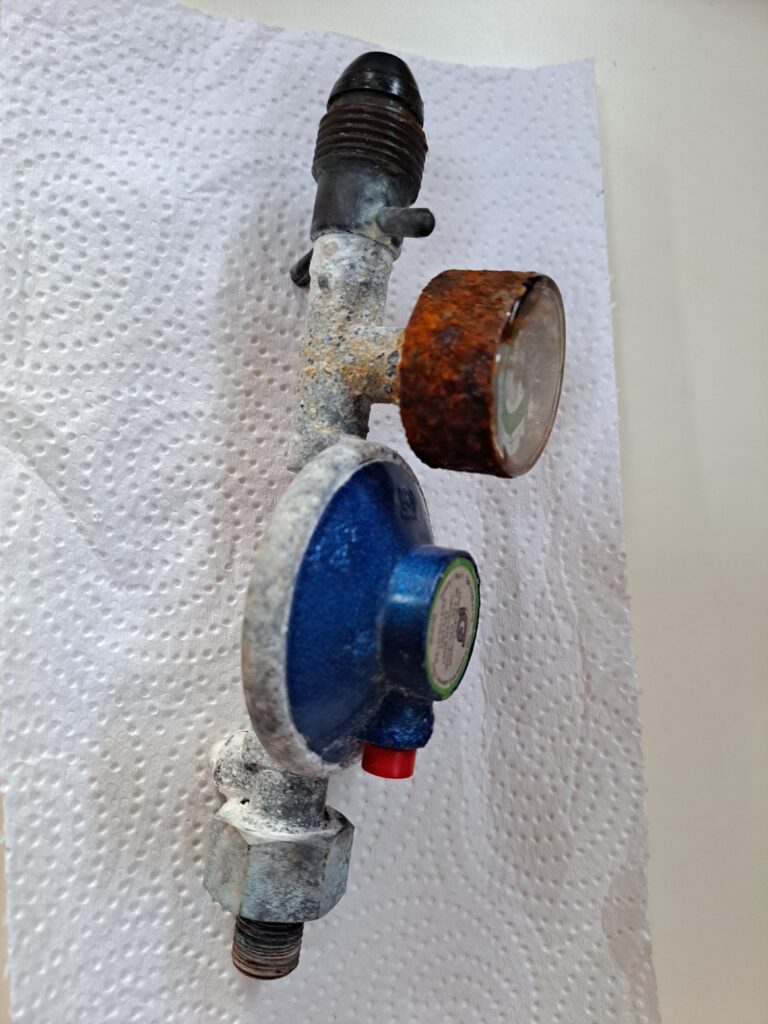
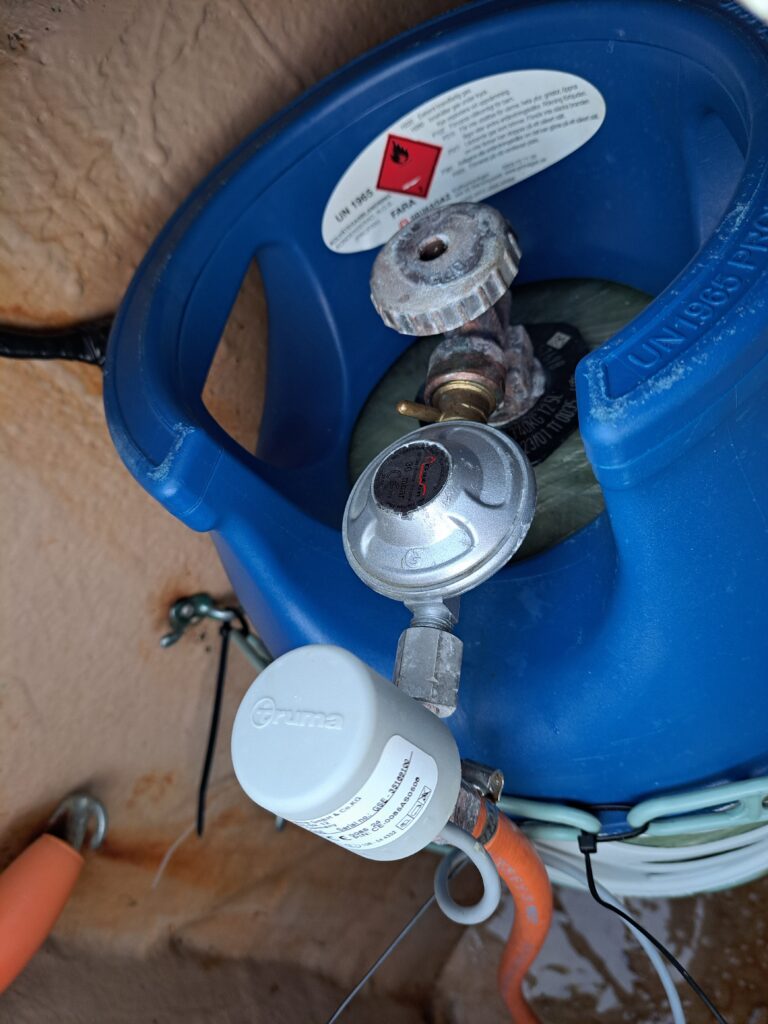
After we bought Lovisa we replaced the gas regulator as part of the preparation for this adventure. We bought a regulator that is fitted with a pressure gauge as it helps to know when the gas bottle is about to finish. Although the regulator is sold for boats, the pressure gauge started to rust very quickly. Salt water also managed to get inside the instrument and the needle got blocked.
The last thing we want is a gas leakage so we decided to install the spare gas regulator that we carried with us.
Replacement of windvane steering lines
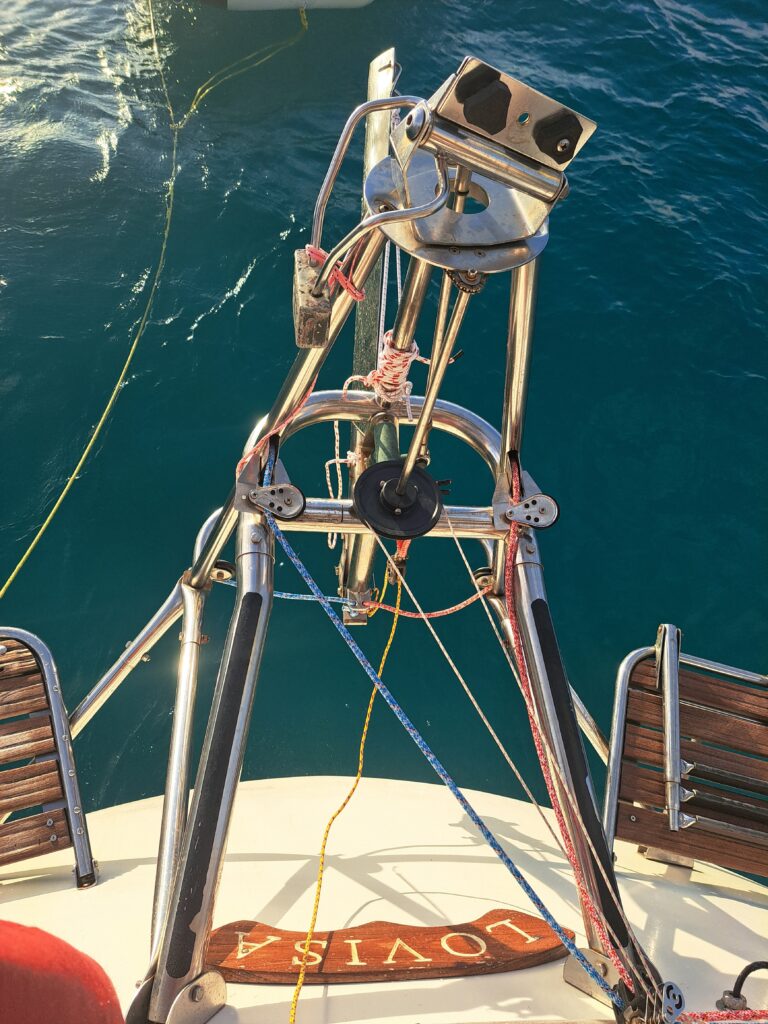
We left Sweden with new steering lines for the windvane. We have used the windvane a lot along the way and the chafe sleeve of our lines were worn in some places, so we replaced them.
Check of the state of the halyards
We left Sweden with halyards and sheets almost new. We checked the state of them. We found two minor issues:
– The eye loop of the genoa halyard that was a bit worn so we rebuilt one.
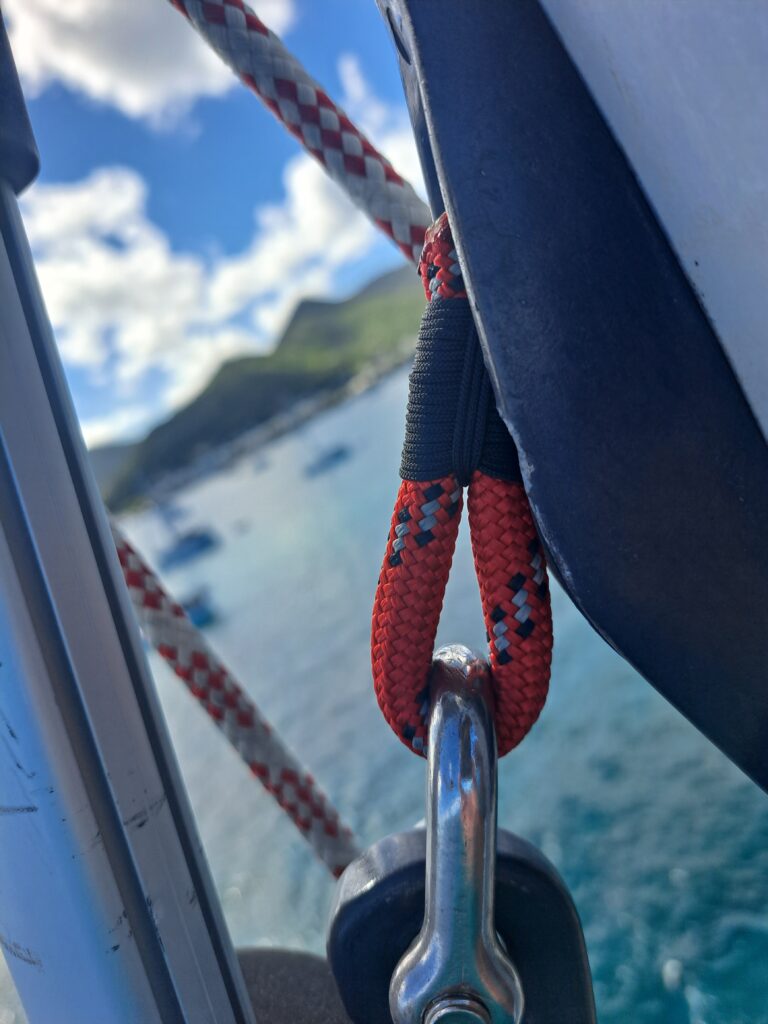
– the chafe of the mainsail halyard was a bit worn at the location where we normally lock the halyard on the mast when the mainsail is up. To not continue damaging the chafe on the same area, we shortened the halyard on the working end.
Cleaning of windlass
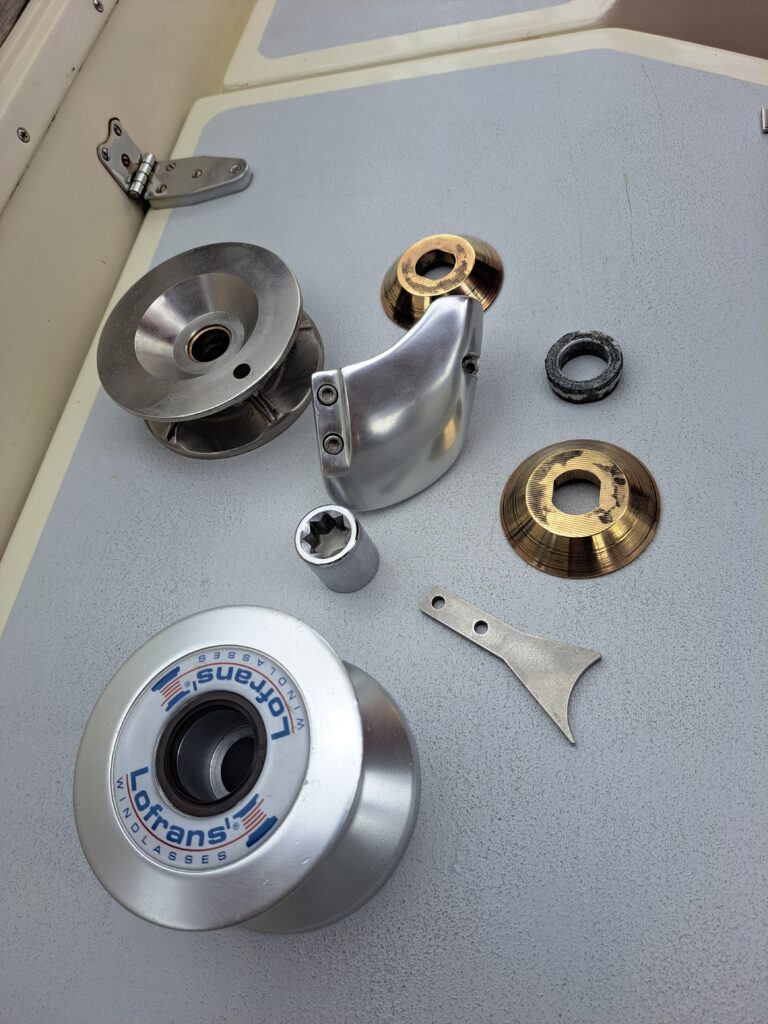
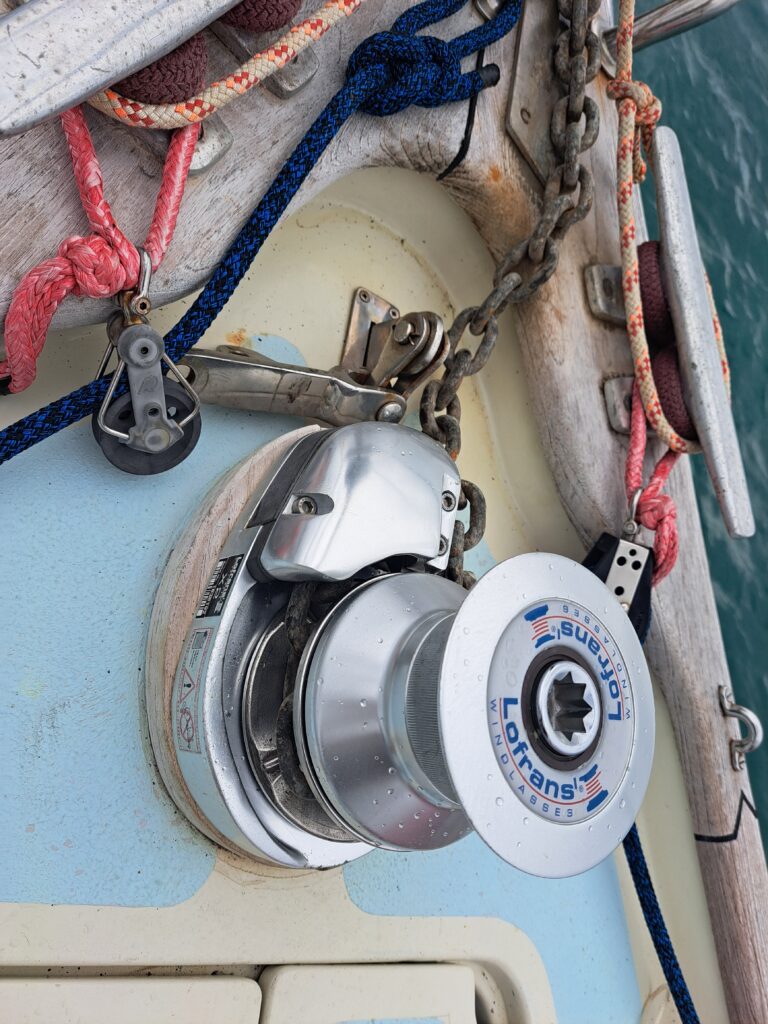
The cleaning of the windlass itself has little to do with the actual sailing but we will for sure be happy to have a windlass that work smoothly at arrival in next destination. We have used it a lot since last cleaning we did in Grande Anse d’Arlet in Martinique so it was time for a new cleaning and regreasing of the moving parts.
Cleaning of outboard engine carburetor
A well running 2,5 horse power outboard engine won’t be a game changer for an ocean passage. But after a crossing, especially if we stay on anchor at arrival, we definitely don’t want having to row to go to land. We have been using a lot the outboard engine since our arrival in the Caribbean. Eventually it began to run unevenly or simply died when running on idle. We took that as a request to get some cleaning so we removed the carburetor and opened it to make some cleaning. We found some varnish on the surfaces and tiny particules a bit everywhere.
We cleaned the carburetor with a cleaning spray, reassembled everything and made a test … we saw no improvement whatsoever … after a few swear words we reopened the carburetor and this time we dismantled the orifices and cleaned them separately very thoroughly. After the second reassembly, the engine came back running very smoothly.
We took the opportunity of this work to replace a few gaskets to try to eliminate a tiny fuel leakage from the carburetor that we had for some time.
Repair and upgrade of the cover for the cutter sail
We have been sailing all the way with the cutter sail packed on deck inside its cover when not used. It went all smooth until our sailing to Philipsburg. Although the cover was tied to deck from its ends, a bigger wave probably washed the deck and dragged the middle of the cover with the sail inside overboard. The whole thing hanged in the water until we noticed the issue and lifted it back, but the cover got damaged and needed some repair. We sew an additional loop in the middle of the cover to be able to tie it more firmly on deck.
Re-waterproofing of rain gear
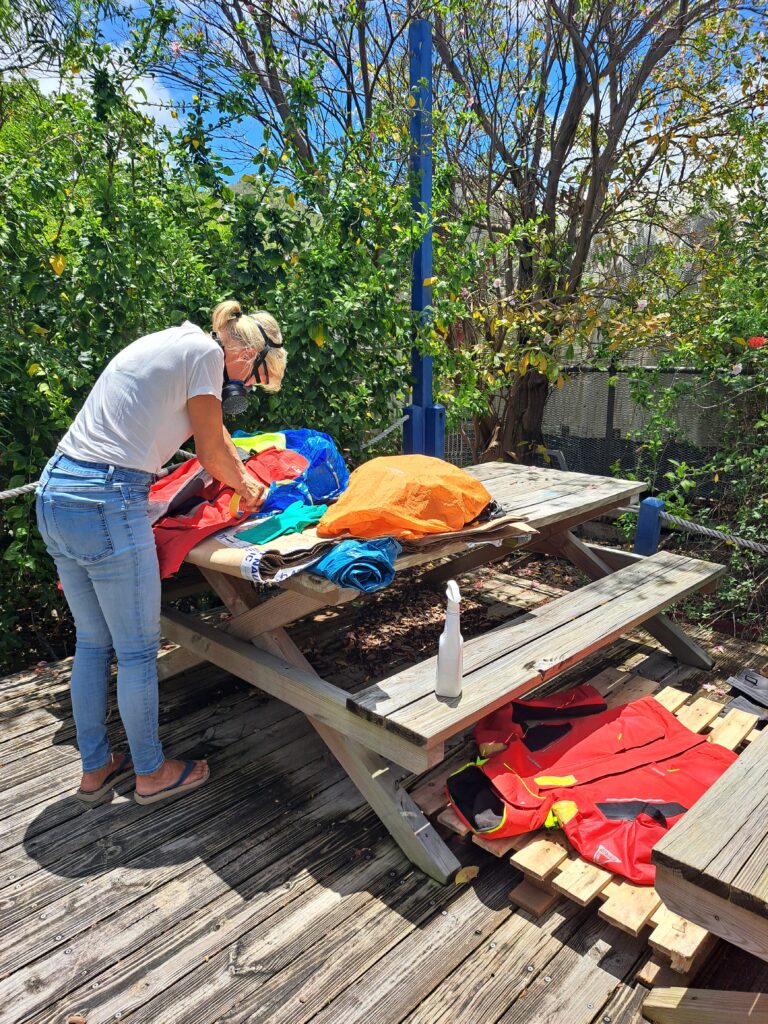
After heavy showers one night, we ended up with the dinghy full of fresh water. That was perfect timing as we were in need of big quantity of fresh water to clean our sailing gears prior to apply waterproofing product. We used the dinghy to rinse our offshore rain gear from salt and dirt. We then sprayed them with 303 fabric guard to hopefully keep us dry even as we reach wetter regions.
Inspection of the towed hydrogenerator
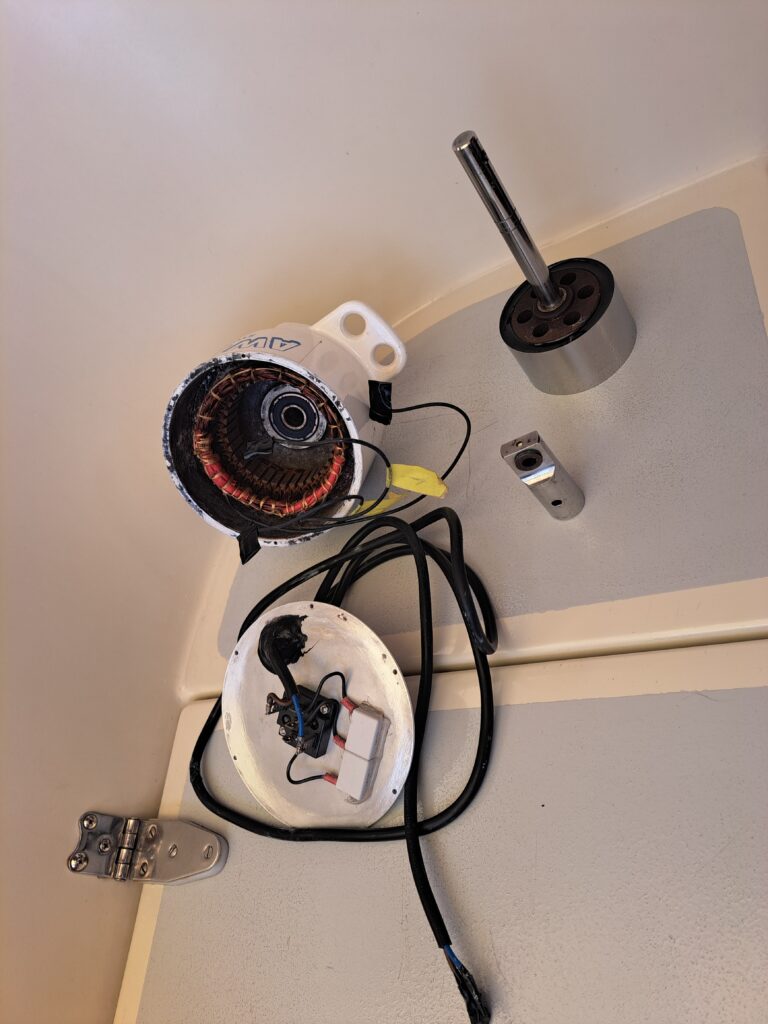
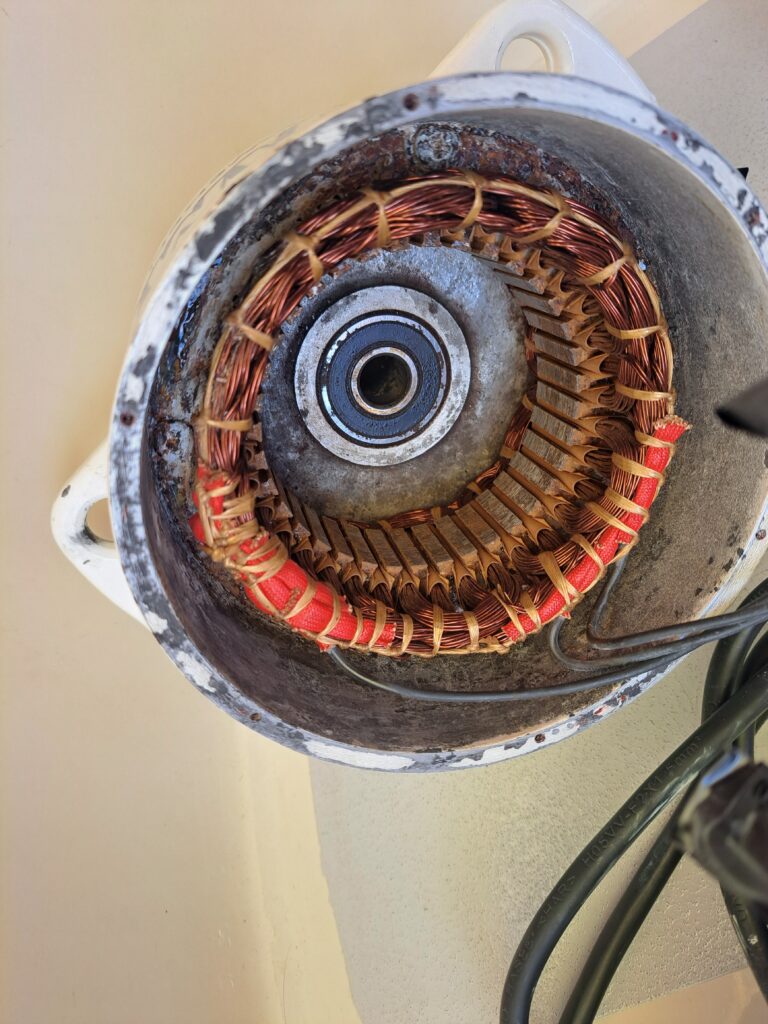
We started to use it when we were on the way to Lanzarote and we used it frequently until we reached the Caribbeans. In the caribbeans, it remained hanging on the pushpit but we didn’t use it. We inspected it to know if we could still rely on it. The internal components were more or less in the same conditions as when we repaired them before leaving Sweden. We cleaned a bit the contact, remove a little bit of dust, apply new sealant and closed again.
Service of watermaker
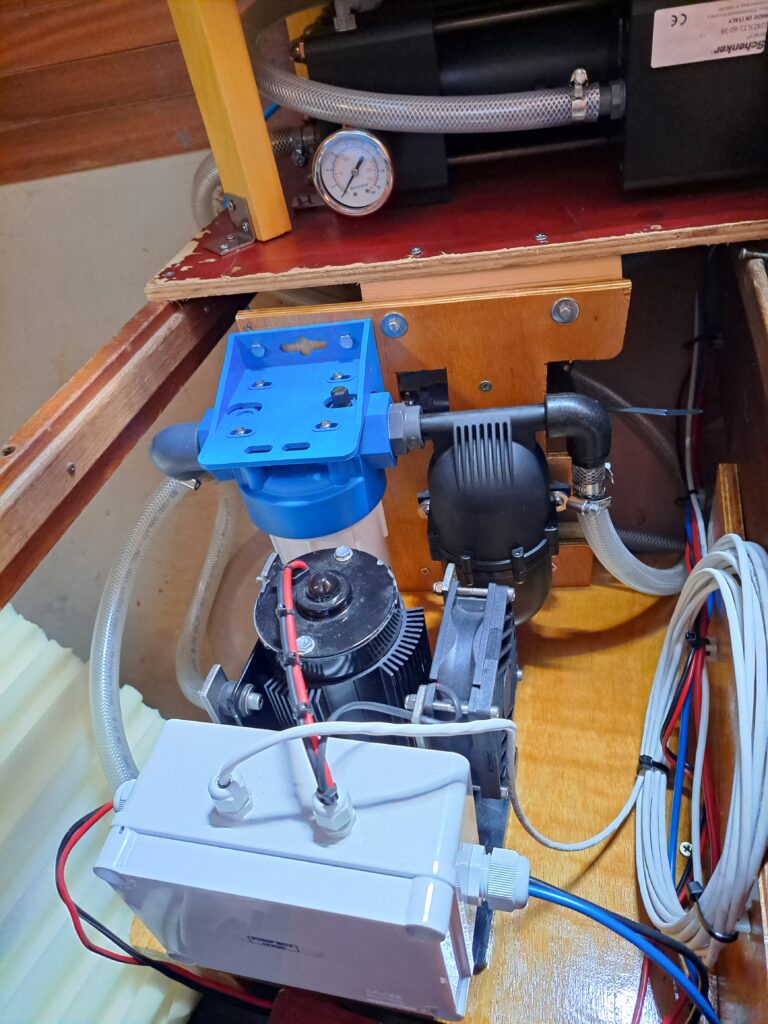
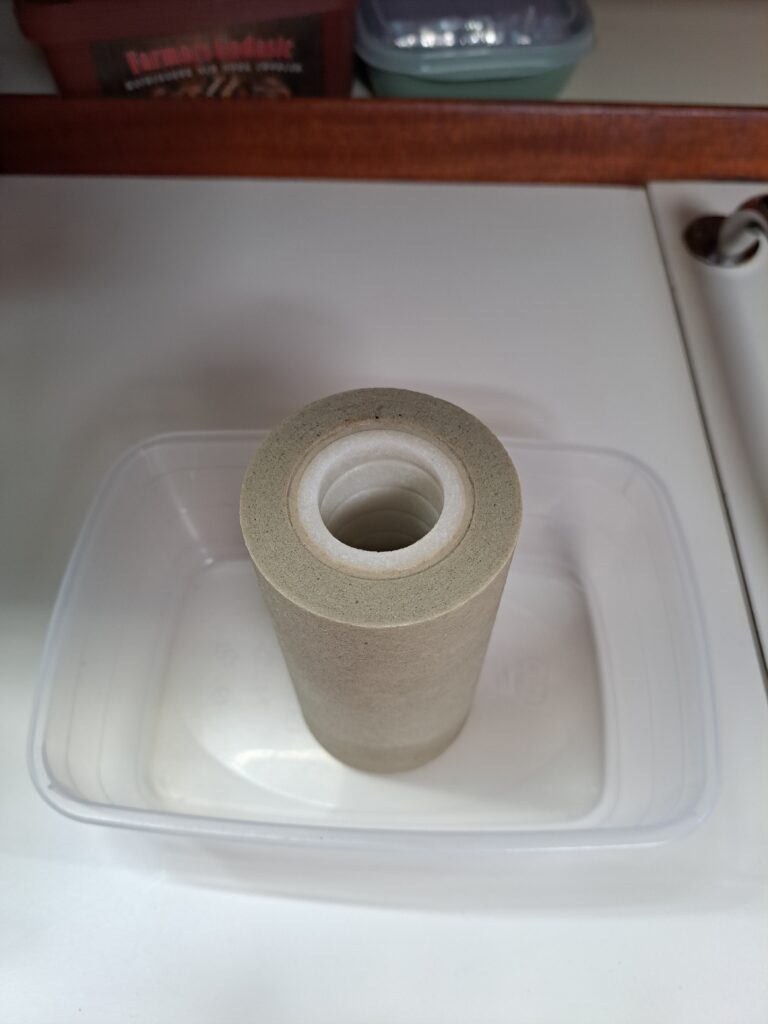
We replaced the fine filter of the watermaker. That was the second replacement since we started to use our watermaker. We also readjusted the pressure in the pressure accumulator located downstream the pump. We also found a small water leakage that we removed.
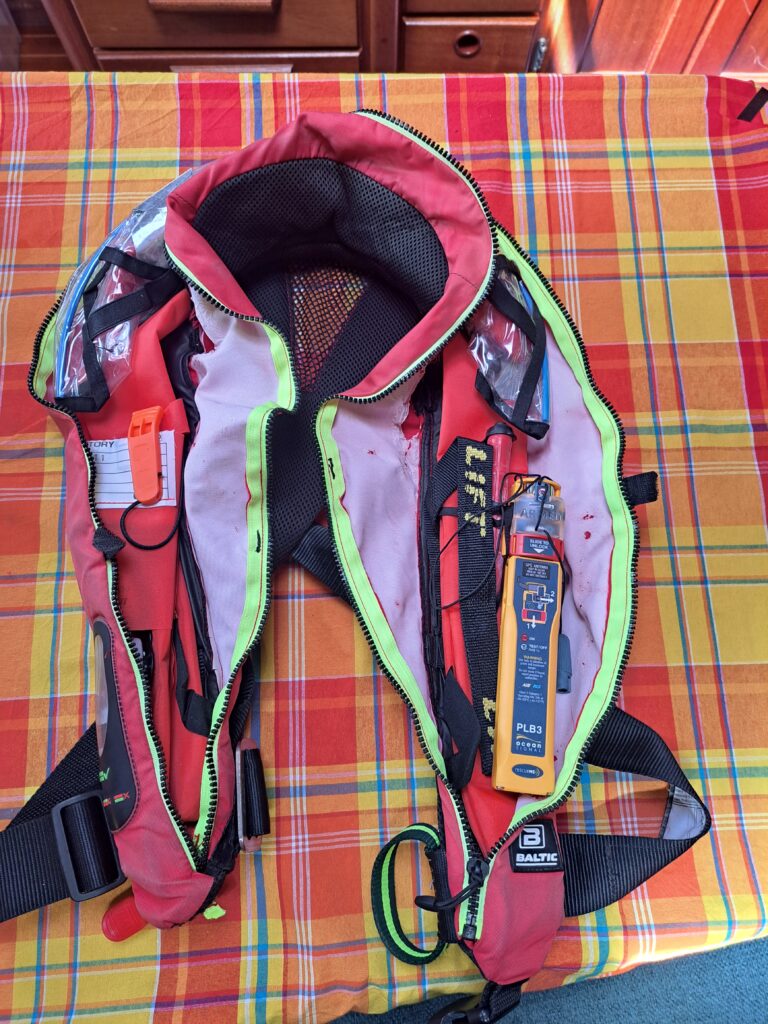
Test of our man overboard PLB3 devices
We both have man overboard PLB3 devices inside our inflatable lifevest. These need to be tested regularly according to manufacturer. The tests allow to check how much battery life has been consumed and check that the device is capable of acquiring a GPS position from satellites.
Engine lubricating oil and filter replacement
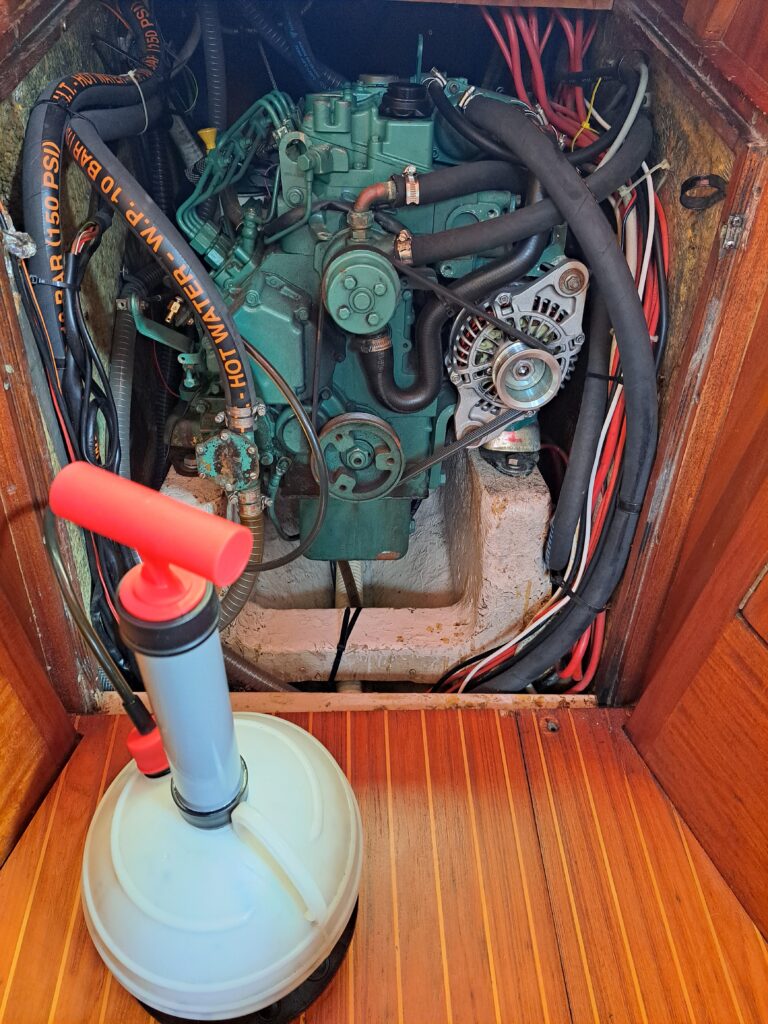
We left Sweden with new lubricating oil in the engine. We replaced the engine oil for the first time when we were in Lanzarote. We expect to run several hours on engine on our way to Azores so we replaced the oil a second time. It feels somehow good to start a long ocean passage with new oil in the engine.
We also replaced the oil in the gear. The oil in the gear was quite clear but since we never replaced it since we bought Lovisa, we thought it was a good idea to replace it too now.
Other checks as part of our checklist:
- Tension generator belt
- Coolant level
- Cooling seawater strainer
- Exhaust silencer: we made a temporary repair of the exhaust silencer in Teneriffe and we checked that it was not leaking.
- VHF check: we usually hear other people talking over the VHF loud and clear so the important thing that we wanted to confirm was that we could also be heard loud and clear.
- Adjustment of the tension of the rigging