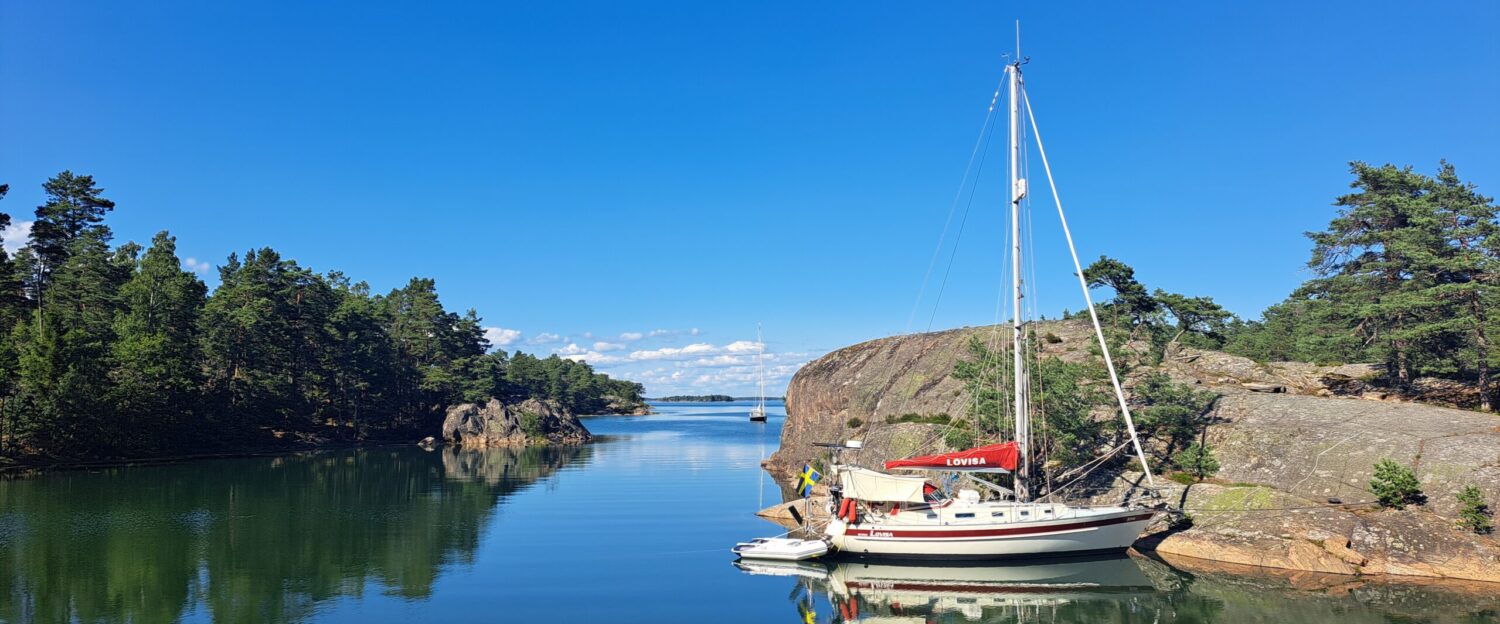
We anchored in Pasito Blanco when we first got to Gran Canaria. When the time came to go on land with the dinghy, the outboard engine that we got fixed in Cabo de Cruz, mainland Spain, gave us som new troubles. This time it was able to start and run although a bit irregularly, but it was dying as soon as we tried to accelerate with the gear engaged.
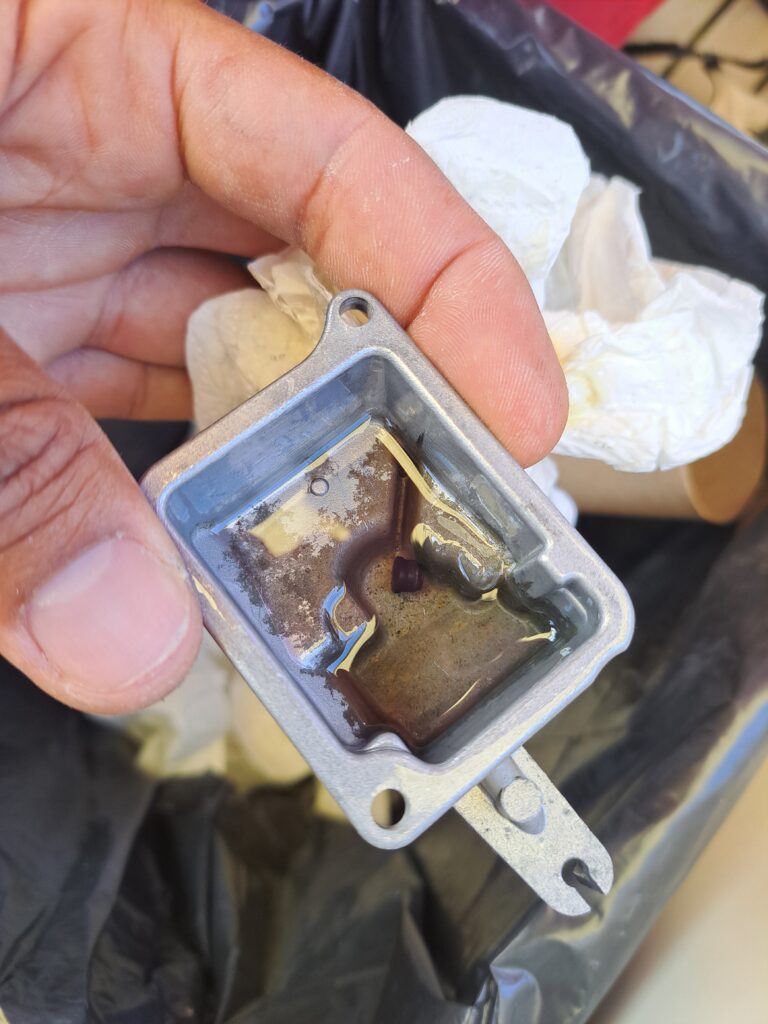
We tried to solve the problem ourselves this time. We removed the carburator from the motor assembly and opened it. We found a first problem already on the bottom of the carburator. The plug that is supposed to tap the opening of the pilot jet got loose and ended up on the bottom of the carburator. The rubber probably got old so the tap was not fitting tight as it should anymore. Apart from that, the carburator was clean as we were expecting.
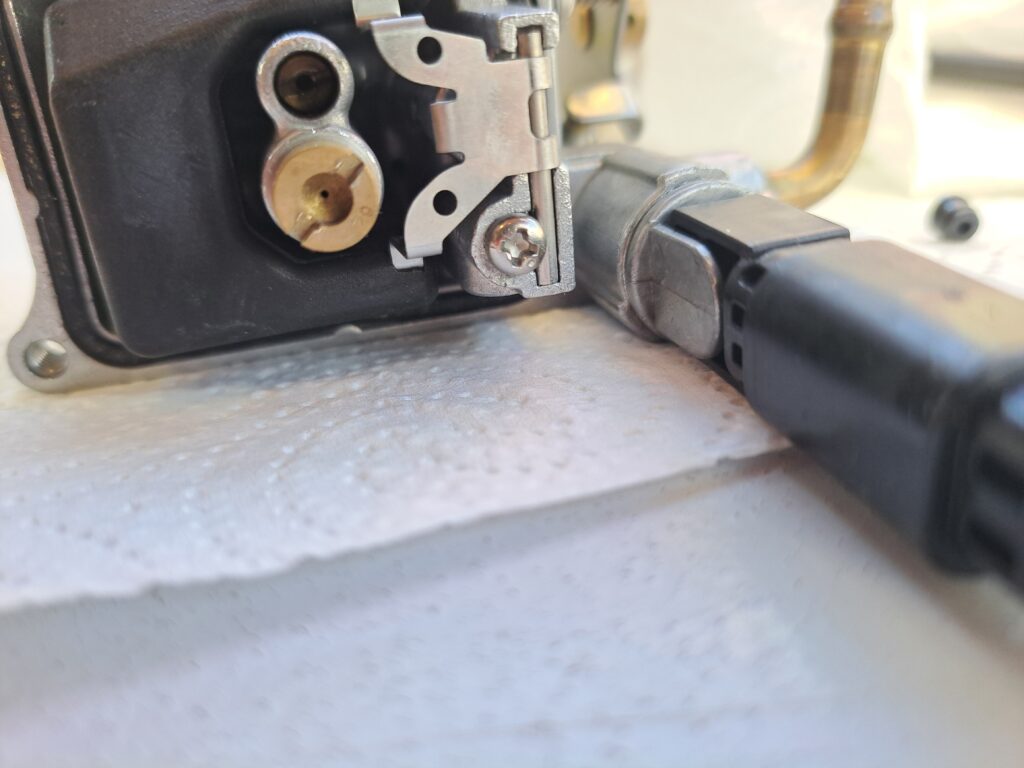
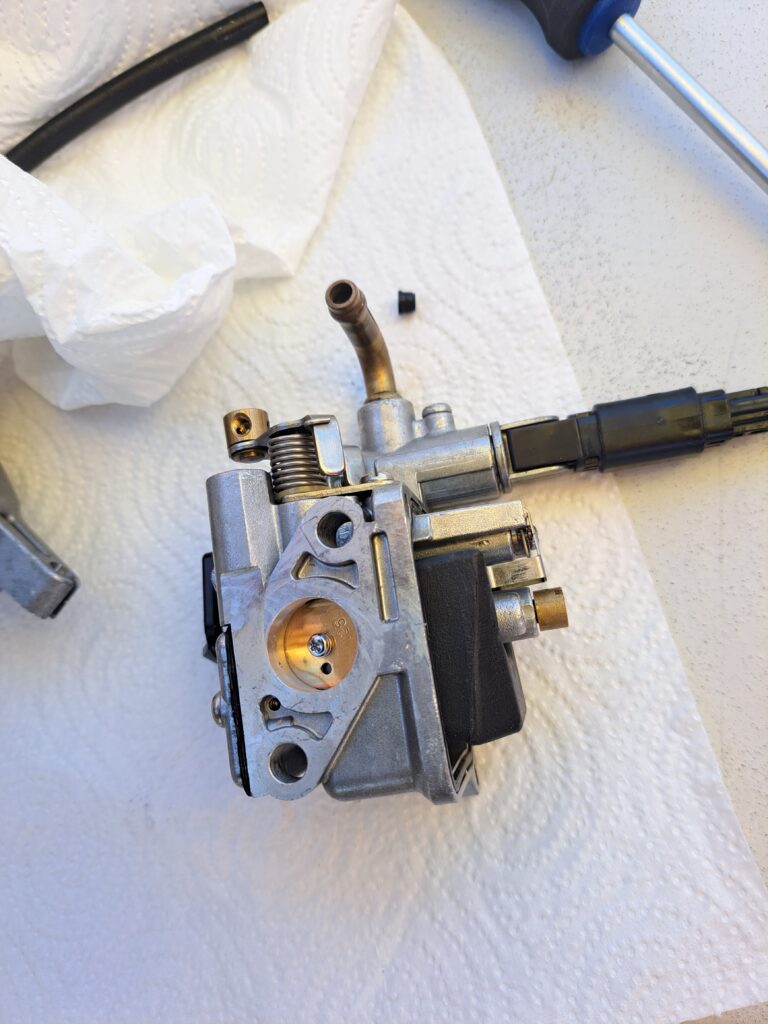
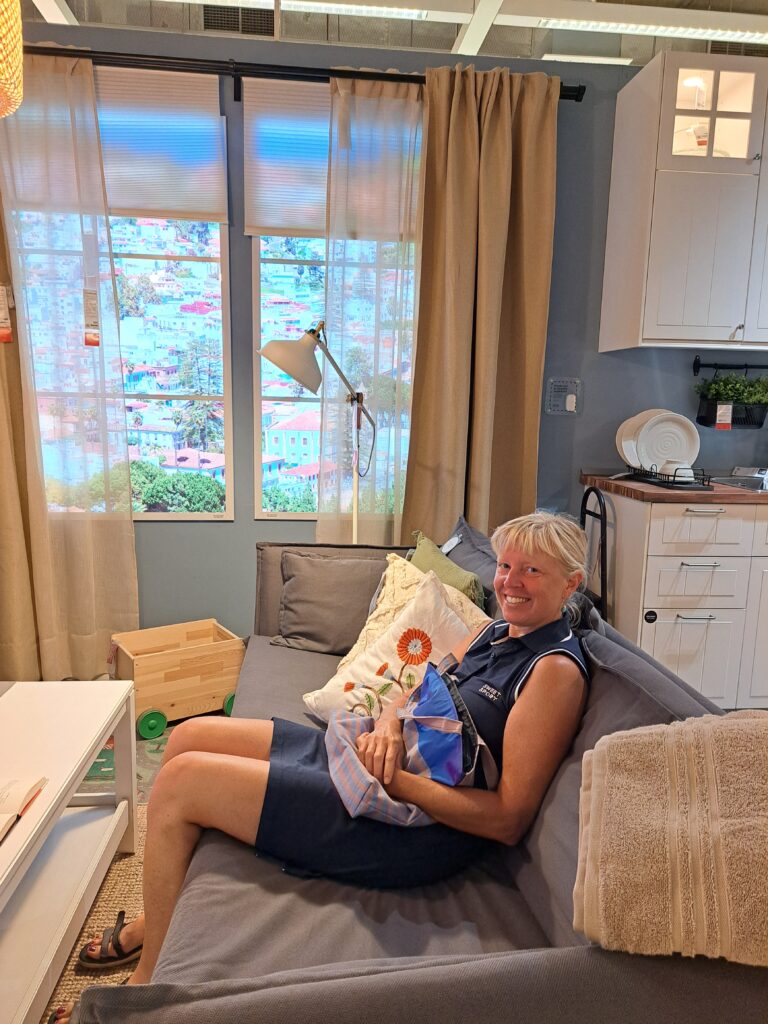
While we had quite a lot of spare parts for the main engine of Lovisa, we brought nearly nothing for the outboard engine. We spent some time looking for the small plug in some Yamaha service centre and boat equipment shops around Gran Canaria without success so we had to order it from Sweden. We also avoided to do any temporary fix as we were not in absolute need to use the outboard engine during the coming weeks. The hunt for our spare part gave us the opportunity to see Las Palmas and for Maria the opportunity to sit on a real sofa at IKEA. After more than four months on a 33 foot sailboat, the picture below tells everything about how it feels to sit on a real sofa! As our friends sailing S/Y Mana told us, “there is no disadvantage that doesn’t come with an advantage”.
We took the opportunity of being in Las Palmas to start buying food for the Atlantic crossing in one of the huge shopping centers.
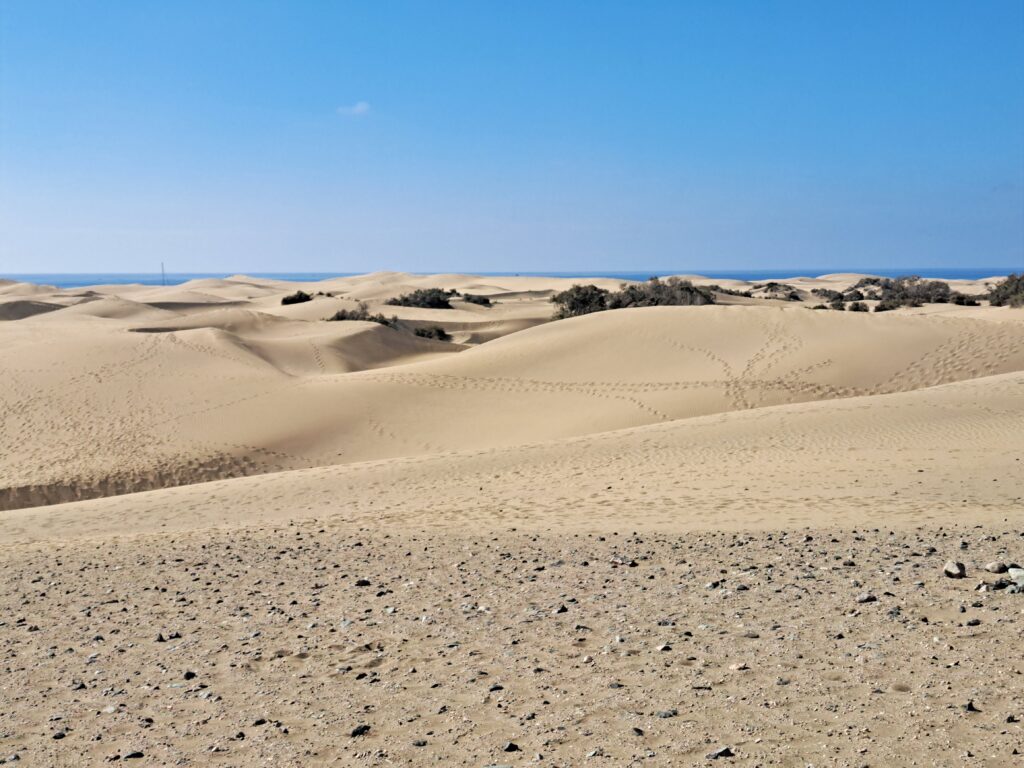
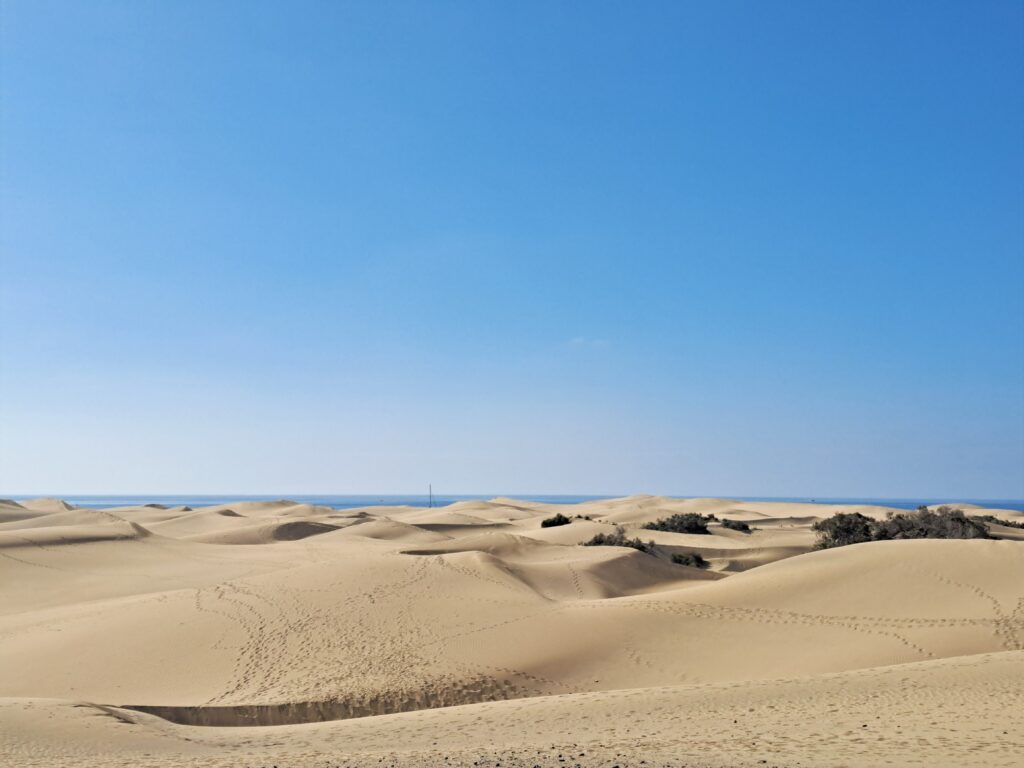
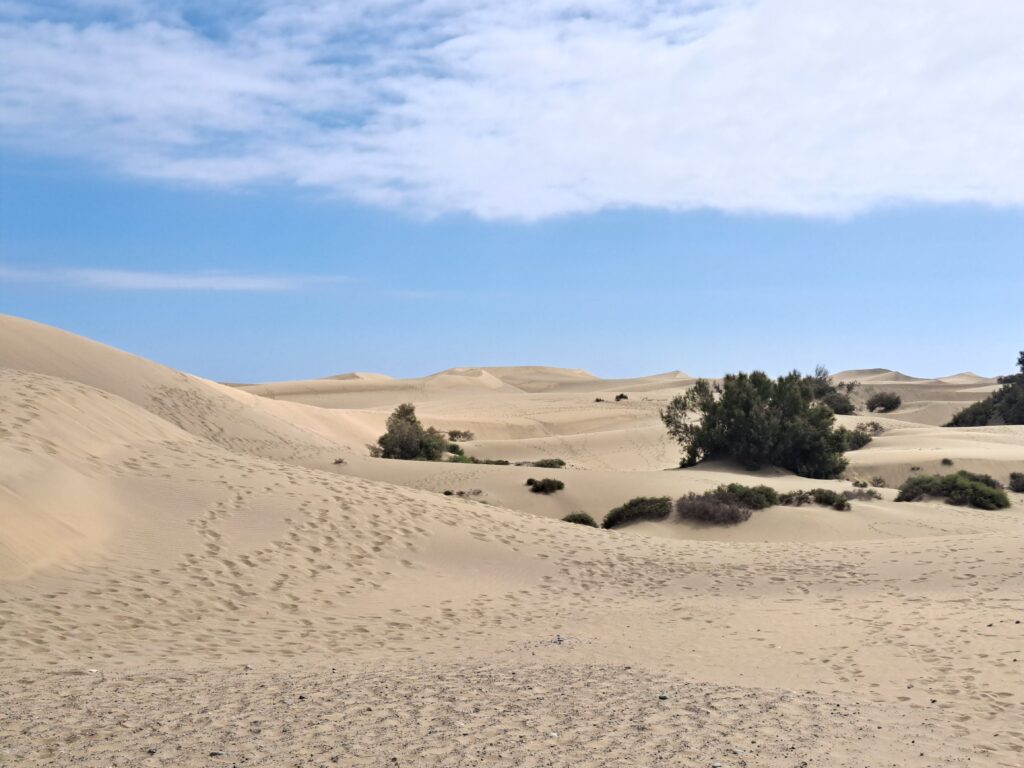
After giving up the hunt for the small plastic plug and filling up a first shopping bag with food for the crossing, we drove to the Dunas de Maspalomas that are a must see in Gran Canaria. Like a desert of sand trying to take over another desert of volcanic rocks.
While we had the car, we also drove to Puerto de Mogan, a small town in the southwest of Gran Canaria known for its colorful low buildings in the old town. The narrow streets between the houses were bordered with flowers giving a lot of charm to this small town.
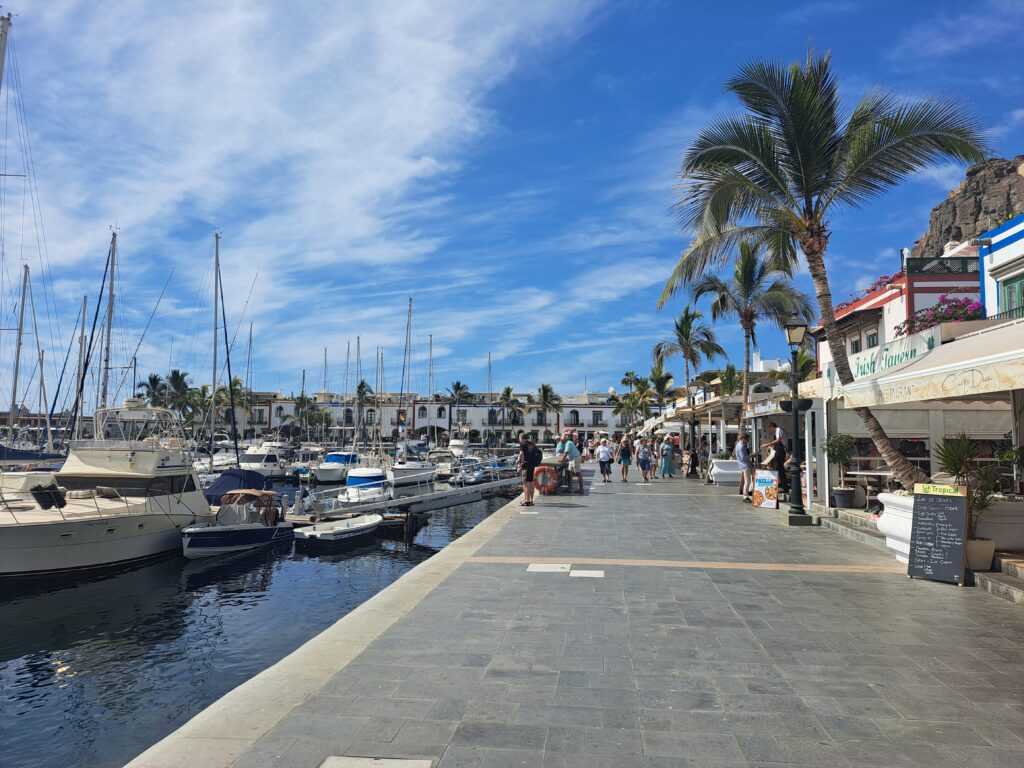
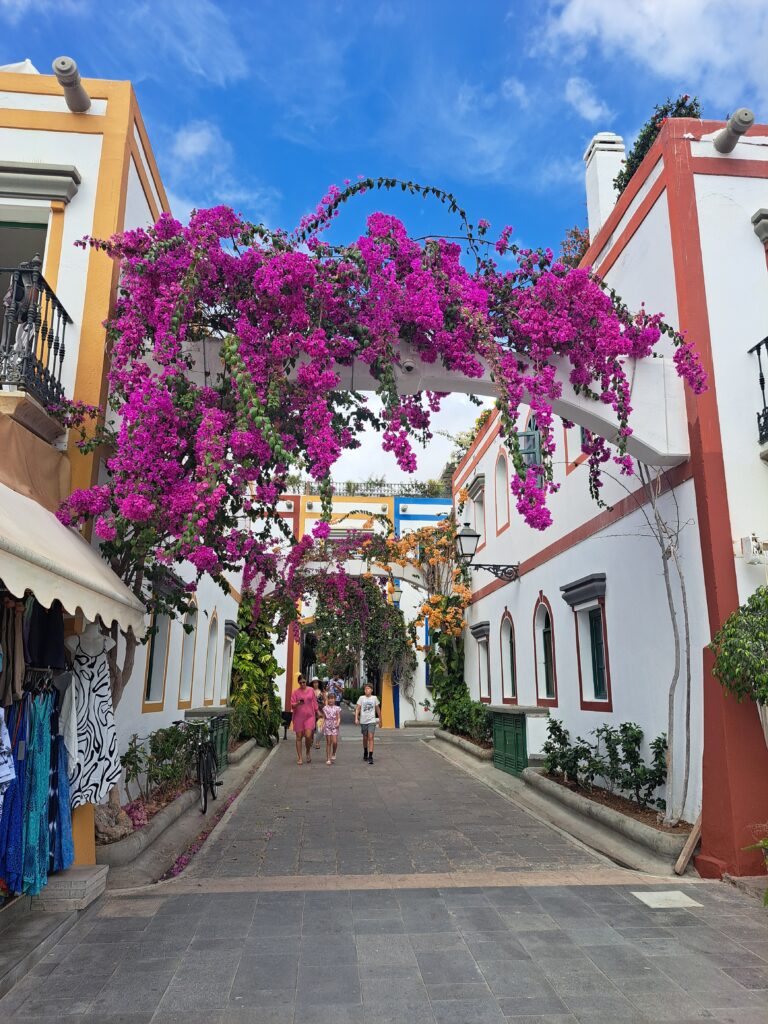
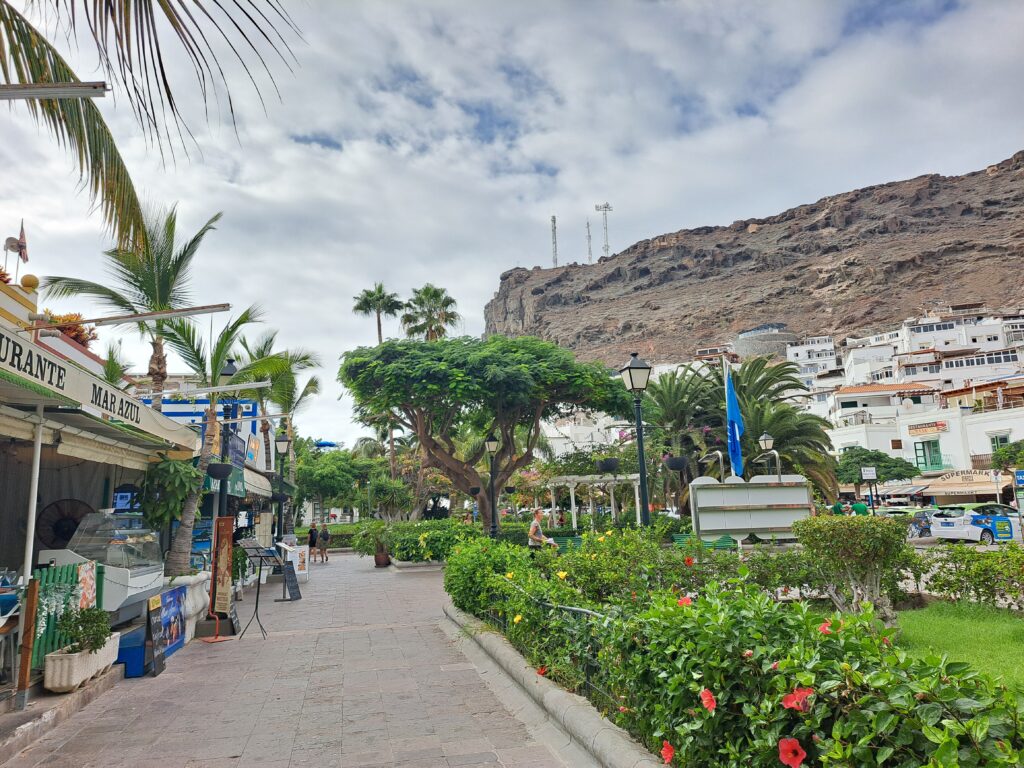
Unfortunately, the price to pay to visit those places was to drive on a large highway with sometime quite a lot traffic. It was fine by itself but after 2 days, we felt a bit stressed. After more than four months living on a sailboat further away from the sound of a city, we probably got quite sensitive.
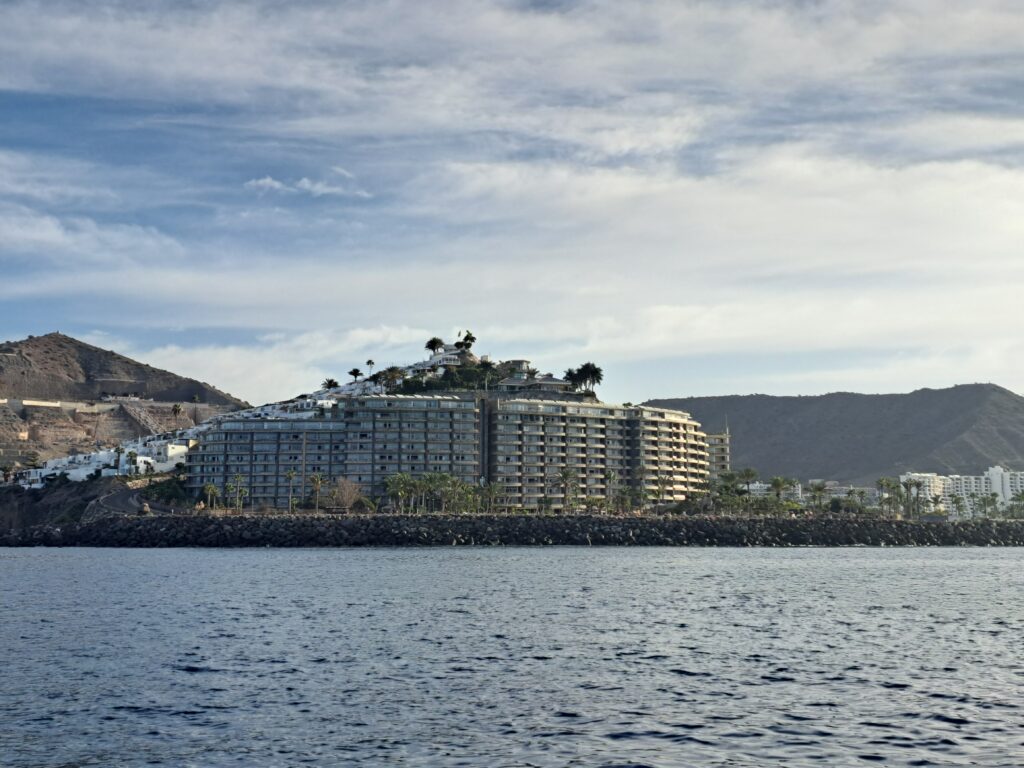
After our two days around Gran Canaria with the car, we decided to look for a new place to anchor in Gran Canaria. Unfortunately for us, most of the small towns along the south coast of Gran Canaria are full of large hotels and resorts. From Pasito Blanco we sailed to Anfi del Mar and stayed there two nights until we got tired of seeing the huge hotels that have been built all along the bay. We then moved and anchored in front of Puerto de Mogan as we liked the place when we drove there with the car.
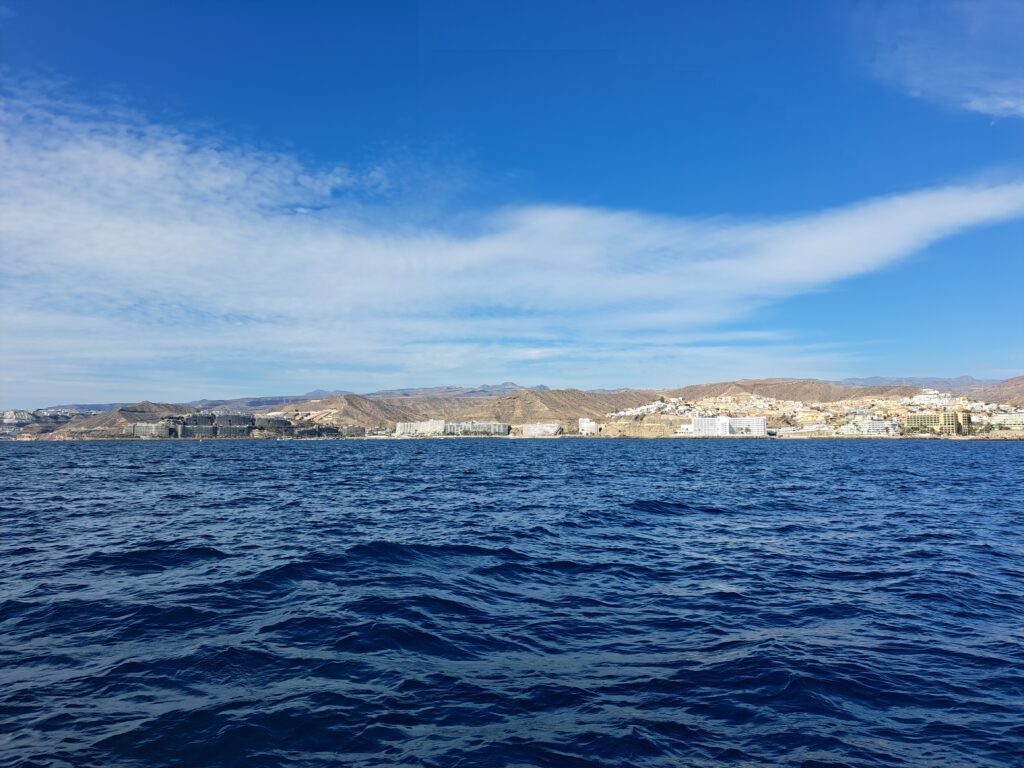
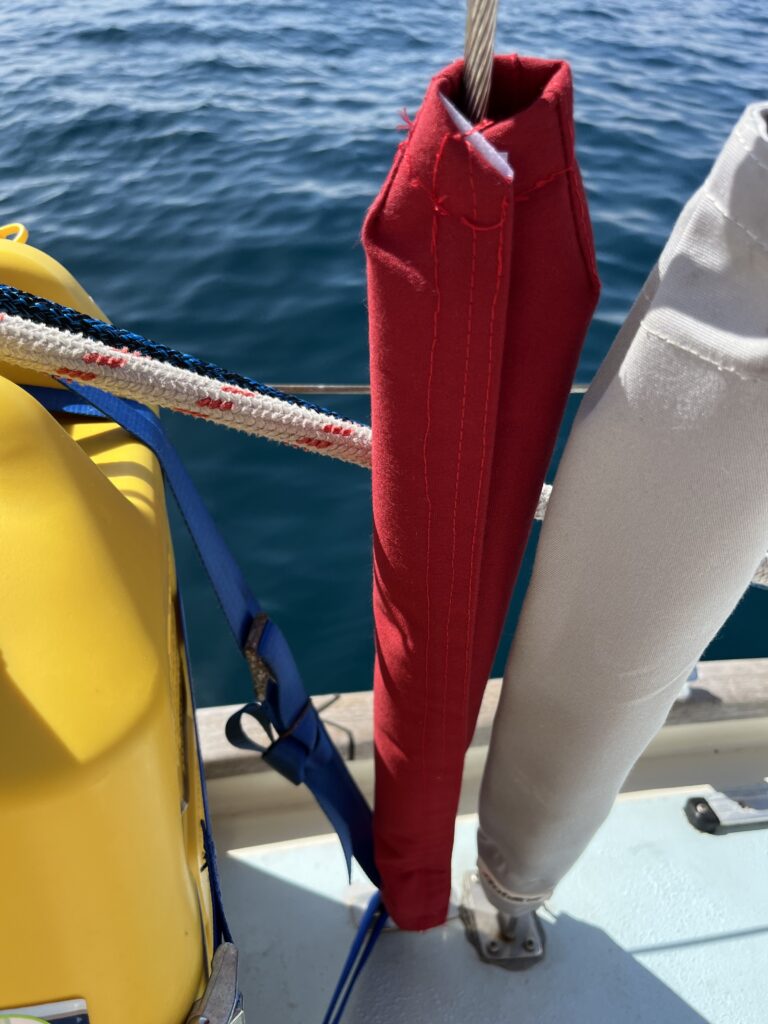
At first, the anchorage was ok and we took the time to sew a protection for the inner forestay, the only one that we had not bought a protection for back in Sweden. It was so easy to make it that it seemed quite a waste that we spend money to buy the other ones. Perhaps the mindset is changing when we are living on the boat so that we more look out for what we can do ourselves?
But overall, being on anchor in Puerto de Mogan was a different experience. During the day, we were surrounded by tour boats, pedalos, waterscooters, and other kind of motorvessels passing a few meters ahead or back of the boat. During the night, especially the first one, the boat kept rocking a lot making sleeping an impossible task. We were anchored next to a catamaran, S/Y Courage from US. We had to hold ourself to move anywhere around the boat but they were able to stand and cook with their two hands without apparent problems. This is the great advantage of catamarans, they are way more stable than monohulls. We had another sailboat near us, S/Y Blue Velvet of Sark from Guernsey, but they left around midnight that evening and went looking for another spot. They were rocking hard enough for us to be able to say that they had a very clean hull!
After two rolling nights we decided it was time to leave and also to try to get back to a more natural surroundings. We set sail toward La Gomera via Teneriffe. We left our anchorage in Puerto de Mogan on Thursday (October 30) to head toward Playa las Galletas on Teneriffe. The nearest piece of land on Teneriffe is 40 Nm away from Puerto de Mogan but since the highest mountain on Tenerife, mount Teide, is about 3700 m of altitude, the island was well visible already from Puerto de Mogan. We started the journey on engine and continued on sail when we entered into the wind acceleration zone west of Gran Canaria. These wind acceleration zones forms between the islands when the wind coming from the north is beeing “pressed” between the mountainous islands creating areas where wind speed increases. Weather forecast models take into consideration this phenomenon but our experience so far is that they can underestimate the strength of the wind in these areas.
We took the opportunity of the good boat speed, around 6 knots, and the clear sky to produce some fresh water with the watermaker and check the capacity of the solar panels, the wind generator and the hydro generator, to cope with the high continuous current consumption. With the watermaker running and dragging 8 A, the fridge dragging 3 A and the boat electronic (plotter, VHF, AIS, wind instrument, Autopilot) dragging between 3 and 4 A, we were still able to generate between 1 and 2 A more than what what we were consuming.
As we approached Tenerife, the wind speed decreased so we had to continue on engine for a couple of hours until we reached our anchorage in Playa de las Galletas.
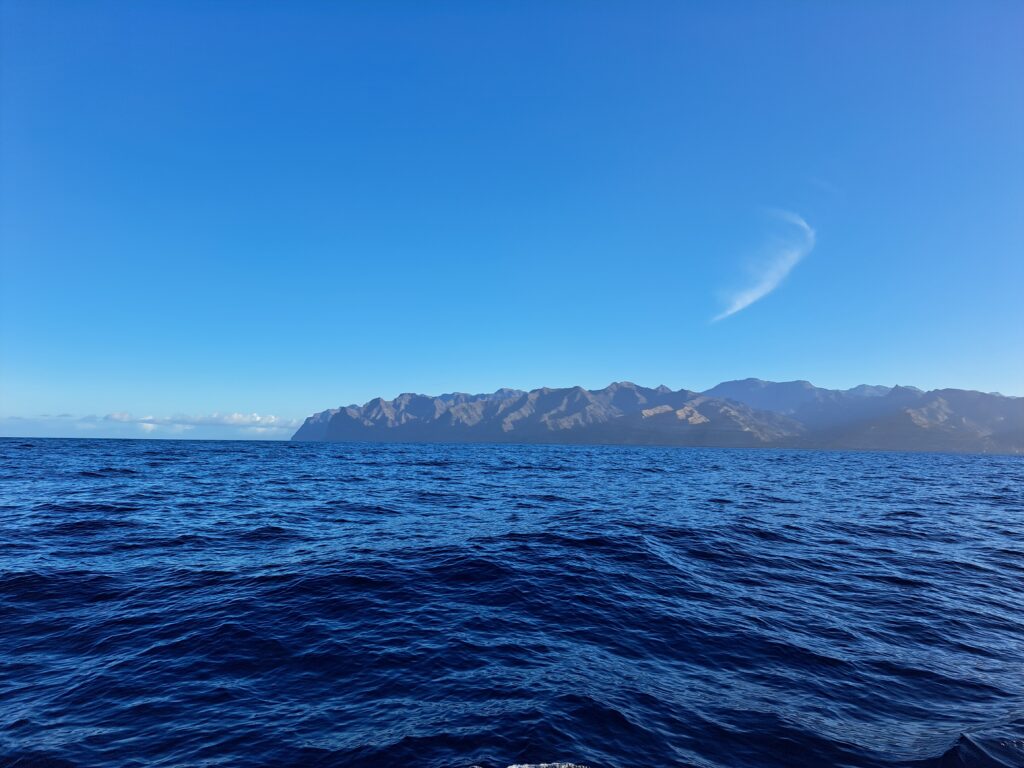
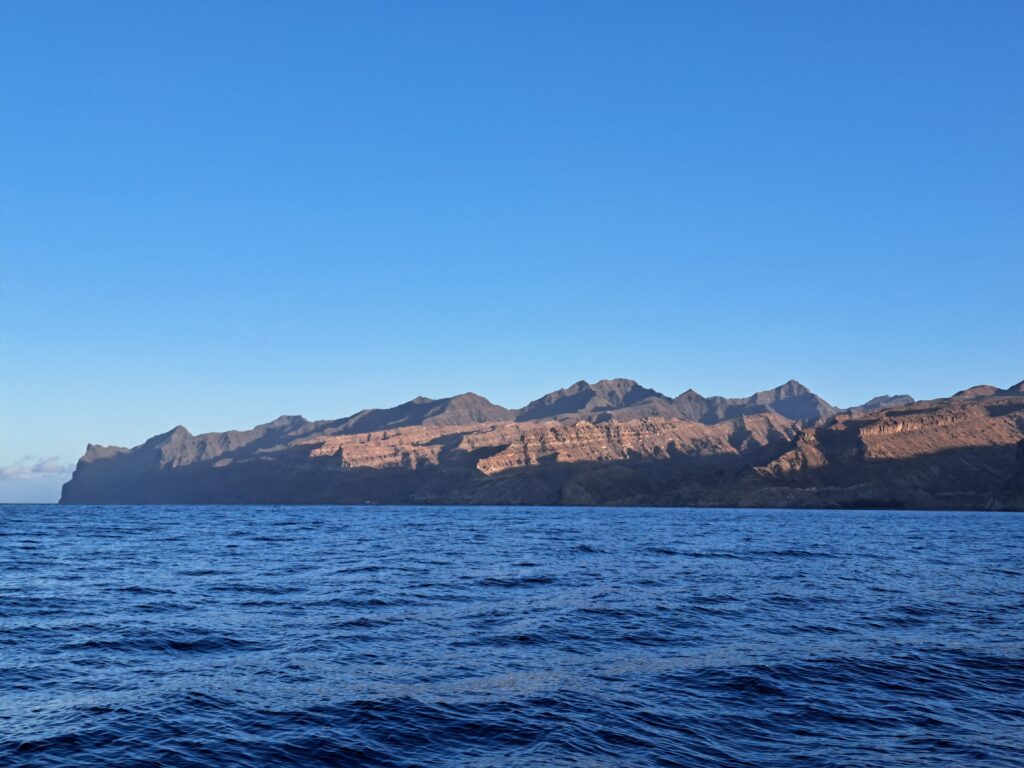
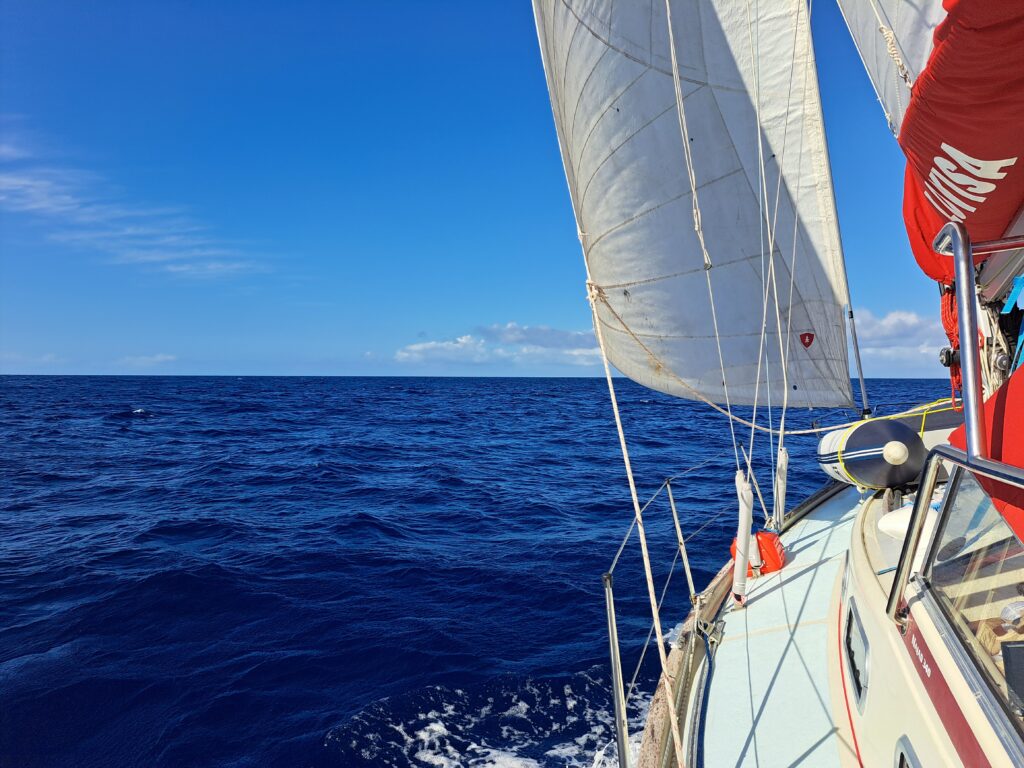
We stayed two nights anchored outside Playa de las Galletas, one easy and one rolling. During our time there, we enjoyed the company of another Swedish couple on their way to Caribbean with their sailing boat S/Y Selene.
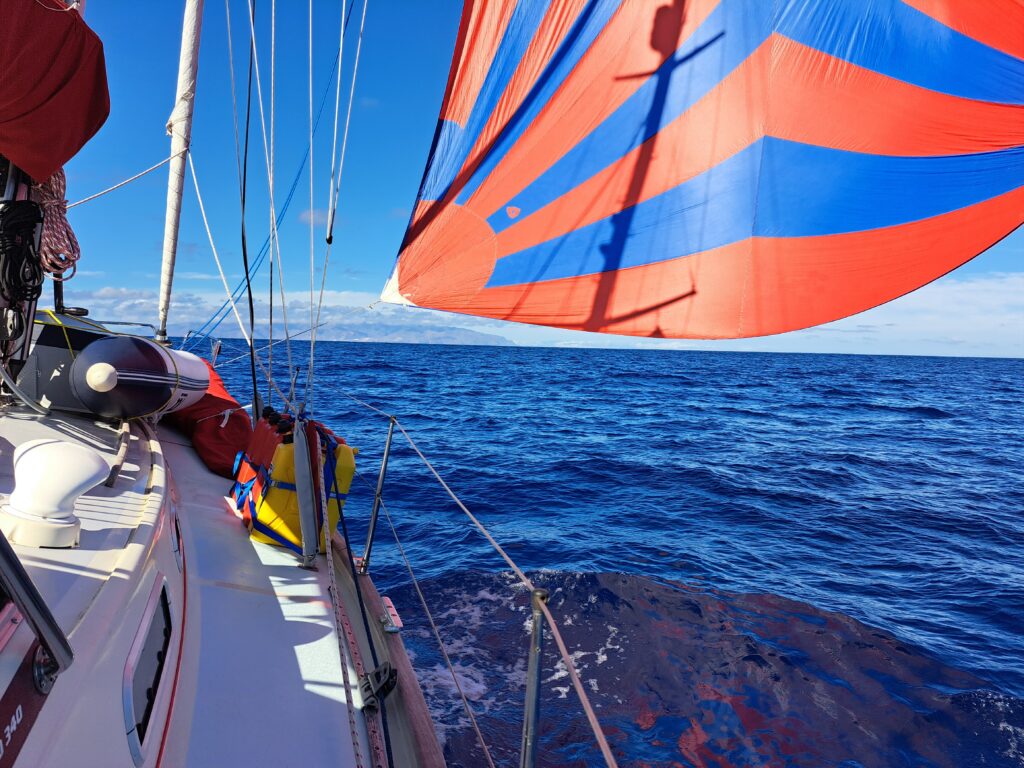
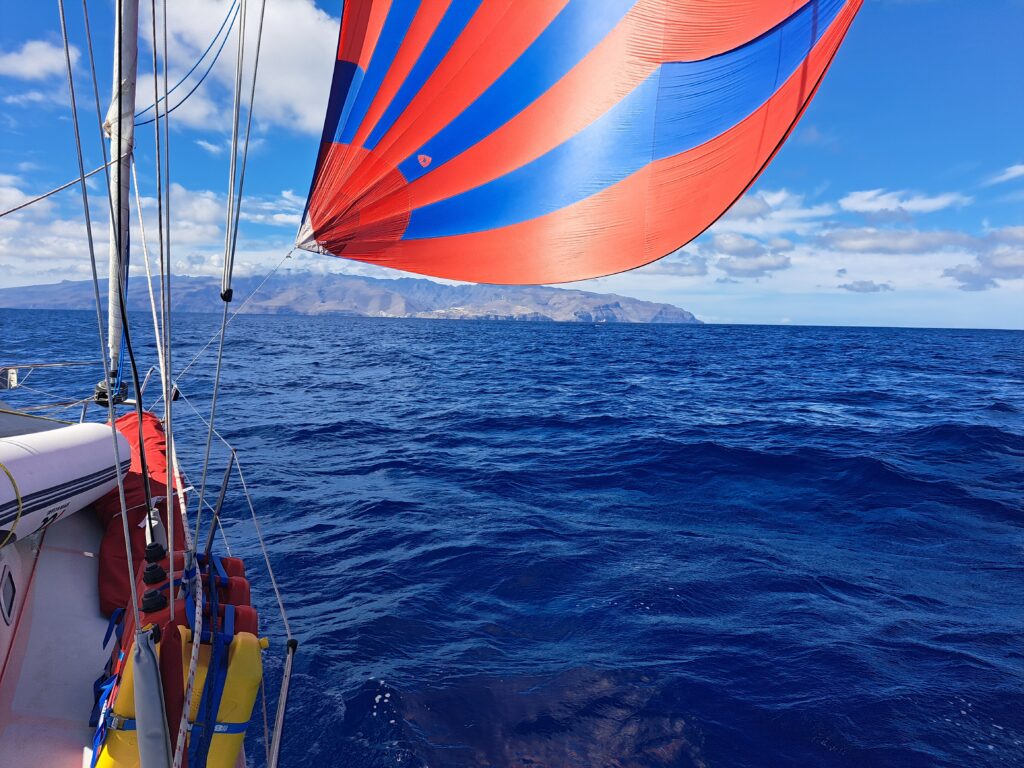
We left our anchorage towards La Gomera on Saturday 1 October and enjoyed and great downwind sailing on Gennaker nearly all the way until the entrance of the harbor of San Sebastiàn de la Gomera. On the way we crossed the path of a group of pilot whales heading south.
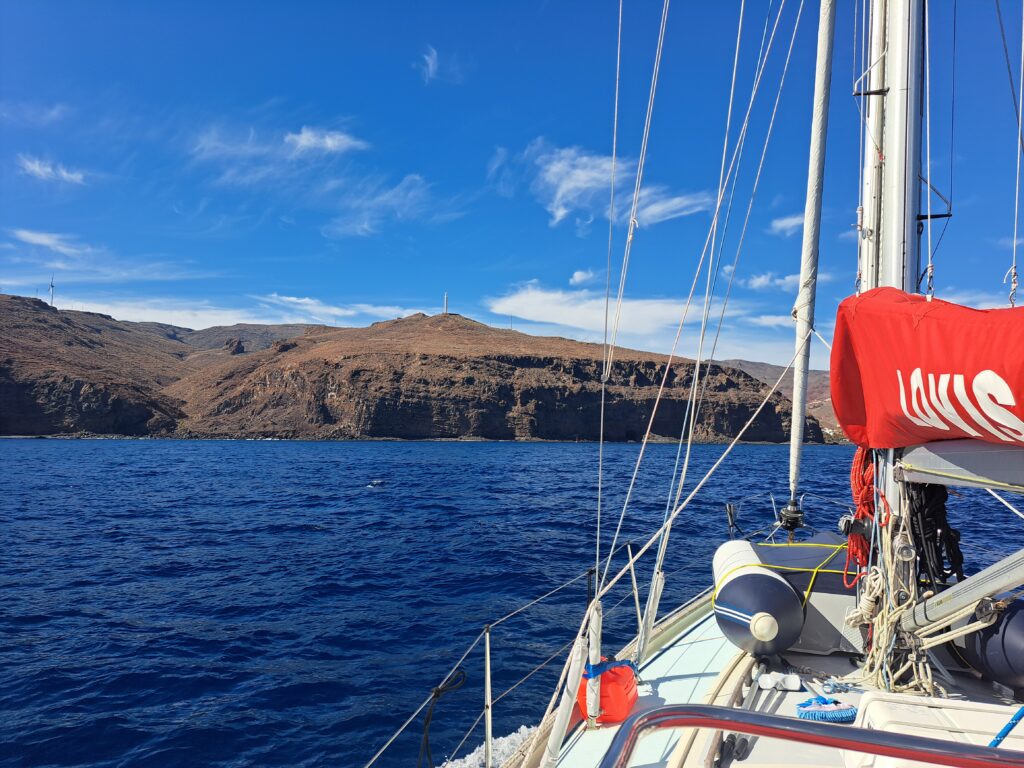
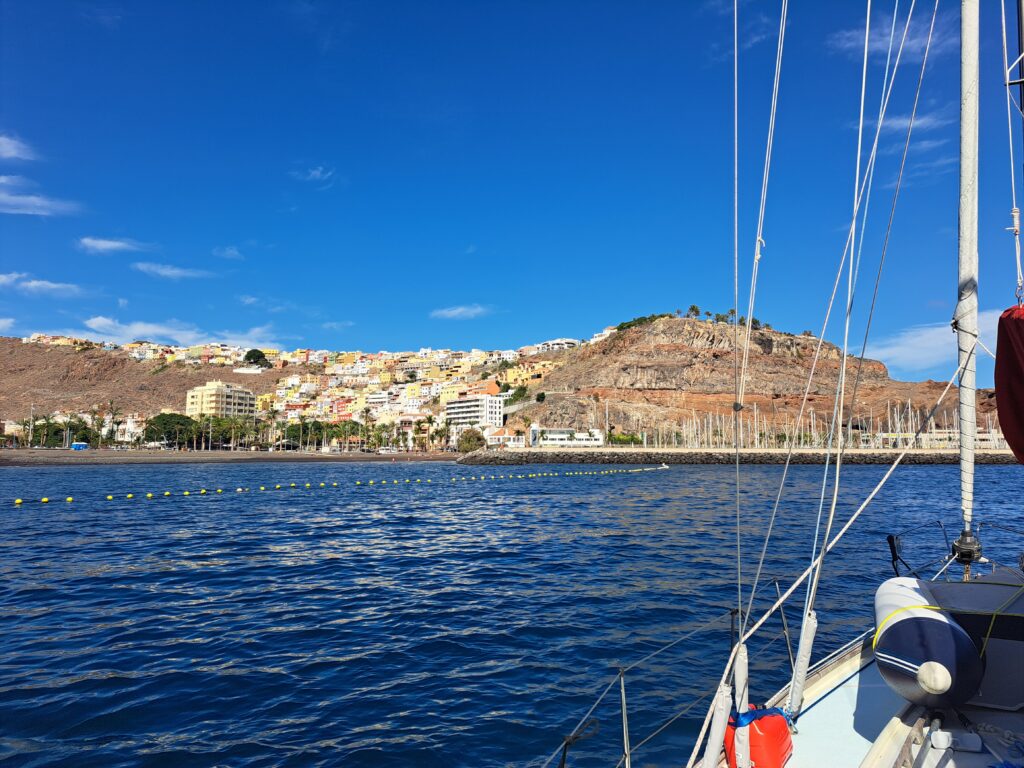
Compared with Tenerife and Gran Canaria, the coast of La Gomera appeared much wilder from the sea as we were approaching the island. San Sebastián, our destination, turned out to be a small town with relatively small buildings squeezed between the surrounding high hills. Just a few people on the black sand beach. No waters scooters. We found the calm and quiet environment we were looking for after many days sailing along the touristic coast of Gran Canaria.
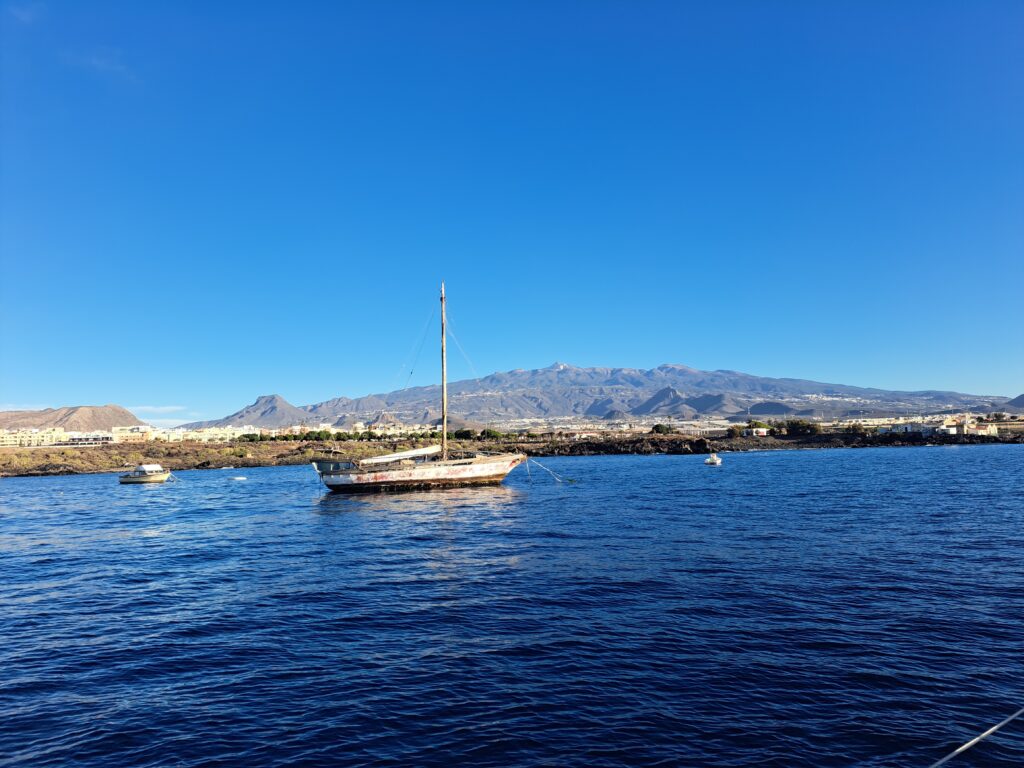
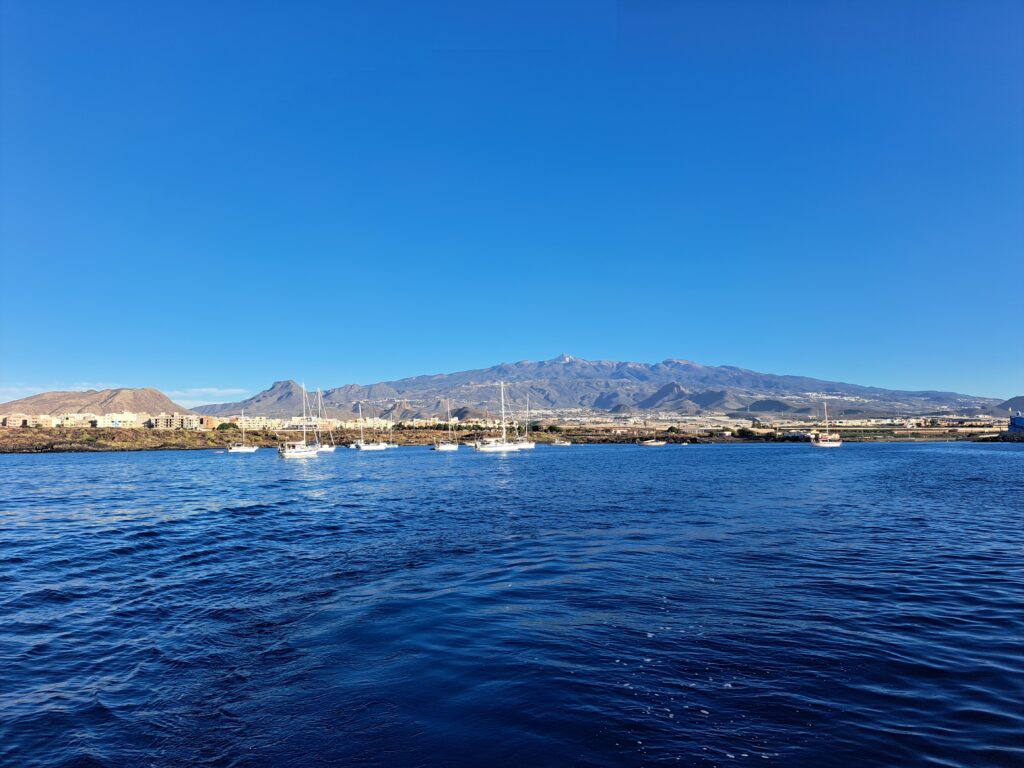
In San Sebastián, we came accross our friends on S/Y Mana from Holland that we last met in Cascais and S/Y L’Aventure 3 from Sweden. We also encountered a retired Swedish man who has been living all his 23 years of retirement in his boat under the sun of the Caribbeans and then of the Canary Islands. At 83 years old, still agile enough to sail his dinghy.
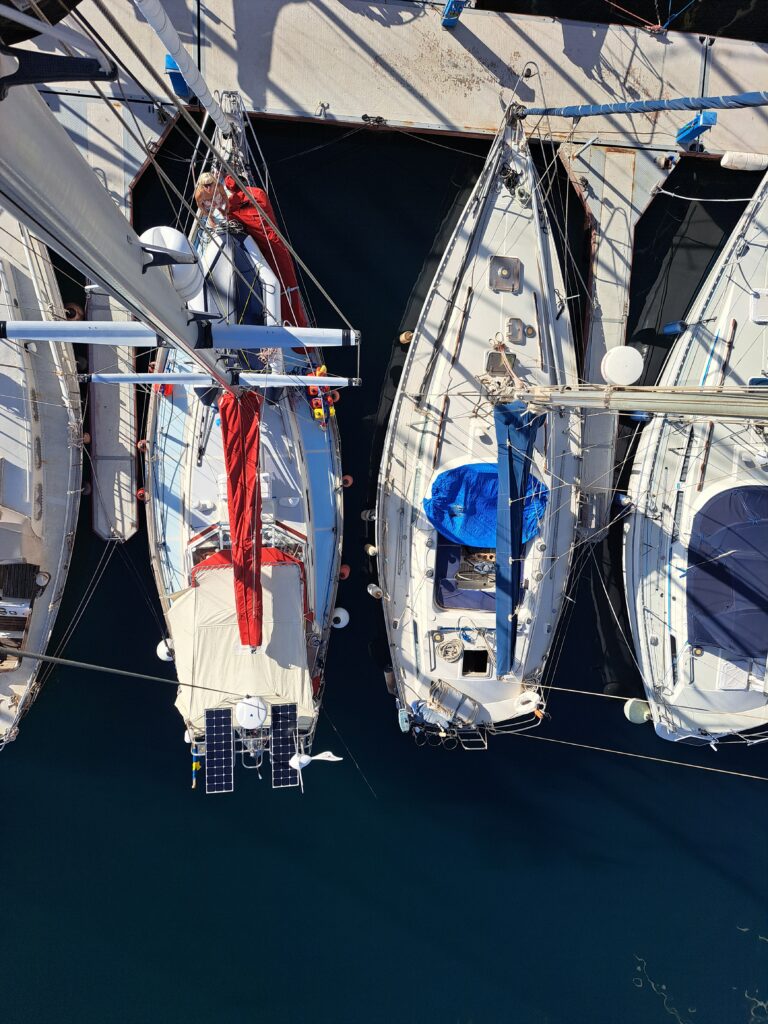
A carpenter made us two nice wooden boards to better attach the diesel cans on the side of the boat. Maria also gave Emilien a haircut. We climbed in the mast to check if there was anything abnormal like missing popnit, loose nut or damaged electrical cable. The wind instrument had a tendency to get stuck in a certain position so we checked it and we felt some kind of friction in some position. We turned it by hand many times and the friction went away… for how long is the question.
Isn’t Lovisa looking amazing from the top of the mast ?
We took a day off from the boat to explore the island together with our friends from Holland sailing S/Y Mana.
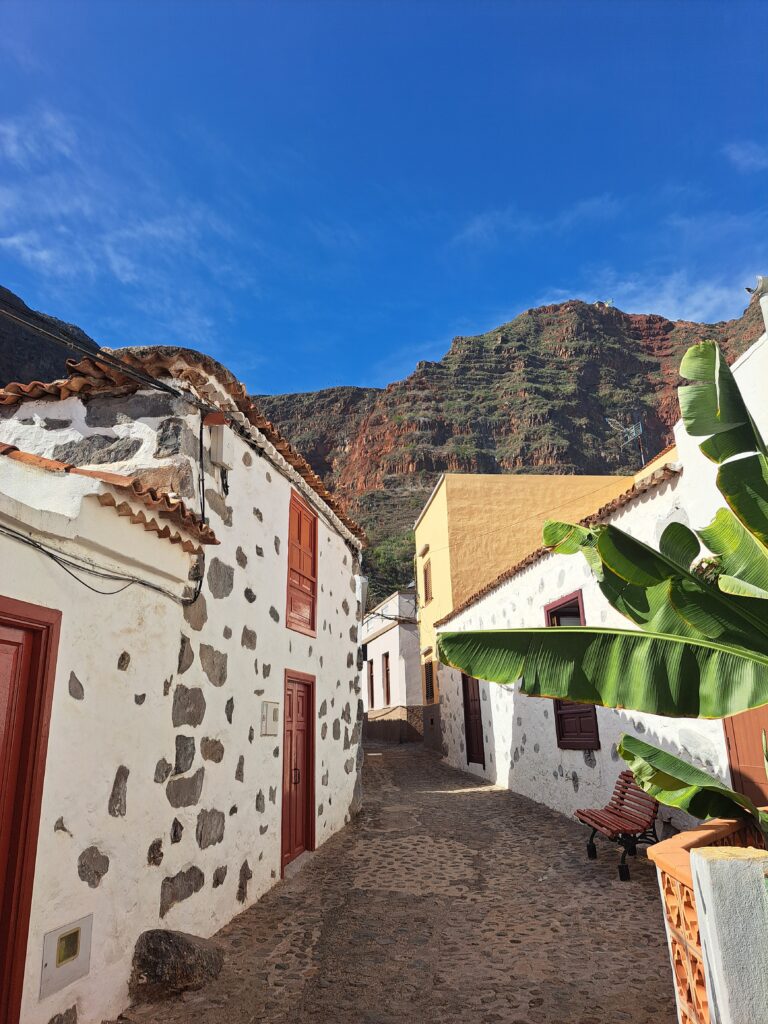
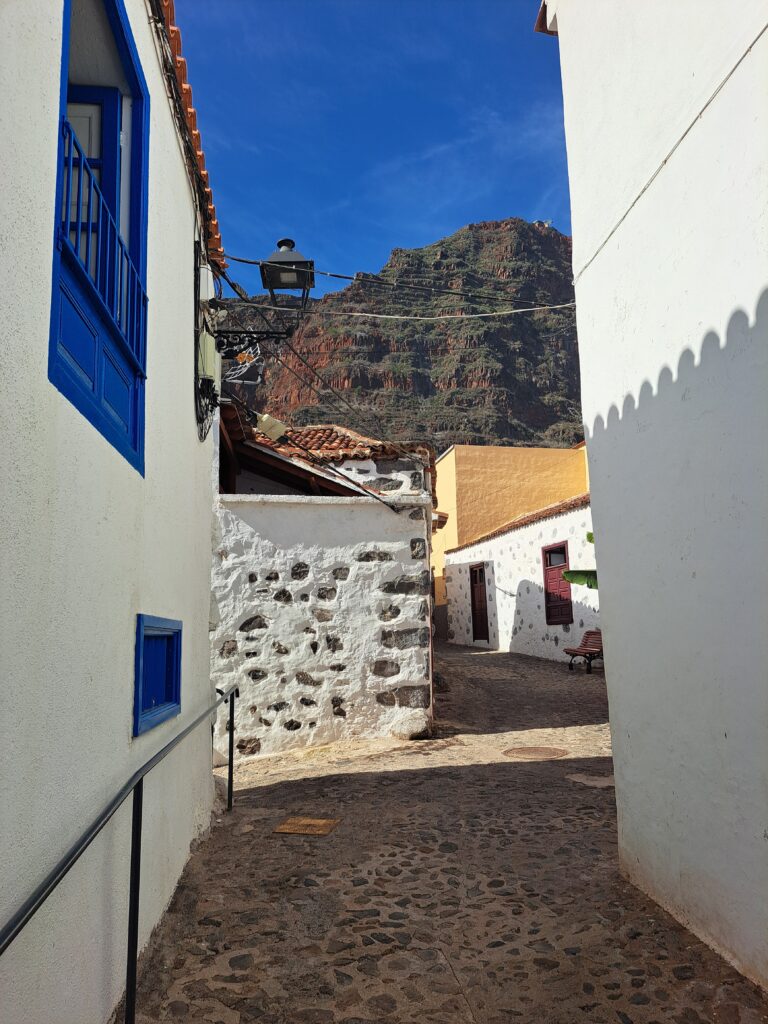
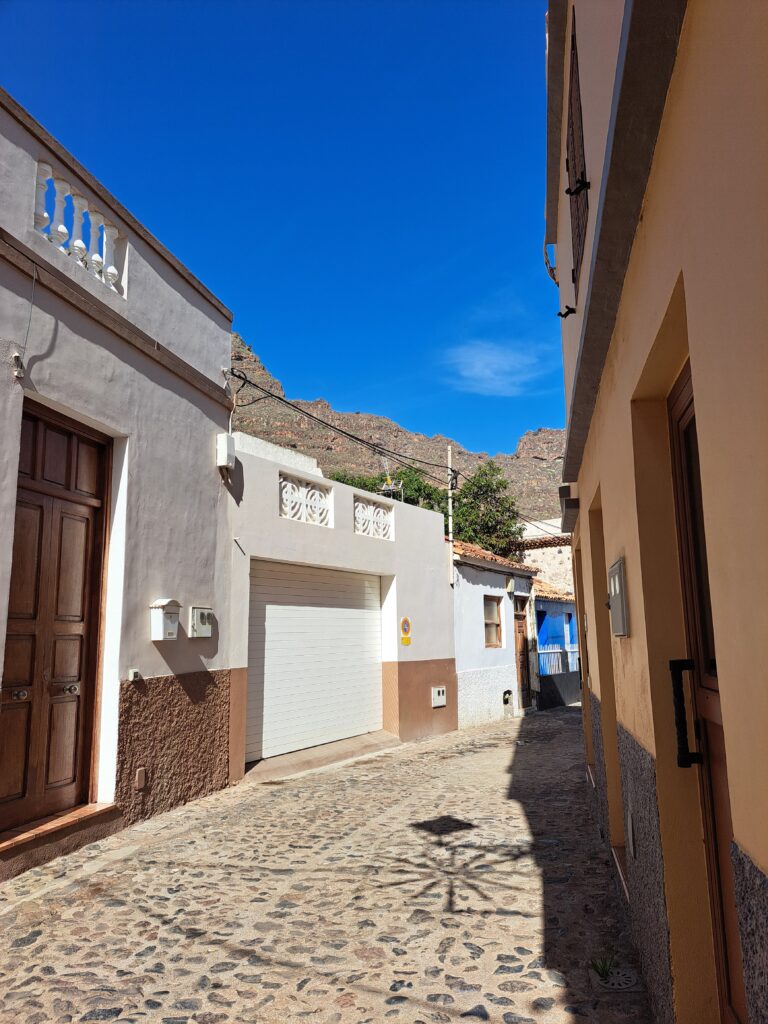
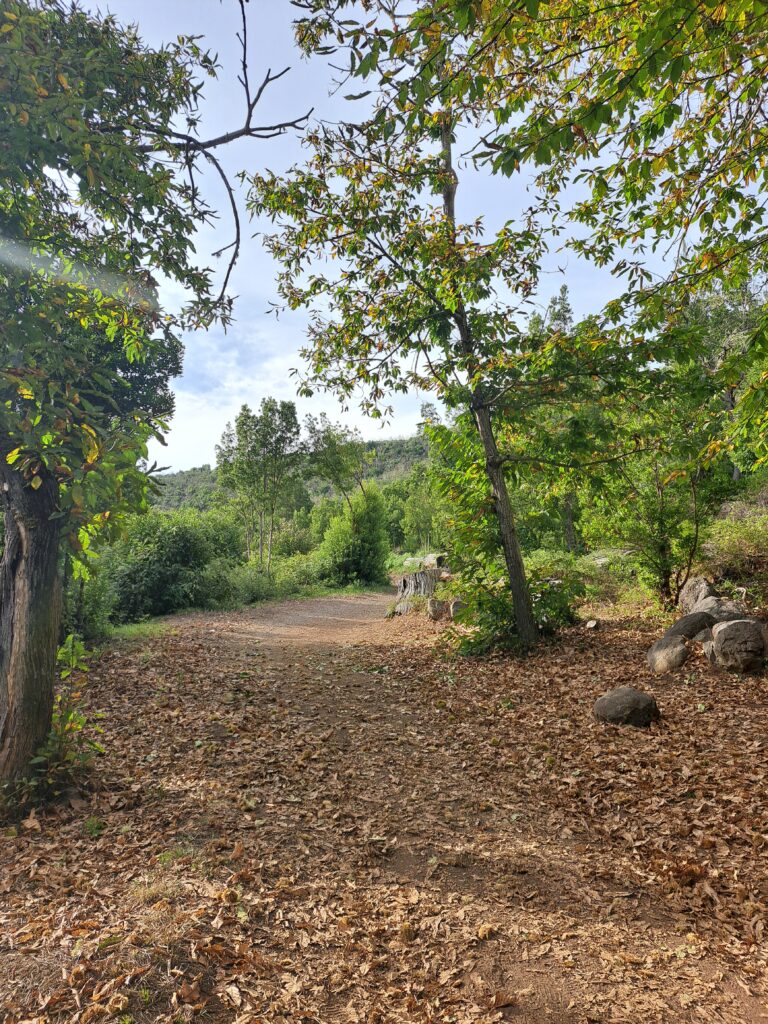
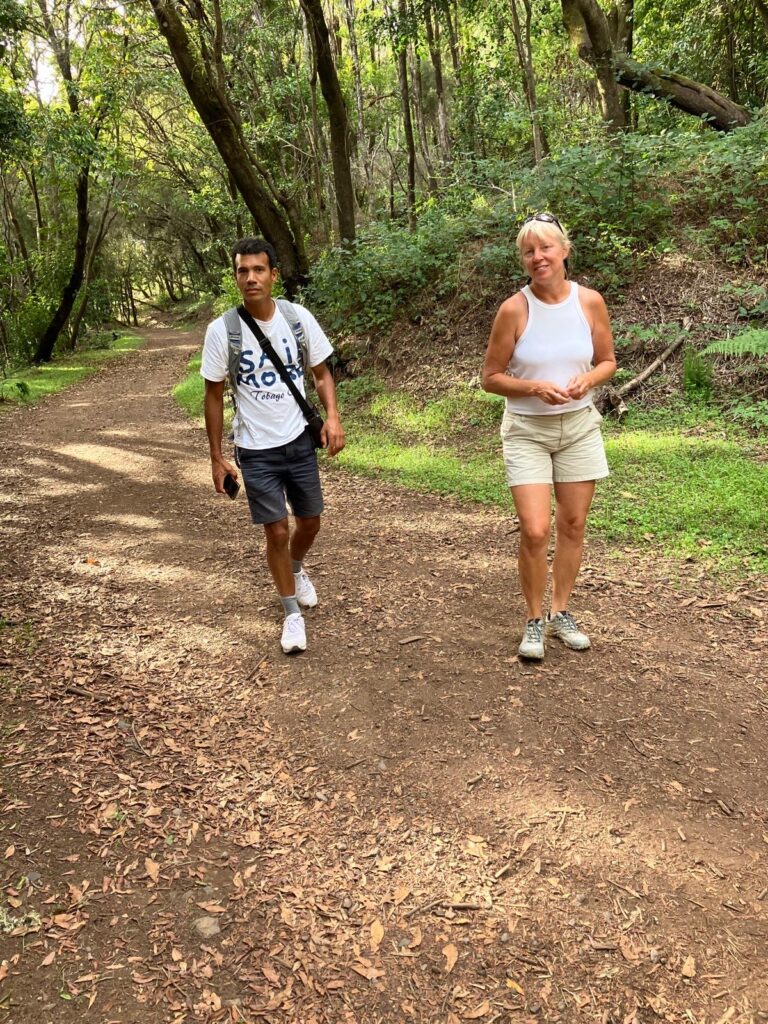
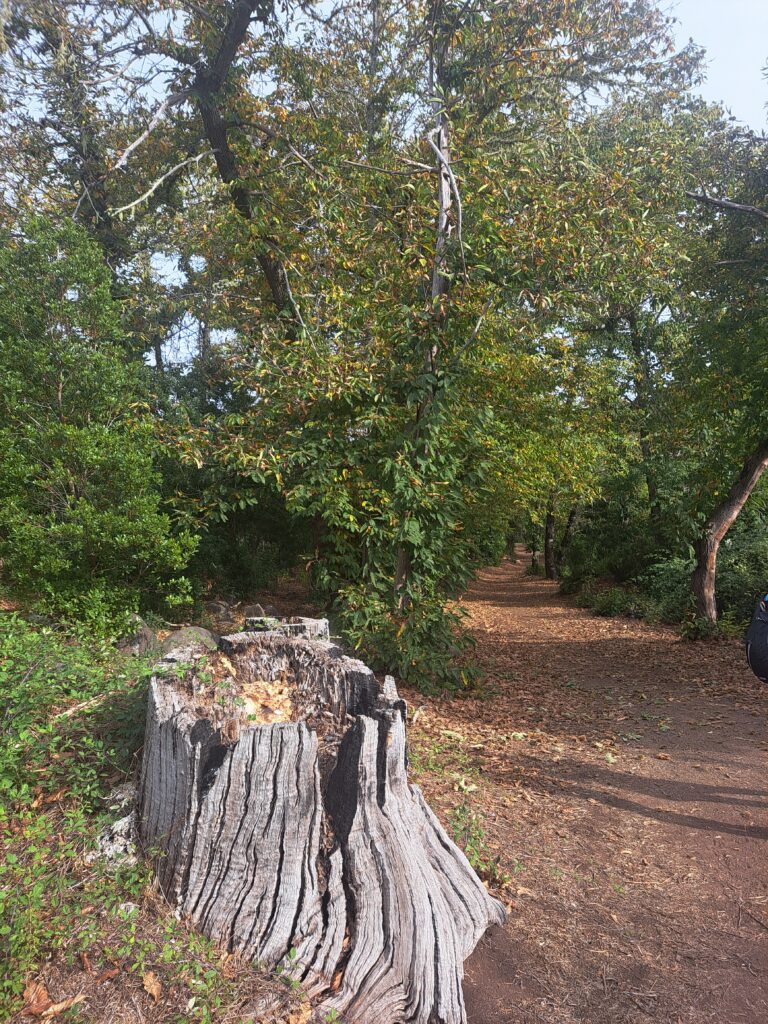
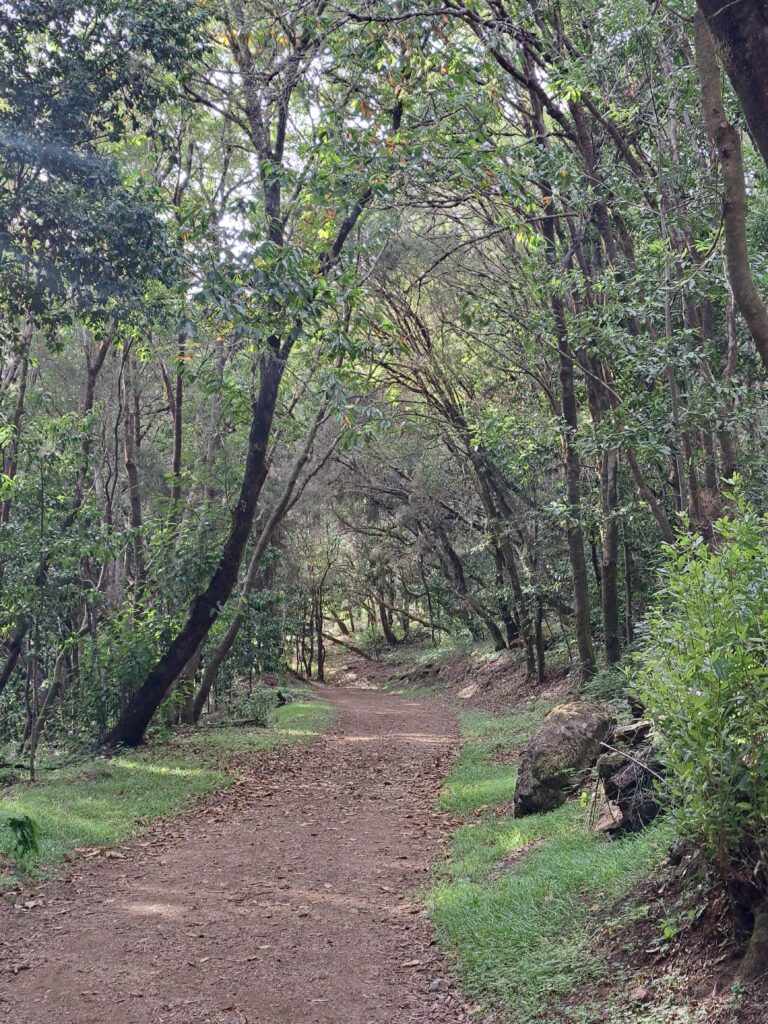
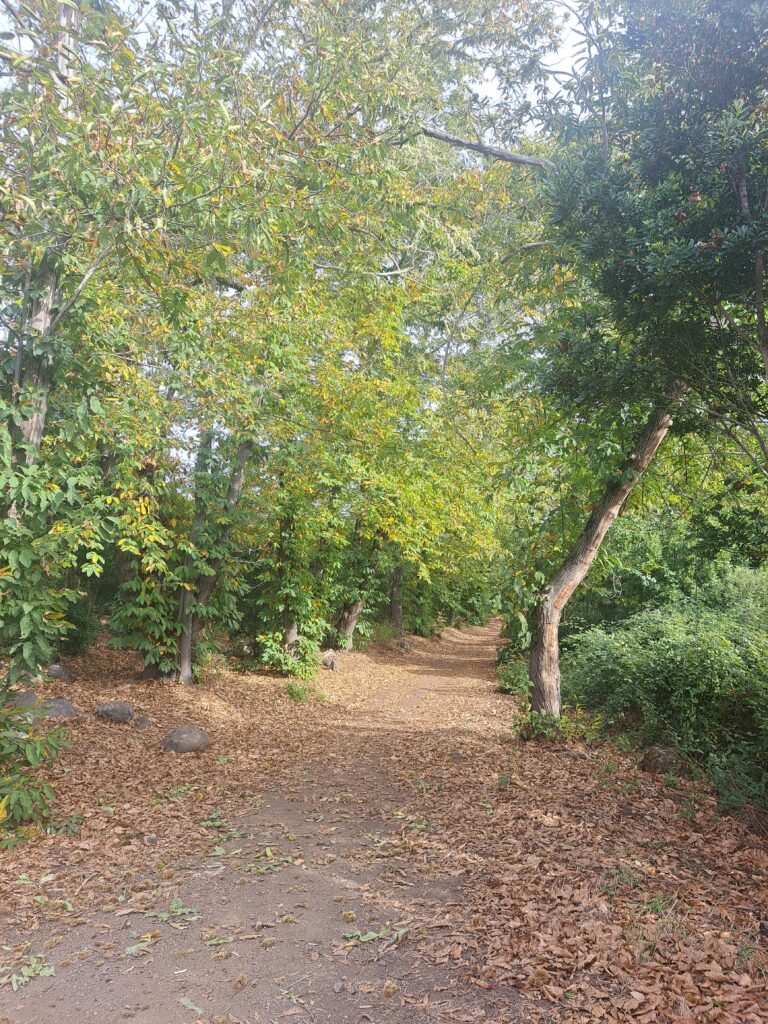
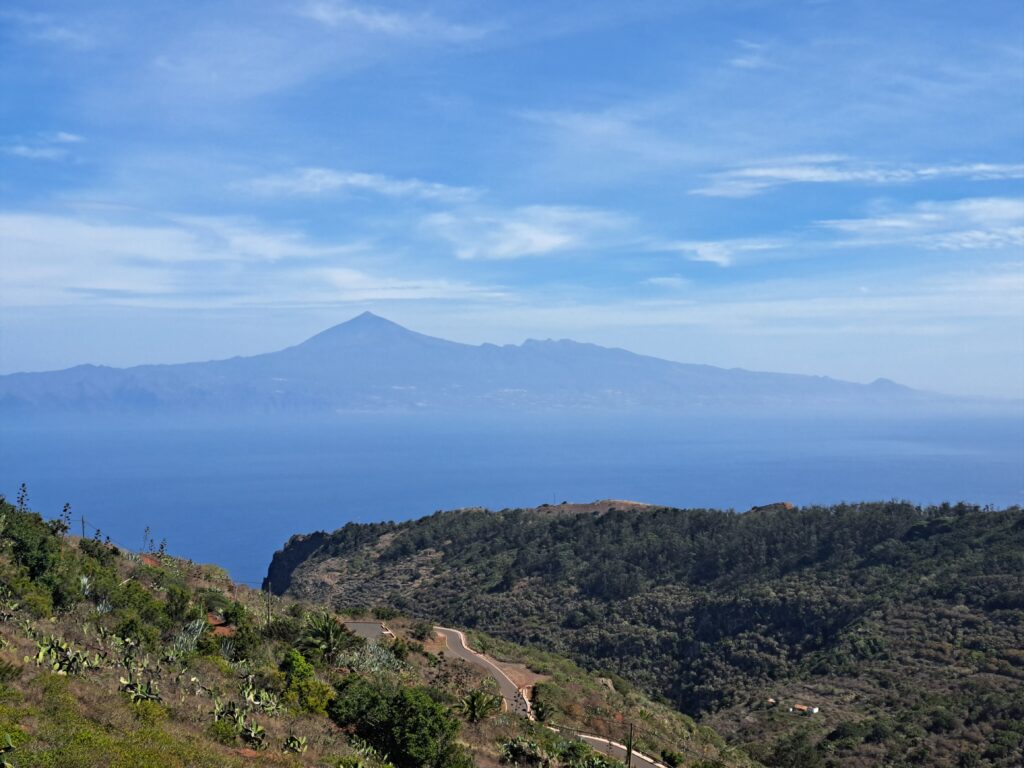
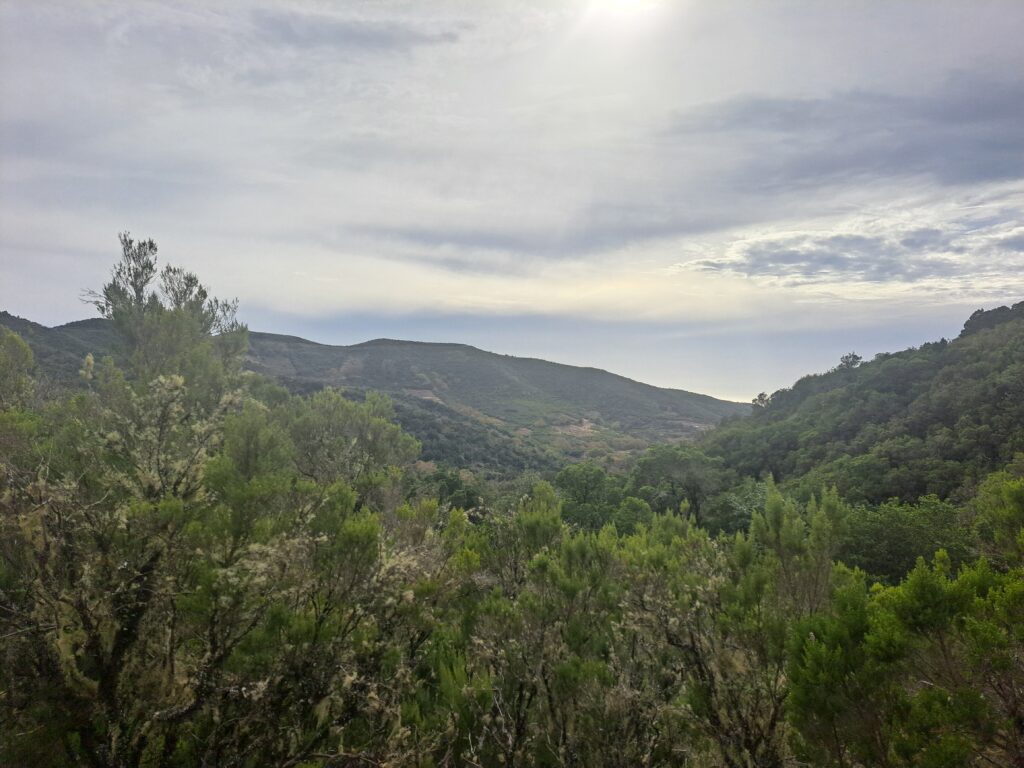
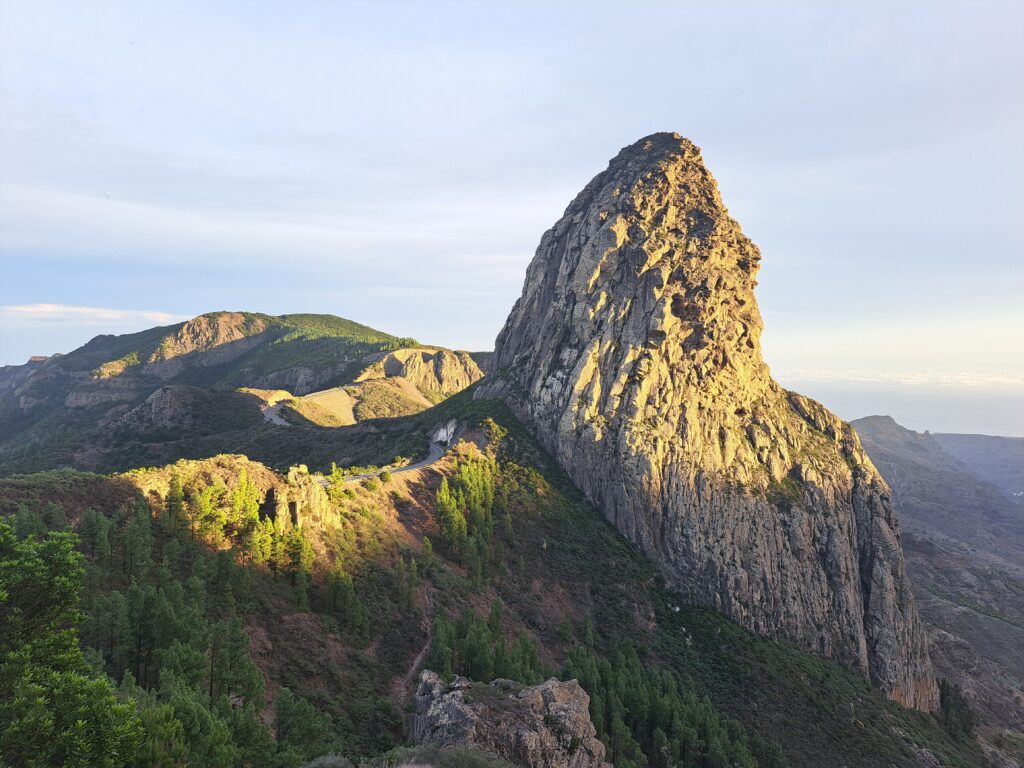
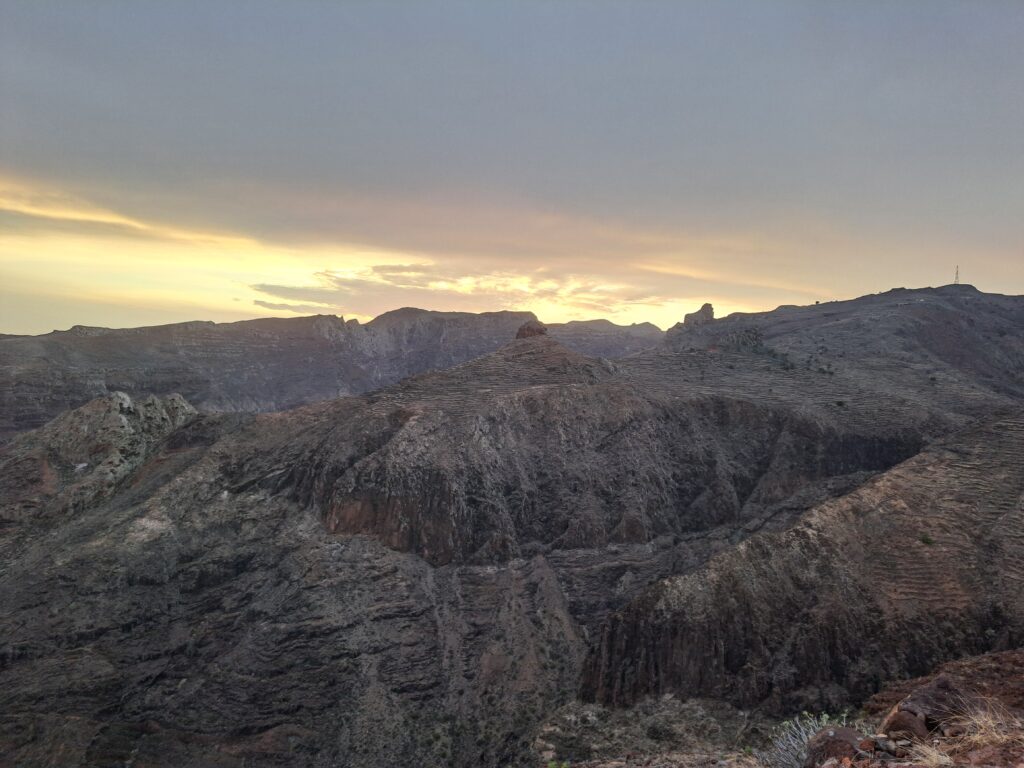
After a first stop in the charming village Agula we headed towards the visitors centre. A place where people can learn more about the history of Canary Islands, how the islands formed through millions of years of volcanic activity, why there are such contrasts in landscapes between the older islands of Lanzarote and Fuerteventura and the other ones, and finally why there is a laurel forest at the top of La Gomera that has become a national park (Garajonay National Park) and classified as a World Heritage site by Unesco. We had a lovely walk surrounded by nature. For us Swedes, it was so amazing to be in a forest again.
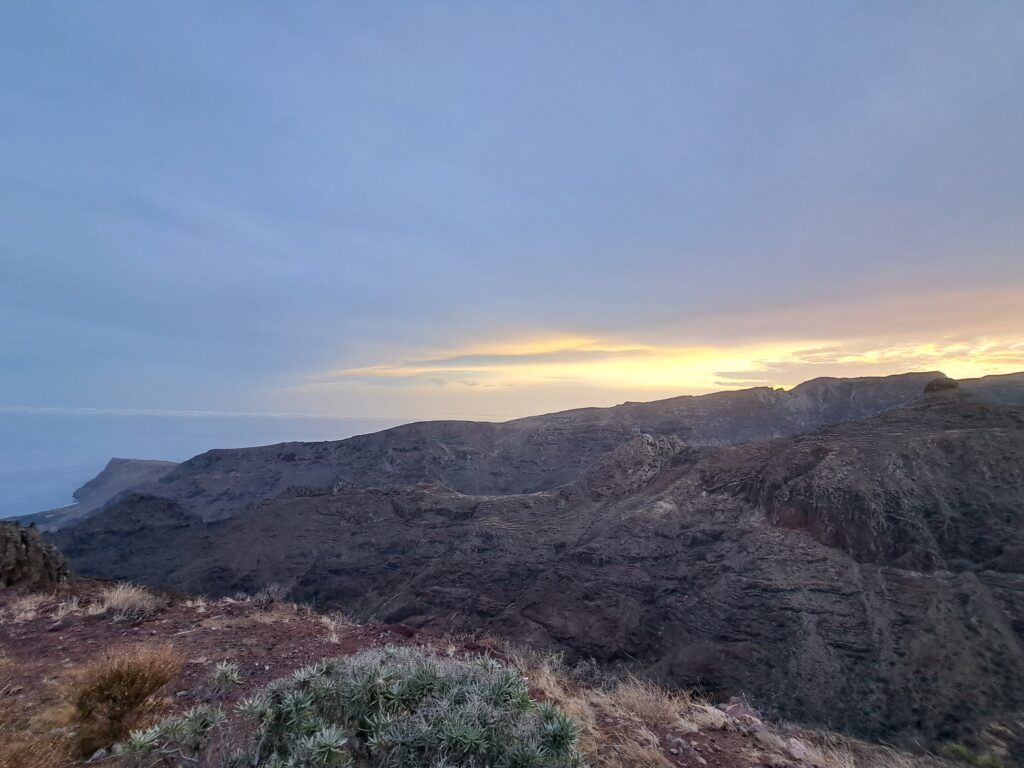
After three days enjoying La Gomera, on Tuesday 4 October, we left the marina to anchor in a bay south of San Sebastián for one night. Here we tried for the first time to set an extra anchor to try to hold the boat to keep facing the swell. On anchor, the boat can roll a lot if the waves come sideway so trying to force the boat to face the waves instead can make like much more comfortable. It was a semi-success. There were strong tidal currents in the bay and first it seemed that the stern anchor could cope with this, but after some time, we realized it was dragging so we had to pull it up.
After that night, it was time to return to Tenerife to continue loading the boat with food supplies for the Atlantic crossing. The trip from La Gomera started with a very light wind but it increased very rapidly as soon as we approached the acceleration zone so we could enjoy a nice sailing on broad reach with only the Genoa up in 12-14 m/s of wind. Just fantastic!
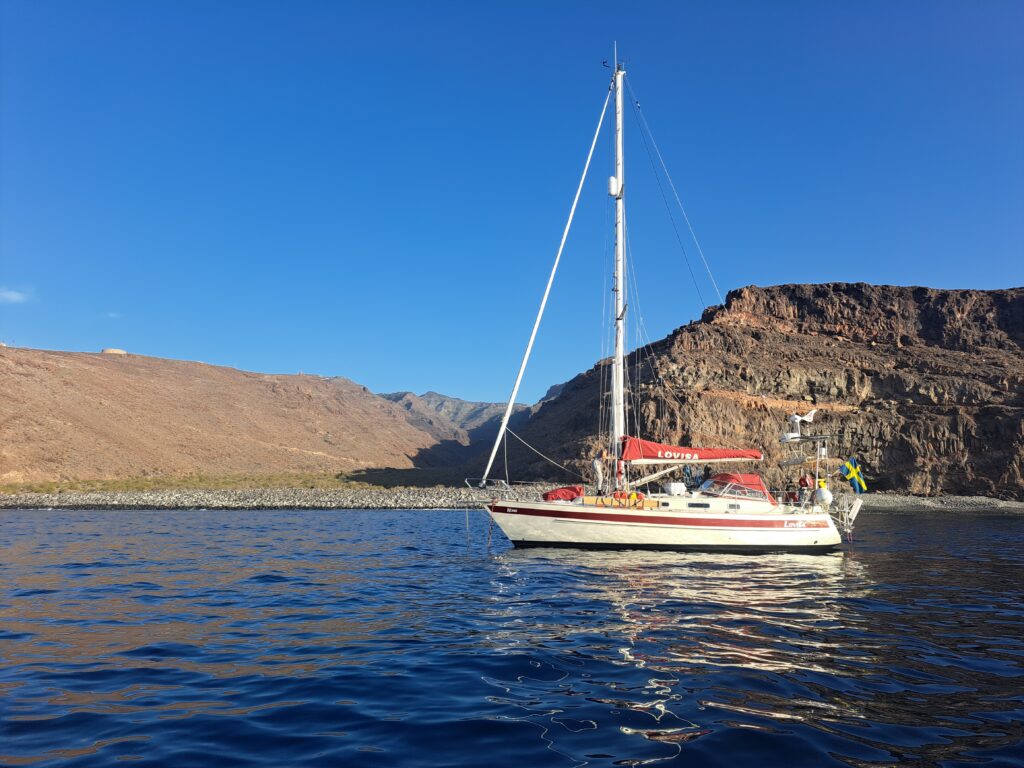
We reached Marina Amarillo San Miguel de Abona on early afternoon and started right away to set the to do list for the next days.
Bonjour Maria, bonjour Emilien,
Effectivement Maria était bien calée dans le canapé, comme si c’était fait pour elle !
Il ne faut pas avoir le vertige pour monter en haut du mât.
Merci encore pour ces belles photos
Bon courage pour la grande traversée ! (c’est quand ! 🙂 )
Great to read you’re doing well !
Fair winds !
Merci pour toutes ces photos magnifiques ! Et nous en apprenons beaucoup grâce à vous ! C’est beau les Canaries, aux paysages si différents. Différents aussi les actions que vous avez à mener. Dont, si elle n’est pas la plus rare, paraît être la plus vertigineuse 🙂 : Emilien a grimpé ? Ou Maria ?
Les montagnes de 3700 m doivent être impressionnantes sur des îles…
Bon voyage vers le Cap Vert, vers de nouveaux horizons, et de nouvelles rencontres.
Bises à tous les deux !