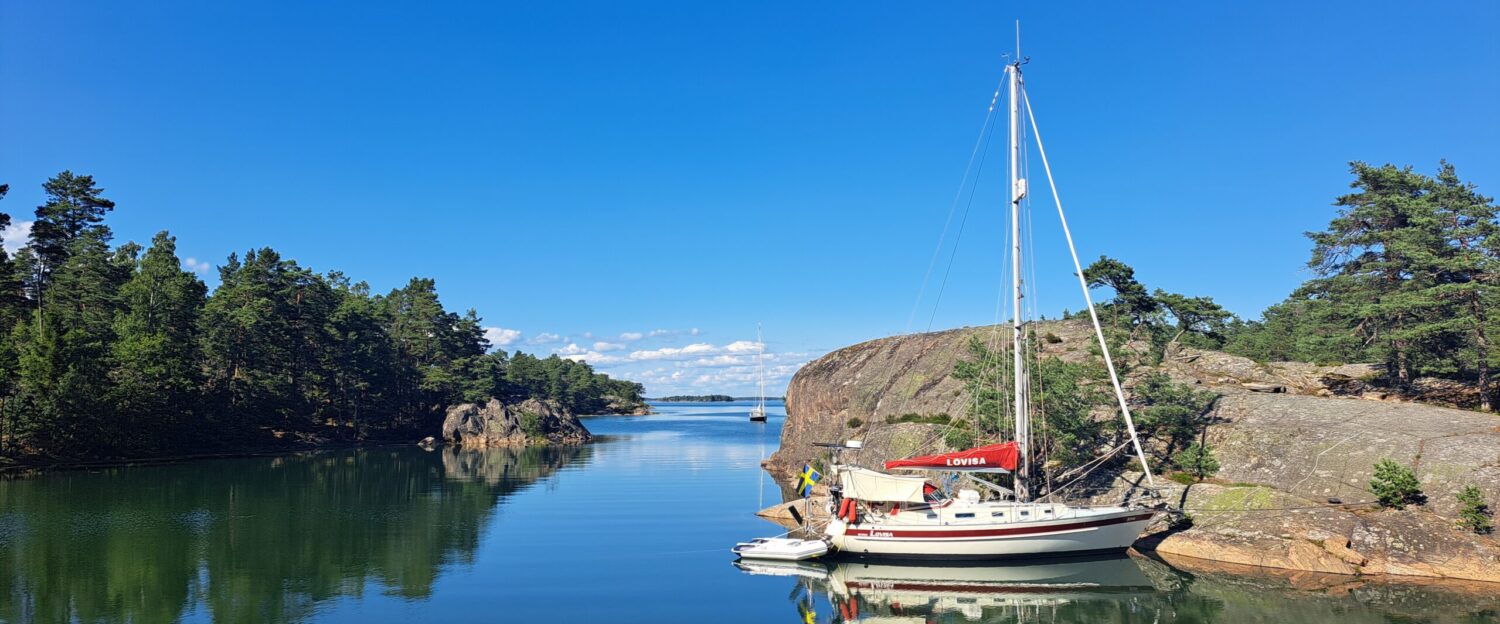
It took us four months to sail the 2800 nautical miles to Lanzarote in the Canary Islands from Kalvholmen, our home harbor in Sweden. The Caribbeans never felt so close even though Barbados, the closest island of the Caribbean from Canary Islands is still about 2600 nautical miles away from Lanzarote. This is nearly ten times the distance of our last crossing between Madeira and Lanzarote.
We remember sitting on the boat just before departure from Kalvholmen enjoying a fika with Maria’s step mother. She told us “take it easy, don’t think about the Caribbeans, it’s too far away, just take it day by day”. This was the best advice we could get and so we did. We headed first toward Ämtö and enjoyed a wonderful evening in Sankt Anna archipelago. The day after we sailed toward Stugvik, another charming natural harbor in Gryt archipelago. One day after the other, we sailed through 40 harbors and anchorages until we reached Lanzarote. Although we still had a month at least to hang around the Canary Islands prior to make route towards the Caribbeans, the actual fact that we had to start preparing for that leg felt like a reward for all the hard work we spent to reach that point. The work in the cold winter of Sweden to get Lovisa fit for this long journey. The efforts to keep her in good shape on the way and even improve her. The efforts to plan the route from one day to another and the efforts at sea to keep the her going safely.
Our journey through the Canary Islands became a mix of enjoyment and preparation works.
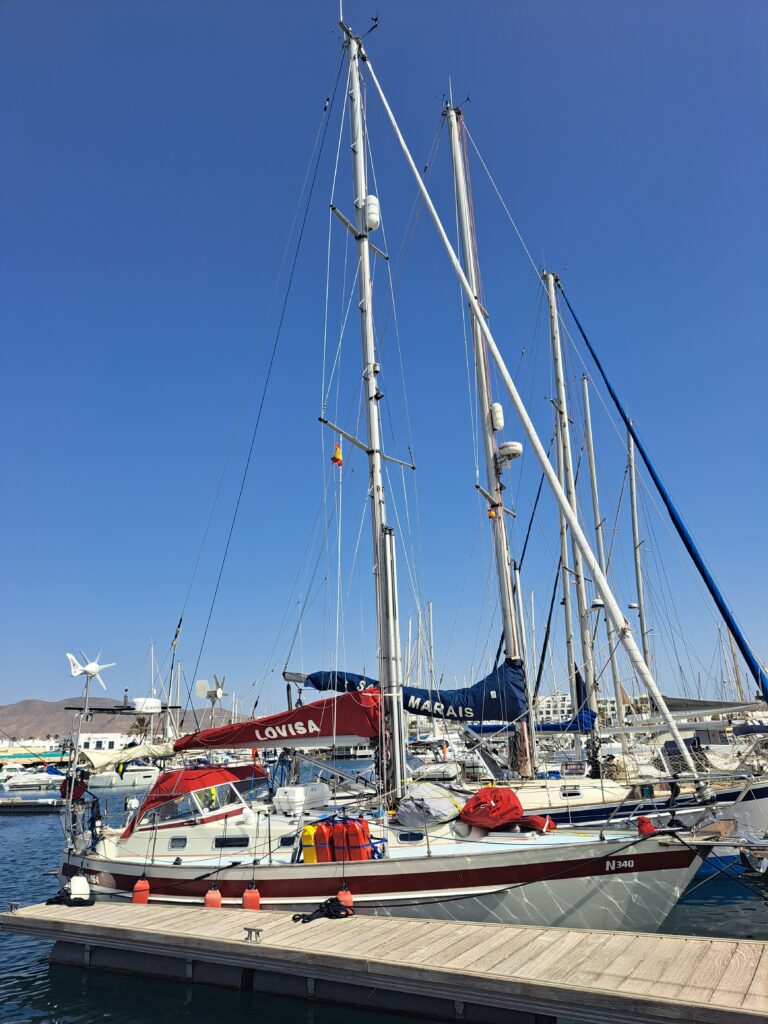
Lanzarote (October 7 to 15)
We spent a week in Playa Blanca. A week to discover the surroundings, relax and of course do some boat works.
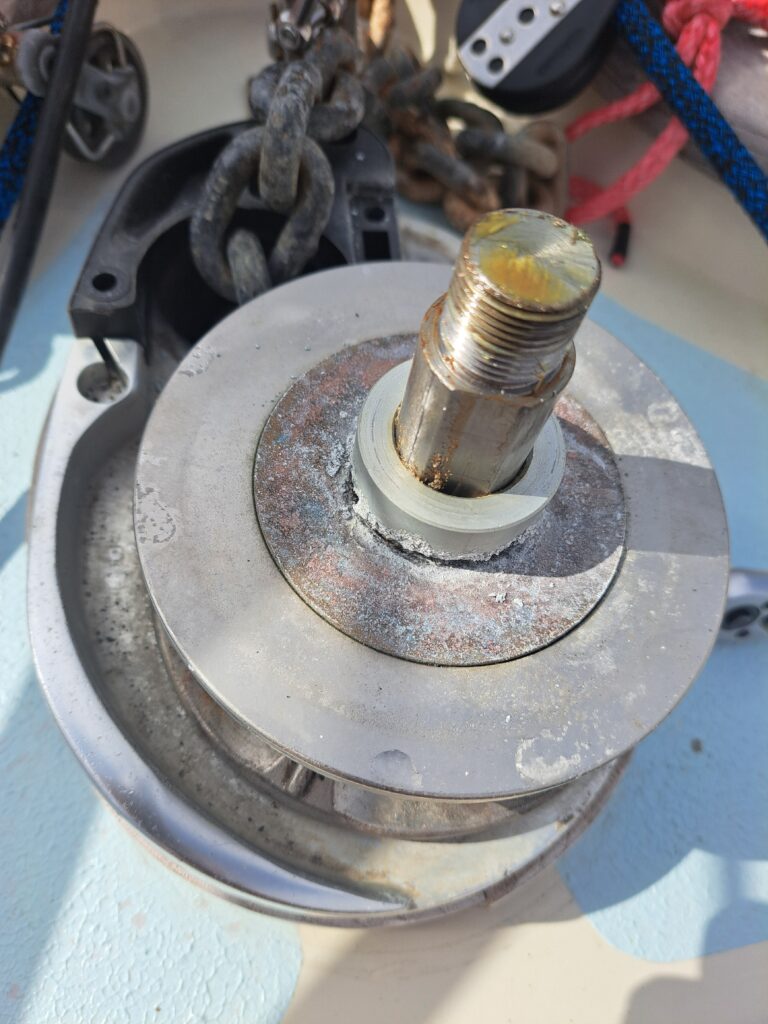
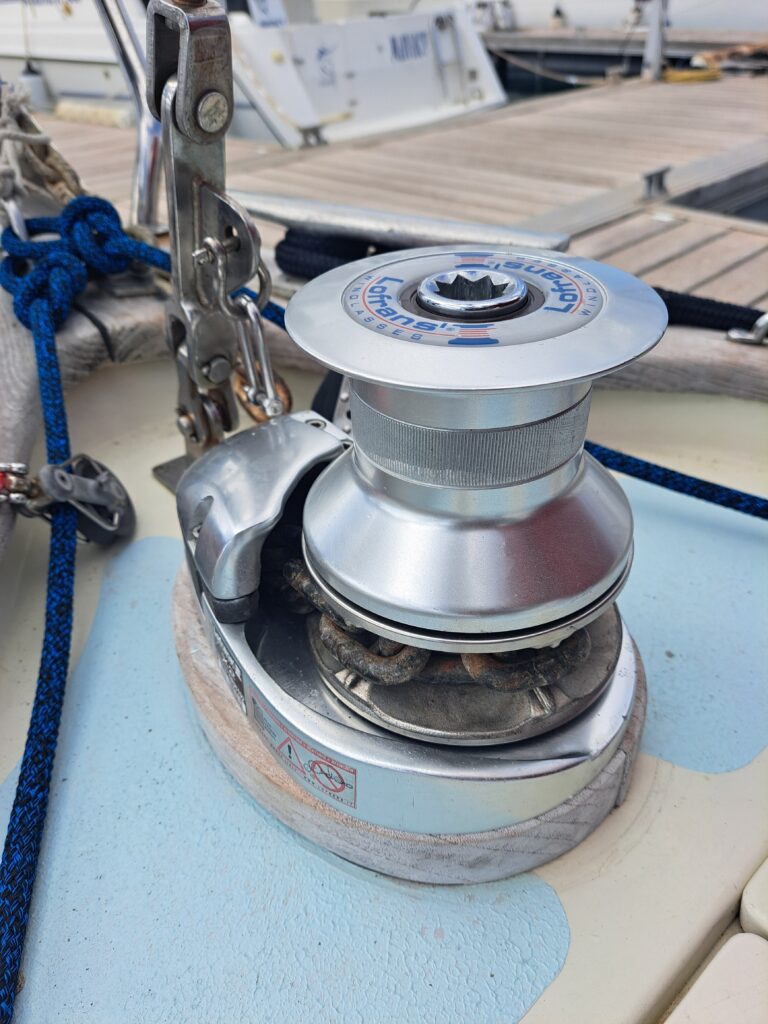
The boat maintenance we did consisted in replacing the lubricating oil and lubricating oil filter of the engine as well as the diesel fine filter to have all that fresh for crossing the Atlantic. We also performed the regular maintenance of the windlass. Not to prepare ourself to anchor in the middle of the Atlantic (we don’t have enough chain length…) but just because it was really time to do it; we cleaned all the moving parts and applied new grease.
Some sealings between the teak rails on the side of the boat were getting bad so we did some recaulking work as well. The teakdeck of Lovisa was entirely removed some years ago but she still has these nice teak rails on the side that need attention from time to time. That work doesn’t make any difference at sea but Lovisa looks even more beautiful with fresh sealings.
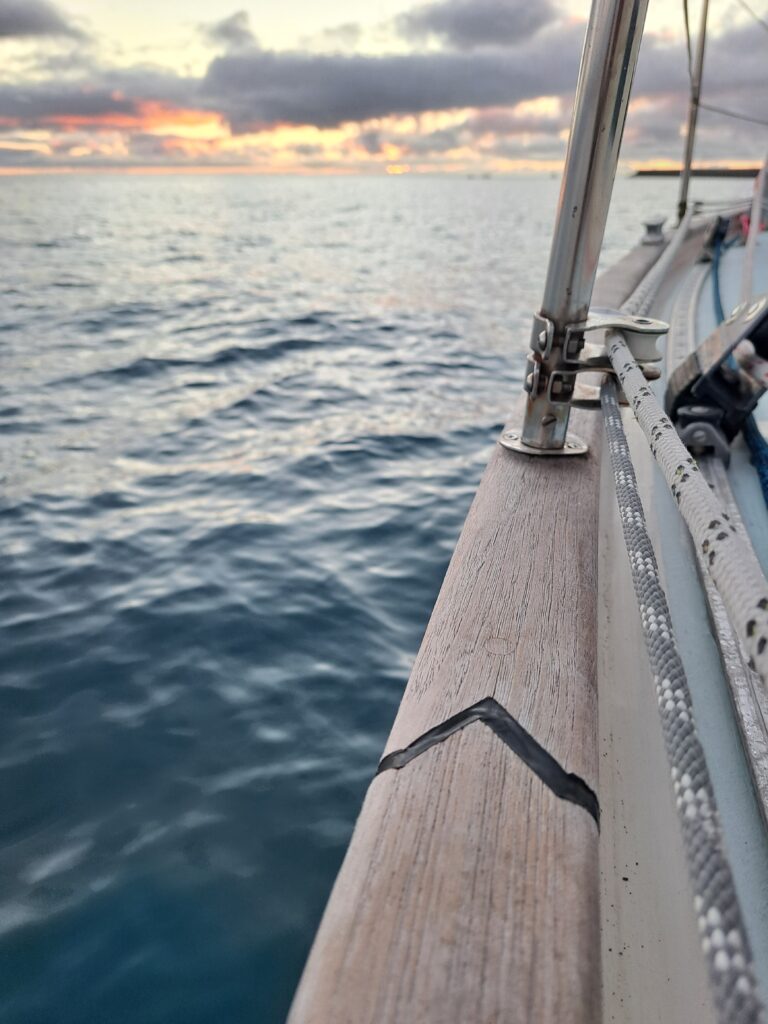
We also did some minor sealing works to try to eliminate a small water infiltration we observed during the crossing from Madeira.
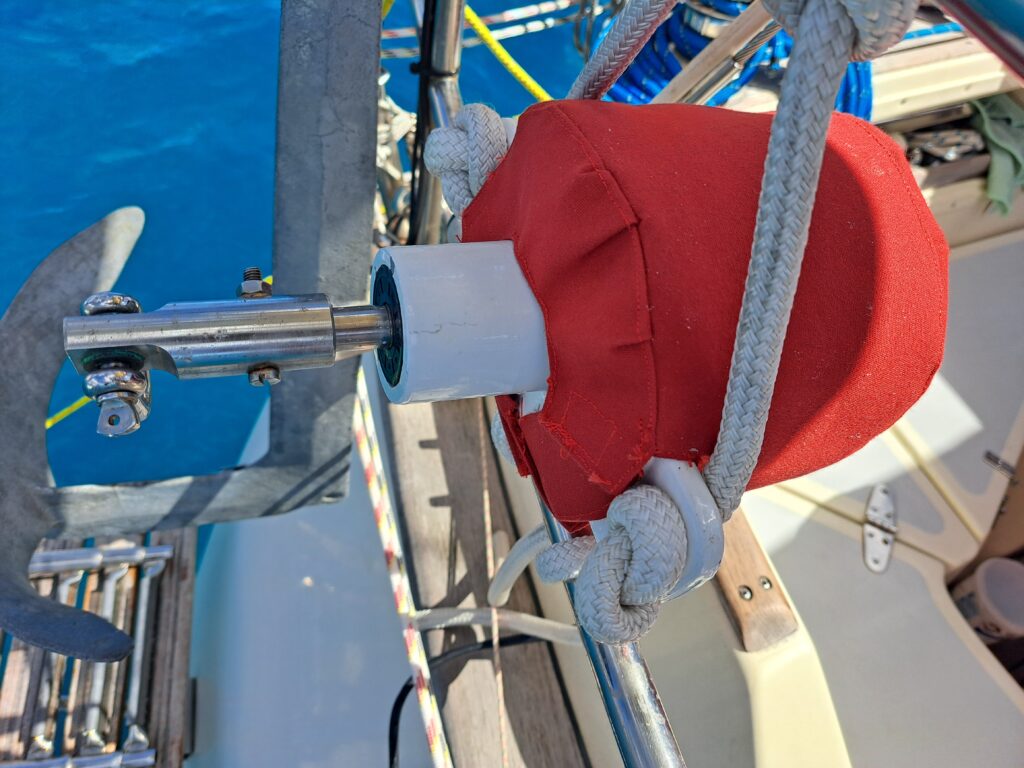
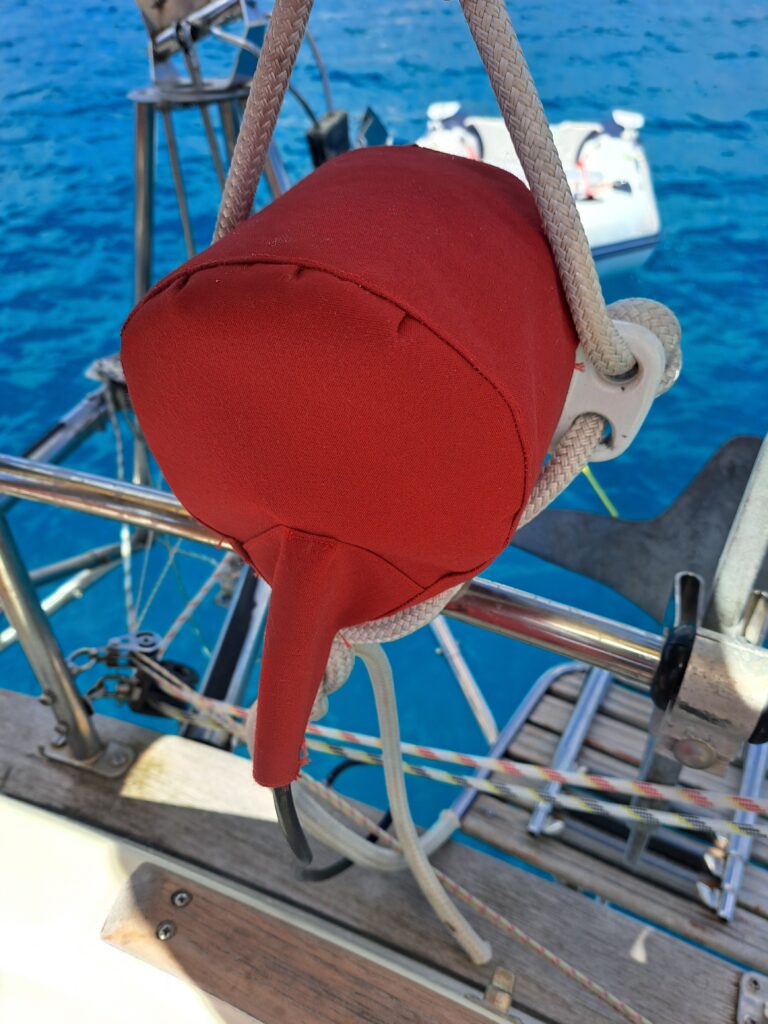
We started and finished a new sewing project: a cover for the hydrogenerator to have on when it is not in use. When the generator is working and delivering current, it is getting warm so the protection needs to be off to allow it to cool properly.
Once we were clear with our boat maintenance, we explored Playa Blanca. Playa Blanca is a touristic bubble in Lanzarote. It is a town entirely built around tourism, with many hotels, restaurants, touristic shops, tour operators, all kinds of water activities, small supermarkets, car rental companies and the marina. As we could hear, most of the tourists seemed to be coming from the UK.
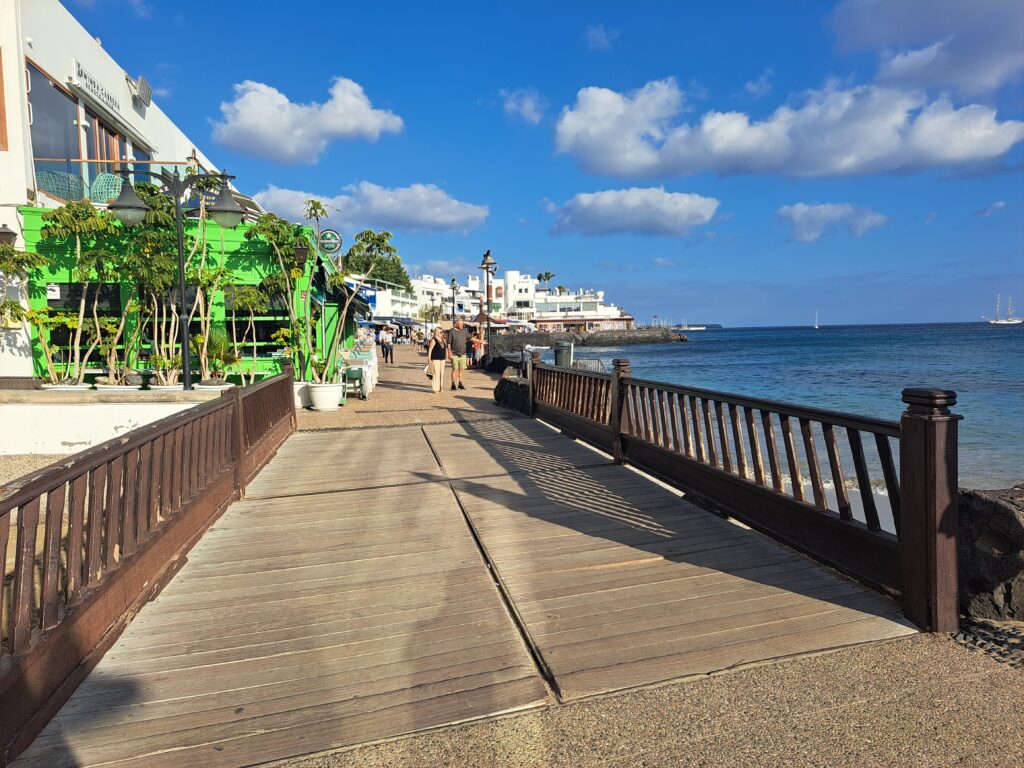
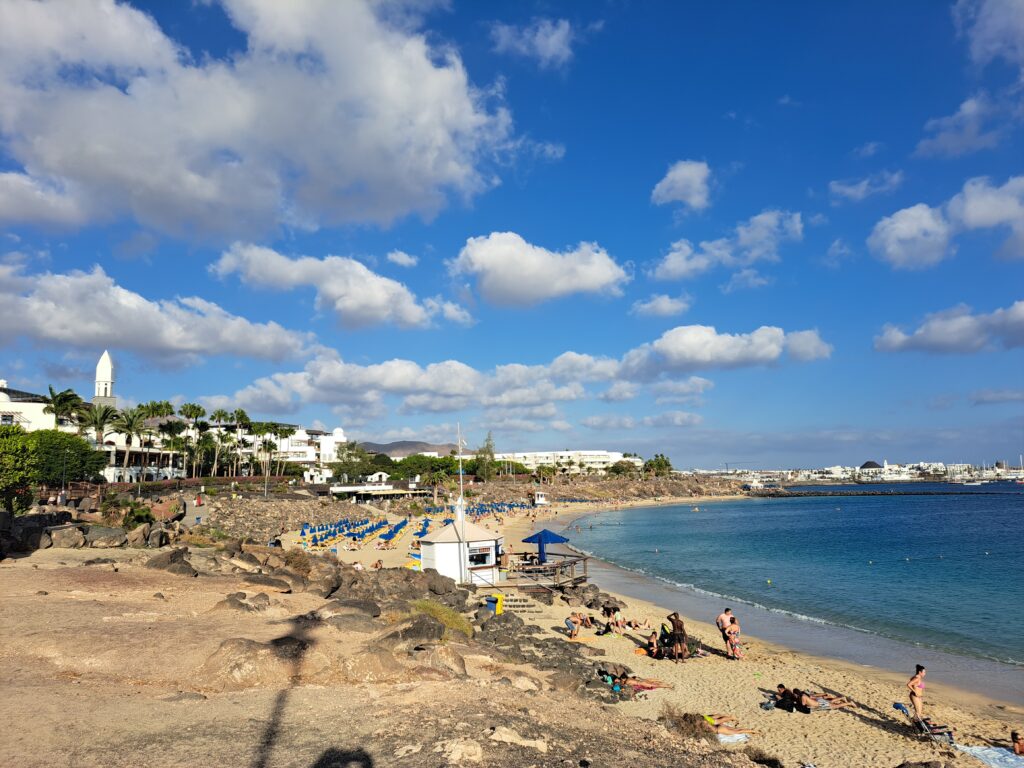
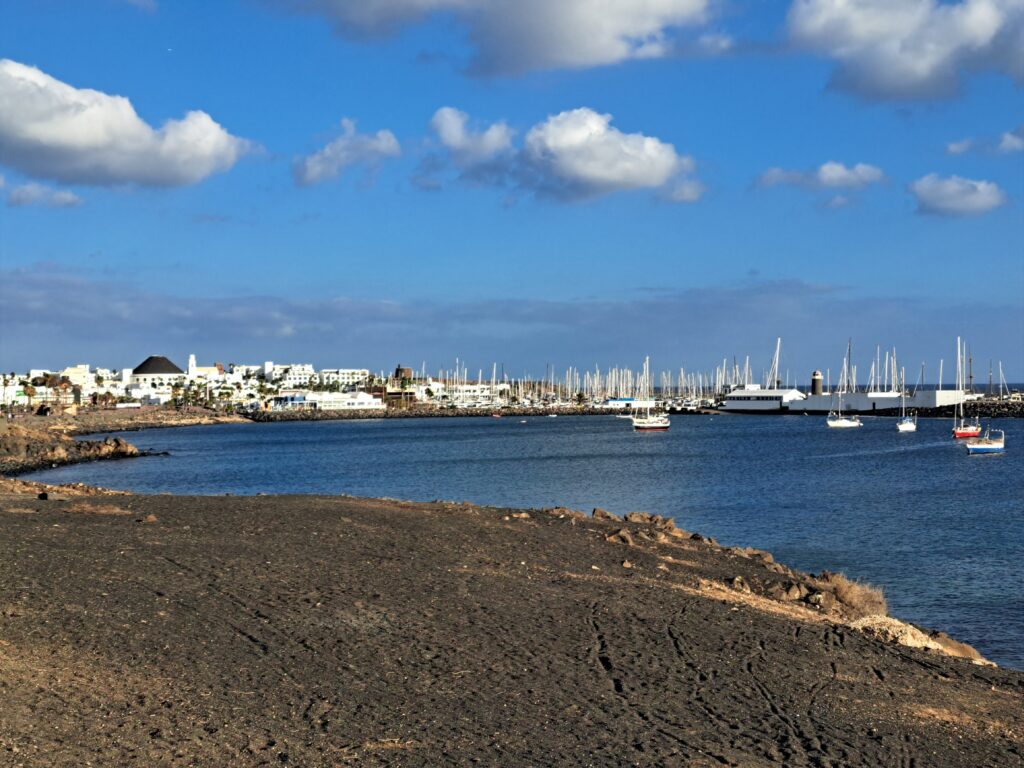
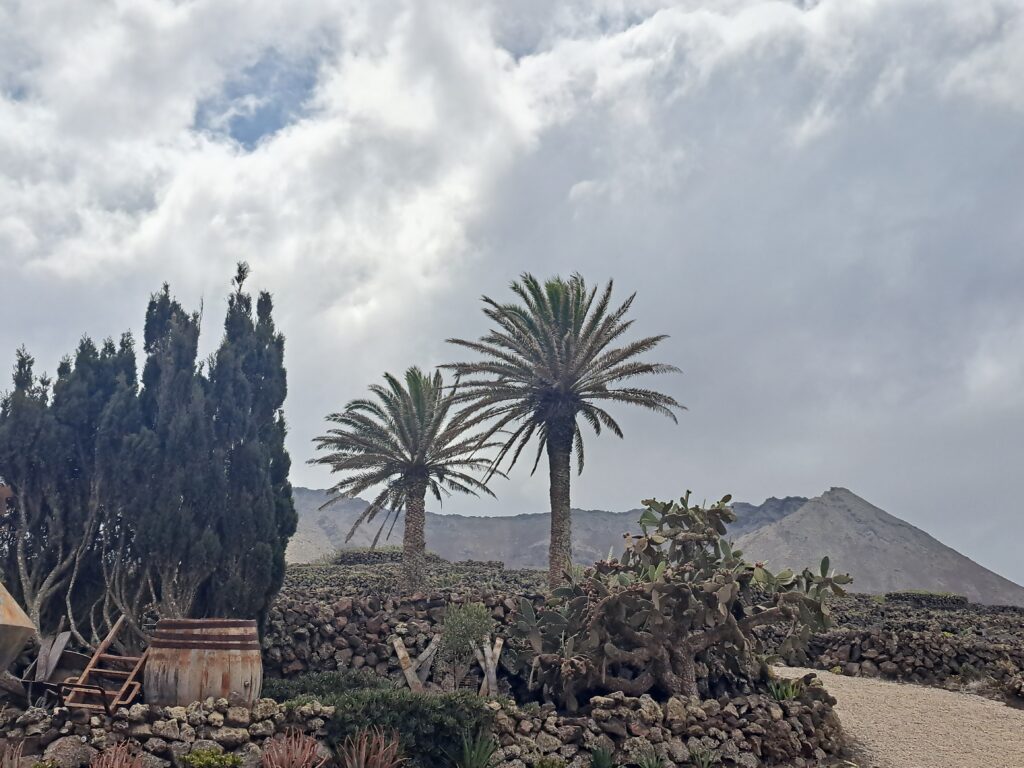
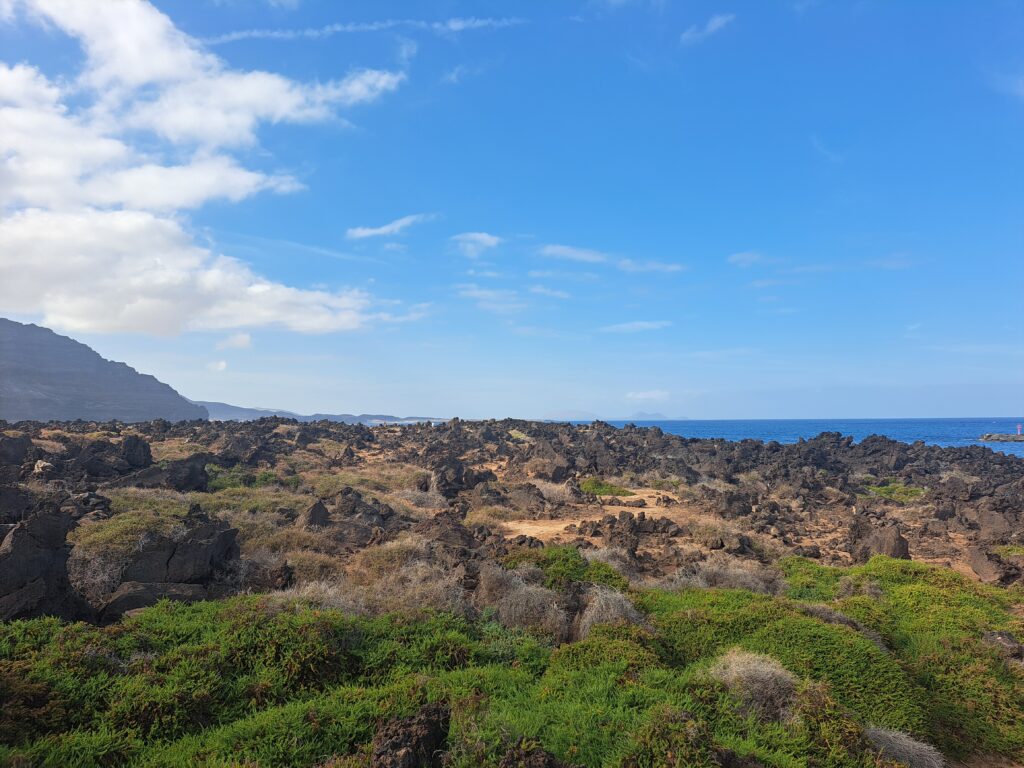
Playa Blanca is surrounded by volcanic landscape like most of the towns and cities on Lanzarote. In some places like Timanfaya National Park in the centre of Lanzarote, the ground is covered by pyroclastic materials and solidified lava flows, as the result of eruptions that occurred in the 18th century creating a lunar like landscape. To go and see what Lanzarote is about, we rented a car with our sailor friends from S/Y Siesta to drive through the island for one day.
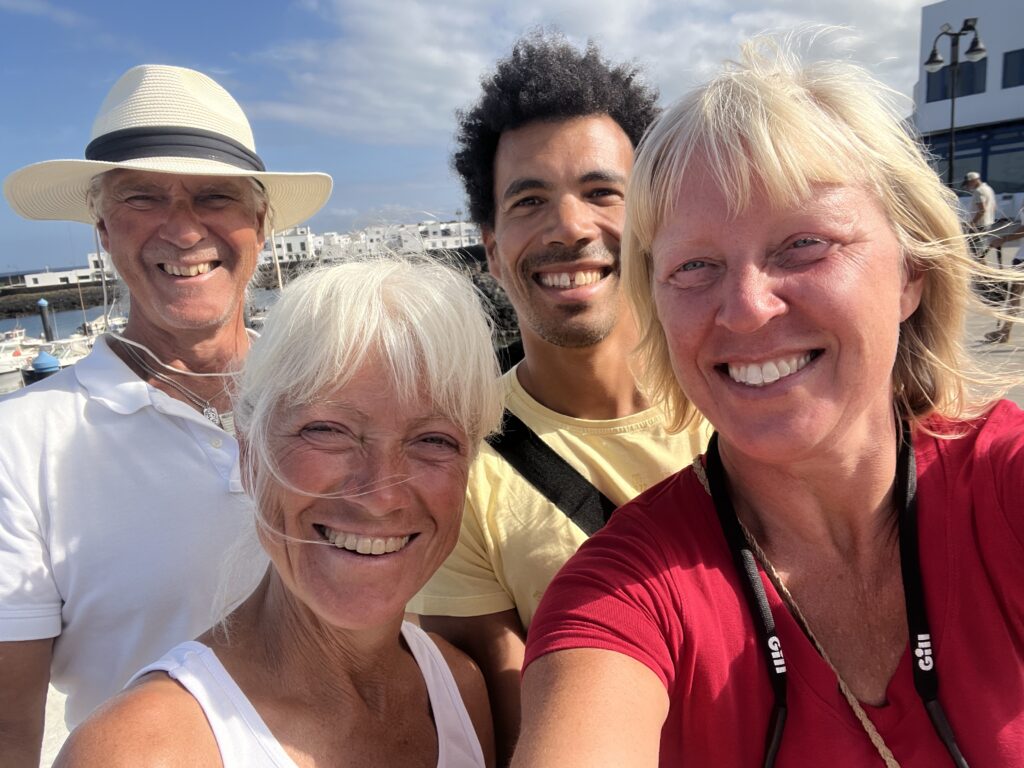
We made a pit stop in Arrecife to buy some more boat equipment (a never ending activity) and fill up one of our gas bottles. Then we drove toward Cueva de los Verdes, a popular tourist attraction on Lanzarote. It is an impressive 8 km lava tube formed during a volcanic eruption some 20 000 years ago. A section of the lava tube has even become a concert hall for classical music. The walls are made of basalt that is one of the best sound absorber you can think of so there is no sound echo in the tube. We were a bit disappointed to not actually hear someone playing an instrument there.
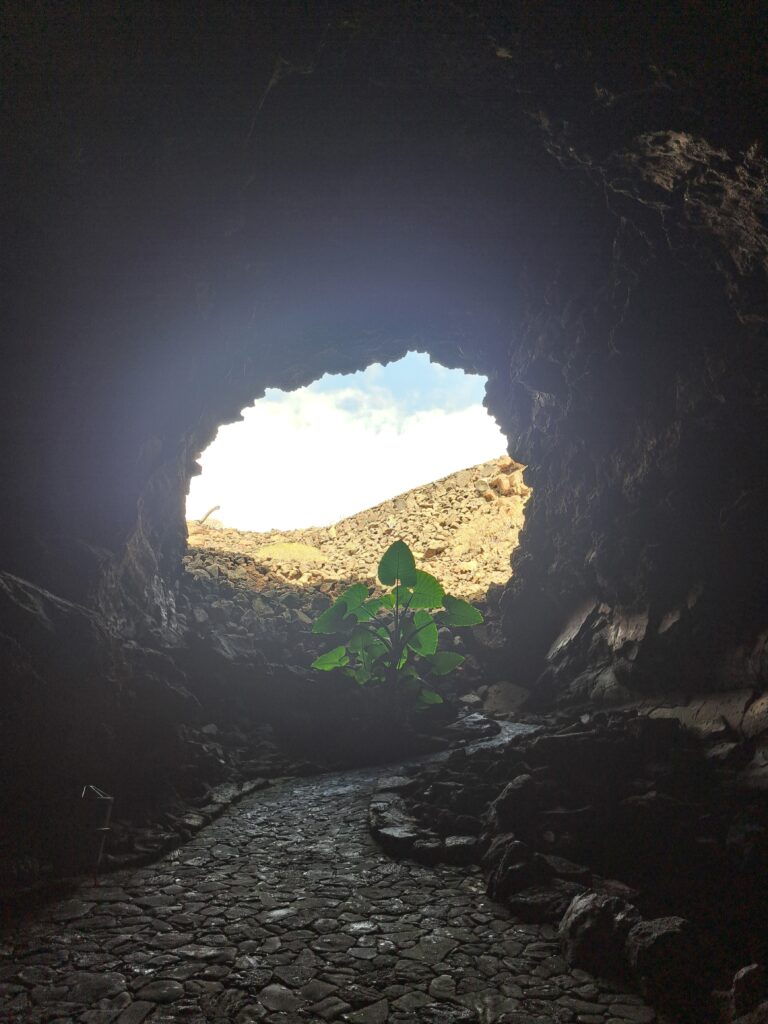
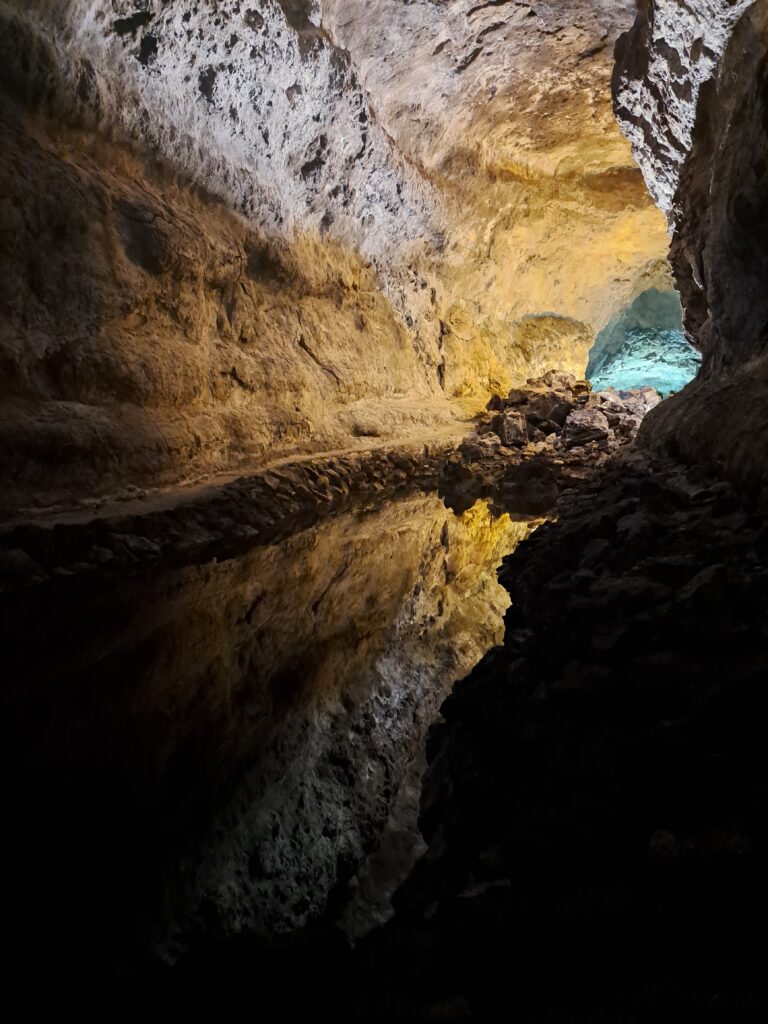
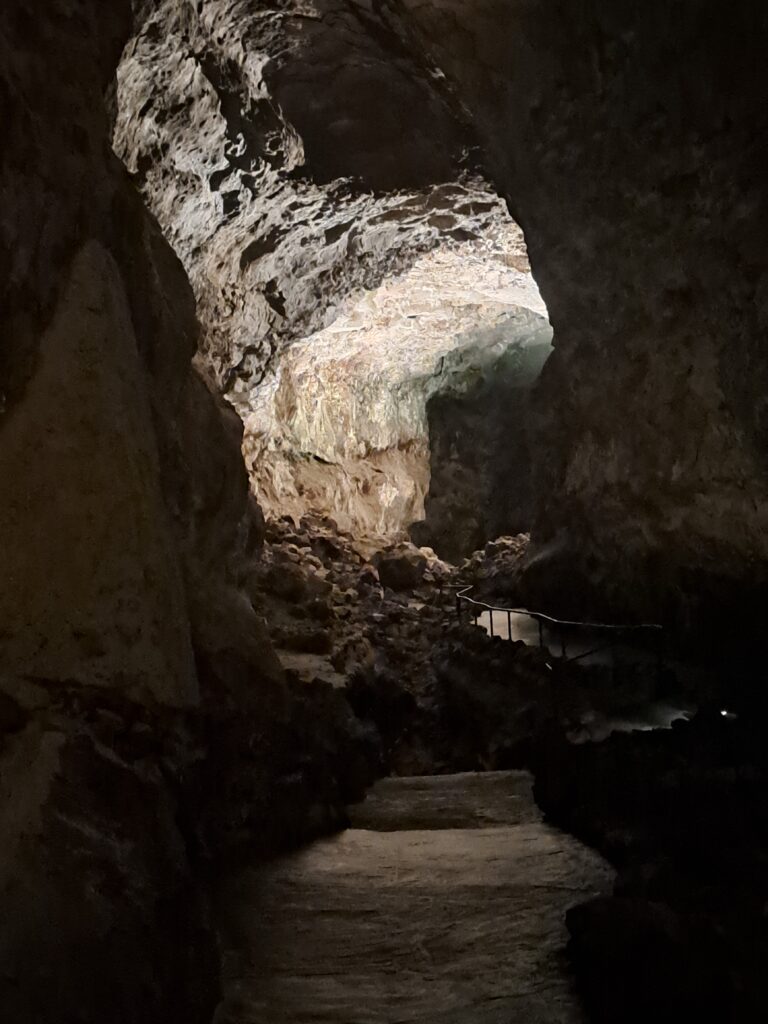
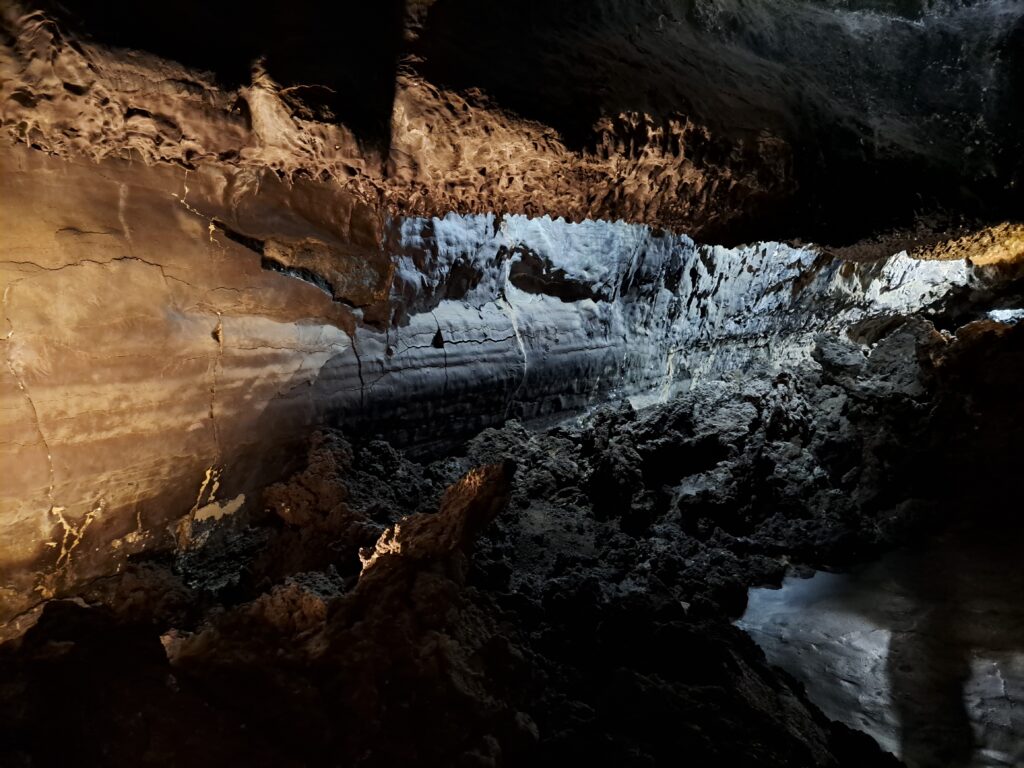
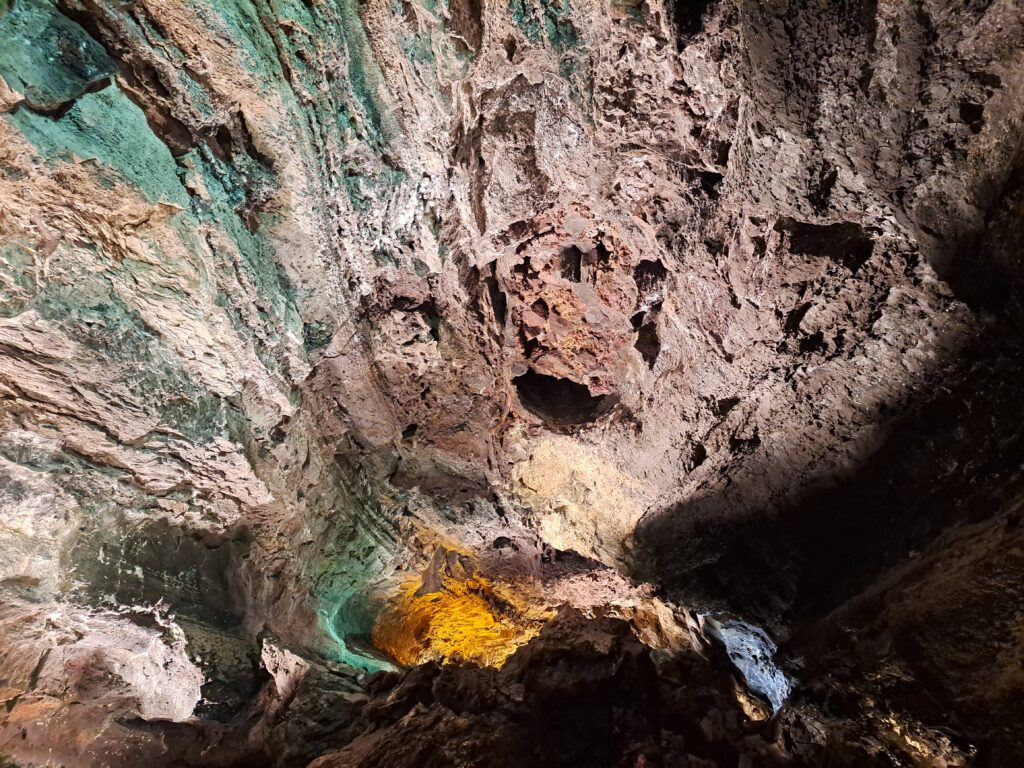
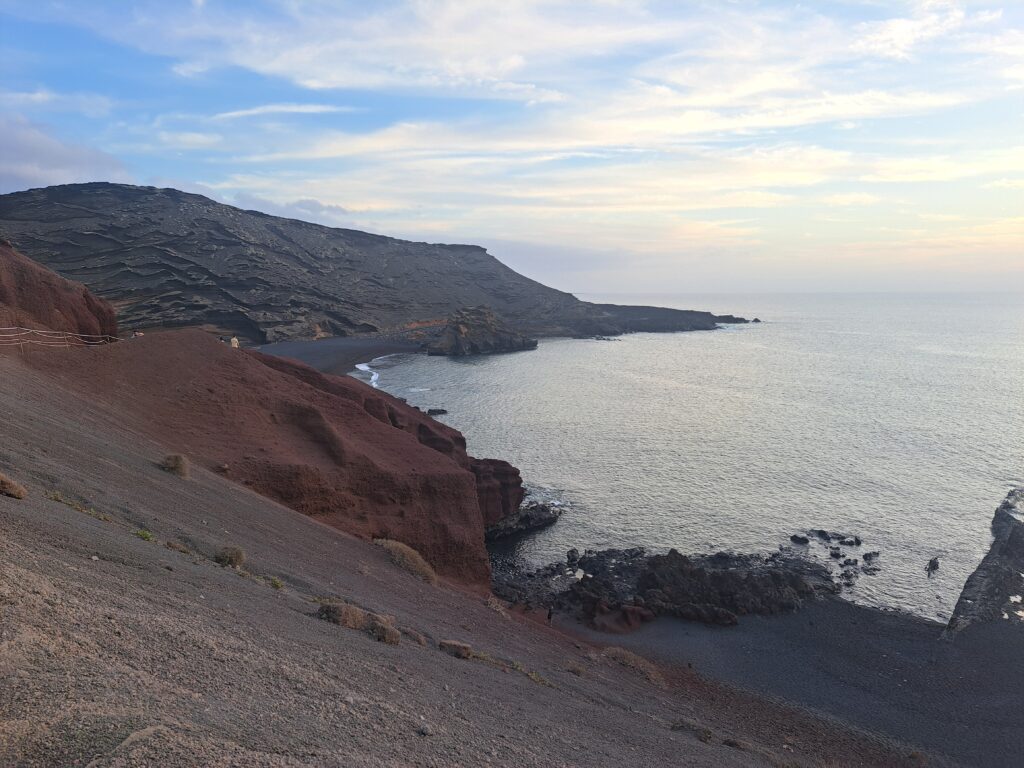
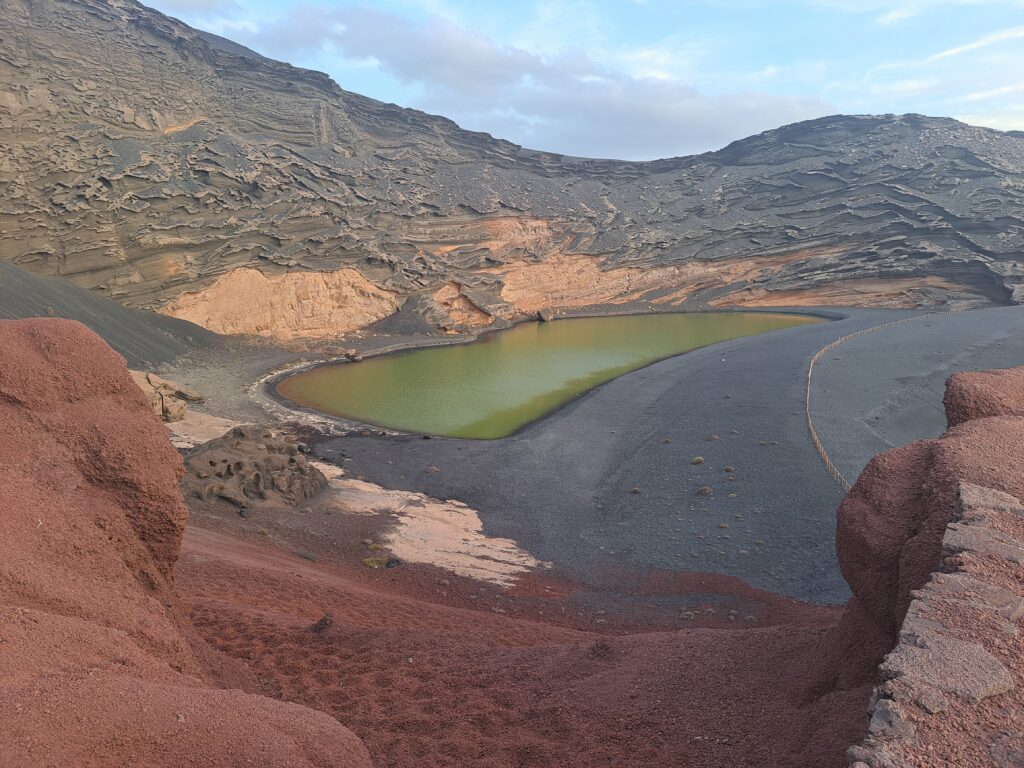
After the guided tour of the lava tube, we drove north to see the upper part of the island and then back toward Playa Blanca through the moonlike landscape of Timanfaya National Park with a stop in a small town on the west coast of the island called El Golfo, known for its green lake.
Isla de Lobos (October 15 – 17)
On October 15 after 8 nights in harbor, our longest stay in a harbor at that point of time, we left Lanzarote and headed towards Isla de Lobos, a small island just off the main island of Fuerteventura. We enjoyed a nice sailing with 6 m/s of wind beam reach on a flat sea. Conditions that reminded us the Swedish archipelago with the difference that there are no flying fish there! Finally we saw them! Such an amazing experience to see them flying. Some flew for at least 100 meters!
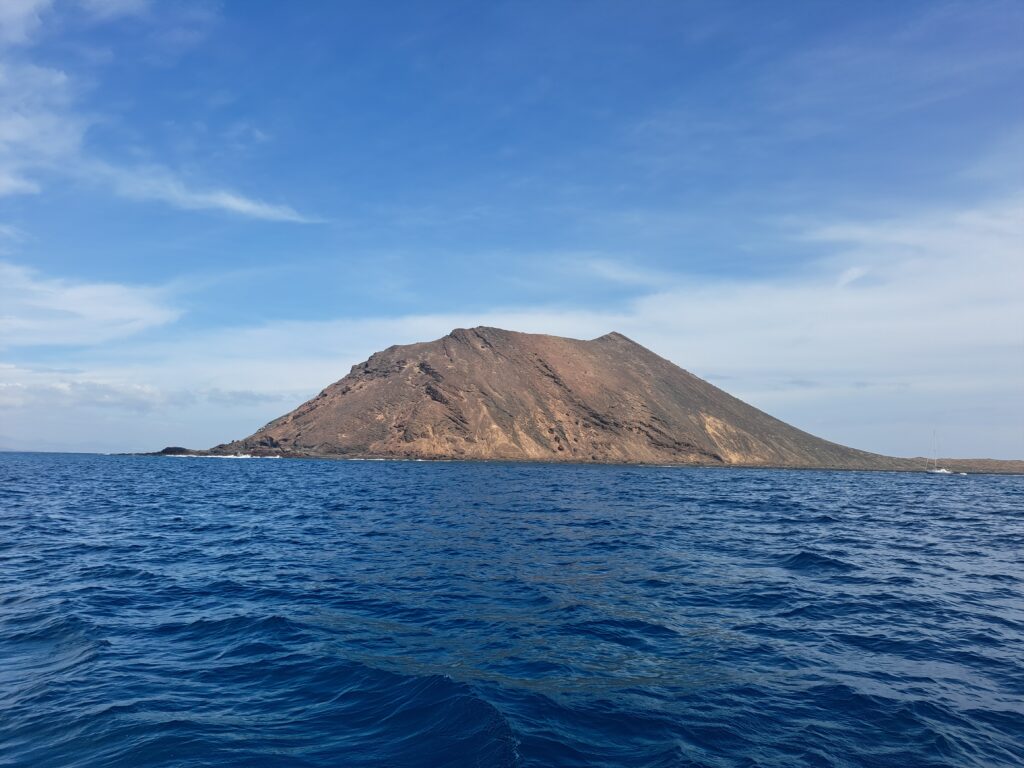
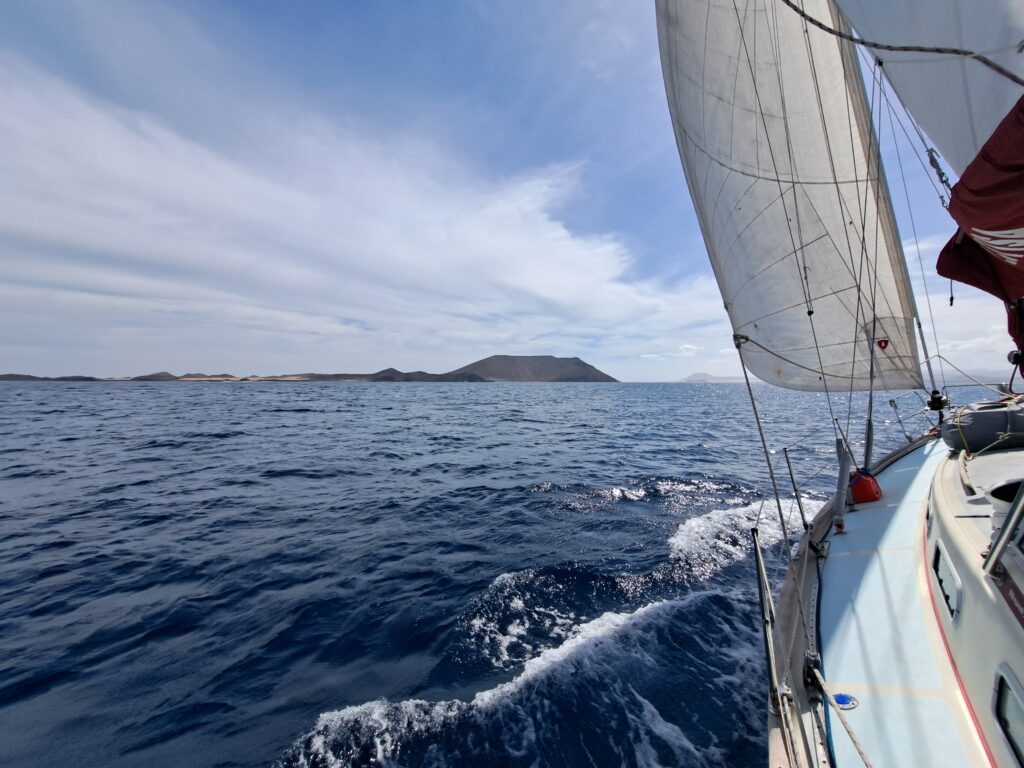
We anchored on Isla de Lobos after only one hour sailing in clear turquoise waters. We first took an anchoring spot as close as possible to the shore but when the wind turned in the evening, we ended up close to the anchoring buoy of another sailboat. Even though it was already dark, to avoid having to think all night about whether we would get entangled in the line of the anchoring buoy of our neighbor or not, we simply changed spot.
We inflated our dinghy next morning to explore a bit of the island. Getting on land with the dinghy took a bit of time. It was forbidden to let dinghies on the only narrow sand beach that was reserved to swimmers. We got recommended a rocky beach instead but volcanic rocks are sharp and the bottom of the dinghy is soft so we needed to be very careful not to end up on a sharp rock. Nevertheless, amazing clear water and the panorama from the island was worth the efforts!
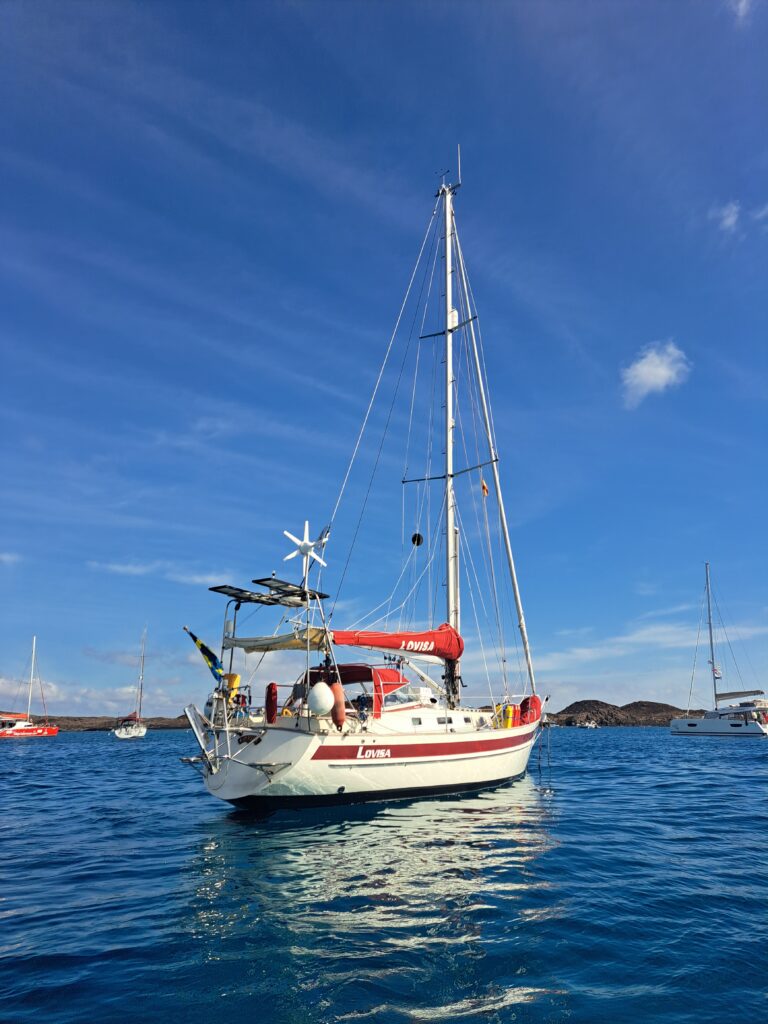
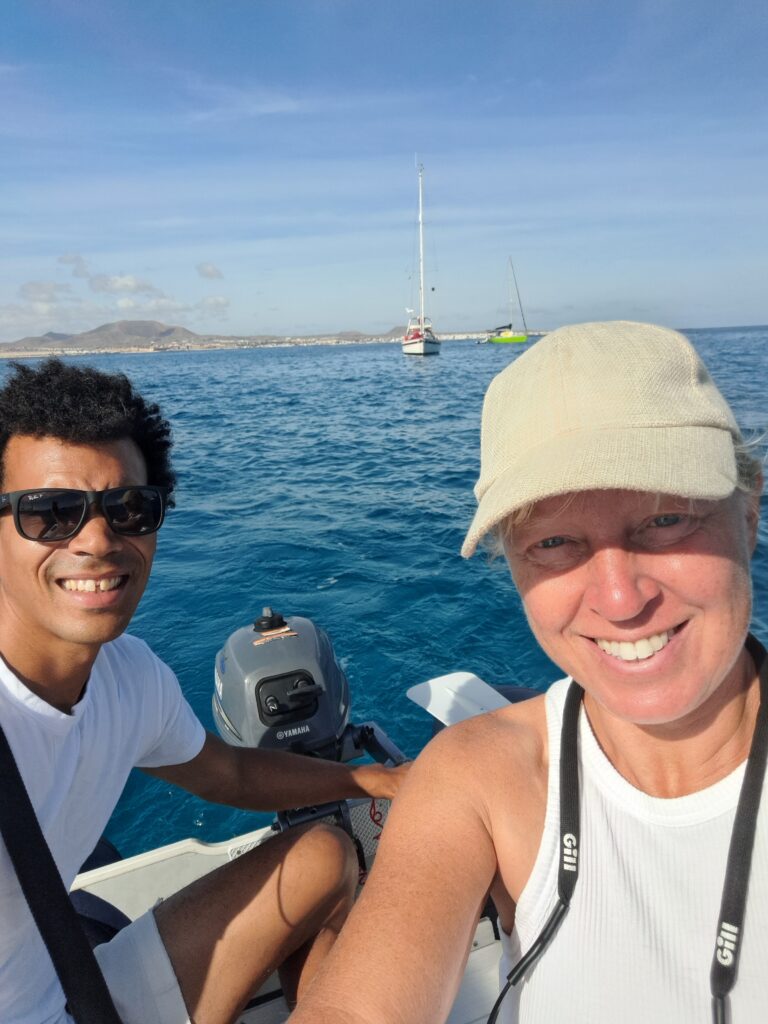
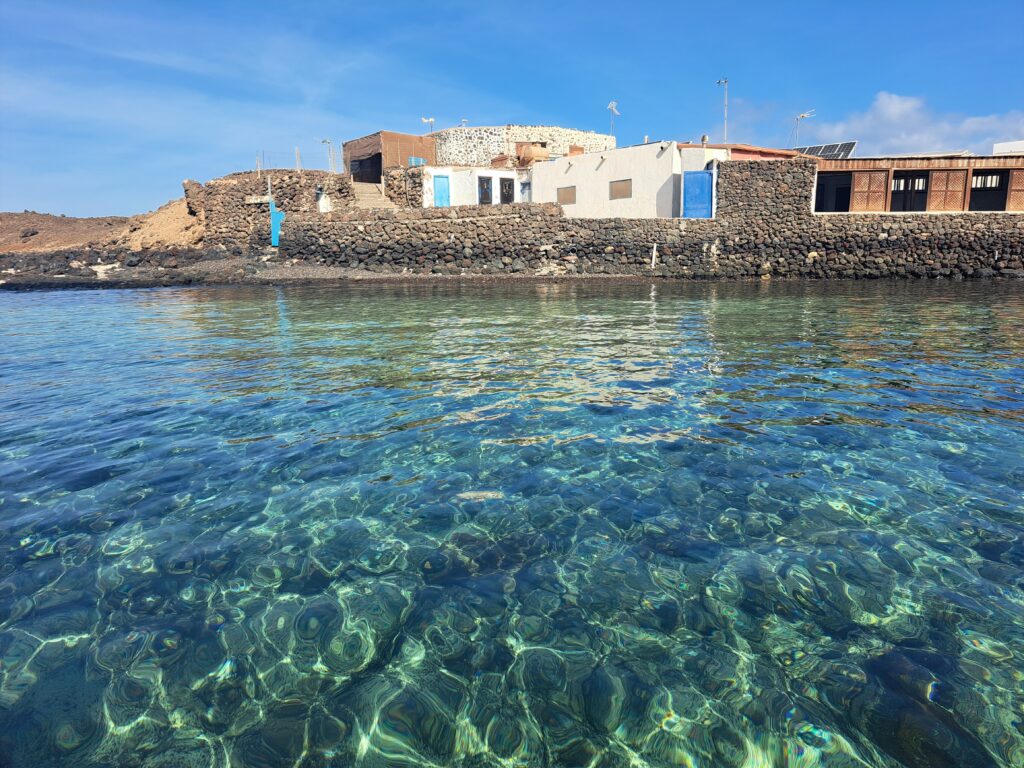
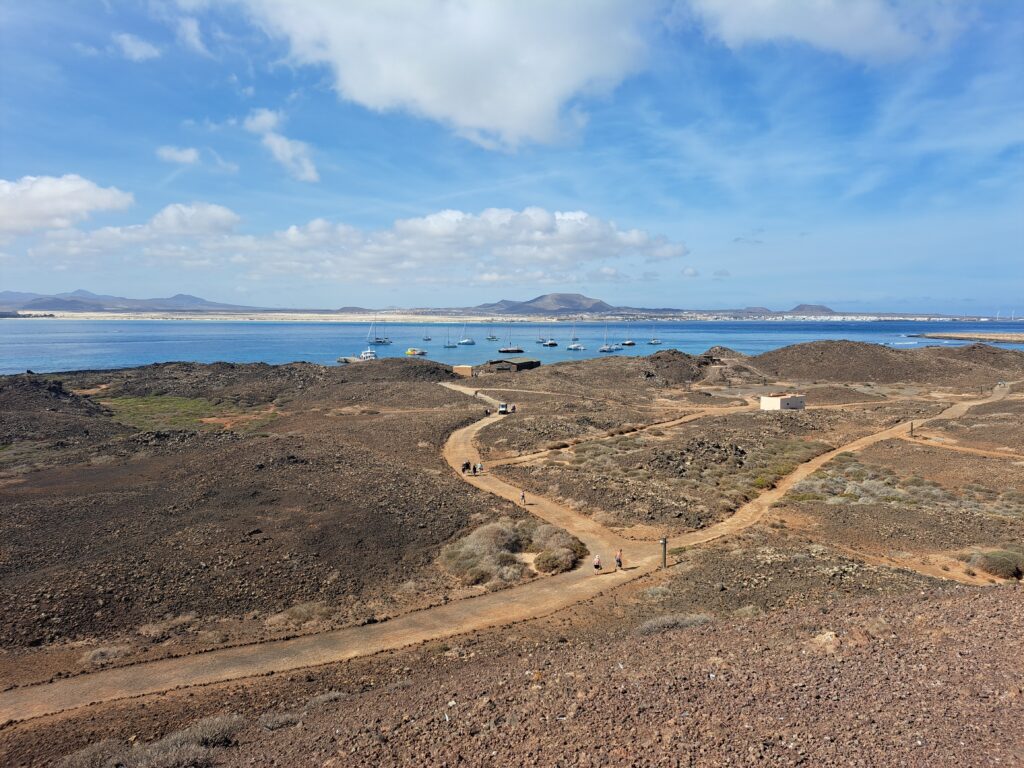
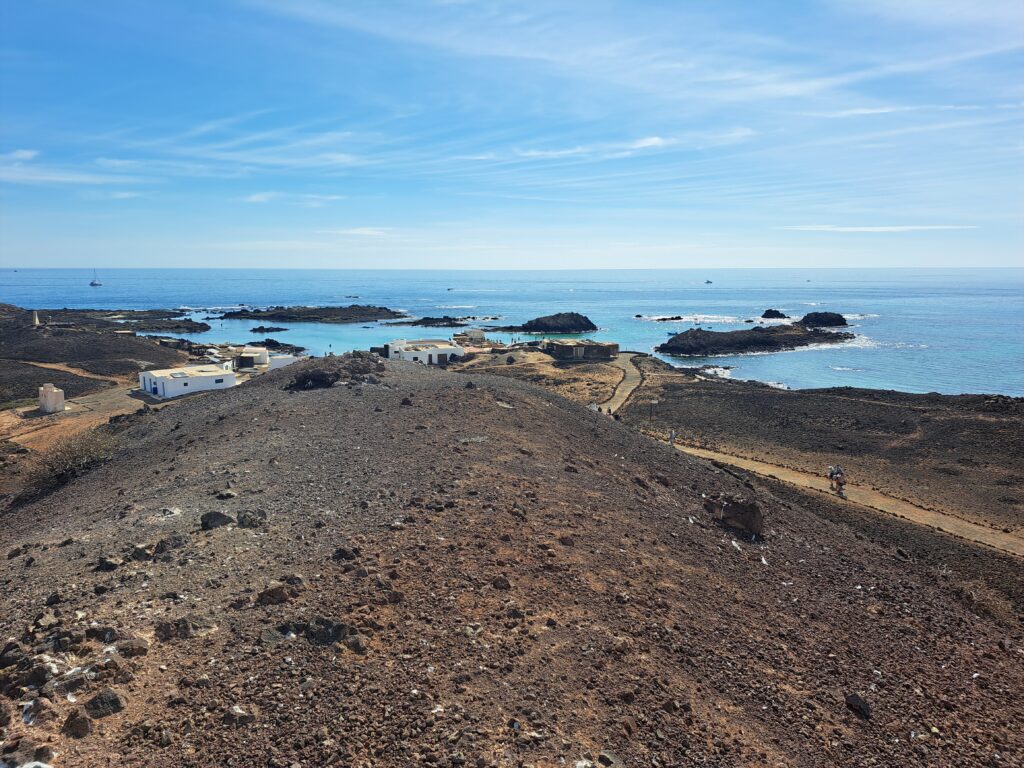
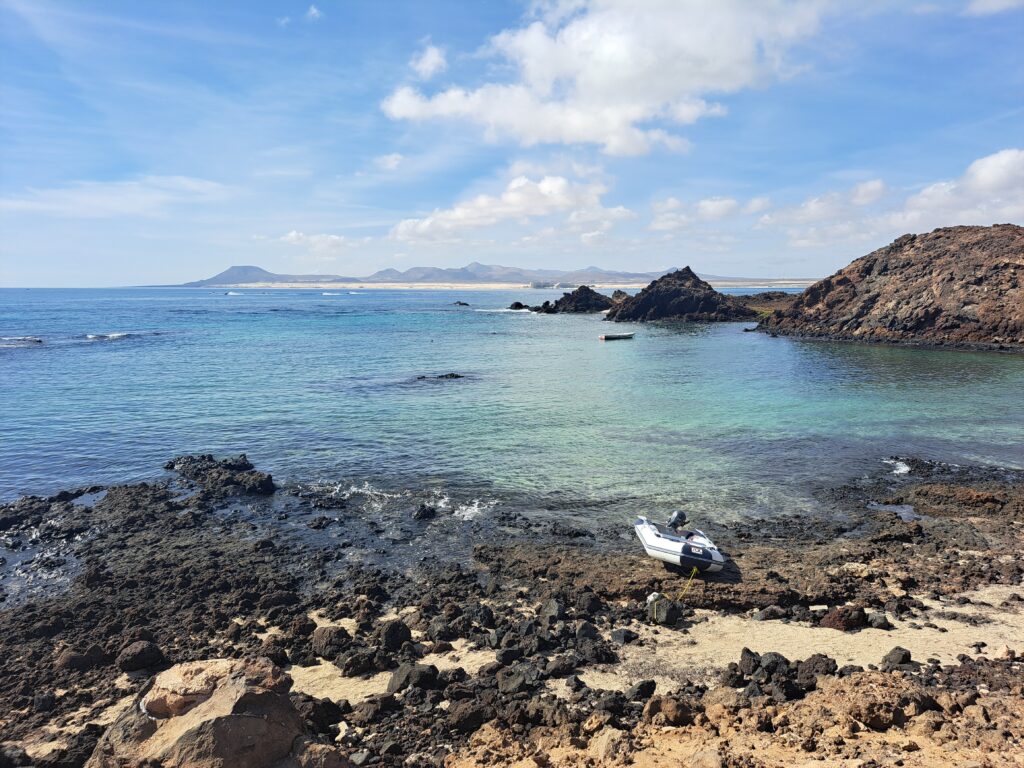
On Friday 17 October after 2 nights on anchor we decided to sail forward toward Fuerteventura. There was no wind when we lifted the anchor and the water was so clear that we could clearly see the chain and the anchor laying on the bottom at 10 m depth. The shiny anchor attracted the curiosity of a stingray that swam around it of a minute or so!
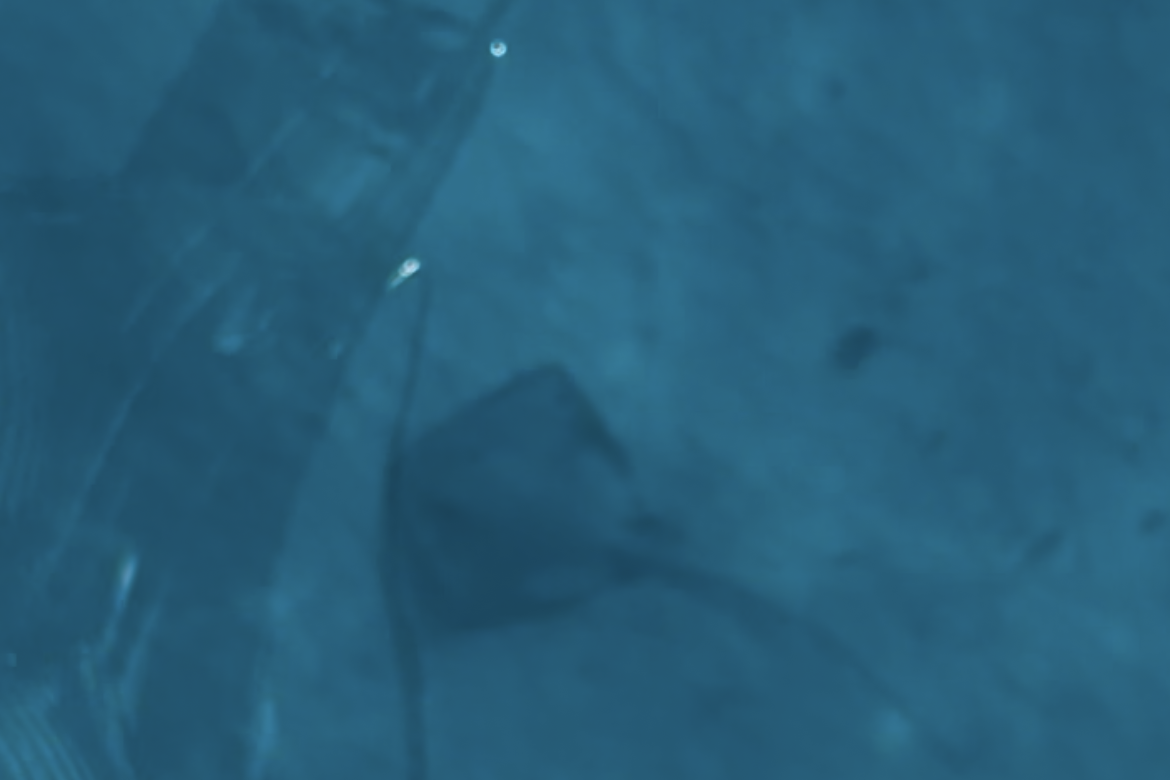
After this fantastic scene, we started our route along the eastern coast of the main island of Fuerteventura.
Fuerteventura (October 17 – 21)
We were expecting an entire day on engine as there was very little wind forcasted. Instead, we enjoyed a relaxed sailing day as a light sea breeze built up around midday (a sea breeze is a wind coming from the sea towards lands caused by the land heating up faster than the water). We had no wave to slow down the boat so we managed to hold speeds between 3 and 4 knots most of the way. Acceptable considering that we only had 25 nautical miles to cover to reach the bay of Pozo Negro where we planned to anchor for the night.
Just prior to entering the bay, we spotted a turtle in the water. It was taking some air at the surface before diving again and disappear. Although we could clearly see the head with the binoculars, it was not that easy to see it in the water.
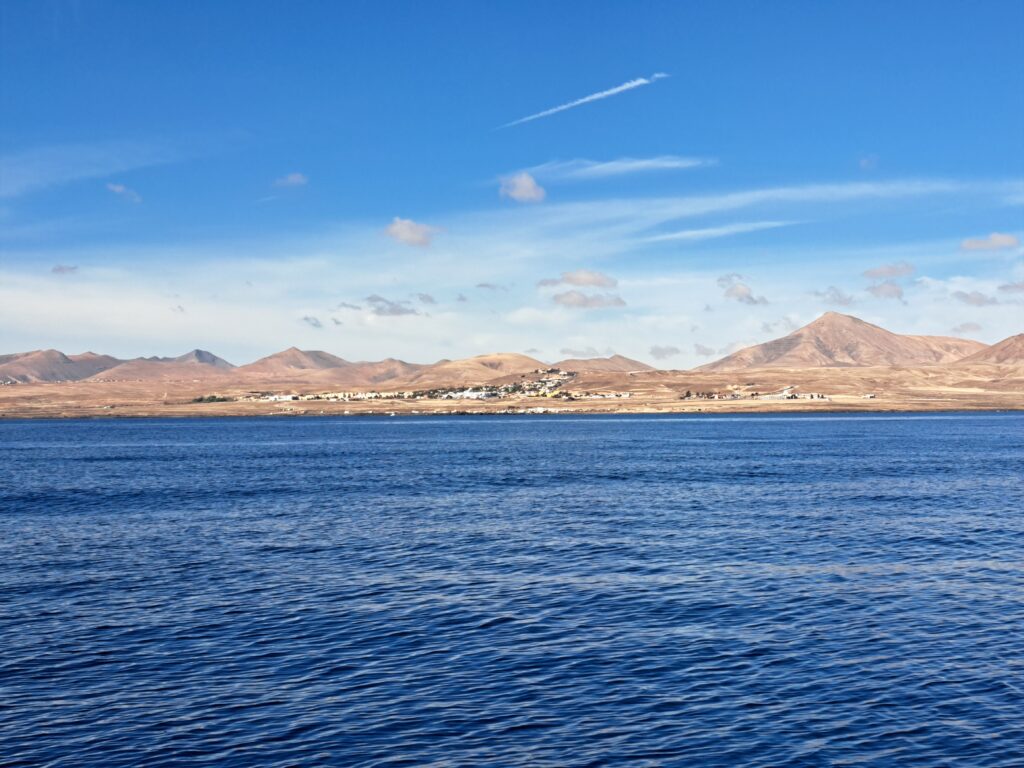
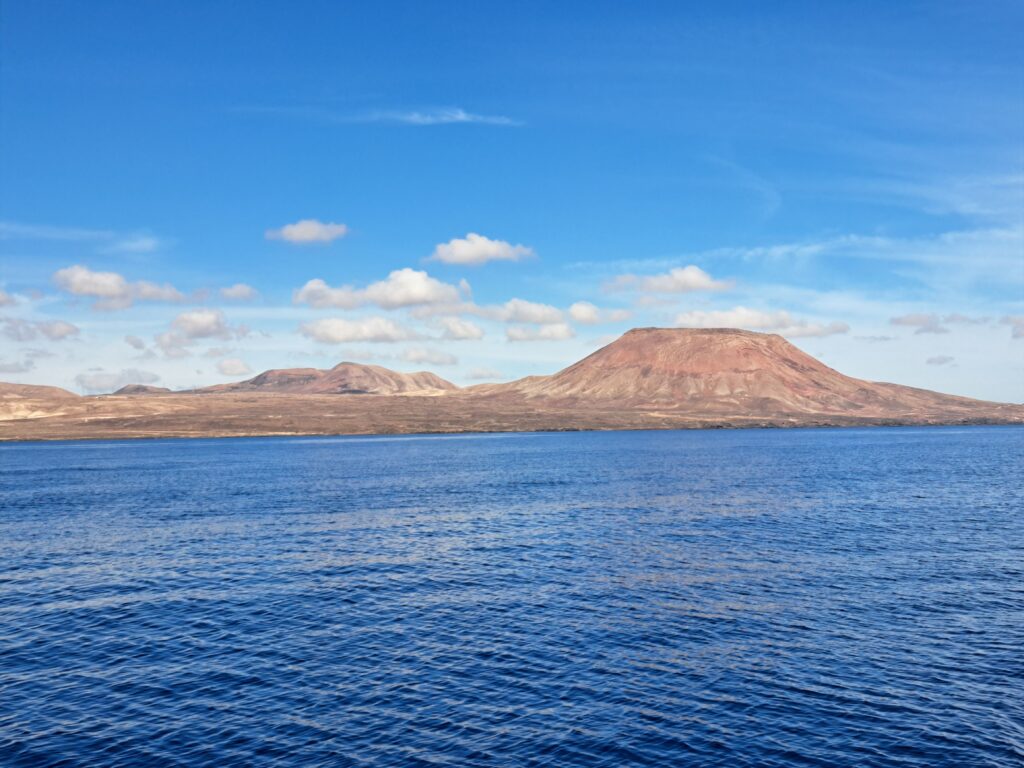
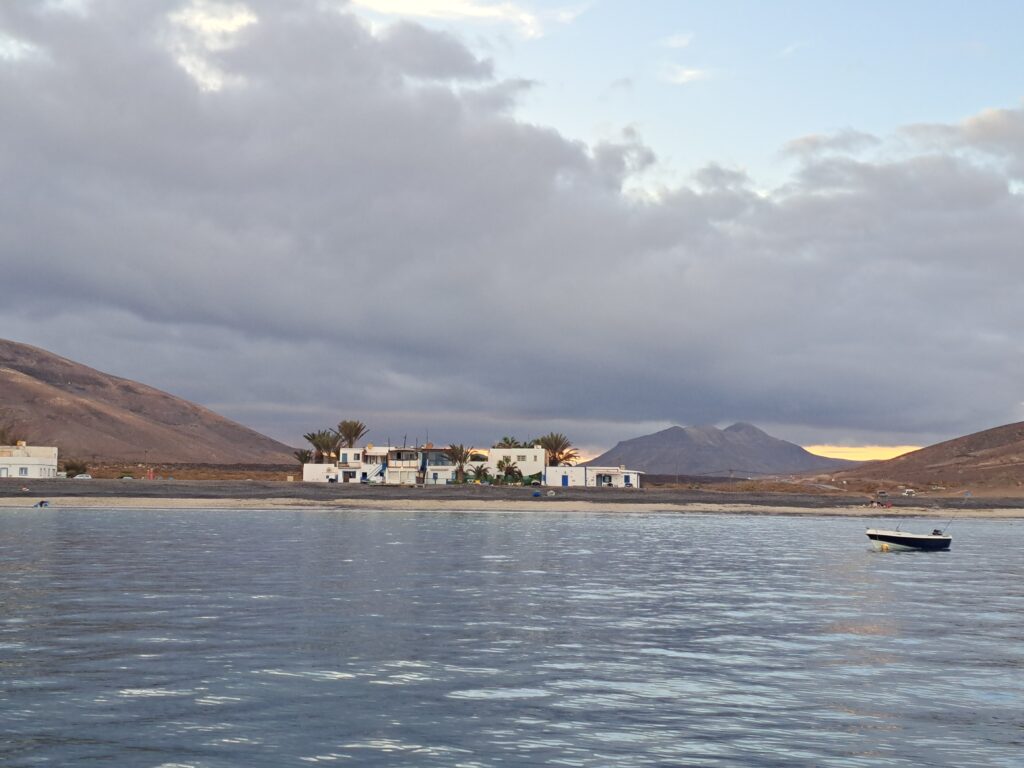
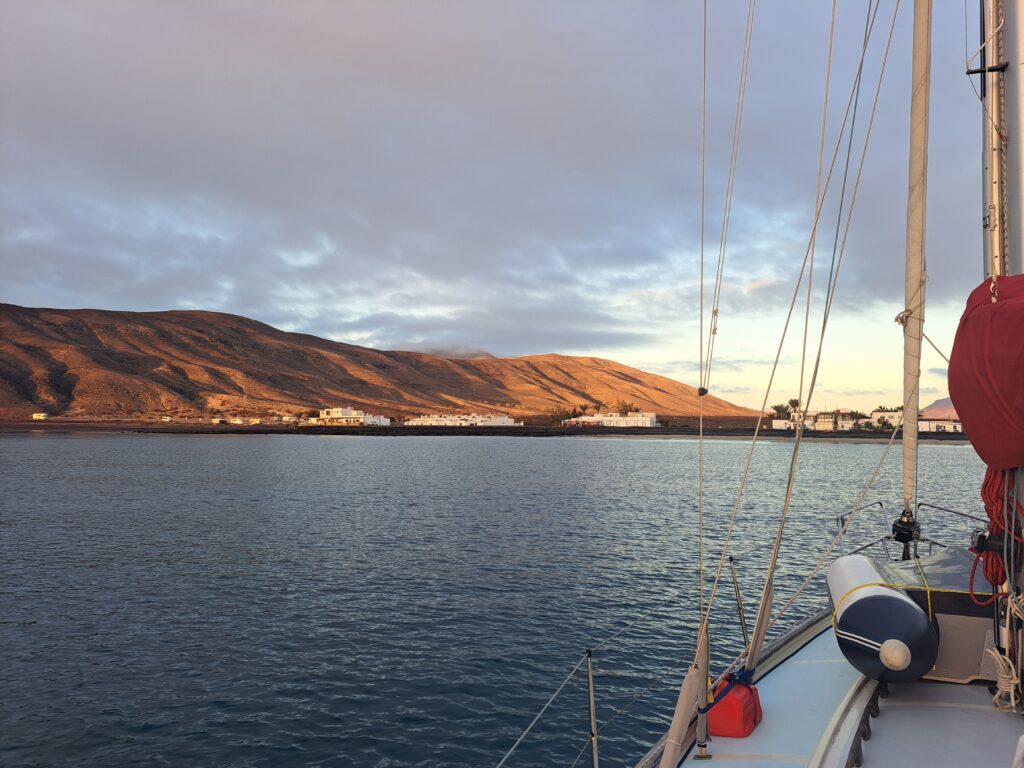
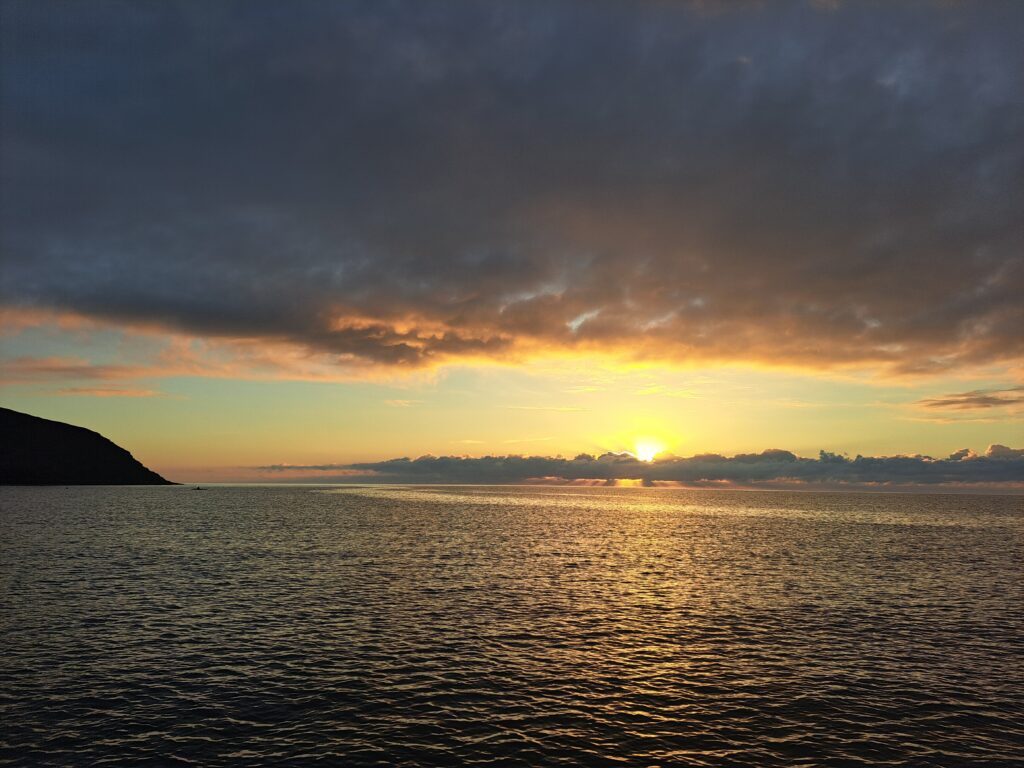
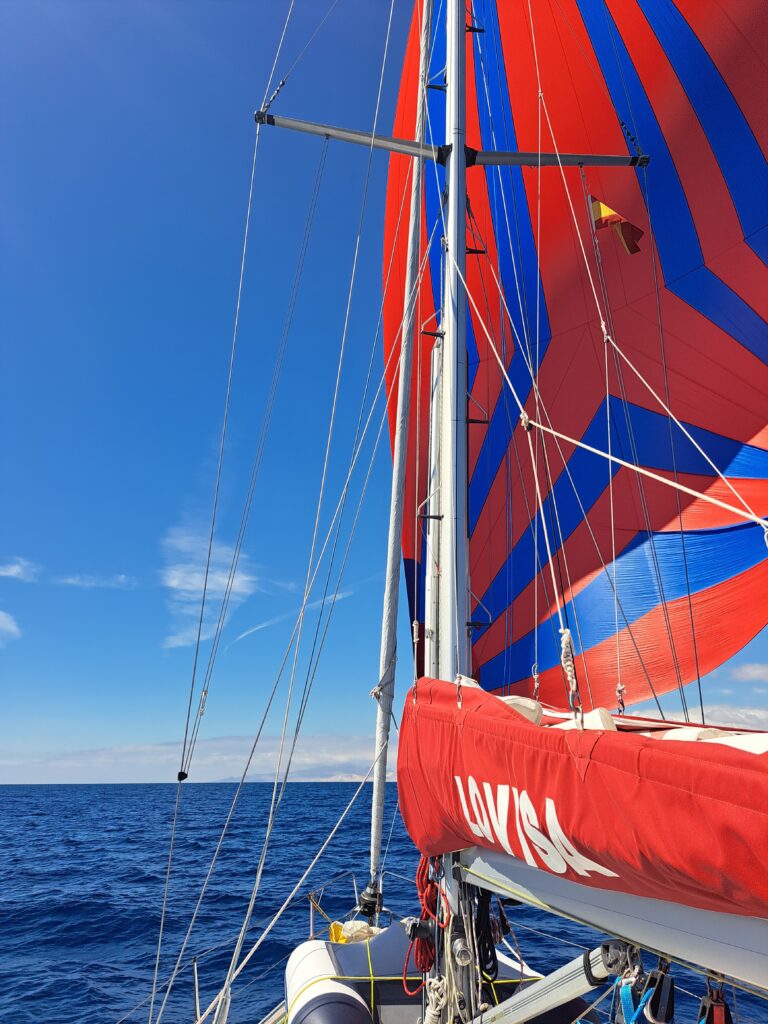
We dropped the anchor in Pozo Negro in the middle of the afternoon between other six or seven sailboats. We didn’t put step onshore and admired the black volcanic sand beach and the dark volcanic stone cliffs from the boat. Next morning we left our anchorage to head toward Playa de Sotavento. There was very little wind so we did most of the way on engine but we could anyway enjoy a couple of hours on gennaker after a light sea breeze built up in our back.
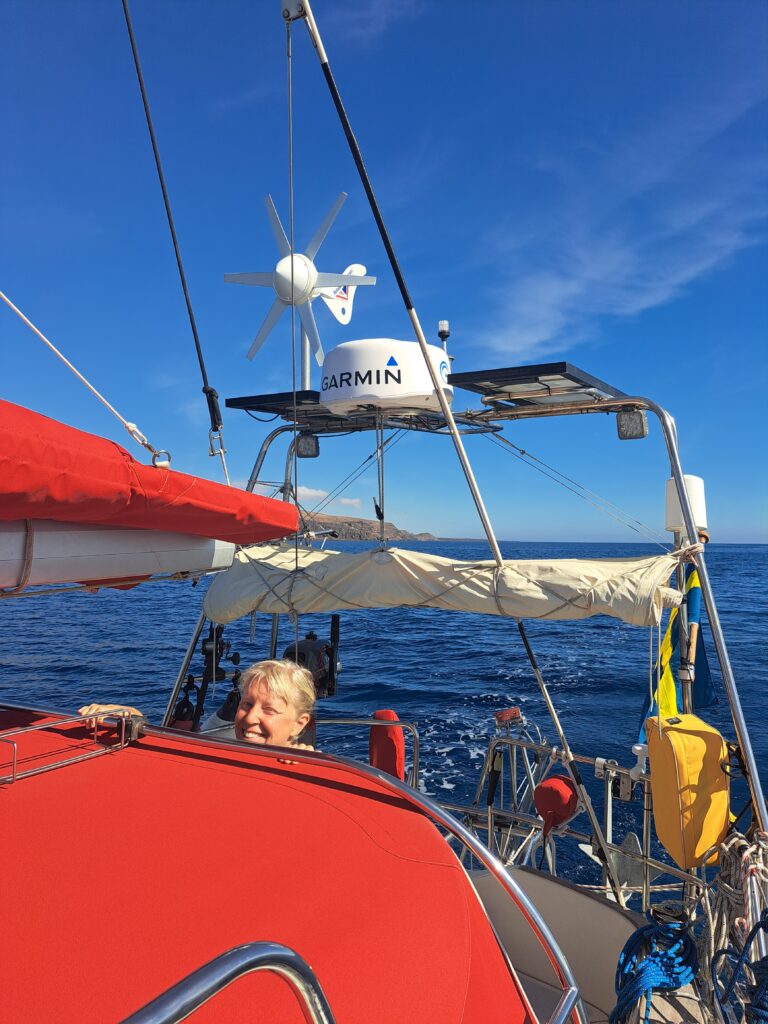
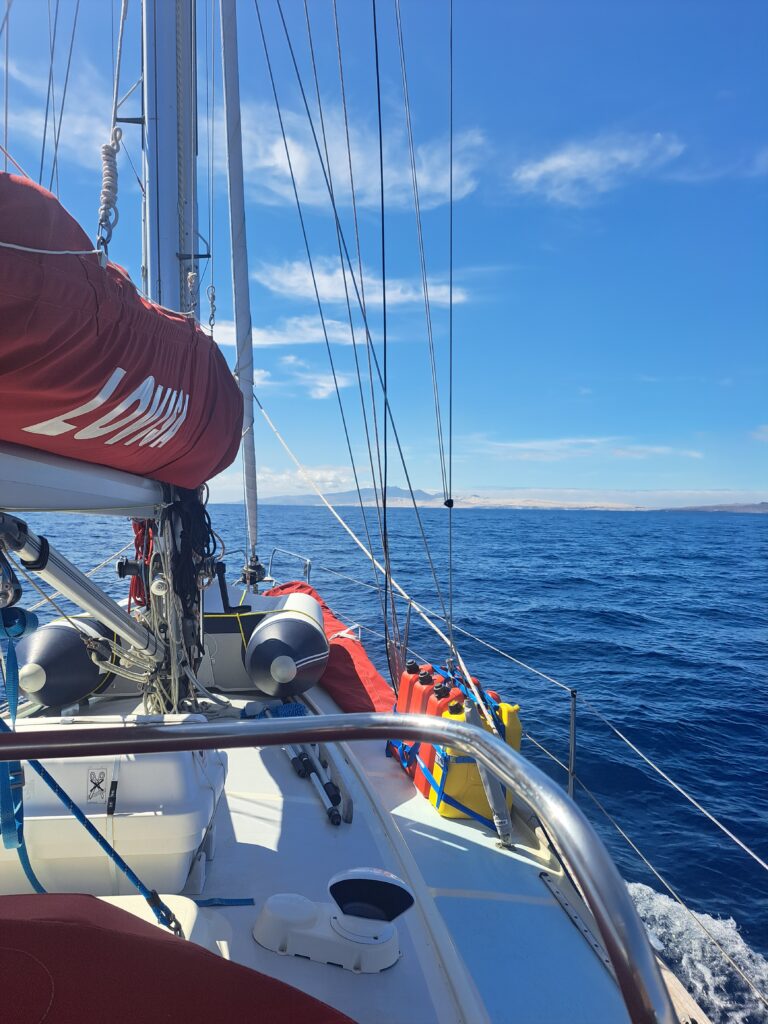
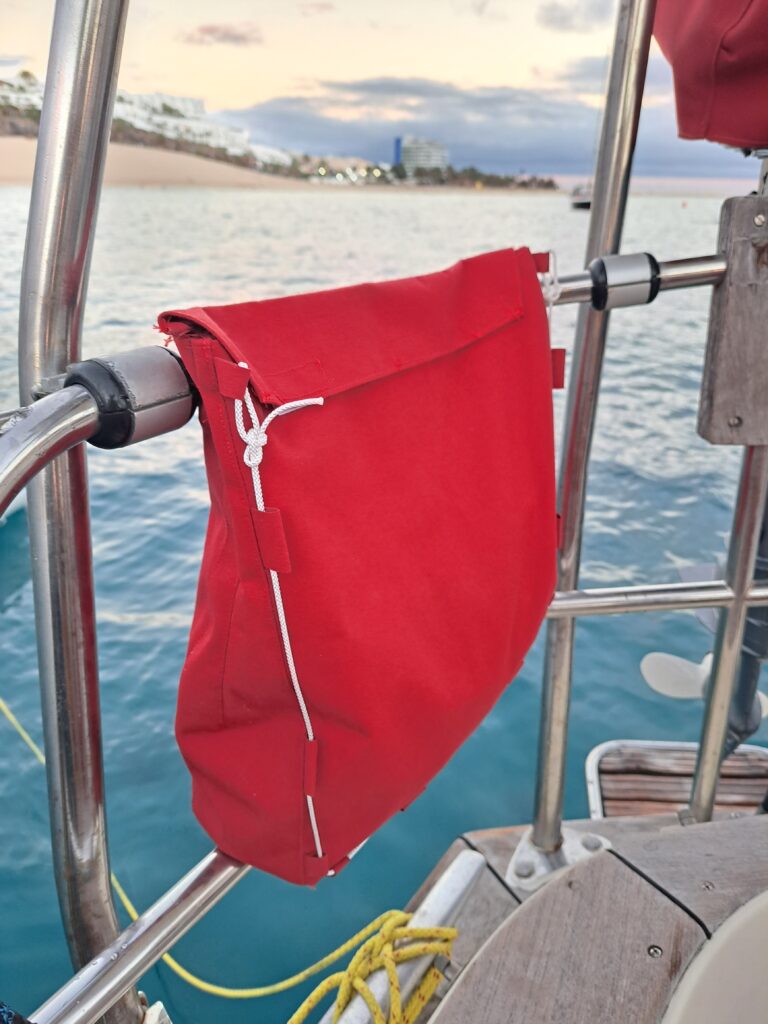
On the way, we finished another sewing project; a holder to hang on the pulpit to store the downhauls. Ever since we bought the downhauls in Lisbon, we never found a good place on the boat to store them and they remained in the way.
After two weeks surrounded by the darkness of volcanic rocks, Playa Sotavento offered a well appreciated change of scenery. We found a landscape made of sand. A lot of sand!
We enjoyed a swim in 25 degrees clear water and dived to check the state of the propeller shaft anode and … nothing …we lost that one too … However we managed to dive and install a new one.
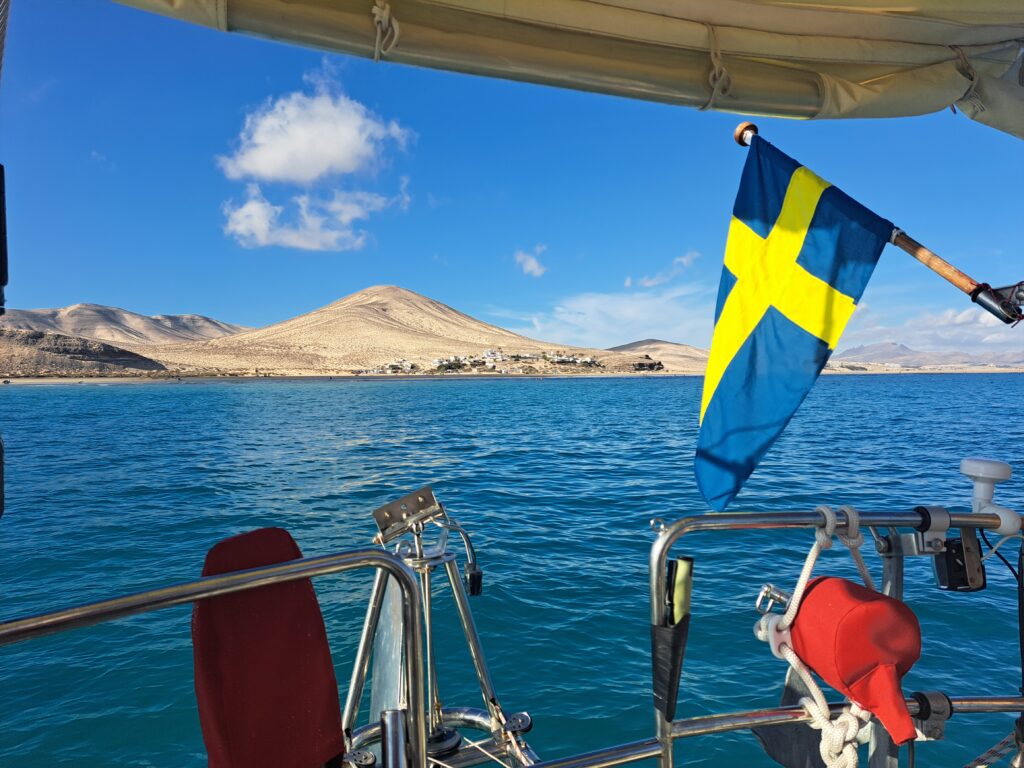
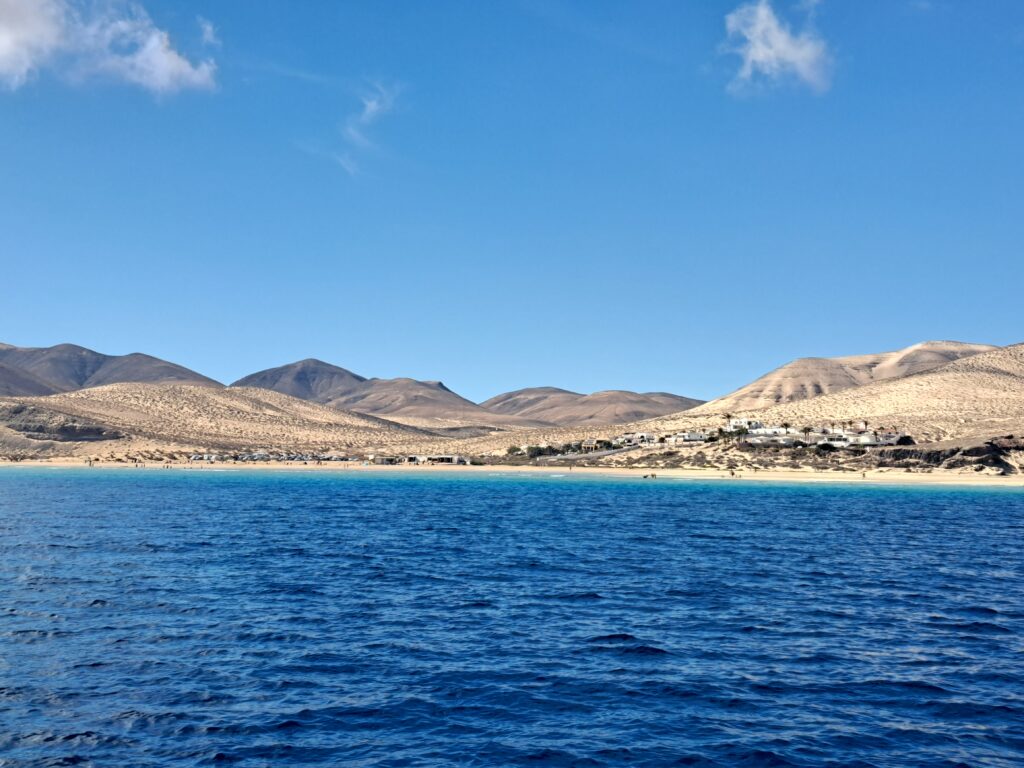
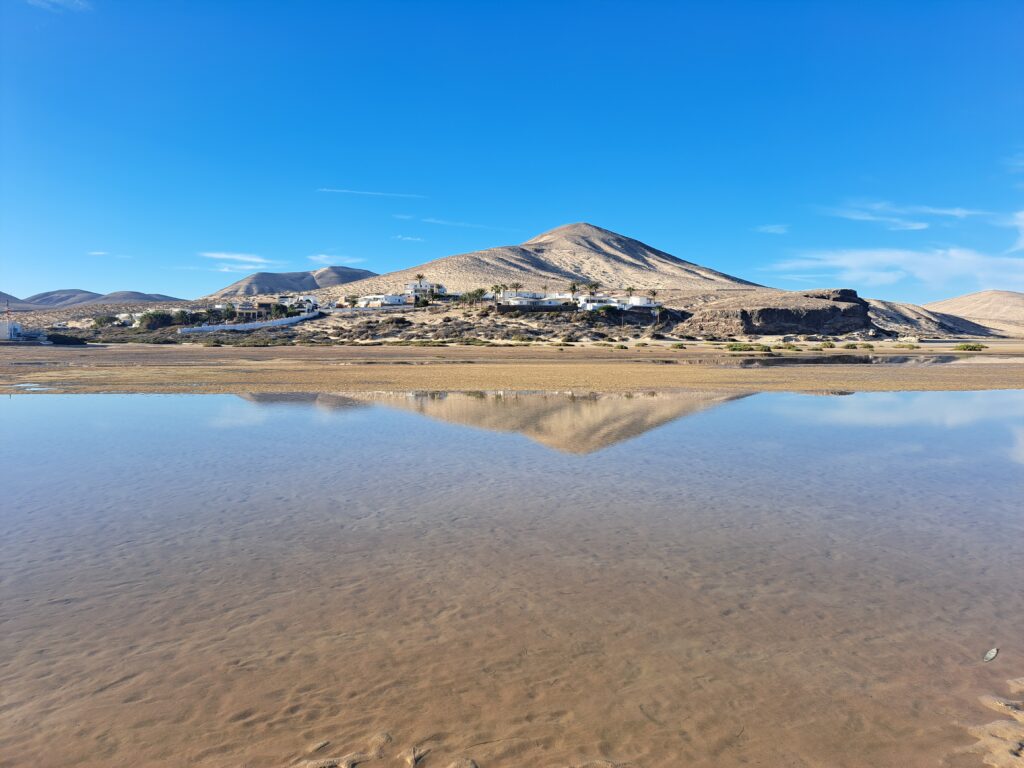
Because the forecast was giving no wind at all, we were thinking to stay anchored until mid afternoon and move to Morro Jable just before dinner time. Instead at 10 o’clock the wind started to blow 7 m/s from north. We decided to take that wind so we would not need to motor our way to Morro Jable. We were afraid the wind would die later? After just a couple of hours sailing we were anchored in front of Morro Jable beach.
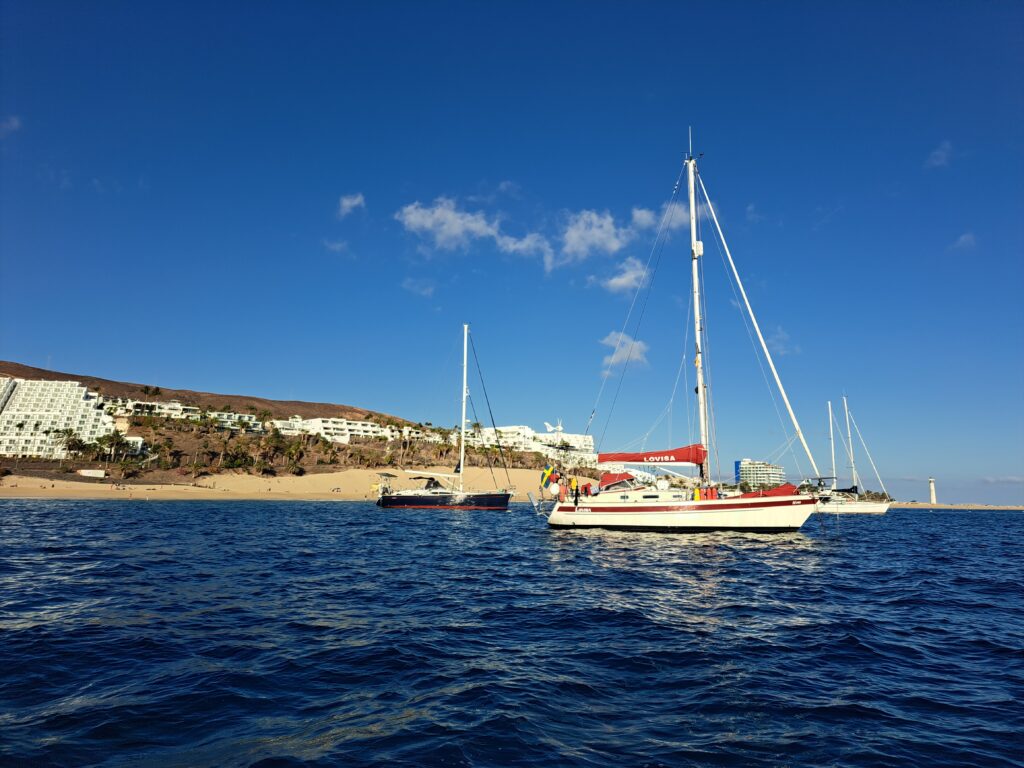
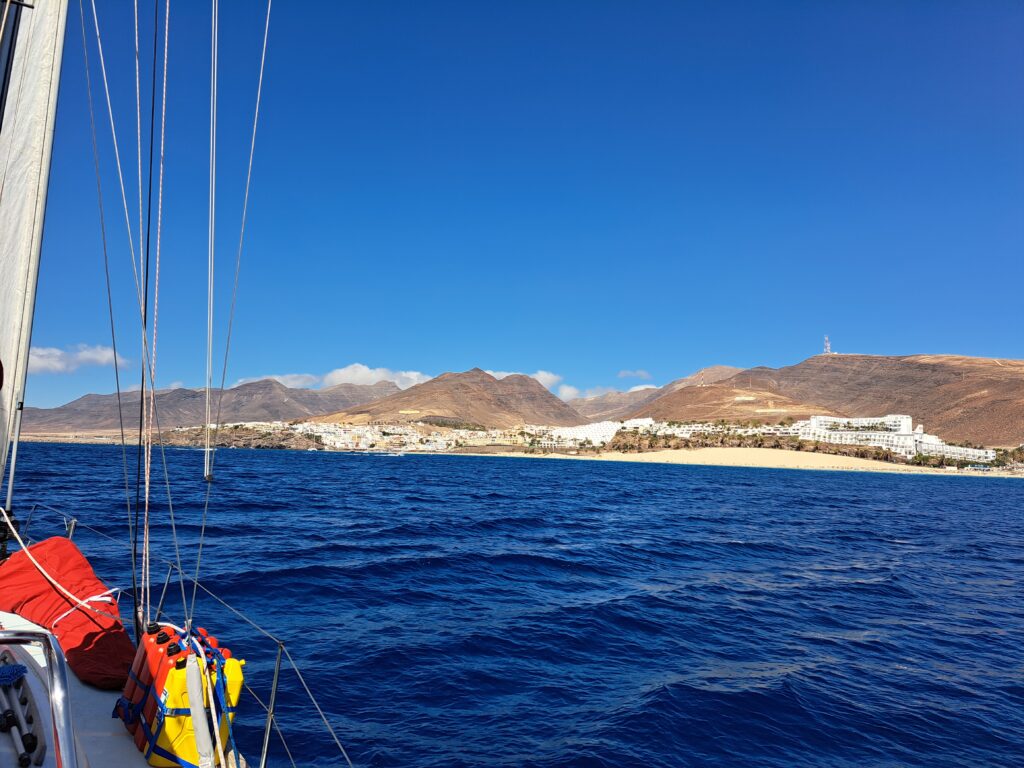
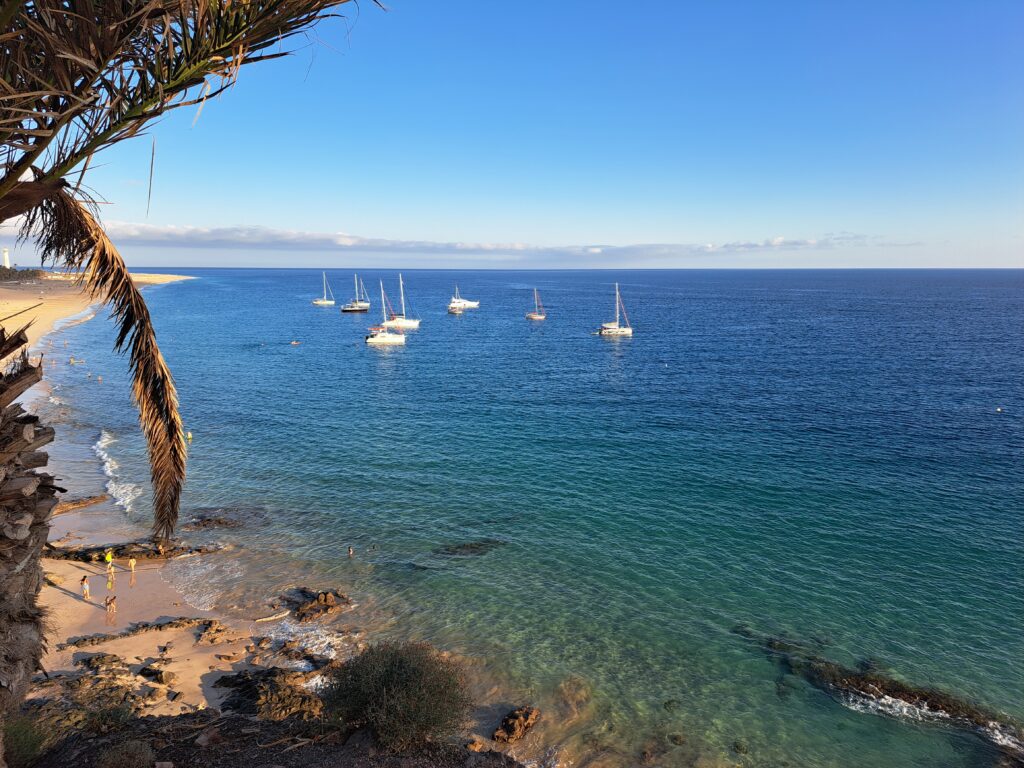
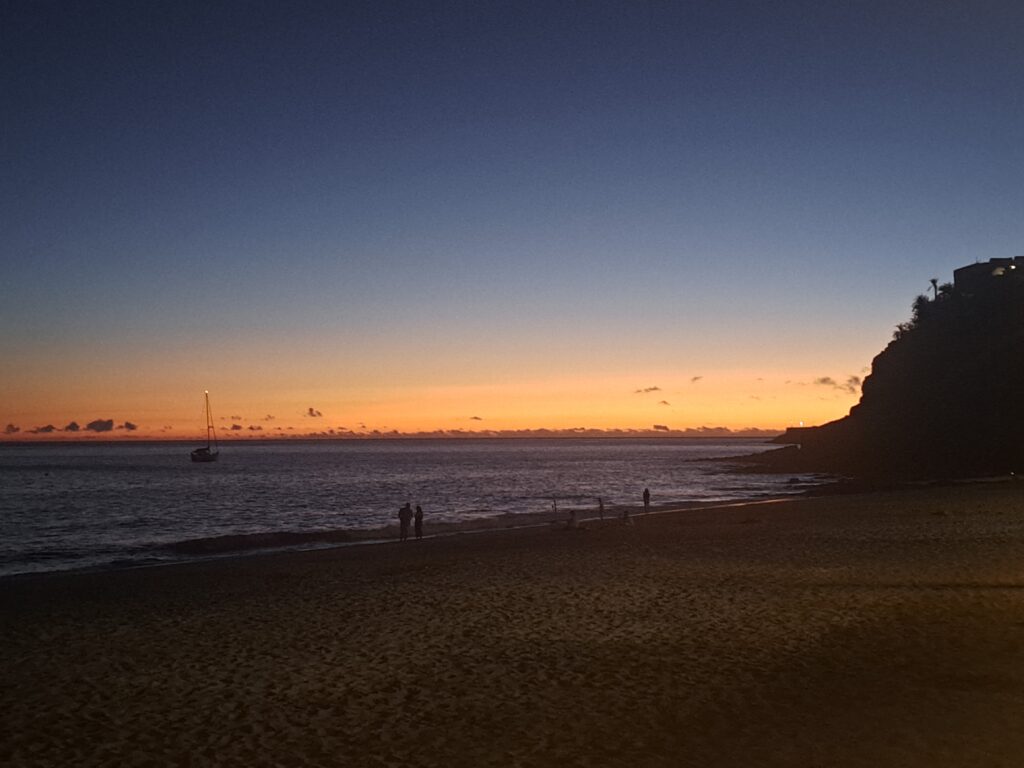
Morro Jable is a very touristic place where people come to enjoy the long beach with clear waters. We felt there was quite little to explore there but we enjoyed a very relaxing time on the boat and of course did some boat mechanics. During our second and last day in Morro Jable, we installed the exhaust hose that we bought in Arrecife. We had been looking for it in many boat shops for long time and we found it in a very well furnished boat equipment store in Arrecife on Lanzarote named “Sucesores de Hermenegildo Duarte”. After installing, we tested that everything was tight and we finally marked that job as “DONE”.
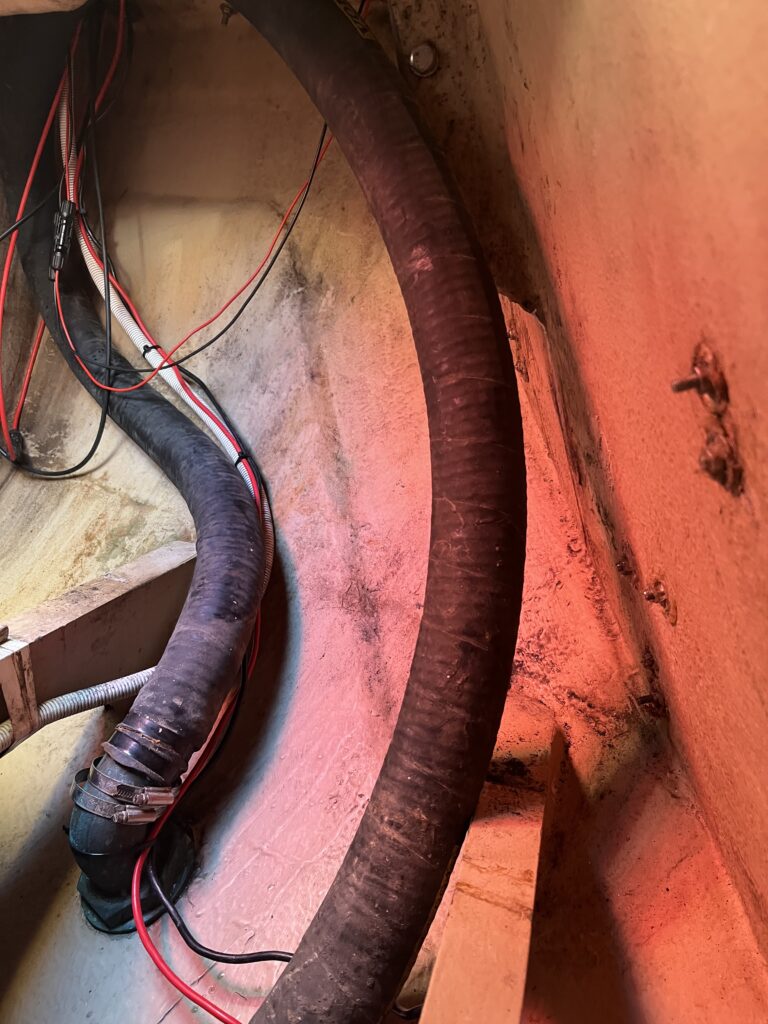
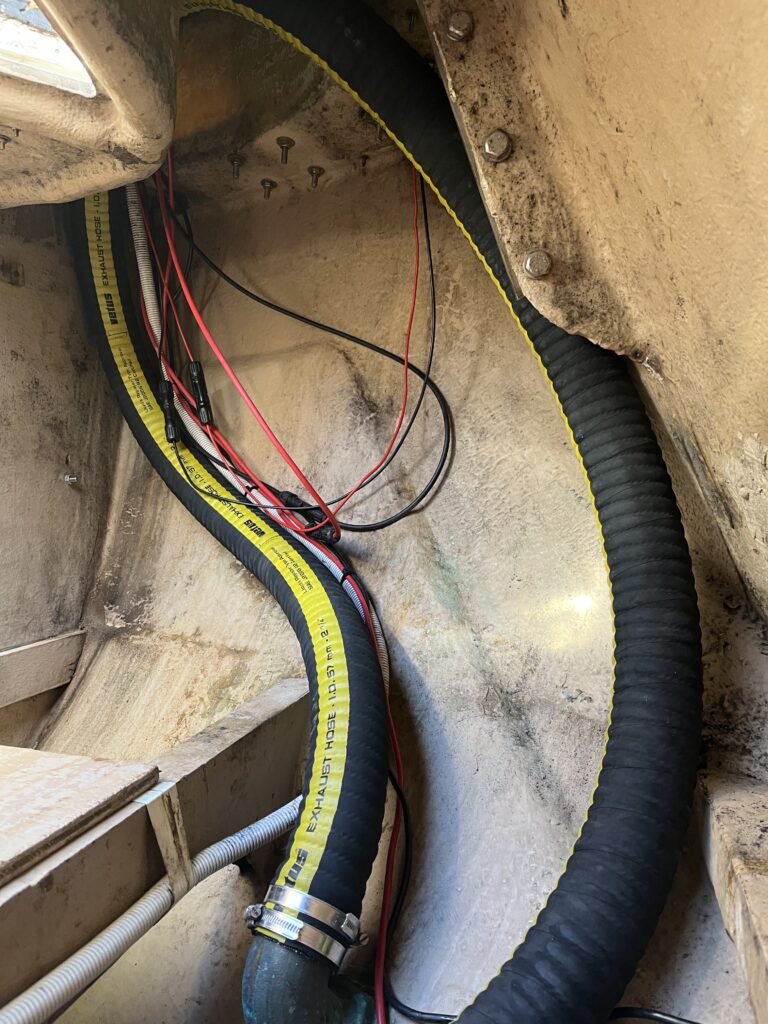
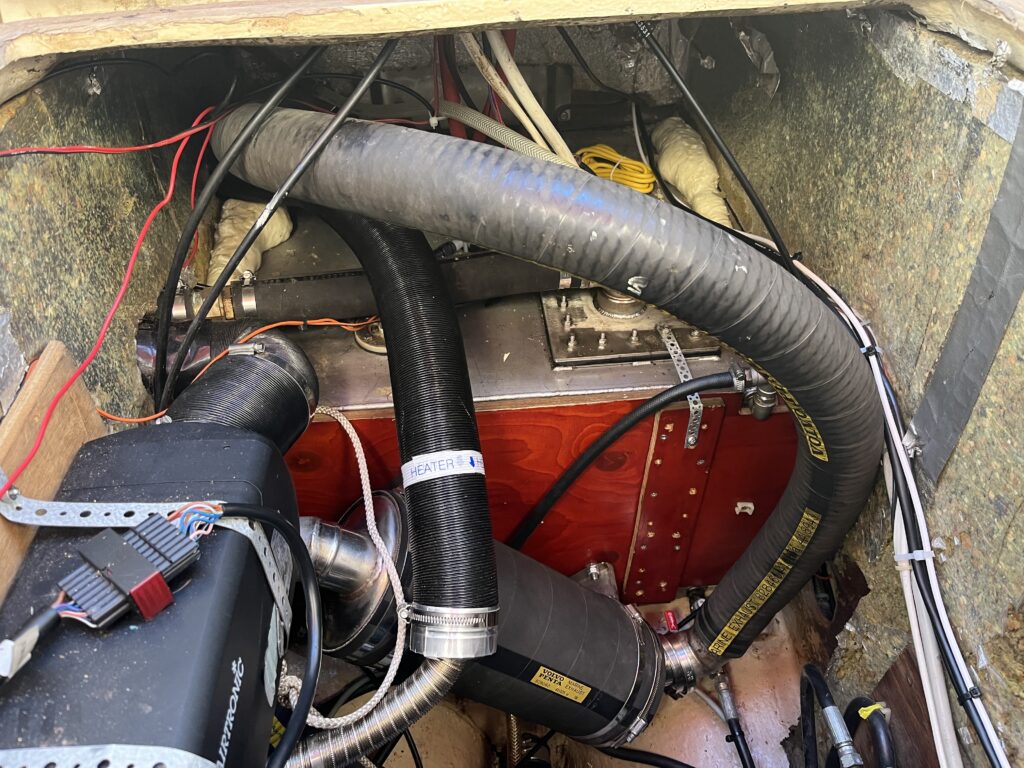
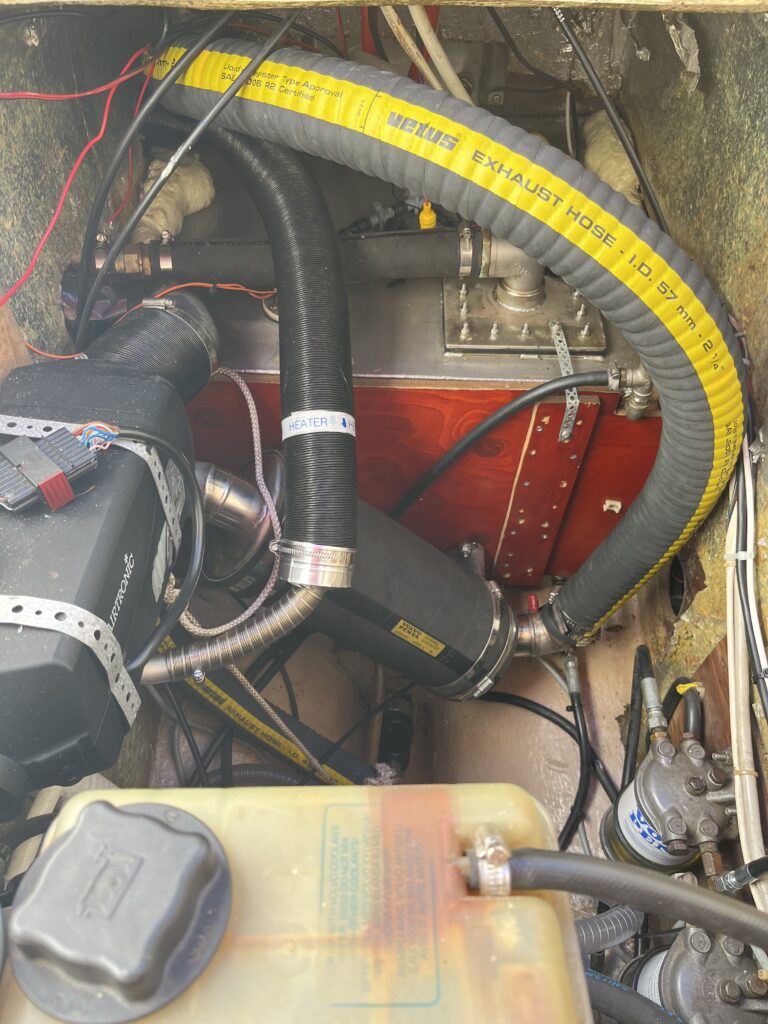
With this job done, we prepared Lovisa for the short 70 nautical miles crossing to Gran Canaria and tried to get some sleep early as we planned to leave our anchorage very early in the morning. We left Fuerteventura on Tuesday 21 October at 5 am in the darkness. We were actually happy to leave because the boat started to roll quite a lot during the night and it became impossible to sleep.
The sailing to Gran Canaria was quite frustrating with many wind changes. Twice, it happened that the wind picked up and stabilized at around 6 or 7 m/s while we were motoring. As soon as we decided to sail instead and got the mainsail up, the wind died. We remained with the sound and view of flapping sails. Another time while sailing with both mainsail and genoa, the wind changed direction forcing us completely out of course. To get back on track, we decided to roll the genoa and get the gennaker up. That’s not an effortless task. Well, the wind died exactly when got the gennarker up. We looked at our flapping gennaker for five minutes hoping for the wind to come back and then took it down.
On the top of that, no fish on the hook, meaning no fish for dinner!
But like a sudden beam of sunlight on a rainy day, a group of pilot whales appeared and made our day! So beautiful!
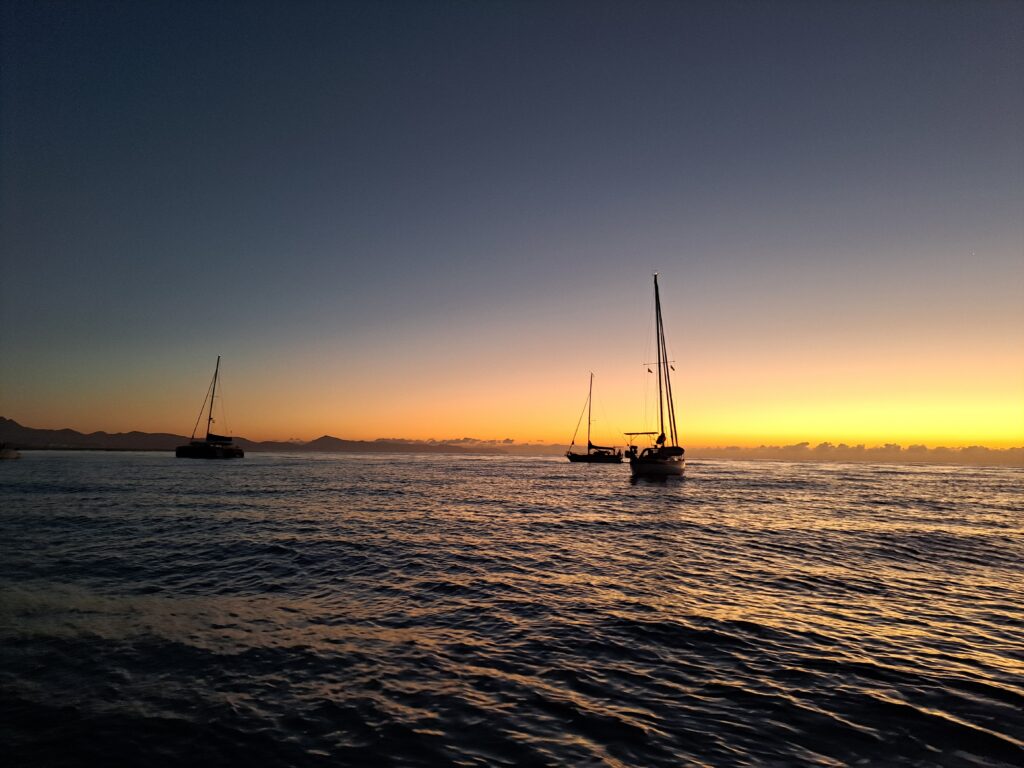
When approaching the south eastern coast of Gran Canaria, the wind increased to between 10 and 14 m/s so we enjoyed a nice two hours sailing until Pasito Blanco, our first anchorage in Gran Canaria. We anchored right on time to enjoy a beautiful sunset.
Bravo Trop bien! vous pecher un peu ?
Salut François! On essaye de pêcher mais ça n’a pas beaucoup mordu! On a eu quand-même un mahi mahi la veille de notre arrivée à Madeira. Il faut qu’on trouve quelqu’un qui puisse nous donner quelques tuyaux.
Emilien
Hej Maria och Emilien.
Nu har jag läst ikapp i eran seglingsblogg. Det ör så härligt att få följa er resa! Speciellt fint tycker jag det var när Maria beskrev hur lycklig hon var med livet när ni hade korsat Biscaya och anlänt till La Coruna i Spanien. Heja er och stort lycka till på den fortsatta färden! Hälsningar Erik Engström
Hej Erik! Så fint du skriver och häftigt att du läst allt 🙂 Just nu har vi fullt upp med förberedelser för den långa resan över Atlanten. Och vi har massor av mat på båten! Annars har det varit så skönt här i Kanarieöarna när vi har ankrat och lätt kunnat bada. Hoppas allt är bra med er. Ha det så bra!
j’ai laissé pas mal de pages passer, et beaucoup de choses sont arrivées ! en particulier, j’admire les travaux de couture, et le travail de maintenance, sans cesse renouvelé. (J’ai des traductions rapides 🙂 – Il faut savoir se débrouiller aussi pour être autonomes.
Ces paysages si différents, ces contrées si riches… tant à découvrir, et tant à apprécier, de la beauté des paysages à la gastronomie locale. Et les poissons (vivants ceux-là)
Kenavo, et bons vents !!